
UAE Corporate Tax Guide 2026: Practical Steps for Business Compliance
· 29 min read

Why a Practical Corporate Tax Guide for UAE Businesses Matters in 2026
The United Arab Emirates (UAE) has seen big changes in its tax rules. A new corporate tax system started in June 2023, and it’s important for everyone to understand it clearly in 2026. This new tax means that many businesses and people who make money from business activities in the UAE now need to pay corporate tax. Knowing these rules well helps investors and small businesses make smart choices and avoid problems.

It’s especially key for those new to the UAE market or looking to grow their business here. For example, understanding how UAE corporate tax affects your Dubai property investment structure can save you a lot of worry.
This corporate tax guide will walk you through everything you need to know. We will cover important topics like:
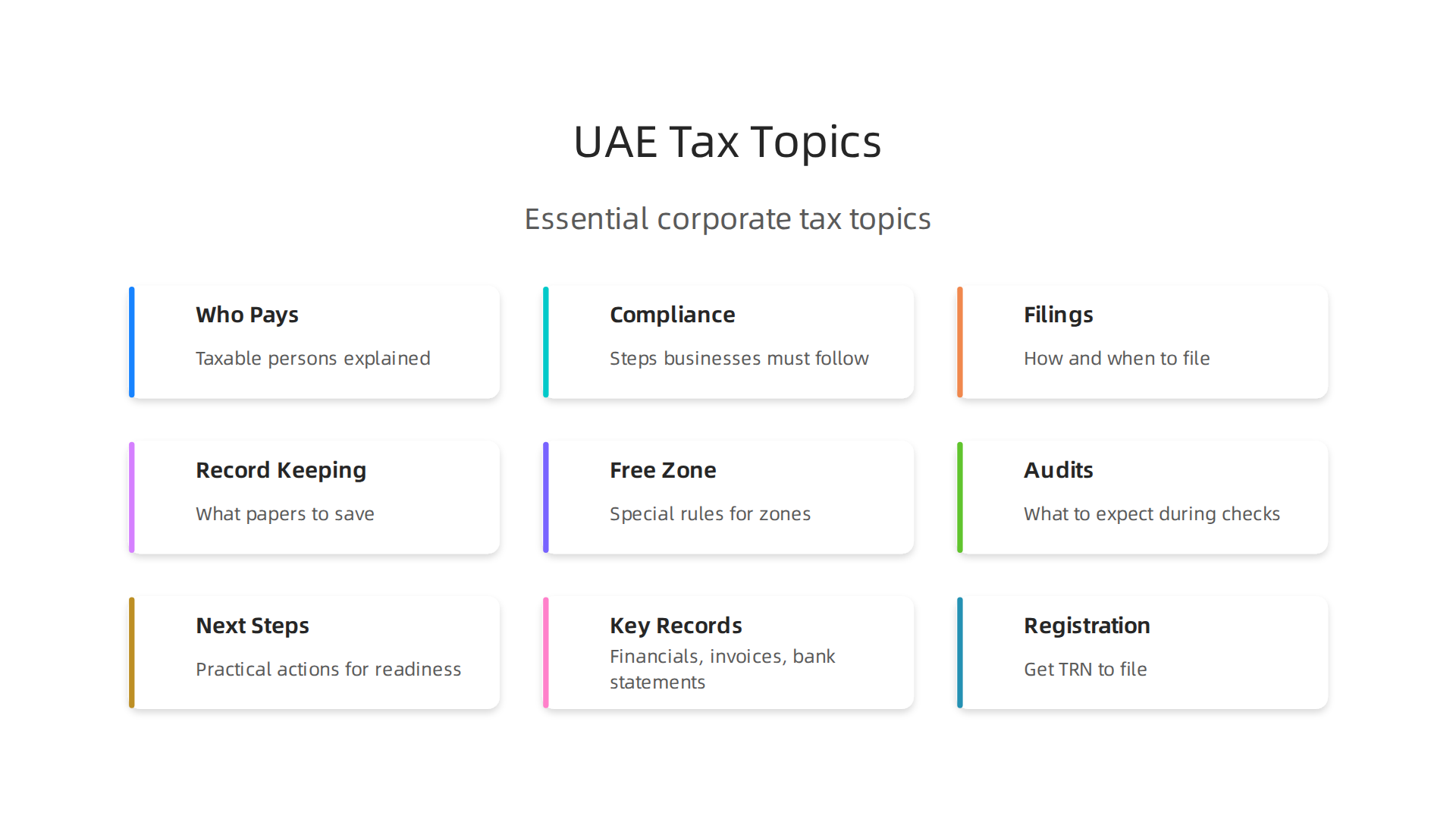
- Understanding Who Pays: We will explain what a "Taxable Person" is and how it applies to businesses and individuals, including those companies set up in the UAE or managed from here KPMG Corporate Tax Guide on Tax Resident and Tax Residency Certificate.
- Compliance Checklist: What steps your business needs to take to follow all the rules.
- Filings: How to file taxes for business, including where and when you need to send in your tax forms. We’ll show you how to file business taxes online so it’s easier.
- Record-Keeping: Keeping good records is super important. We’ll explain what papers you need to save and for how long.
- Free Zone Treatment: If your business is in a free zone, there are special rules you need to know about.
- Audits: What to expect if your business is chosen for a tax check.
- Practical Next Steps: Simple advice to help you manage your corporate tax duties smoothly.
Our goal is to give you a clear, easy-to-follow corporate tax guide. It will help you learn the best small business tax strategies to make sure your business stays on the right side of the law. You’ll also learn how to file online business taxes correctly. This way, you can focus on making your business successful in 2026.
If you are buying, selling, renting, or investing in Dubai property and need to understand how these tax changes impact you directly, it can be very helpful to speak with an expert. Get tailored advice for your specific situation.
Connect with Ayaz Salman for a FREE Dubai Real Estate Consultation.
1. The Legal Framework: Who the Corporate Tax Law Applies To
To really understand the new corporate tax in the UAE, the first step is to know who actually has to pay it. The law calls these people or companies "Taxable Persons." Not everyone or every business needs to pay, so let’s break down who is included in this important corporate tax guide.
Who is a Taxable Person?
In 2026, a Taxable Person in the UAE is either a "Resident Person" or a "Non-Resident Person."
These can be companies, which are called "juridical persons," or individuals, who are called "natural persons." Knowing which group you or your business falls into helps you understand your corporate tax duties. This is clearly explained in the Federal Decree Law No. 47 of 2022 and its amendments by the Ministry of Finance.
Also, the Federal Tax Authority gives more details in its Tax Resident and Tax Residency Certificate guide.
Resident Persons: Companies and Individuals
For Companies (Juridical Persons):
Most companies that are set up or recognized under UAE laws are seen as Resident Persons. This means if your business started in the UAE, it’s likely a Resident Person for corporate tax. This includes companies in the mainland and those in special Free Zones. The Cabinet Resolution of 2022 Determining the Tax Residence explains this in more detail.
What’s more, even foreign companies might be considered Resident Persons if they are actually managed and controlled from within the UAE. So, if the main decisions for a foreign company are made here, it could be subject to UAE corporate tax. This point is covered in the Explanatory Guide on UAE Corporate Tax Law. If you’re looking to set up a company in Dubai, understanding these rules is key. You can learn more about how a business setup company for Dubai property investment works in 2026.
For Individuals (Natural Persons):
Yes, individuals can also be Taxable Persons! If you are an individual doing business activities in the UAE and your total sales in a calendar year go over AED 1 million, then you are a Resident Person for corporate tax purposes. This rule helps make sure that all business income is treated fairly. You can find more information in the Tax Procedures Guide on Tax Residency.
Non-Resident Persons
A Non-Resident Person is typically a foreign company or an individual who doesn’t live in the UAE but still does business or earns money from sources inside the UAE. For example, if a foreign company has a permanent place of business here, like an office, or makes money from property in the UAE, it will likely need to pay corporate tax on that specific UAE-sourced income. The general rules for this are outlined in the Doing business in the UAE guide.
Special Rules for Certain Groups
Some types of businesses and organizations have special rules for corporate tax:
- Free Zones: Businesses operating in UAE Free Zones can sometimes get a 0% corporate tax rate. However, they must follow strict rules to qualify. This is a very important part of the new tax system and often needs careful planning for small business tax strategies.
- Government Entities: Many government-owned groups and public benefit organizations are usually exempt from paying corporate tax. This means they do not have to follow the same rules as private businesses when it comes to taxes.
Knowing these different types of Taxable Persons is the first step in understanding the UAE corporate tax guide. It sets the stage for how to file taxes for business and helps you make smart choices for your company in 2026.
Now that you know who needs to pay corporate tax, the next big step is figuring out what income the tax applies to. This is super important for small businesses in the UAE to understand, especially when it comes to managing money and figuring out how to file taxes for business. This part of our corporate tax guide will help you understand taxable income, what you can deduct, and the simple rules for keeping your books.
What Counts as Taxable Income?
Simply put, taxable income is the money your business makes after you take away all the allowed costs of running that business. In the UAE, for most businesses, this means the profit you get from your business activities. Whether your business buys and sells goods (trading) or offers services (non-trading), your profits are usually what the corporate tax applies to.
For companies in Free Zones, there’s a special rule. They can sometimes get a 0% tax rate on what’s called "qualifying income" if they meet certain conditions. But if their income doesn’t qualify, it will be taxed at the normal rate, as noted in the UAE Corporate Tax 2026 Guide.
Accounting Rules: How to Keep Track of Your Money
To figure out your taxable income, you need to keep good records.
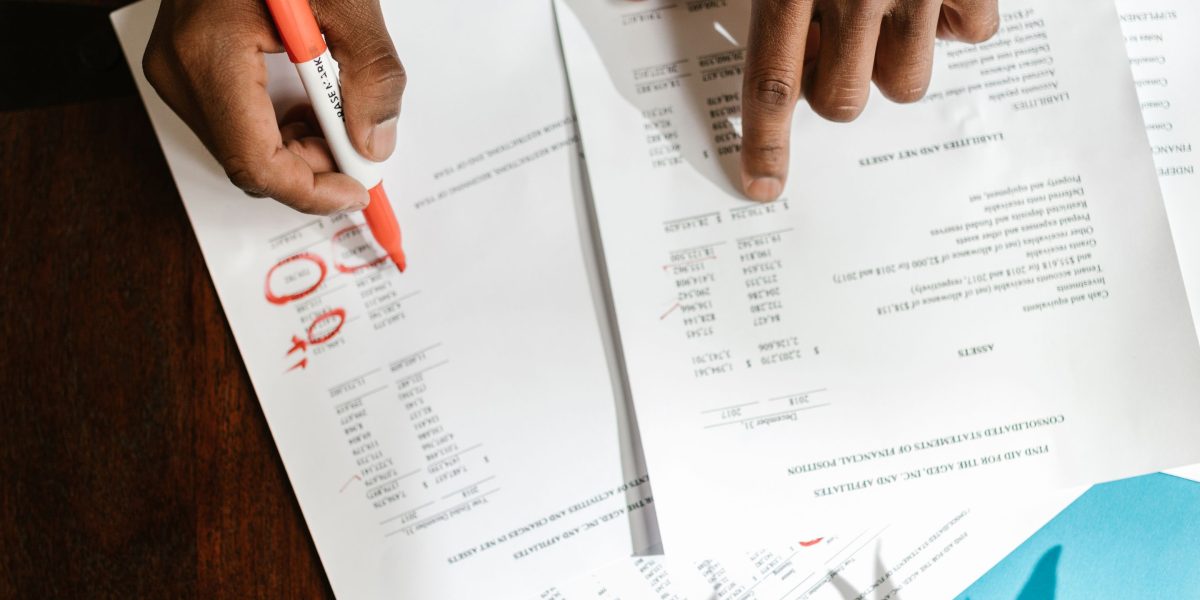
Most businesses in the UAE will use what’s called the "accrual basis" for accounting. This means you record income when you earn it and expenses when you owe them, not just when money changes hands. It gives a clearer picture of your business’s financial health over time.
For small businesses, keeping clear and correct financial records is very important. These records will help you prepare your corporate tax return accurately. If you’re wondering about the best tools to help with this, you can find insights into the best small business tax software for Dubai 2026.
Allowed Deductions: Reducing Your Taxable Income
The good news is that you don’t pay tax on all the money your business takes in. The government allows you to subtract certain business expenses from your income. These are called "deductions" and they lower the amount of income that the corporate tax applies to. This is a key part of smart small business tax strategies.
Common things you can deduct include:
- Salaries and wages for your employees
- Rent for your office or business space
- Costs of goods sold (what you paid for products you sell)
- Utility bills (electricity, water, internet)
- Professional fees (like for lawyers or accountants)
There are rules about what can and cannot be deducted, so it’s wise to understand these limits. For example, personal expenses cannot be deducted as business costs. Knowing how to claim business write offs for taxes on Dubai property can save you money.
UAE Corporate Tax Rates and Small Business Relief
In 2026, the UAE corporate tax system is designed with small businesses in mind:
- 0% Tax Rate: If your taxable income is up to AED 375,000, you will pay 0% corporate tax. This is a great benefit for many small businesses.
- 9% Tax Rate: For any taxable income over AED 375,000, the rate is 9%.
There’s also something called "Small Business Relief." If your total revenue (all the money you bring in, before expenses) is AED 3 million or less in a tax period, you might be able to pay 0% corporate tax. This is explained further in the UAE Corporate Tax Exemptions 2026 guide. This relief helps make sure that small companies have less tax burden.
Common Pitfalls for Small Businesses
When it comes to corporate tax, small businesses often make a few common mistakes:
- Poor Record-Keeping: Not keeping good track of all sales and expenses can lead to problems when you need to file business taxes online.
- Mixing Personal and Business Funds: It’s important to keep your personal money separate from your business money. This makes it much easier to figure out taxable income.
- Missing Deadlines: Knowing when to file online business taxes and pay them is crucial to avoid fines.
Staying organized and understanding these basic rules will help your business follow the UAE corporate tax guide smoothly. For more specific guidance on how UAE corporate tax affects your property investments, you can read about how UAE corporate tax affects your Dubai property investment structure.
If you are buying, selling, renting, or investing in Dubai property, it is always a good idea to seek expert advice.
Get a FREE Dubai Real Estate Consultation today.
Getting your business’s money matters in order is super important for UAE corporate tax. We talked about how good records help you figure out your taxable income. Now, let’s look closer at what records you need to keep, how long to keep them, and the important dates for filing your taxes. This part of our corporate tax guide will make sure you know what to do so you can file business taxes online without a headache.
What Records Must Businesses Keep?
To follow the UAE corporate tax rules, businesses need to keep clear and full records of their money. These records show how much money came in and went out. They prove your income and expenses, which helps you figure out your tax bill correctly.
Here’s a list of important records you should always keep:
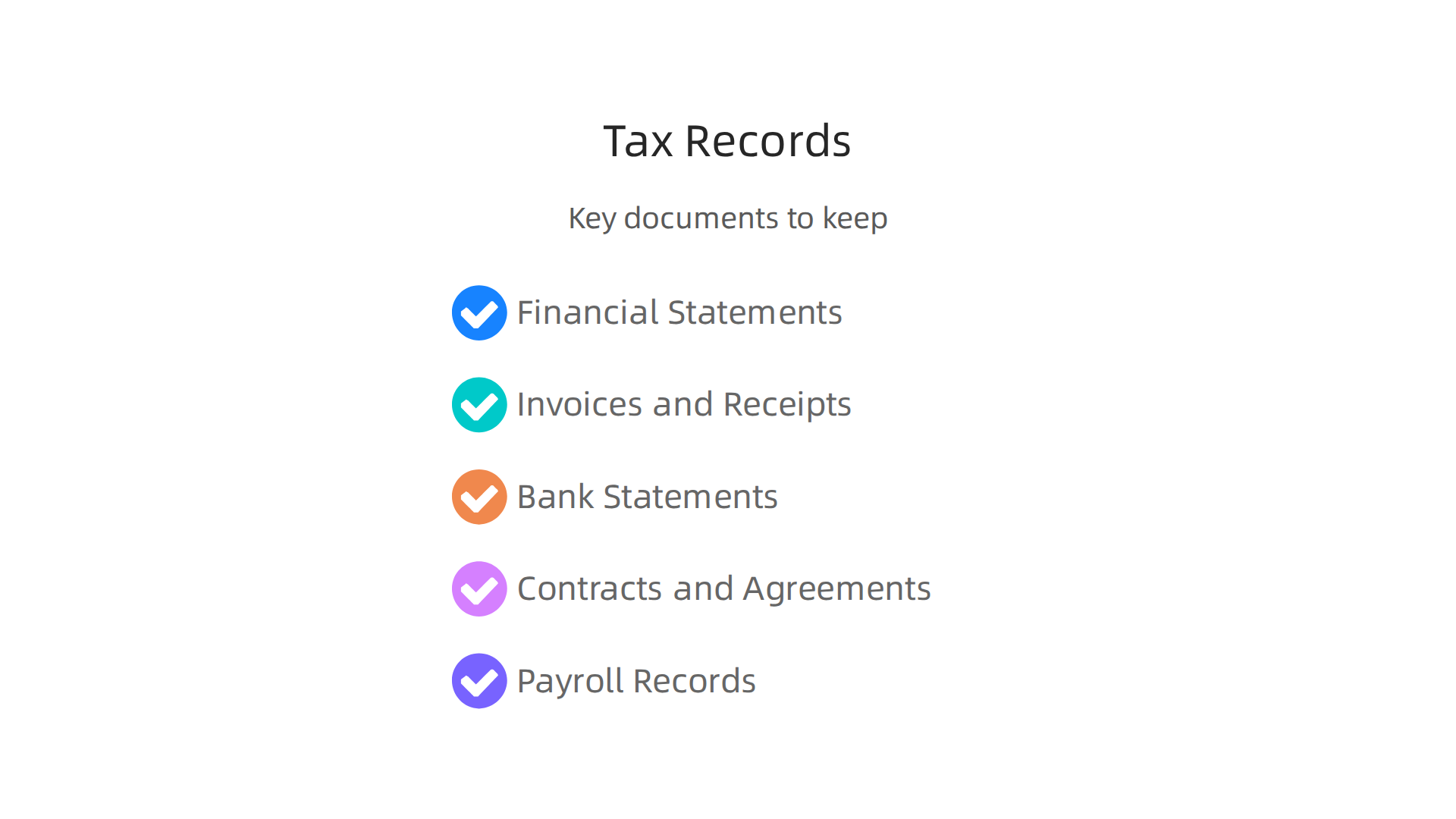
- Financial Statements: These are like a report card for your business’s money health. They include your profit and loss statements and balance sheets.
- Invoices and Receipts: Keep copies of all sales invoices you send out and all receipts for things you buy for your business. This helps track your income and allowed deductions.
- Bank Statements: All your business bank statements are key to show where your money is going.
- Contracts and Agreements: Any papers for big deals, loans, or even rent for your office space.
- Payroll Records: Details about what you pay your employees.
Keeping these records helps you prove your taxable income and deductions to the tax office. It’s a big part of smart small business tax strategies. Many businesses use special accounting software to help keep track of everything easily. This makes it simpler to gather information when you need to file online business taxes.
Keeping Records and Best Practices
So, how long do you need to keep these important papers? Generally, it’s a good idea to keep all your financial records for at least 7 years after the end of the tax period they relate to. This gives you plenty of time in case the tax office needs to check anything later.
For small teams, here are some easy tips for good record-keeping:
- Go Digital: Store copies of your records on a computer or in the cloud. This makes them easy to find and keeps them safe.
- Do It Often: Don’t wait until the last minute. Update your records regularly, like every week or month.
- Keep Business and Personal Separate: We talked about this before, but it’s worth saying again. Always keep your business money and personal money in different places. This makes your accounting much clearer.
- Get Help if Needed: If you’re unsure, ask for help from an accountant. They can guide you on the best ways to keep your books.

Making sure your records are in order is a key step in knowing how to file business taxes for your Dubai property company including corporate tax and VAT.
Filing Timelines and Important Deadlines
Knowing when to do things is just as important as knowing what to do.

There are a few key dates to remember for UAE corporate tax in 2026:
1. Corporate Tax Registration
Before you can even think about filing, your business needs to be registered for corporate tax. This means getting a special Tax Registration Number (TRN) from the Federal Tax Authority (FTA). You usually need to do this within nine months from when your financial year starts, or three months from when your company officially opened, whichever is later. Making sure you have your TRN is a critical first step for compliance, as highlighted in the Ultimate UAE Corporate Tax Checklist 2026. If you need help with this, you can find out how to get your UAE Tax Registration Number TRN for property investment.
2. Filing Your Corporate Tax Return
The main deadline for filing your corporate tax return and paying any tax due is nine months after your business’s financial year ends. This means if your financial year ends on December 31, 2025, your tax return and payment are due by September 30, 2026. There are no separate payments throughout the year; you file and pay once a year.
Here are some common deadlines for businesses with a calendar financial year (January 1 to December 31):
- For financial year ending December 31, 2025: File and pay by September 30, 2026.
- For financial year ending December 31, 2026: File and pay by September 30, 2027.
These dates are very important because missing them can lead to fines. You can find more details on these deadlines in guides like the UAE Corporate Tax Filing Deadline 2026: Dates, Steps & ….
Where to File
You will file your corporate tax return online through the Federal Tax Authority’s (FTA) EmaraTax portal. It’s important to make sure your registration details are correct and up-to-date on this portal before you try to submit your return. This ensures a smooth process for all your business taxes.
Now that you know how to prepare your records and when to file your corporate tax return, let’s talk about the actual tax amounts. It’s time to understand the tax rates, any special tax breaks you might get, and how companies in free zones are treated. This part of our corporate tax guide will help small businesses and investors understand their tax duties better.
4. Tax Rates, Exemptions and Free Zone Treatment – What Small Businesses Need to Know
The UAE corporate tax system is set up to be fair, especially for smaller businesses. Not everyone pays the same amount of tax. Let’s break down the main tax rates and rules you need to know for 2026.
Understanding the Main Corporate Tax Rates
For most businesses in the UAE, the corporate tax has two main rates:
- 0% Tax Rate: If your business makes a taxable income up to AED 375,000, you will pay 0% corporate tax. This is great news for many small businesses.
- 9% Tax Rate: If your business makes a taxable income above AED 375,000, the amount over this limit will be taxed at 9%. This tiered system means you only pay 9% on the part of your income that goes over AED 375,000.
This structure is designed to support small and medium-sized businesses, letting them grow without a heavy tax burden on their initial profits. You can see more details on these rates in guides like the UAE Corporate Tax 9%, who pays and what changed in 2026.

Common Exemptions and Reliefs
Besides the 0% tax rate for smaller incomes, there are other ways businesses might get relief from corporate tax. One important relief is the Small Business Relief (SBR).
The Small Business Relief allows businesses with a total yearly revenue of AED 3 million or less to be treated as having zero taxable income. This means they would pay 0% corporate tax for that year, even if their taxable income technically went above AED 375,000. This is a big help for growing small teams and is part of smart small business tax strategies. Always check the specific rules to see if your business qualifies for such exemptions.
Special Treatment for Free Zone Companies
Many businesses choose to set up in UAE Free Zones because they’ve heard about the 0% corporate tax. However, it’s important to know that companies in a Free Zone are not automatically exempt from corporate tax. They still need to register for corporate tax and meet certain rules to get the 0% rate on their "qualifying income."
To benefit from the 0% tax rate, a Free Zone company must be a "Qualifying Free Zone Person" (QFZP). This means they need to meet specific conditions, such as:
- Real Economic Substance: The business must have a real presence and operations in the Free Zone. It’s not enough to just have a registration; you need to show that your business activities are actually happening there.
- Qualifying Income: The income must come from "qualifying activities" as defined by the tax rules. This often means income from activities within the Free Zone or with other Free Zone businesses.
- No Direct Operations Outside the Free Zone: Generally, a Free Zone company that wants the 0% rate should not have direct operations outside the Free Zone on a regular basis. Any income that doesn’t fit these rules might be taxed at the standard 9% rate.
For example, a Free Zone company must have enough staff and offices to match its business activities to meet the "substance" rule, as explained in the UAE Taxation in 2026. If a Free Zone company earns income that is not considered "qualifying income," that part of its earnings will be taxed at 9%. You can learn more about how Free Zone entities qualify for 0% tax in guides like Taxes in Dubai in 2026.
Understanding these details is key to ensuring you correctly file online business taxes and make the most of the UAE’s tax system. If you are ever unsure about these rules, especially for property investments, getting expert advice can save you a lot of worry.
Buying, selling, renting, or investing in Dubai? Connect with Ayaz Salman for a FREE Dubai Real Estate Consultation.Now that you know how to prepare your records and when to file your corporate tax return, let’s talk about the actual tax amounts. It’s time to understand the tax rates, any special tax breaks you might get, and how companies in free zones are treated. This part of our corporate tax guide will help small businesses and investors understand their tax duties better.
4. Tax Rates, Exemptions and Free Zone Treatment – What Small Businesses Need to Know
The UAE corporate tax system is set up to be fair, especially for smaller businesses. Not everyone pays the same amount of tax. Let’s break down the main tax rates and rules you need to know for 2026.
Understanding the Main Corporate Tax Rates
For most businesses in the UAE, the corporate tax has two main rates:
- 0% Tax Rate: If your business makes a taxable income up to AED 375,000, you will pay 0% corporate tax. This is great news for many small businesses.
- 9% Tax Rate: If your business makes a taxable income above AED 375,000, the amount over this limit will be taxed at 9%. This tiered system means you only pay 9% on the part of your income that goes over AED 375,000.
This structure is designed to support small and medium-sized businesses, letting them grow without a heavy tax burden on their initial profits. You can see more details on these rates in guides like the UAE Corporate Tax 9%, who pays and what changed in 2026.
Common Exemptions and Reliefs
Besides the 0% tax rate for smaller incomes, there are other ways businesses might get relief from corporate tax. One important relief is the Small Business Relief (SBR).
The Small Business Relief allows businesses with a total yearly revenue of AED 3 million or less to be treated as having zero taxable income. This means they would pay 0% corporate tax for that year, even if their taxable income technically went above AED 375,000. This is a big help for growing small teams and is part of smart UAE Corporate Tax Exemptions 2026. Always check the specific rules to see if your business qualifies for such exemptions.
Special Treatment for Free Zone Companies
Many businesses choose to set up in UAE Free Zones because they’ve heard about the 0% corporate tax. However, it’s important to know that companies in a Free Zone are not automatically exempt from corporate tax. They still need to register for corporate tax and meet certain rules to get the 0% rate on their "qualifying income."
To benefit from the 0% tax rate, a Free Zone company must be a "Qualifying Free Zone Person" (QFZP). This means they need to meet specific conditions, such as:
- Real Economic Substance: The business must have a real presence and operations in the Free Zone. It’s not enough to just have a registration; you need to show that your business activities are actually happening there.
- Qualifying Income: The income must come from "qualifying activities" as defined by the tax rules. This often means income from activities within the Free Zone or with other Free Zone businesses.
- No Direct Operations Outside the Free Zone: Generally, a Free Zone company that wants the 0% rate should not have direct operations outside the Free Zone on a regular basis. Any income that doesn’t fit these rules might be taxed at the standard 9% rate.
For example, a Free Zone company must have enough staff and offices to match its business activities to meet the "substance" rule, as explained in the UAE Taxation in 2026. If a Free Zone company earns income that is not considered "qualifying income," that part of its earnings will be taxed at 9%. You can learn more about how Free Zone entities qualify for 0% tax in guides like Taxes in Dubai in 2026.
Understanding these details is key to ensuring you correctly file business taxes for your Dubai property company and make the most of the UAE’s tax system. If you are ever unsure about these rules, especially for property investments, getting expert advice can save you a lot of worry.
Buying, selling, renting, or investing in Dubai? Connect with Ayaz Salman for a FREE Dubai Real Estate Consultation.
Now that you understand the different tax rates and special rules for businesses, it’s just as important to know what happens if things go wrong. No one wants trouble with taxes, so let’s look at how to avoid audits and penalties, and what to do if you face a tax dispute in 2026. This part of our corporate tax guide will help you manage potential risks.
5. Audits, Penalties and Dispute Resolution: How to Avoid and Manage Risk
Even with the best intentions, mistakes can happen. It’s vital to know about tax audits, the penalties for not following rules, and how to fix things if a problem comes up. Being prepared is your best defense.
What Makes the Tax Authority Look Closer? (Audit Triggers)
The Federal Tax Authority (FTA) in the UAE has stronger powers for audits in 2026. They don’t just pick businesses at random anymore. Instead, they focus on risks. Here are some common things that can make them look at your business more closely:
- Wrong or Late Filings: If your tax return has mistakes, or you file it late, this can raise a red flag. The FTA can now check for differences between what you file and your bank records, which can trigger an automatic audit UAE Corporate Tax 2026: Urgent FTA Audit Guidelines & New Penalty Rates (Official PDF).
- Not Paying on Time: Just like filing, paying your corporate tax late can lead to issues.
- Large Refunds: If your business asks for a very large tax refund, the FTA might want to check why.
- Unusual Business Activity: If your business activities or income suddenly change a lot without a clear reason, it might get noticed.
- Lack of Proper Records: If your financial records are incomplete or messy, it makes it harder for you to prove your tax numbers are correct. This is key for any small business tax strategies to succeed.
The FTA has increased its inspection visits, showing they are serious about tax compliance, as mentioned in the UAE Finance Partner 2026: Corporate Tax Deadlines, FTA Audits and the ….
How to Be Ready for an Audit
The best way to deal with an audit is to try to prevent it. But if one happens, being ready makes it much easier.
- Keep Excellent Records: This is the most important step. Make sure all your financial statements, invoices, receipts, and other business documents are well-organized and easy to find. For many businesses, audited financial statements are needed to file a corporate tax return FAQs on UAE Corporate Tax (2026): Rates, Filing and ….
- Understand Deadlines: Know when your corporate tax return and payment are due. For many, this is nine months after your financial year ends. For example, if your year ends on December 31, 2025, your deadline is September 30, 2026 UAE Corporate Tax Filing Guide 2026: Step-by-Step for SMEs.
- Internal Checks: Set up good internal systems to check your numbers before you file. This helps catch mistakes early.
- Respond Quickly: If the FTA asks for information, reply within the given timeframe, usually 7 to 30 days How To Comply With UAE Tax Procedures 2026.
What Happens if You Don’t Follow the Rules? (Penalties)
The UAE has clear penalties for not following corporate tax rules. These are designed to encourage everyone to be compliant.
- Late Filing: If you don’t file your corporate tax return on time, you could face a penalty of AED 500 each month. Plus, if you owe tax, you’ll pay interest on that unpaid amount Corporate Tax Filing Deadline UAE 2026 – Fastlane Dubai.
- Incorrect Information: Submitting a tax return with wrong information can also lead to a penalty, starting from AED 500 6 Important UAE Corporate Tax Penalties.
- Not Registering: All businesses that need to pay corporate tax must register with the FTA. Not registering can also lead to penalties.
- Extended Audit Window: Be aware that the time the FTA has to audit your records has changed. In some cases, especially if tax evasion is suspected, this period can be extended to up to 15 years UAE Tax Procedures Law Overhaul: 15-Year Audit Window, 5-Year ….
How to Fix Mistakes (Dispute Resolution)
If you realize you made a mistake on your tax return before an audit starts, you can make a "voluntary disclosure." This means telling the FTA about the error yourself. The penalties for doing this are often much lower than if the FTA finds the mistake during an audit.
If you get a tax assessment from the FTA that you don’t agree with, you have the right to appeal. You would typically go through these steps:
- Reconsideration Request: First, you can ask the FTA to reconsider their decision. You’ll need to explain why you think their assessment is wrong and provide supporting documents.
- Tax Disputes Committee: If you’re still not happy with the FTA’s reconsideration, you can take your case to the Tax Disputes Committee. This is an independent group that will review your case.
- Court Appeal: As a last resort, if the committee’s decision is not satisfactory, you can appeal in court.
Always keep track of the timelines for these appeals, as there are strict deadlines for each step. For more details on managing your business taxes, you can explore guides like How to File Business Taxes for Your Dubai Property Company.
Understanding these parts of the UAE corporate tax system is important for any business. By keeping good records, knowing your deadlines, and seeking help when needed, you can avoid many problems and ensure your business stays compliant in 2026.
Understanding these parts of the UAE corporate tax system is important for any business. By keeping good records, knowing your deadlines, and seeking help when needed, you can avoid many problems and ensure your business stays compliant in 2026. Now, let’s look at a practical checklist to guide your next steps and ensure you’re fully ready for corporate tax in 2026.
6. Practical Checklist and Next Steps for Small Businesses and Property Investors
Getting ready for corporate tax doesn’t have to be hard. A simple checklist can help small businesses and property investors keep track of what they need to do. This will help you manage your risks and follow all the rules in 2026.
Your Corporate Tax Readiness Checklist
Here’s a step-by-step guide to make sure your business is ready:
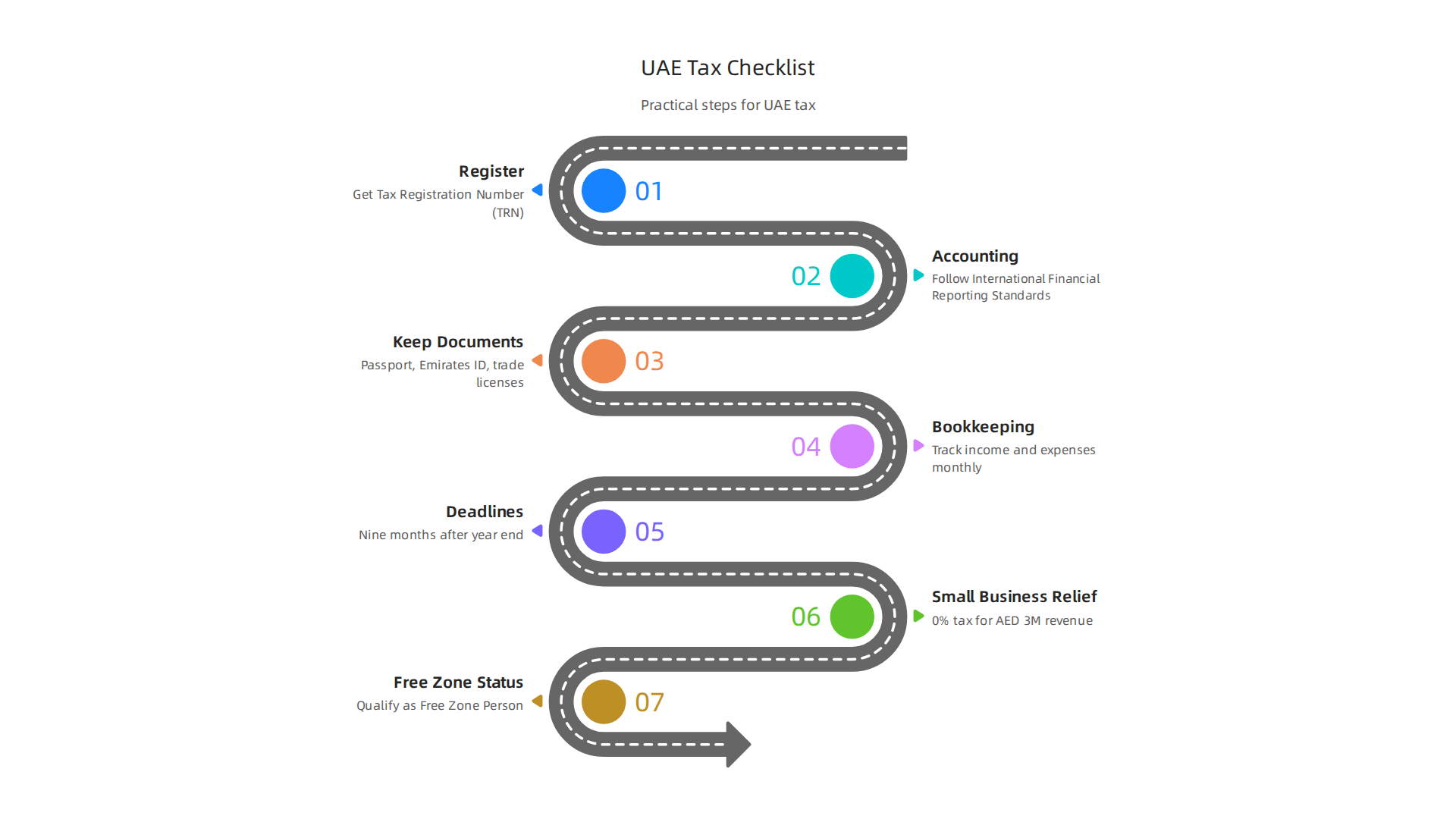
- 1. Register for Corporate Tax:
- This is the very first step. Every business that needs to pay corporate tax must register with the Federal Tax Authority (FTA) on the EmaraTax portal. You’ll get a Tax Registration Number (TRN). Without a TRN, you can’t file your returns and may face penalties Ultimate UAE Corporate Tax Checklist 2026.

The registration deadline is usually 9 months from the start of your financial year or 3 months from your company’s setup date UAE Corporate Tax Compliance Requirements for …. If you’re looking for help with this, consider reading about how to get your UAE Tax Registration Number TRN for property investment.
-
2. Set Up Your Accounting Right:
- Make sure your accounting system follows International Financial Reporting Standards (IFRS). Good records are a must, especially for how to file taxes for business. You’ll need financial statements for your corporate tax return. This could be audited or unaudited, depending on your business size FTA Corporate Tax Checklist for UAE Businesses.
-
3. Keep All Your Documents in Order:
- Collect all necessary business documents. This includes passport copies, Emirates IDs, trade licenses, and details about your business activities and ownership 2026 UAE Business Checklist: License, Tax, VAT and …. Having everything ready will make it easier to file online business taxes when the time comes.
-
4. Do Your Bookkeeping Regularly:
- Don’t wait until the last minute. Keep track of all your income and expenses every month. This helps you correctly categorize costs as either deductible or non-deductible UAE Corporate Tax 2026 Monthly Checklist for SMEs. Accurate bookkeeping is essential for sound small business tax strategies.
-
5. Know Your Deadlines:
- For most businesses, your corporate tax return and payment are due nine months after your financial year ends UAE Corporate Tax Filing Deadline 2026: Dates, Steps & …. For example, if your year ends on December 31, 2025, your deadline is September 30, 2026 UAE Corporate Tax Filing Obligations for 2026. Make sure you mark these dates on your calendar.
-
6. Check for Small Business Relief:
- If your business has a yearly revenue of AED 3 million or less, you might not pay corporate tax. This is called Small Business Relief, and it means you could have a 0% tax rate UAE Corporate Tax Exemptions 2026. Always check if you qualify.
-
7. Understand Free Zone Status:
- If your business is in a UAE Free Zone, you might pay 0% corporate tax on certain income. This applies if you meet the rules to be a "Qualifying Free Zone Person" (QFZP) UAE Corporate Tax 2026: Rates, Exemptions, and …. However, you still need to register and report your income, and any non-qualifying income will be taxed at 9% UAE Corporate Tax 2026 Guide | Rates & Exemptions.
When to Get Professional Help
While this corporate tax guide helps, tax rules can be complex. It’s often a good idea to speak with a tax advisor or consultant, especially if:
- Your business structure is complicated.
- You have international transactions.
- You are unsure about deductions or exemptions.
- You want to make sure your Dubai property tax optimization strategies are correct.
A professional can help you put together a Dubai Corporate Tax Year-End Checklist and make sure you’re taking all the right steps.
By following this checklist, small businesses and property investors can feel more confident about handling their corporate tax duties in 2026. Being proactive and organized is key to avoiding issues and ensuring smooth operations.
Ready to make smart property investment decisions in Dubai?
FREE Dubai Real Estate Consultation
Summary
This article is a practical corporate tax guide for UAE businesses and property investors in 2026, explaining who must pay corporate tax, what counts as taxable income, and how to claim allowed deductions. It covers resident and non‑resident taxable persons, the 0%/9% tiered tax rates plus Small Business Relief, and special Free Zone conditions for qualifying income. The guide explains accounting rules (accrual basis), the records you must keep for at least seven years, registration and EmaraTax filing timelines, and common audit triggers and penalties. It also gives a clear readiness checklist—register for a TRN, set up IFRS‑compliant accounting, keep digital records, track deadlines, and consider professional help. After reading, business owners will know how to prepare, file online, reduce risks, and take practical next steps to stay compliant and optimise taxes for Dubai property investments.