
How to Get Your UAE Tax Registration Number (TRN) for Property Investment
· 22 min read

Understanding the UAE Tax Registration Number (TRN)
If you are looking at investing in property in the United Arab Emirates (UAE) in 2026, you might find the tax rules a bit new. Actually, the UAE’s tax system is quite fresh, and many property owners are still getting used to it. This means there can be some confusion about what you need to do, especially when it comes to getting a tax registration number, often called a TRN. It is like a special ID for your tax duties here. Getting a clear grasp of these rules is super important for anyone dealing with real estate.

This includes understanding things like Understanding Taxes for UAE Property Investment: A Simple Guide.
Here’s the thing: getting a Tax Registration Number (TRN) is not just a good idea, it is often a must-do step. This is true for many property sales and purchases, and especially for getting rental income from your properties. If you want to know how to file business taxes for your Dubai property company including corporate tax and VAT, the TRN is a key part of that process. It helps the government keep track of your income taxes for business and makes sure everything is fair. Without a TRN, you might run into problems when you try to complete property deals or receive your rental earnings.
This guide is here to help you understand your needs and give you a simple, step-by-step way to secure your tax registration number. We will share expert advice so you can learn how to file taxes as a business owner in Dubai without stress. Our goal is to make sure you have all the information to navigate the system smoothly and confidently in 2026.
Ready to take the next step in your Dubai property journey?
FREE Dubai Real Estate Consultation
What is a Tax Registration Number (TRN) in the UAE?
A Tax Registration Number, often called a TRN, is like a special ID code given to people and businesses in the UAE by the Federal Tax Authority (FTA). Think of it as your unique tax fingerprint. This number is really important for handling your tax duties, especially in 2026. Without it, you might find it hard to deal with different kinds of taxes in the country.
The TRN is needed for several important tax reasons. For example, if you collect VAT (Value Added Tax) on your property rentals, you will need a TRN. The UAE made some key VAT changes starting in January 2026, aiming to make tax steps easier and ensure everyone follows the rules better. You will also need a TRN for corporate tax, which applies to businesses earning above a certain amount. The FTA explains that you need to apply for a TRN to register for VAT and follow tax rules Federal Tax Authority – Value Added Tax (VAT) Registration. This number helps the government keep track of your income taxes for business, making sure that property owners and companies pay what they should. Getting a TRN is a must-do step for many taxable people, including companies and individuals who run businesses, to make sure they can properly register for corporate tax Key Considerations For Obtaining Tax Registration Number (TRN).
It is also good to know that a TRN is not the only tax ID out there. While it is your main tax registration number, it serves as the base for different tax types. For instance, sometimes people might talk about a "VAT registration number." This is simply your TRN once you have completed the VAT registration process. So, the TRN is the main number that ties all your tax obligations together, whether you are trying to understand how to file taxes for a business or how to file taxes as a business owner. Knowing this difference is important so you do not get confused when dealing with various tax forms or when looking into things like your Dubai property tax 2026 how to file corporate tax and claim key deductions.
To put it simply, the TRN is your official identification for all tax matters in the UAE, making sure your tax dealings are smooth and correct. If you are looking to invest in Dubai property, applying for a Tax Registration Number (TRN) is a key step to ensure you follow all the rules Applying for a Tax Registration Number (TRN) in the UAE.
For property investors and landlords in the UAE, understanding if you need a Tax Registration Number (TRN) is key for handling your financial duties correctly in 2026.
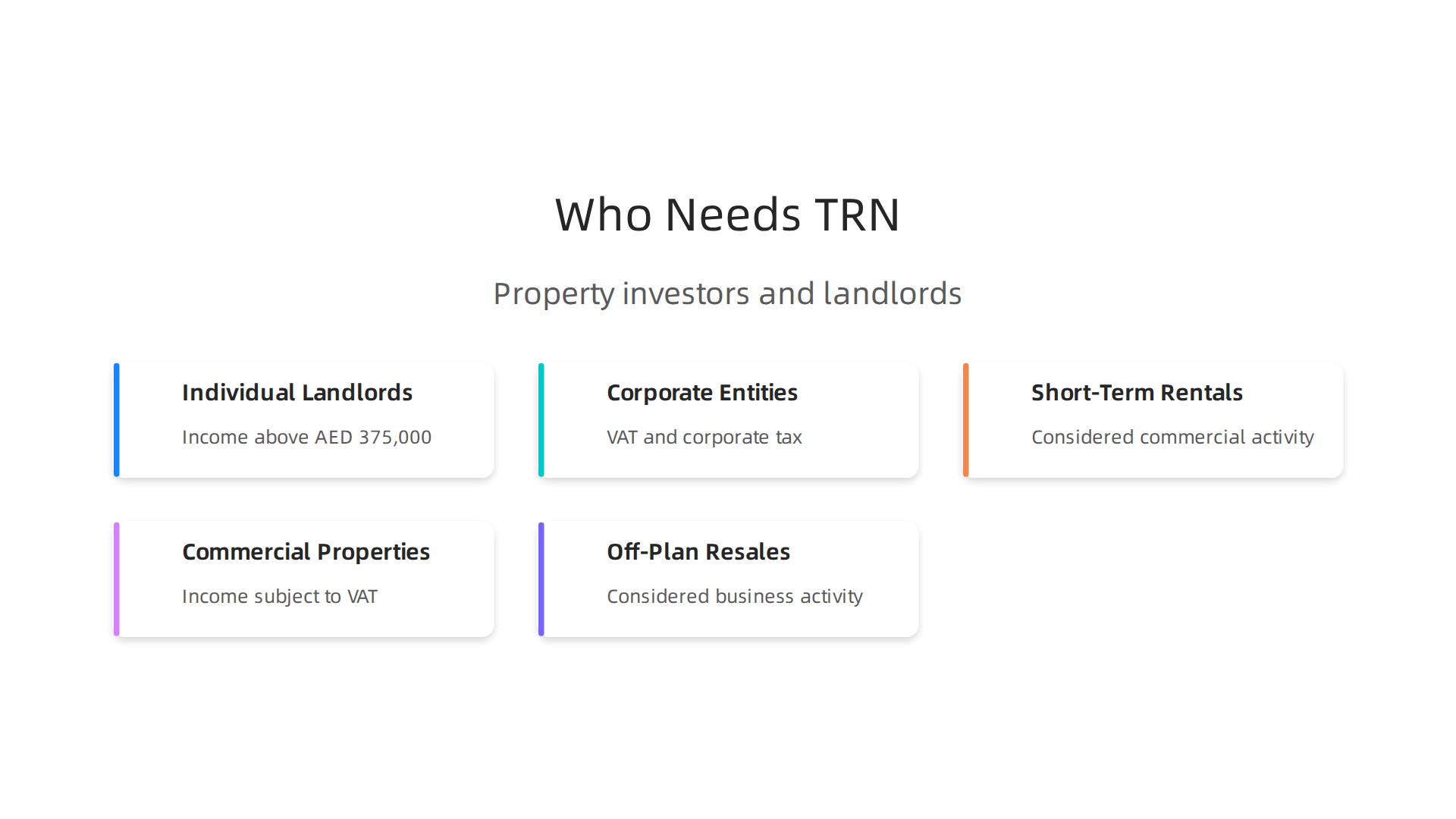
Not everyone needs one, but many who deal with property in Dubai and the wider UAE do.
Property Investors and Rental Income
If you are a property investor involved in renting out properties, selling them, or developing new ones, you will likely need a TRN.

This is especially true if your activities are seen as a business. For example, if your yearly income from taxable supplies goes over AED 375,000, VAT registration becomes a must. This means you will need a TRN to collect and pay Value Added Tax (VAT) on your rental income. The Federal Tax Authority (FTA) makes it clear that VAT registration is required if your business makes taxable supplies in the UAE and meets the threshold Federal Tax Authority – Registration For VAT.
It is not just about VAT. All businesses in the UAE, even small ones, generally need to register for corporate tax. This applies if you are running a property business or getting significant income from real estate. This includes corporate entities that own property for rental or sale, and even individuals if their real estate activities are considered a business. For instance, companies must register for corporate tax and get a TRN, regardless of their size, to follow the rules set in 2026 Corporate Tax Registration in 2026 – The Total CFO.
Different Rules for Different Owners
The rules can be a bit different for individual landlords compared to bigger companies.
- Individual Landlords: If you are an individual renting out property, you generally need to register for VAT if your annual rental income goes above the AED 375,000 threshold. For corporate tax, individuals earning income from real estate investment are mostly excluded, unless their total business turnover crosses certain limits. This helps to show how to file taxes as a business owner when you are an individual.
- Corporate Entities: Companies that own properties for rent or sale will need to register for both VAT and corporate tax if they meet the conditions. The mandatory VAT registration threshold is AED 375,000, but corporate tax registration is required for all UAE businesses making taxable income Is Tax Registration Mandatory in UAE 2026? Official Thresholds.
Special Situations for Property
Some specific situations also call for a TRN:
- Short-Term Rentals: If you rent out properties for short periods, like holiday homes, this is often seen as a commercial activity. This usually means you will need to register for VAT if your income reaches the threshold.
- Commercial Properties: Income from commercial properties such as offices, warehouses, or serviced apartments is generally subject to VAT, meaning a TRN is likely needed if the threshold is met Understanding Taxes for UAE Property Investment: A Simple Guide.
- Off-Plan Resales: If you are buying and selling off-plan properties as a regular business activity, you may also need a TRN to manage the income taxes for business dealings.
Knowing these details is crucial for making sure you are on the right side of the law. If you are a property investor, getting a Tax Registration Number is a vital step in your journey. You might also find it helpful to learn about how UAE corporate tax affects your Dubai property investment structure. This helps you understand all your tax duties.
If you are looking to invest in Dubai real estate or need help with your current property, getting expert advice can make a big difference.
Connect with Ayaz Salman for a FREE Dubai Real Estate Consultation.
Once you know a Tax Registration Number (TRN) is needed for your property dealings in Dubai, the next step is to get one. This process is mostly done online through the Federal Tax Authority (FTA) portal called EmaraTax. It is important to do this right to handle your income taxes for business properly.
Step-by-Step Guide to Obtaining Your TRN
Getting your tax registration number is straightforward if you follow the steps carefully.
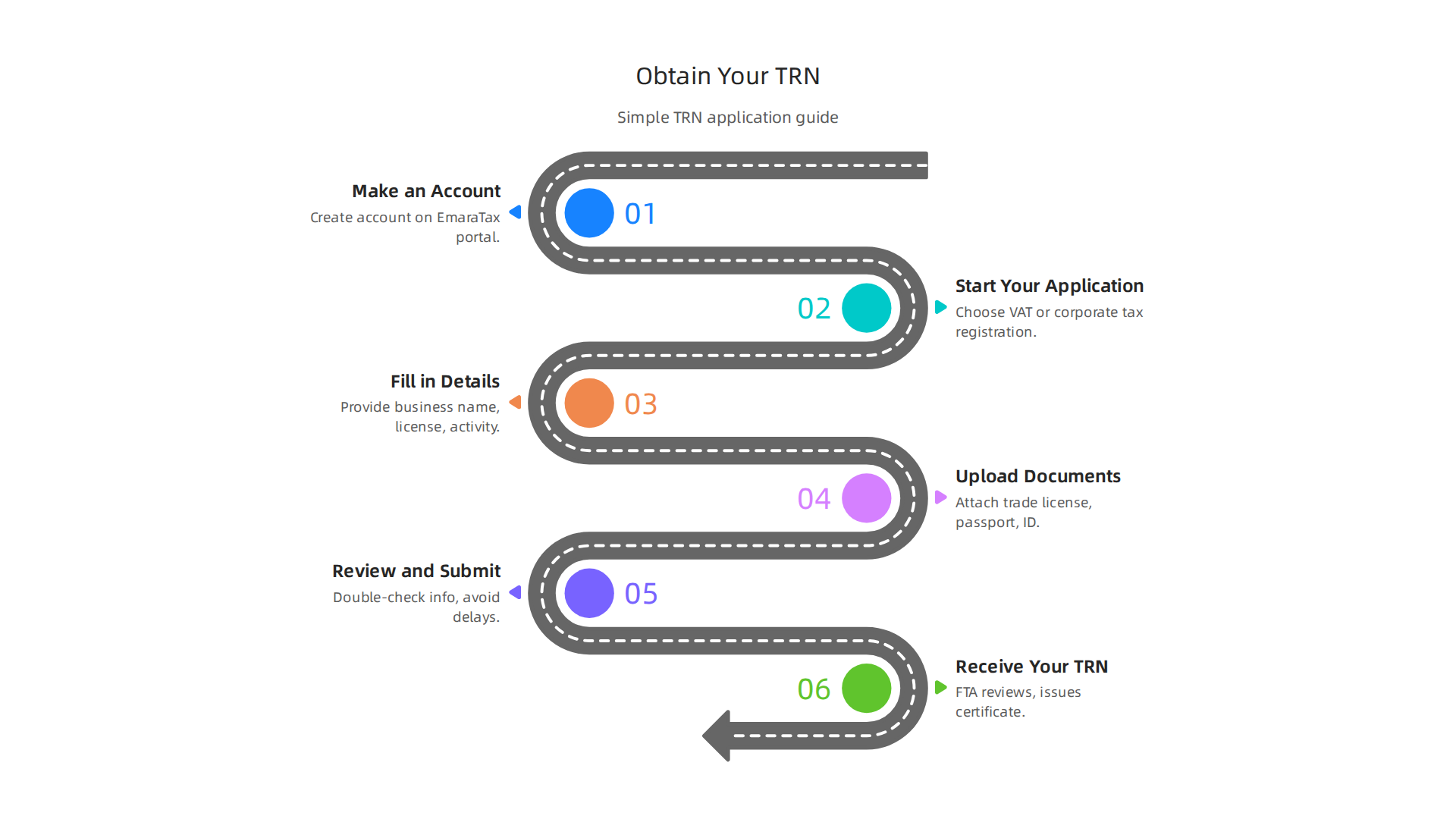
Think of it like setting up an online account for any other service. This is how you will file taxes for a business in the UAE.
Here are the main steps:
- Make an Account: First, you need to create an account on the EmaraTax portal. This is your main place for all tax matters in the UAE. You will need to give your email and set up a password.
- Start Your Application: Once you log in, you will find the option to apply for a TRN. You will need to choose if you are applying for VAT registration or corporate tax registration. Sometimes, you might need both.
- Fill in Details: The application form will ask for lots of information about you or your company. This includes your business name, license number, what your business does, and when your financial year starts and ends.
- Upload Documents: You will need to attach important papers. These often include a copy of your trade license, passport or Emirates ID, and details about your bank account. For companies, you might also need documents like a Certificate of Incorporation. Having all your documents ready can help avoid delays VAT Registration UAE 2026: Documents, Process & AED 199.
- Review and Submit: Before sending your application, double-check everything. Make sure all the information is correct and all required documents are attached. Mistakes can cause your application to be delayed.
- Receive Your TRN Certificate: After you submit, the FTA will review your application. This usually takes a few days. If everything is good, you will get your TRN certificate. This certificate will have your unique Tax Registration Number. The whole process can take about 3 to 5 days if all documents are clear VAT Registration UAE 2026: Requirements, Process & Timeline.
Getting your TRN is a key step to becoming a compliant property investor or landlord in the UAE. It helps you prepare for how to file taxes as a business owner and manage your finances correctly. For more details on what comes after getting your TRN, you might want to learn about how to file business taxes for your Dubai property company including corporate tax and VAT.
After you have followed the steps to apply for your Tax Registration Number (TRN), the next big part is gathering all the correct documents. Having everything ready before you start can make the process much smoother. The Federal Tax Authority (FTA) is very clear about what they need to process your application, whether you are an individual or a company Federal Tax Authority – Value Added Tax (VAT) Registration. This helps you properly handle your income taxes for business and shows you know how to file taxes for a business in the UAE.
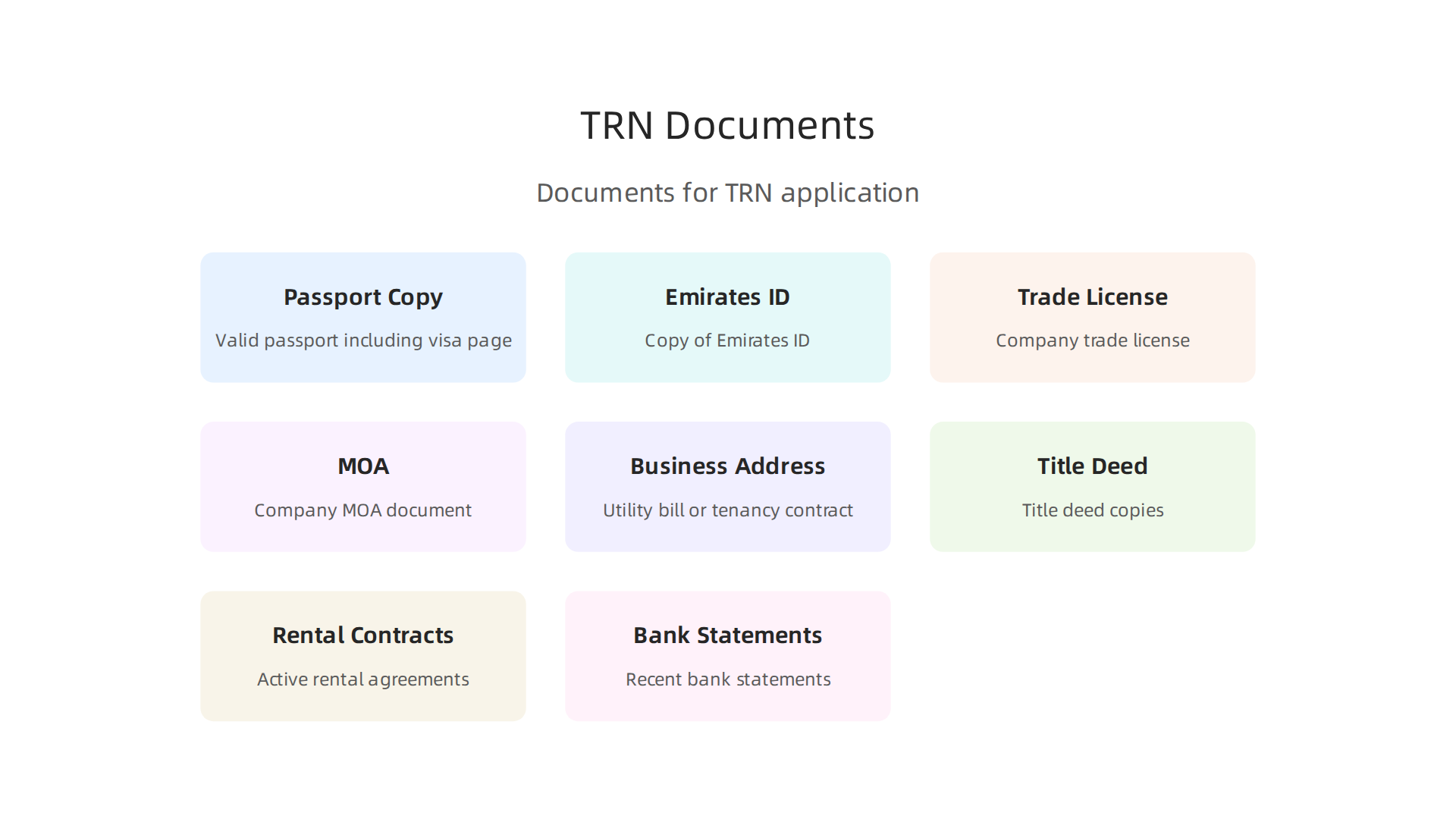
Here is a simple list of the documents you will likely need for your TRN application, depending on who is applying:
For Individual Applicants
If you are an individual property owner or investor, you will typically need these personal documents:
- Passport Copy: A clear copy of your valid passport, including your visa page if you are not a UAE citizen.
- Emirates ID: A copy of your valid Emirates ID card, both front and back.
- Tenancy Contract: If you are renting out a property, a copy of your Ejari registered tenancy contract might be asked for. This shows your connection to the property.
Having these ready will help speed up your application for a tax registration number.
For Corporate Applicants
If your property dealings are under a company name, you will need more business-specific documents. These help the FTA understand your company’s structure and activities. This is key for companies learning how to file taxes as a business owner.
- Trade License: A copy of your company’s valid trade license from the relevant licensing authority in Dubai or the UAE. This proves your business is legally registered.
- Memorandum of Association (MOA): This document outlines the company’s structure, goals, and rules. It is crucial for corporate tax registration in 2026 Corporate Tax Registration in 2026 – The Total CFO.
- Proof of Business Address: Documents like a utility bill or tenancy contract for your office space can prove your company’s registered address.
Additional Documents for Property Investors
Since your focus is on property investment in Dubai, you might also need to provide documents related to your properties. These are important for the FTA to understand your property income and activities.
- Title Deed: Copies of the title deeds for the properties you own in Dubai. This shows you are the legal owner.
- Rental Contracts: Copies of any active rental agreements for your properties, if you are a landlord. This helps show your rental income.
- Bank Statements: Recent bank statements (usually for the last 6 to 12 months) for the bank account linked to your property business. This helps show your financial activity and income taxes for business.
Making sure all your documents are complete and accurate is super important.

Incomplete paperwork is a common reason for delays when applying for your tax registration number. Prepare these documents carefully to ensure a smooth TRN application.
If you are looking for personalized guidance on your Dubai property investments or navigating tax requirements, consider connecting with an expert.
FREE Dubai Real Estate Consultation
Even with all your documents ready, some common mistakes can still cause problems when you apply for your tax registration number. Knowing what these mistakes are can help you avoid them and ensure a smooth process.
Here are some common errors and how to steer clear of them:
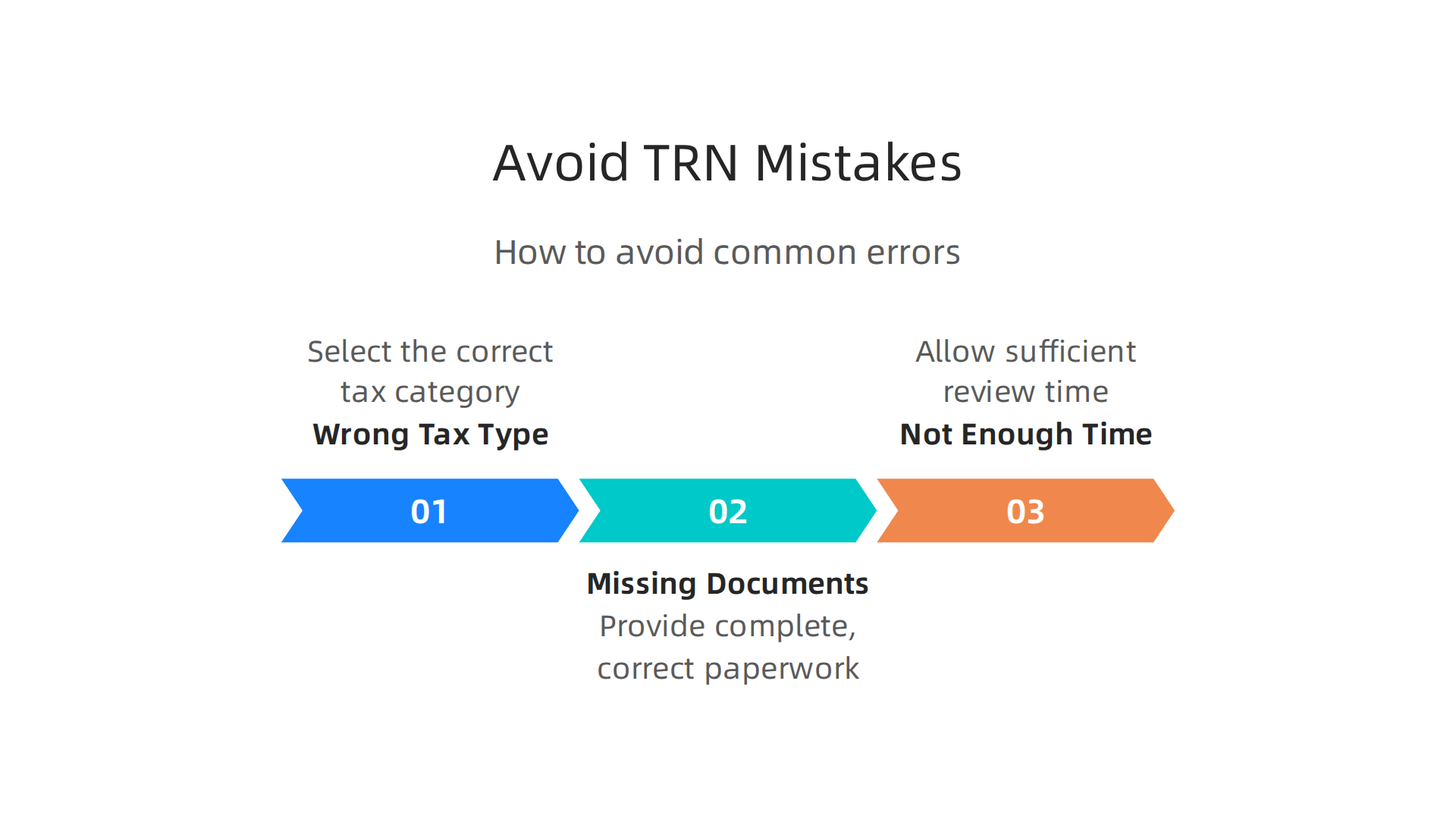
Choosing the Wrong Tax Type
One big mistake people make is picking the wrong kind of tax. In Dubai, you might need to register for VAT (Value Added Tax) or for corporate tax, especially if you have a company. Knowing the difference is important for managing your income taxes for business.
If you are a property investor, your activities might fall under corporate tax rules, which are important in 2026, or VAT if your rental income goes over a certain amount. Make sure you understand which type of tax applies to your specific situation. This helps you know how to file taxes as a business owner properly and avoid issues later on.
Missing or Incorrect Documentation
We talked a lot about documents before, but it is worth saying again: wrong or missing paperwork is a huge reason applications get delayed or even rejected. Even a tiny mistake in your documents can cause your application for a tax registration number to get sent back. For example, if your Emirates ID copy is blurry, or if a date is wrong on your rental contract, the FTA might ask for corrections. In fact, many e-invoices in the UAE get rejected because of incorrect or missing TRN details, which shows how crucial accuracy is Why Do UAE E-Invoices Get Rejected? The 10 Most Common Mistakes.
Always double-check every paper and make sure all information is correct and clear before you submit your application. This step is key for learning how to file taxes for a business without problems.
Not Planning Enough Time
Getting your tax registration number takes time. Many people underestimate this. If you are waiting for your TRN to close a property deal or start a new rental agreement, delays can mess up your plans. The FTA needs time to review everything. If you apply at the last minute, you might find yourself in a rush, which can cause issues with your property transactions. It is smart to apply well before you actually need the tax registration number. This way, you avoid any last-minute stress and ensure everything goes smoothly.
After getting your tax registration number, it is important to understand how it impacts your property deals. When you invest in property in Dubai, the rules for Value Added Tax, or VAT, can be tricky. Knowing these rules is key to handling your taxes correctly and avoiding problems.
VAT Differences: Residential vs. Commercial Property
One of the most important things to know is that VAT treatment is different for residential and commercial properties. This means how you deal with VAT depends on the type of property you own or rent out.
- Residential Properties: Generally, if you are selling or renting out residential property, it is usually exempt from VAT. This means you do not add VAT to the rent or sale price, and you cannot claim back any VAT paid on costs related to that property. This applies to most homes, apartments, and villas used for living.
- Commercial Properties: On the other hand, commercial properties, like offices, shops, or warehouses, are typically subject to VAT. If you sell or rent out a commercial property, you usually need to charge 5% VAT on the transaction. This also means you might be able to reclaim VAT on costs related to your commercial property.
It is important to keep up with these rules, as the UAE introduced new VAT changes starting January 1, 2026, to make tax steps simpler and improve how well people follow the rules UAE VAT Changes 2026: Impact on Businesses and Individuals.
Why Your TRN Matters for VAT in Property
Your tax registration number (TRN) is very important for handling VAT in property transactions, especially for commercial properties. Here is why:
- Issuing Tax Invoices: If your commercial property is subject to VAT, you must issue proper tax invoices that show your TRN. These invoices are official documents that buyers or renters need for their own tax records. Without a TRN, you cannot legally issue these invoices.
- Reclaiming Input VAT: When you spend money on your commercial property, for things like repairs or services, you might pay VAT on those costs. This is called input VAT. If you have a TRN and are VAT registered, you can often reclaim this input VAT from the Federal Tax Authority (FTA). This helps reduce your overall costs.
Understanding these details helps you handle your income taxes for business more effectively and correctly file taxes as a business owner in Dubai. For property investors, having a TRN and knowing the VAT rules ensures you follow the law and manage your property investments wisely. You can also explore strategies to optimize your taxes to keep more of your rental income.
If you are looking for personalized advice on navigating property taxes and VAT in Dubai, help is available.
Connect with Ayaz Salman for a FREE Dubai Real Estate Consultation.
After getting your tax registration number (TRN) and understanding how VAT works for your properties, your journey as a property investor in Dubai continues. You need to follow certain rules to make sure you stay on the right side of the law. This is called compliance, and it is very important to avoid problems.
Post-Registration Obligations and Compliance
Once you have your tax registration number, you have ongoing duties.
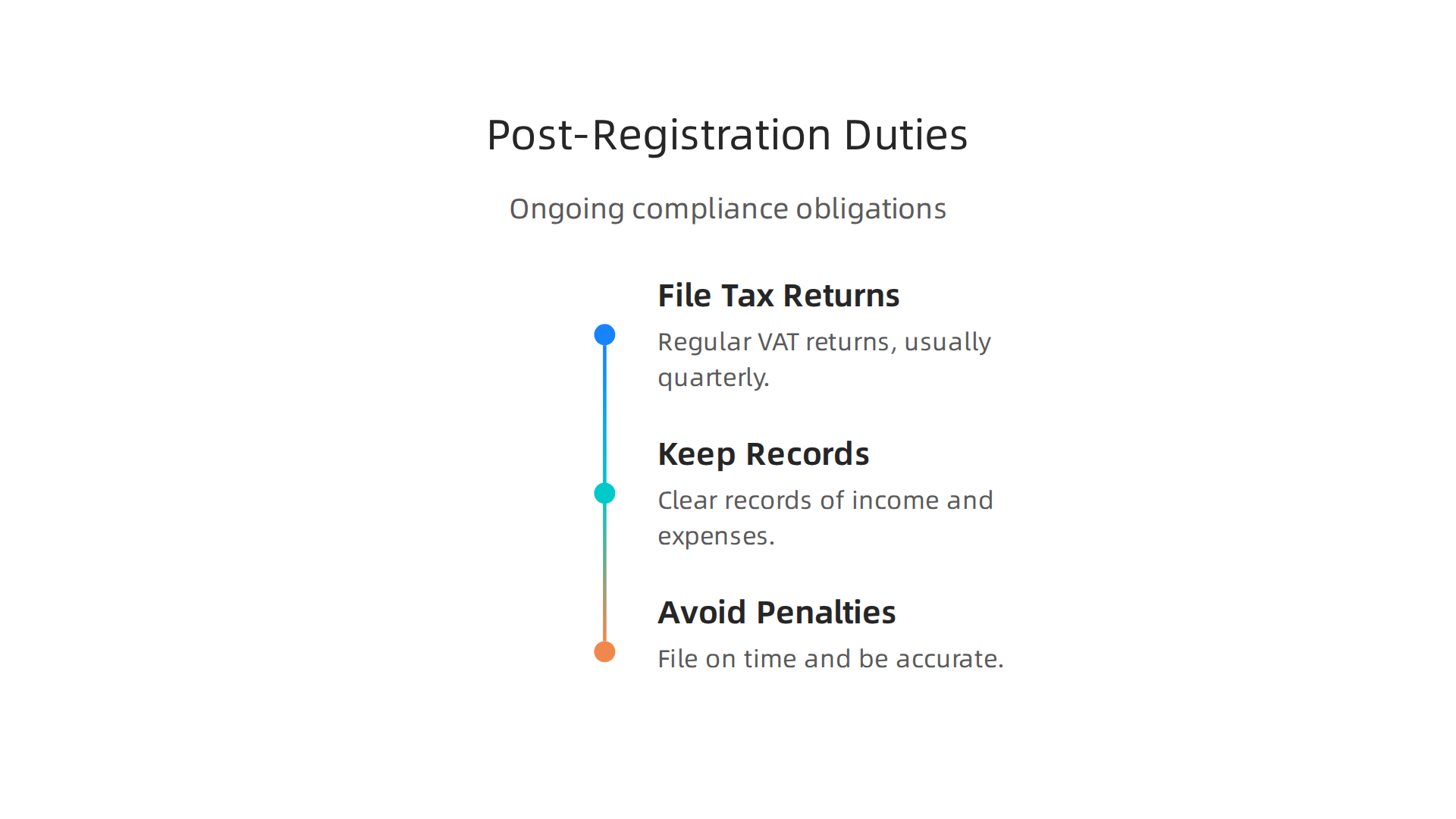
These are like regular tasks you need to do to keep your tax matters in order.
Filing Periodic Tax Returns
One of your main jobs is to file regular VAT returns. If you own commercial property that collects VAT, you will typically need to send these reports to the Federal Tax Authority (FTA) every three months. These returns tell the government how much VAT you collected from tenants or buyers and how much VAT you paid on your business costs. It is how you officially report your VAT activities. Making sure you know how to file taxes for a business helps keep things smooth.
Keeping Accurate Records
It is a must to keep very clear and complete records of all your property money dealings. This means saving all your invoices for income and expenses, bank statements, and any other papers related to your property business. Good records help you show the government exactly how you calculated your VAT and other income taxes for business. They are also key if you want to reclaim any input VAT you paid. Be careful, as missing or wrong tax registration numbers on your invoices can cause them to be rejected Why Do UAE E-Invoices Get Rejected? The 10 Most Common ….
Avoiding Penalties
The UAE takes tax compliance seriously. If you do not file your tax returns on time, or if you do not tell the full truth about your tax information, you could face big fines. These penalties can add up quickly and eat into your property investment profits. So, it is always better to be on time and accurate with all your tax duties. Taking care of these things correctly means you manage your property business well and avoid costly mistakes.
If you are looking for personalized advice on navigating property taxes and VAT in Dubai, help is available. Connect with Ayaz Salman for a FREE Dubai Real Estate Consultation.
After understanding your post-registration duties like filing VAT returns and keeping good records, you might still have some questions. It’s normal to wonder about the specifics of your tax registration number (TRN) when dealing with property investments in Dubai. Here are some common questions property investors ask.
Frequently Asked Questions About TRN for Property Investors
Let’s clear up some common doubts about your tax registration number and property investment.
Can I use my personal TRN for rental income from multiple properties?
Generally, a personal TRN is linked to an individual’s tax identity, not a business one. If your properties are for personal use or non-commercial short-term rentals below the VAT threshold, your personal tax situation applies. However, if you are running a commercial property business with multiple units or renting out properties in a way that generates significant income and falls under the VAT rules for commercial activity, you will likely need a separate TRN for your business entity. The Federal Tax Authority (FTA) has guidelines for Real Estate Investment For Natural Persons, but for VAT purposes, the nature and scale of your activity matter. It is important to know that commercial real estate income can be subject to VAT if it meets certain conditions.
Do foreign investors need a TRN for properties bought through offshore companies?
Yes, if the offshore company is considered to be conducting business in the UAE and meets the conditions for tax registration, it will likely need its own TRN. The rules here can be a bit tricky because they depend on how the company is set up, where it is based, and the type of income taxes for business it earns. For example, if an offshore company owns commercial property in Dubai and collects VATable rent, it would need to register for VAT. When considering your investment structure, it’s wise to look at all Key UAE Real Estate Tax Investment Considerations to make sure you’re compliant.
What is the difference between TRN and the real estate registration (DLD) reference?
These are two very different things, though both are important for property owners in Dubai.
- TRN (Tax Registration Number): This is a unique number given to you by the Federal Tax Authority (FTA). It is used for all your tax matters, like filing VAT returns or corporate tax. Think of it as your tax ID with the government. It helps the FTA keep track of your tax payments and reports.
- DLD (Dubai Land Department) Reference: This is a number related to the registration of your property with the Dubai Land Department. Every property transaction and ownership record in Dubai gets a unique reference number from the DLD. This number confirms your legal ownership of the property and is used for things like buying, selling, or registering a lease.
Simply put, your TRN is for taxes, and your DLD reference is for proving property ownership and its official records. Both are key parts of how to handle property in Dubai. If you’re new to the market, learning how to start investing in real estate in Dubai means understanding these distinctions.
Summary
This article explains the UAE Tax Registration Number (TRN) and why every Dubai property investor, landlord or property company should understand it in 2026. It defines the TRN, shows who must register (including VAT registration at the AED 375,000 threshold and corporate tax requirements), and highlights special cases like short‑term rentals, commercial property and off‑plan trading. The guide walks you through the EmaraTax application process, lists the documents individuals and companies need, and flags common mistakes that delay approvals. You will also learn how TRN ties into VAT treatment for residential versus commercial property, what ongoing filing and record‑keeping duties look like, and the penalties for non‑compliance. By following the steps and preparing the right documents, you can register confidently and keep your Dubai property tax affairs compliant.