
Best Small Business Tax Software for Dubai 2026: Compare Top Tools
· 21 min read

Running a small business in Dubai comes with plenty of rewards, but keeping up with the tax rules can feel like a second job. Between VAT registration, corporate tax filings, and staying on top of the Federal Tax Authority’s changing demands, it is easy to feel overwhelmed. The UAE introduced new VAT amendments starting January 2026, which means getting your numbers right the first time matters more than ever.
This is where the right software for small business taxes makes a real difference. A solid taxes software for small business can track your sales software tax, handle software for sales tax calculations in seconds, and simplify the entire process of filing business taxes online. It helps you avoid costly mistakes, saves hours of manual work each month, and gives you peace of mind that your business is fully compliant.

Whether you run a small retail shop, a growing consultancy, or manage rental income from a property portfolio, understanding your tax obligations is critical. If you own real estate in Dubai, we have a complete guide on how to file taxes for business that walks you through the entire process step by step.
Tax rules for Dubai property investments can be especially tricky to navigate. If you want personalized advice on how recent tax changes affect your holdings, consider booking a FREE Dubai Real Estate Consultation with our expert.
In this guide, we provide an honest, data-driven comparison of the top tax software solutions built for Dubai small businesses in 2026. Our goal is to help you find the perfect tool for your specific needs so you can spend less time on paperwork and more time growing your business.
Understanding Tax Obligations for Small Businesses in Dubai in 2026
Before you choose any software for small business taxes, you need to know exactly what you are up against. Dubai’s tax system in 2026 comes down to two main requirements: VAT and Corporate Tax.
Getting both right means you avoid penalties and keep your business running smoothly.
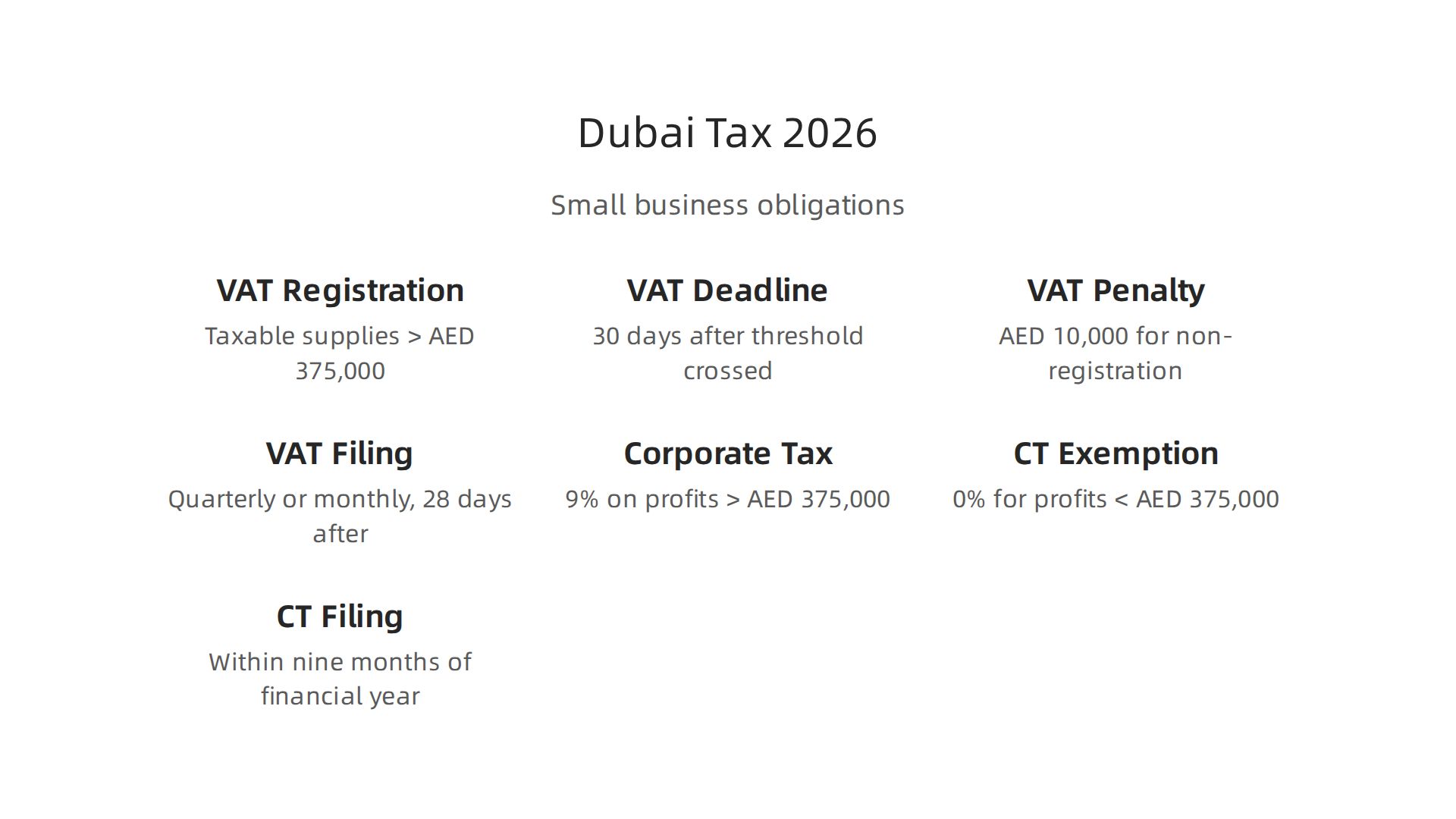
VAT registration is the first hurdle. If your business makes taxable supplies and imports worth more than AED 375,000 in a year, you must register for VAT with the Federal Tax Authority. You have only 30 days after crossing that threshold to apply. Fail to do so and you face a penalty of AED 10,000. If your turnover is between AED 187,500 and AED 375,000, you can choose to register voluntarily. That can be a smart move for startups that want to recover VAT on early costs. The full VAT registration UAE 2026 procedure breaks down exactly what you need to submit and how to use the EmaraTax portal.
Once registered, you must file VAT returns quarterly or monthly, depending on your annual turnover. Businesses with turnover under AED 150 million file quarterly, while larger ones file monthly. Each return is due within 28 days after the tax period ends. You also need to keep all records for at least five years. The good news is that the right taxes software for small business automates most of this work, from calculating the 5% VAT rate to generating the audit file the FTA expects.
Corporate Tax is the second big change. Since June 2023, the UAE has a federal Corporate Tax of 9% on profits above AED 375,000. Small businesses with taxable profits below that threshold pay 0%. There are also exemptions for certain small business categories, but you still need to file a return every year. This applies to most legal structures, including sole proprietorships and companies, unless you run a qualifying free zone entity. The 9% rate is low compared to many countries, but the filing requirements are strict. You must submit your corporate tax return within nine months after the end of your financial year.
All of this adds up to one thing: you cannot rely on spreadsheets and guesswork anymore. The FTA expects accurate, audit-ready records for both VAT and Corporate Tax. That is where a solid software for sales tax or an all-in-one filing business taxes online platform becomes your best friend. Understanding these obligations first helps you pick a tool that actually solves your problems instead of creating new ones.
If you own property in Dubai, the rules get a little more detailed. Corporate Tax can affect how you structure your real estate investments, so it pays to understand the full picture. Check out how UAE corporate tax affects your Dubai property investment structure for a deeper look at scenarios that matter to landlords and property companies.
Key Features to Look for in Small Business Tax Software
Now that you understand your tax duties, the next step is picking the right tool.

The market is full of options, but not all of them are built for Dubai’s rules. You need a platform that handles VAT, Corporate Tax, and the FTA’s expectations without headaches. Here are the features that actually matter.
Core Features You Cannot Skip
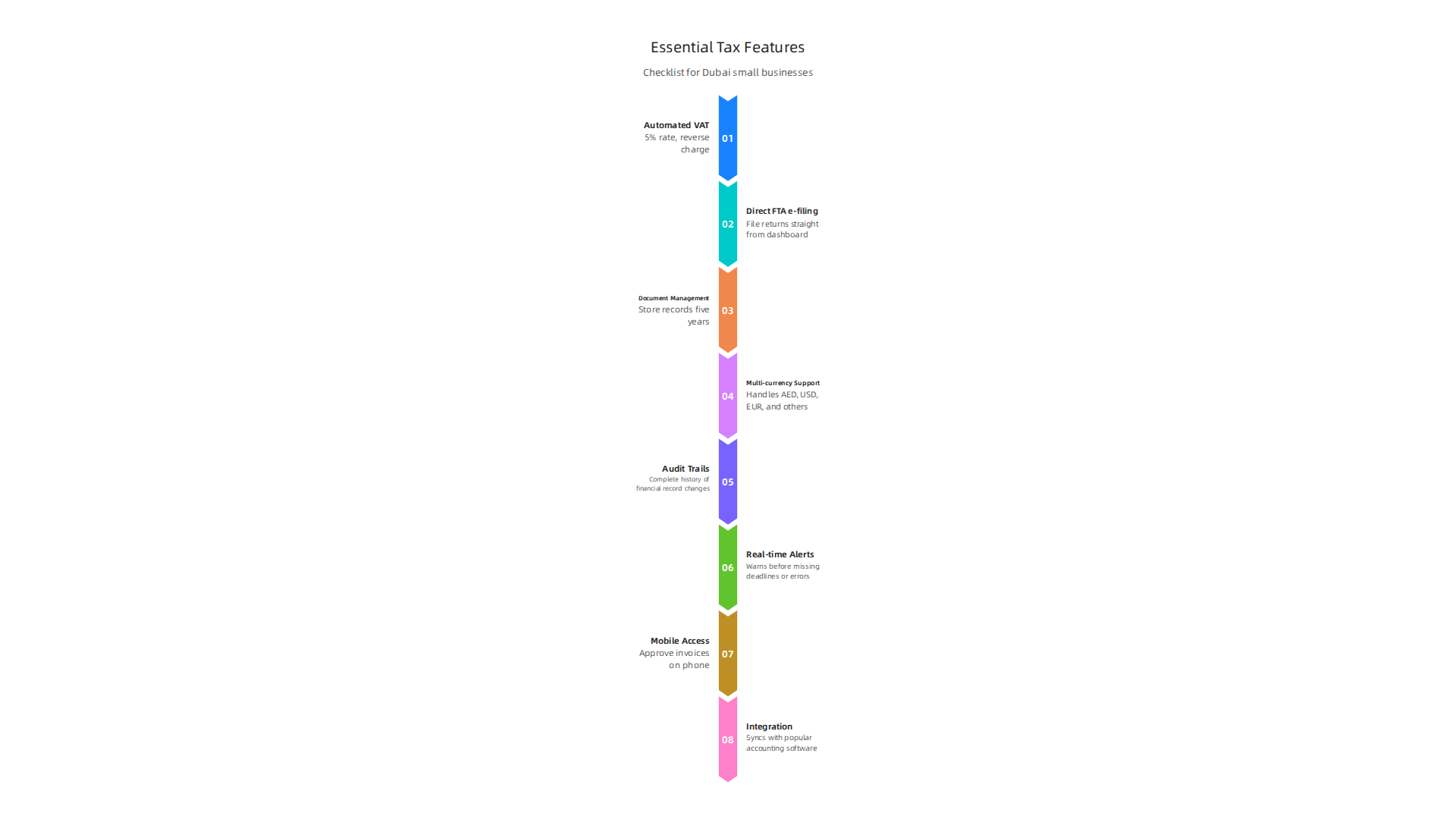
Automated VAT calculations are the number one must-have. Your software should apply the 5% VAT rate automatically on every invoice and purchase. No manual math, no rounding errors. The best tools also handle reverse charge mechanisms for cross-border transactions, which is common if you trade with other GCC countries.
Direct FTA e-filing integration saves you from logging into the EmaraTax portal separately. Your software should let you file VAT returns and Corporate Tax returns straight from the dashboard. That means less time copying numbers and fewer mistakes. Tools like Zoho Books and QuickBooks now have this feature built in for UAE businesses.
Document management is another core requirement. The FTA demands you keep records for at least five years. Your software should store all invoices, receipts, and tax returns in one secure place. You should be able to pull up any document in seconds if the FTA asks for an audit.
A good guide on the best sales tax software for ecommerce in 2026 explains that address-level accuracy and product-specific tax rules are also critical if you sell goods in different emirates or online.
Advanced Features for Growing Businesses
Multi-currency support matters if you deal with international clients or suppliers. Dubai is a global hub. Your software should handle AED, USD, EUR, and others, converting them automatically while applying the correct VAT rules for each transaction.
Audit trails give you a complete history of every change made to your financial records. This is not just a nice feature, it is essential for FTA compliance. If the tax authority asks why a number changed last month, you can show them exactly who made the change and when.
Real-time compliance alerts warn you before you miss a deadline or make a mistake. For example, if your quarterly VAT return is due in 10 days, the software should notify you. If a transaction looks like it needs a tax code, the system should flag it. This keeps you from racking up penalties.
Usability That Makes Your Life Easier
Mobile access lets you check your tax status, approve invoices, or file returns from your phone. If you run a property business in Dubai, you are often on the move between viewings and meetings. A mobile-friendly dashboard keeps you in control wherever you are.
Dashboard clarity means you can see your tax liabilities, upcoming deadlines, and cash flow at a glance. Complicated charts and clutter just slow you down. Look for tools that show you what matters most in plain language.
Integration with popular accounting software is a must. Zoho Books and QuickBooks are the two most common choices for UAE small businesses. Your tax software should sync seamlessly with them. That way, every sale, expense, and tax calculation flows automatically into your books without double entry. The UAE SME accounting software comparison guide for 2026 highlights integration capabilities as a top feature for stress-free compliance.
For property investors, these features become even more important. You have multiple properties, tenants, and maintenance costs to track. The right software helps you separate personal and business expenses and claim every legitimate deduction. If you want to dive deeper into claiming deductions on your Dubai property, check out this guide on how to claim business write-offs for taxes on Dubai property.
Putting It All Together
The best software for small business taxes does more than just crunch numbers. It automates VAT, files directly with the FTA, keeps perfect records, and alerts you before trouble hits. It also works on your phone and connects to the tools you already use.
When you invest in a solid platform, you stop worrying about penalties and start focusing on growing your business. And if you are navigating Dubai’s property market, getting the right tax setup is just one piece of the puzzle.
If you want personal guidance on your Dubai real estate investments, you can get a FREE Dubai Real Estate Consultation with Ayaz Salman. He can help you structure your property portfolio to work smoothly with both VAT and Corporate Tax rules.
Top Tax Software Solutions for Dubai Small Businesses in 2026
Now that you know what features matter most, let’s look at the actual tools. The market offers several strong options, but your choice depends on your business size, industry, and budget. Here are the top software for small business taxes solutions that work well for Dubai companies in 2026.
Zoho Books
Zoho Books is often the best starting point for cost-conscious businesses. It has a completely free plan for one user plus one accountant.
That is rare in this market. Paid plans begin at around AED 60 per month, which makes it one of the most affordable taxes software for small business options out there.
The free tier includes core accounting, invoicing, and bank reconciliation. More importantly for Dubai businesses, Zoho Books has built-in UAE VAT support and FTA audit file generation right out of the box. You do not need expensive add-ons to stay compliant. The Standard plan at AED 60 per month supports three users, while the Professional plan at AED 90 per month adds project billing and multi-currency features. According to a recent QuickBooks vs Xero vs Zoho: UAE Guide, Zoho Books leads on affordability while still delivering full UAE compliance.
For property investors, Zoho Books works well if you have multiple rental units. You can track each property as a separate project and assign expenses accordingly. The Zoho Books pricing comparison shows the Premium plan at AED 120 per month supports ten users, which is plenty for a growing real estate portfolio.
QuickBooks Online
QuickBooks Online is the most recognized name in small business accounting. Plans start around AED 50 per month for the Simple Start tier. The Essentials plan runs about AED 75 per month and adds bill management and multiple currencies. QuickBooks is built for growth.
The platform also offers direct FTA e-filing for both VAT and Corporate Tax returns. Its reporting engine is more powerful than most competitors. You can generate custom reports on rental income, vacancy rates, and property expenses with a few clicks. The mobile app is solid too, which helps when you are managing properties on the go.
The main downside is price. QuickBooks has raised its rates several times over the past few years. But if you value brand familiarity and advanced reporting, it remains a strong choice.
Xero
Xero has a clean, modern interface that many business owners find easier to navigate. It does not have a free plan, but paid tiers start at around AED 50 per month. The Growing plan at AED 100 per month includes multi-currency and project tracking.
Xero connects with hundreds of third-party apps, so you can build a custom workflow. However, UAE VAT and FTA compliance may require additional paid add-ons. A detailed Quickbooks vs Zoho Books vs Xero vs Wave in June 2026 comparison shows Xero shines in user experience and integrations but costs more to reach full UAE compliance compared to Zoho Books.
Xero is best for service-based businesses and property investors who value design and are willing to invest in add-ons for full tax compliance.
Wave
Wave is completely free for core accounting and invoicing. That is hard to beat. It has no monthly subscription fees. You only pay transaction fees if you accept credit card payments through the platform.
The catch is that Wave does not have native UAE VAT or FTA support. You would need to manually configure tax codes and export reports yourself. That is manageable for a freelancer or very small business with simple tax needs. But if you file quarterly VAT returns or have multiple properties, the manual work will eat up your time savings.
Wave works best as a starter tool for solopreneurs testing the waters with their first Dubai business.
Which One Should You Pick?
Here is a simple breakdown:
| Tool | Starting Price | UAE VAT Ready | FTA e-Filing | Best For |
|---|---|---|---|---|
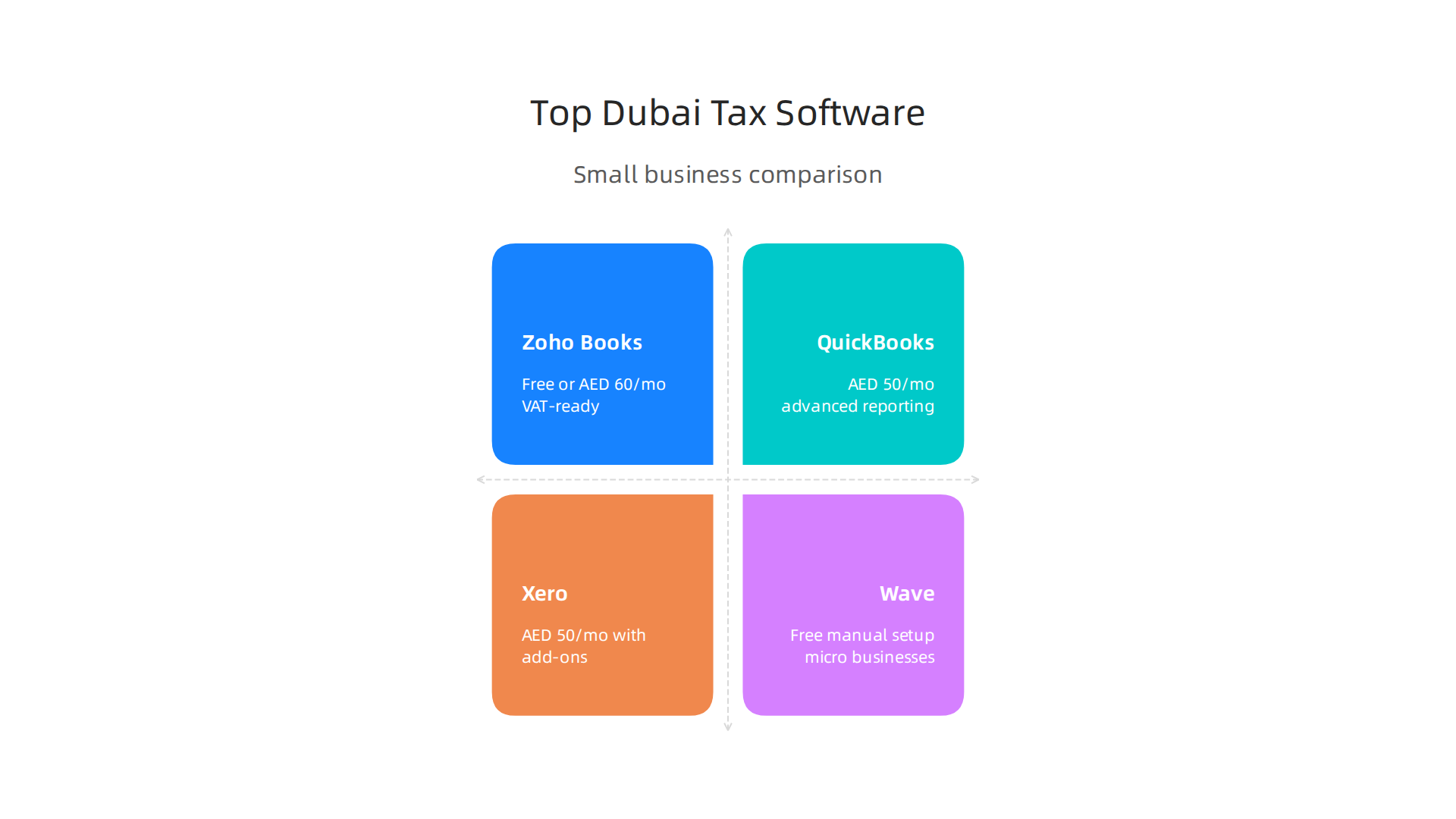
| Zoho Books | Free or AED 60/mo | Yes | Yes | Budget-conscious SMEs, property investors |
| QuickBooks | AED 50/mo | Yes | Yes | Growing businesses, advanced reporting |
| Xero | AED 50/mo | With add-ons | With add-ons | UX lovers, integration-heavy workflows |
| Wave | Free | Manual setup | No | Freelancers, micro businesses |
For property investors specifically, Zoho Books offers the best balance of cost and compliance. QuickBooks is better if you need advanced reporting across multiple properties. Xero is worth the investment if you value a beautiful interface and plan to connect many apps.
No matter which software for small business taxes you pick, the key is getting set up correctly from day one. A wrong tax code or missed deadline can cost you far more than the software subscription itself.
If you want personalized advice on structuring your Dubai property investments for tax efficiency, reach out for a FREE Dubai Real Estate Consultation. Ayaz Salman can help you match the right software setup with your investment goals.
How to Ensure Full Compliance with FTA Requirements Using Software
Picking the right tool is only half the battle. You also need to use it correctly. The UAE Federal Tax Authority has strict rules about how your software must handle data. If your system does not meet these standards, you risk penalties even if your numbers are correct.
Here is what your software needs to do to keep you fully compliant.
Automatic VAT Calculation and Filing
The biggest source of tax errors is manual math. When you enter a transaction, your software should instantly calculate the correct VAT amount. It should know which items are taxable at 5%, which are zero-rated, and which are exempt. This removes guesswork.
The best tools also generate your VAT return automatically. You review it, confirm it, and send it to EmaraTax. No spreadsheets. No manual double-checking. As one guide on FTA tax accounting software guidelines explains, the software must build your return from every single invoice and payment record so nothing slips through.
Some platforms like Zoho Books now offer direct filing through EmaraTax. That means you never have to leave the software to submit your return. Transactions push straight to the FTA portal with one click.
Deadline Reminders and Document Tracking
Missing a filing deadline costs you money. The FTA charges late payment penalties that add up fast. Good software sends you reminders before each VAT quarter ends. It also flags missing documents like supplier invoices or credit notes.
You want a system that shows you a checklist of everything needed before you file. If a receipt is missing or a transaction looks incomplete, the software should tell you before the deadline, not after.
Integration with FTA Systems
By 2026, e-invoicing is mandatory for all VAT-registered businesses in the UAE. Your software must be able to connect directly with the FTA’s EmaraTax portal. This is not optional. The FTA requires invoices in a structured electronic format that the system can validate in real time.
FTA-approved solutions use certified connectors to push data automatically. They also generate the FTA Audit File (FAF), which auditors review during inspections. Without this file, you cannot prove your numbers are accurate.
If you are still using a manual system or generic software without FTA integration, now is the time to upgrade. The penalty for non-compliance is far higher than the cost of good software.
For a complete walkthrough of how to set up your filing process correctly, check this guide on how to file business taxes for your Dubai property company. It covers the exact steps from data entry to final submission.
Integration with Accounting and Payroll Systems
Once your software meets FTA requirements, the next big piece is how it fits with the rest of your financial tools. Good software for small business taxes should talk directly to your accounting platform and payroll system. When these systems connect, you stop typing the same numbers twice and reduce expensive mistakes.

Seamless Data Sync Eliminates Double Entry
The biggest time drain in tax preparation is manual data entry. You enter a sale in your accounting software, then re-enter it in your tax tool. Every time you touch the numbers, you risk a typo or omission. Integrated software fixes this by syncing transactions automatically. When an invoice posts in Xero or QuickBooks, the tax software sees it instantly and applies the right VAT rate.
This sync goes both ways. Your tax software can push calculated VAT totals back to your accounting dashboard, so your profit and loss reports always match your tax returns. No more reconciling spreadsheets at quarter end. As one comparison of UAE SME accounting software features points out, seamless integration with payroll, CRM, and inventory systems is a must-have for 2026 compliance.
Payroll Integration for Employee Tax Obligations
If you have staff, payroll integration is just as critical. The UAE requires accurate reporting of wages, social security contributions, and WPS (Wage Protection System) data. Your taxes software for small business should pull payroll records directly and use them to calculate any employer-related tax obligations.
When payroll and tax systems are disconnected, you have to manually check that every employee’s deductions are correct. That takes hours and leaves room for errors that can trigger FTA audits. With integration, the software handles the math and flags any mismatches before you file.
APIs and Marketplace Ecosystems
The best platforms in 2026 offer more than basic connections. They come with APIs that let you build custom links to property management tools, CRM platforms, and even bank feeds. Marketplaces like the QuickBooks App Store and Zoho Marketplace let you add pre-built connectors with one click.
For a Dubai property investor, this means your tax software can pull rental income from your property management system and match it against expenses tracked in your accounting tool. All the data flows into one place without extra work.
If this sounds complicated, you don’t have to figure it out alone. Get a FREE Dubai Real Estate Consultation and walk through the right setup for your business. For a deeper dive into how corporate tax rules affect your structure, read our guide on how UAE corporate tax affects your Dubai property investment structure.
Cost vs. Value: Choosing the Right Plan for Your Business
Now that you know how integration saves time, let’s talk money. Software for small business taxes comes in many price ranges. Some plans cost nothing. Others run hundreds of dollars each month. The trick is picking the one that fits your business without paying for features you will never use.

Pricing Models You Will See
Most taxes software for small business offers three pricing styles. The first is per month. You pay a flat fee each month, and it covers everything in that plan. The second is per return. You only pay when you file a tax return. This works well if you file quarterly or have just one property. The third is all-inclusive, where one price covers unlimited users, returns, and support.
Many platforms also give you a discount if you pay annually. For example, Zoho Books offers monthly and annual billing. If you pay yearly, the monthly cost drops. According to a detailed Zoho Books pricing comparison, the Standard plan costs $20 per month with monthly billing but only $15 per month when billed annually. That is a $60 saving each year for a small business.
Hidden Costs to Watch For
The sticker price is not the whole story. Some tools charge extra for setup fees. Others charge more for additional users or transactions. Premium support might require a higher tier. And if you need features like multi-currency or inventory tracking, you may have to move to a more expensive plan.
For example, QuickBooks Simple Start costs around AED 50 per month in the UAE. But if you need more than one user or inventory features, you jump to Essentials or Plus, which cost more. Zoho Books keeps it simpler, but it charges extra for add-ons like document auto-scans and expense claims. Always check what is included in the base price before you sign up.
The Real ROI of Good Software
Here is where value beats price. A cheap or free tool that takes hours to use actually costs you more in the long run. Every hour you spend wrestling with spreadsheets is an hour you could spend growing your business.
A real-world ROI analysis shows that switching from Excel to a paid tool like QuickBooks can save hundreds per month. One comparison of QuickBooks/Xero vs Wave/Zoho Free found that a small business paying $596 per month using Excel could save over $3,000 per year by moving to QuickBooks Simple Start. That is an ROI of over 800%. The time saved, penalty avoidance, and accurate filing more than justify the subscription cost.
Try Before You Commit
Most platforms offer free trials. Use them. Test how the software handles your real transactions. See if it syncs with your bank and accounting tools. The best software for small business taxes is the one you actually use consistently.
Before you decide, check how your plan handles deductions and write-offs. For a deeper look at maximizing deductions, read our guide on how to claim business write-offs for taxes on Dubai property. This will help you see the full value picture before you pick a plan.
Expert Tips for Seamless Implementation and Migration
Picking your plan is just the first step. The real work starts when you begin using the software. A smooth setup saves you headaches and keeps you compliant. Here are expert tips to get it right.
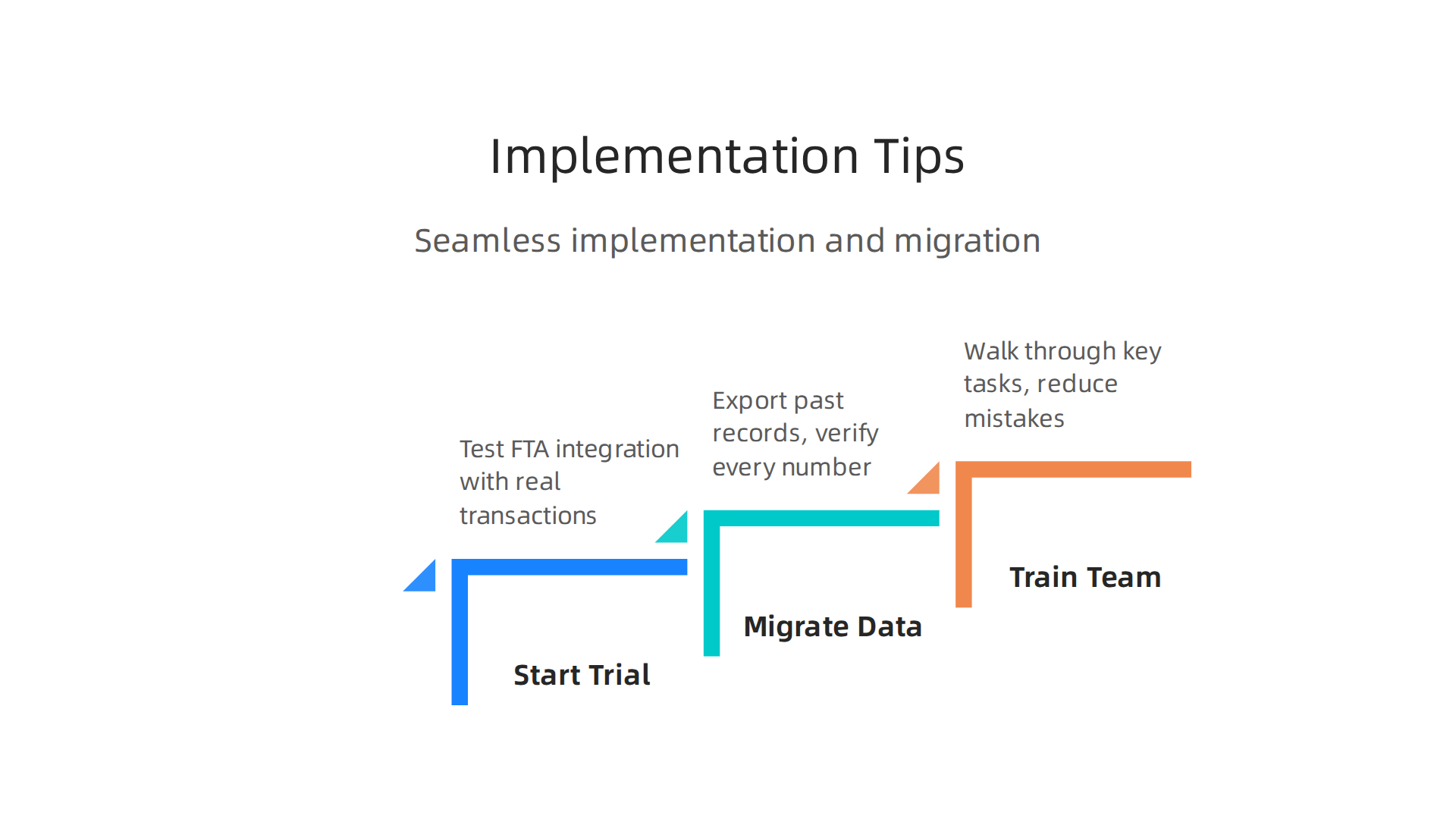
Start with a free trial to test FTA integration. Most platforms let you try before you buy. Use that time wisely. Test how the software handles your real transactions, especially VAT and corporate tax calculations. Check if it syncs with the UAE’s EmaraTax portal for filing. The last thing you want is a tool that looks great on paper but fails when you need to file. For a full picture of what 2026 compliance looks like, review the upcoming UAE business regulation changes for 2026, which include mandatory e-invoicing starting July 2026.
Migrate historical data with care. Moving from spreadsheets or an old system is risky if you rush. Export your past invoices, receipts, and bank records. Import them into the new software in small batches. Then verify every number. A small error in opening balances can snowball into incorrect VAT returns or tax filings. Run a trial balance after migration and compare it to your old records. If something doesn’t match, fix it before you start using the system for live transactions.
Train your team on the new workflow. Your software is only as good as the people using it. Many taxes software for small business providers offer webinars, video tutorials, or dedicated support for UAE users. Set aside an afternoon for your team to walk through the key tasks: creating invoices, recording expenses, and filing VAT returns. The more comfortable they are, the fewer mistakes you will see. If you need extra hands with your setup and filings, don’t hesitate to connect with a professional who knows the UAE market. Get your FREE Dubai Real Estate Consultation to discuss your specific needs and ensure your software migration goes smoothly.
Summary
This guide helps Dubai small business owners choose the right tax software for 2026 by explaining the local VAT and Corporate Tax rules, identifying must-have features, and comparing leading tools. You’ll learn registration thresholds, filing deadlines, and why e-invoicing and EmaraTax integration are now essential for compliance. The article walks through core and advanced features—automated VAT, audit trails, multi-currency, mobile access—and shows how Zoho Books, QuickBooks, Xero, and Wave stack up for different business sizes and budgets. It also covers integration with accounting and payroll, migration and setup tips, hidden costs to watch, and how to evaluate ROI so you pick a solution that saves time, reduces penalties, and supports property investment needs in Dubai.