Mastering Dubai Small Business Tax Strategies 2026
· 26 min read

Working for yourself can be very rewarding. But let’s be honest, taxes can feel like a big puzzle for many small business owners. It’s often hard to know what you can count as a business cost, how to manage your money so you’re ready for tax payments, and how to follow all the rules for things like sales tax. These money worries are very real, even here in Dubai.
For instance, in 2026, businesses in the UAE follow specific corporate tax rules. You pay 0% corporate tax on your profits up to AED 375,000. If your profits go over that amount, the rate becomes 9% UAE Corporate Tax for SMEs in 2026: Key Numbers and Deadlines. There’s also a special "Small Business Relief" for companies with yearly revenue less than AED 3 million Small Business Relief (Corporate Tax). But it’s important to remember that this special help ends on December 31, 2026. This means understanding tax strategies for small businesses is more important than ever.
Good business tax strategies help you keep more of your hard-earned money. They also help you avoid trouble with the tax authorities.

Many business owners worry about finding all the right business taxes deductions or using every possible business write off for taxes. They also want to make sure they are ready if their tax records are ever checked, which is called an audit.
This guide is here to help you. We will give you simple steps to understand Dubai’s tax system for businesses. You will learn how to find all your possible write-offs, how to make sure you follow all the rules for different types of taxes, and how to prepare so you feel calm about audits. Our goal is to make managing your business taxes easy and clear, helping you master Dubai real estate business taxes for investment growth.
Do you need help with your property investments in Dubai?
FREE Dubai Real Estate Consultation
Learning how taxes work for your business starts with understanding some basic rules.

These rules are about how your business is set up, what counts as money your business makes, and when you actually count that money for tax purposes. These are key tax strategies for small businesses.
Tax fundamentals for small businesses: structure, taxable income, and timing
First, let’s talk about your business setup. How you formally organize your business is called its "structure," and it really matters for your taxes. For example, if you are a sole owner, meaning you run everything by yourself, your business’s profits might be taxed differently than if you have a partnership with others or if you set up a larger company. In Dubai, most businesses that are set up as legal companies will follow the corporate tax rules we talked about earlier. Individuals with high business turnover might also fall under these rules. The type of structure you pick affects how you report your money and which business taxes deductions you can use.
Next is "taxable income." This is the money your business earns after you take out all the costs of running your business that the government allows. Think of it this way: if your business brings in AED 500,000, but you spent AED 200,000 on things like rent, salaries, and office supplies, then your taxable income would be AED 300,000. In the UAE for 2026, you pay 0% corporate tax on the first AED 375,000 of your taxable income. Any amount above that is taxed at 9%. Finding all your allowed business write offs taxes is a big part of keeping your taxable income as low as possible. For an expense to be deductible, it usually has to be "ordinary and necessary" for your business, meaning it’s common and helpful for your type of work. Many things count, like advertising, software, rent, and office supplies The 2026 Big List of Tax Deductions for Small Businesses.
Finally, "timing" is important. This is about when you officially count your money and costs. There are two main ways to do this:
- Cash accounting: You count money when you actually receive it, and you count expenses when you actually pay them. This is often simpler and preferred by very small businesses.
- Accrual accounting: You count money when you earn it (even if the customer hasn’t paid yet), and you count expenses when you get the bill (even if you haven’t paid it yet). This gives a clearer picture of what your business has truly earned or owes over a period.
Choosing between cash and accrual accounting can change when you report your income and expenses, which then affects when you pay your taxes. Understanding these business tax strategies helps you plan better and manage your money throughout the year.
When you run a business, many things you pay for can help lower the amount of money you pay taxes on. These are called business tax deductions or business write-offs. Knowing what you can deduct is a key part of smart tax strategies for small businesses.
Common Deductible Expenses: What Usually Qualifies and Common Pitfalls
Many everyday costs of running your business can be deducted. Think about the money you spend to keep your business going, get the word out, and even get help from other experts. These are usually "ordinary and necessary" expenses, meaning they are common and helpful for your type of work Publication 334 (2025), Tax Guide for Small Business.
Here are some common types of deductible expenses:
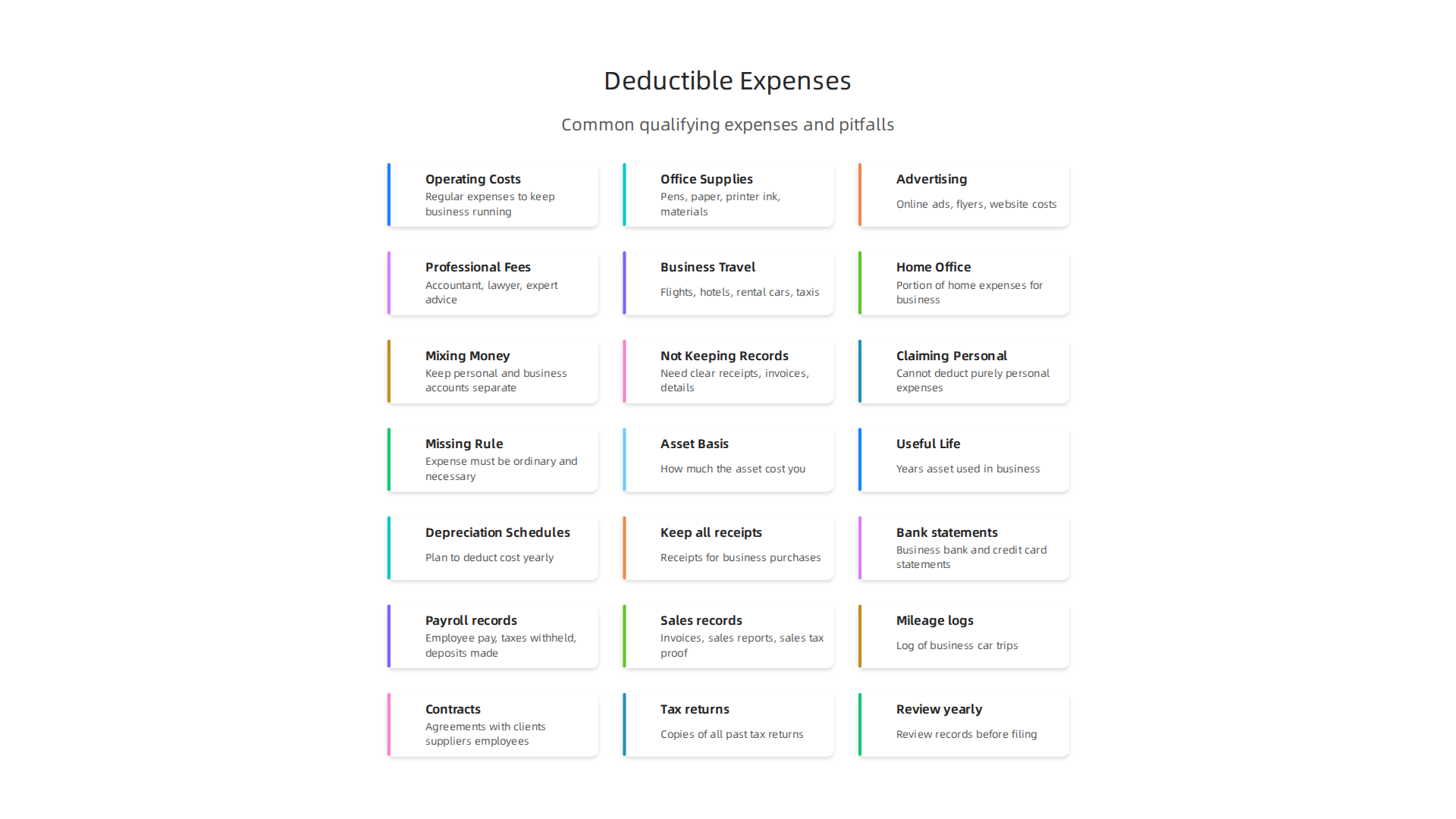
- Operating Costs: These are the regular expenses to keep your business running. This includes things like rent for your office or shop, electricity, water, and internet bills. If you pay employee salaries, those are also deductible.
- Office Supplies and Materials: All those small things you buy for work, like pens, paper, printer ink, and cleaning supplies, count. If your business makes things, the cost of materials used to create your products is also a deductible expense 21 tax deductions (write offs) for small businesses in 2026.

- Advertising and Marketing: Any money you spend to promote your business and find customers is usually deductible. This includes online ads, flyers, website costs, and social media promotions.
- Professional Fees: If you pay an accountant, a lawyer, or other experts for business advice, those fees can be deducted. This is an important business tax strategies tip because good advice can save you a lot.
- Business Travel: When you travel for business, costs like flights, hotel stays, rental cars, and even taxis can be deducted. For meals eaten during business travel, you can typically deduct 50% of the cost Top 14 small business tax deductions & write-offs.
- Home Office Deduction: If you use a part of your home only for business, you might be able to deduct a portion of your home expenses like rent, utilities, and even homeowners insurance The Complete Small Business Tax Deductions Guide for ….
While many things can be claimed as business write offs taxes, it’s easy to make mistakes. These mistakes can lead to deductions being denied or even problems with tax authorities.
Here are some common pitfalls to watch out for:
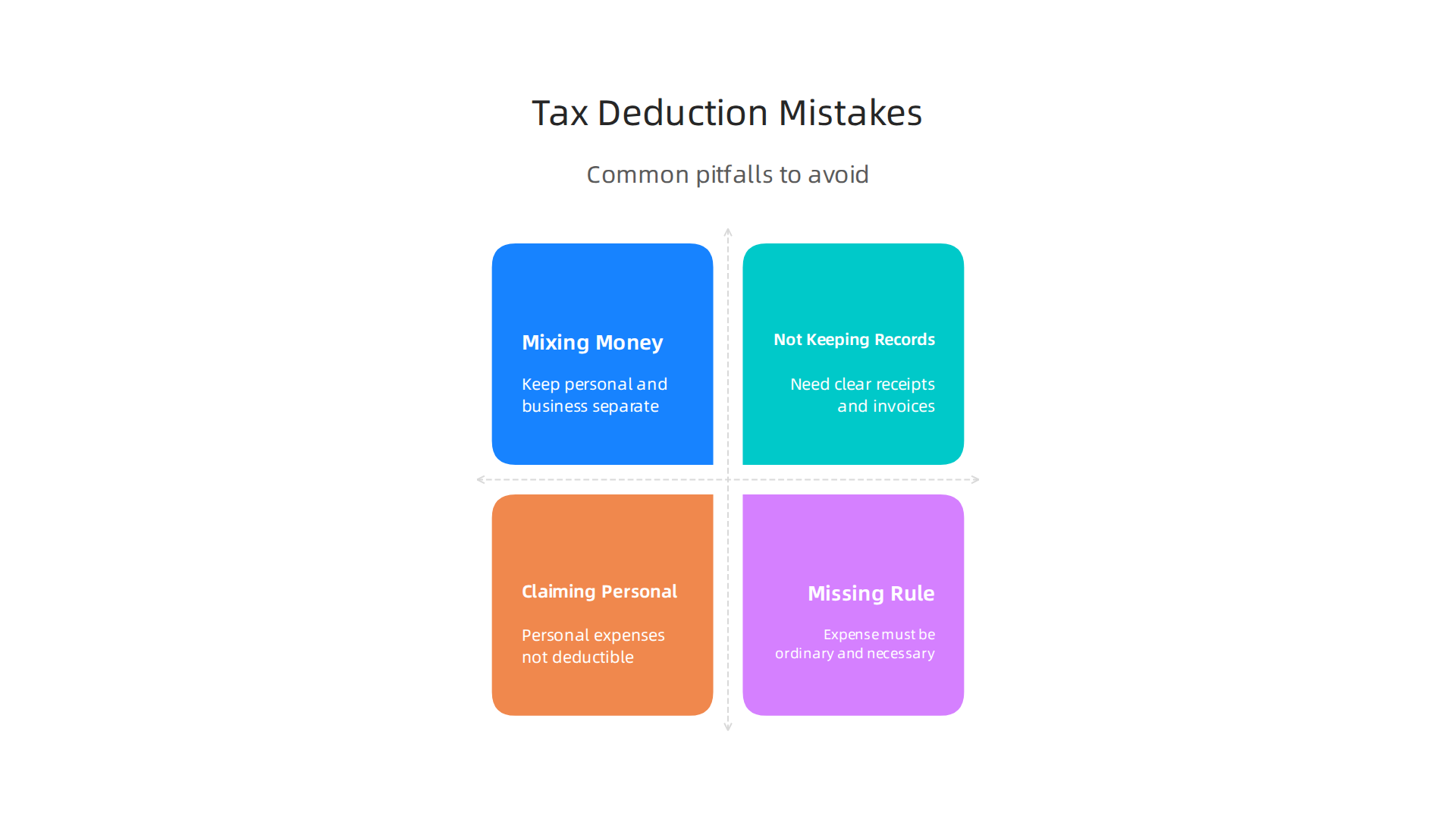
- Mixing Personal and Business Money: This is a big one. Always keep your personal bank accounts and credit cards separate from your business accounts. Using your business account to pay for personal items makes it hard to show what was a true business expense.
- Not Keeping Good Records: For every deduction you claim, you need proof. This means keeping clear receipts, invoices, and detailed records of what the expense was for, when it happened, and how it relates to your business. A simple paper trail is key.
- Claiming Personal Expenses: You cannot deduct expenses that are purely personal, even if they sometimes touch your business life. For example, your personal groceries or a family vacation cannot be claimed as business expenses.
- Missing the "Ordinary and Necessary" Rule: If an expense is not typical for your type of business or doesn’t help your business run better, it might not be deductible. Always ask yourself if the expense makes sense for your business.
Understanding these common deductible expenses and avoiding these pitfalls are vital business taxes deductions insights for any small business owner aiming to manage their taxes well.
If you are thinking about investing in Dubai real estate and need help understanding the tax landscape for your property business, it’s wise to get expert advice.
Get a FREE Dubai Real Estate Consultation.When you run a business, many things you pay for can help lower the amount of money you pay taxes on. These are called business tax deductions or business write-offs. Knowing what you can deduct is a key part of smart tax strategies for small businesses.
Common Deductible Expenses: What Usually Qualifies and Common Pitfalls
Many everyday costs of running your business can be deducted. Think about the money you spend to keep your business going, get the word out, and even get help from other experts. These are usually "ordinary and necessary" expenses, meaning they are common and helpful for your type of work Publication 334 (2025), Tax Guide for Small Business.
Here are some common types of deductible expenses:
- Operating Costs: These are the regular expenses to keep your business running. This includes things like rent for your office or shop, electricity, water, and internet bills. If you pay employee salaries, those are also deductible.
- Office Supplies and Materials: All those small things you buy for work, like pens, paper, printer ink, and cleaning supplies, count. If your business makes things, the cost of materials used to create your products is also a deductible expense 21 tax deductions (write offs) for small businesses in 2026.
- Advertising and Marketing: Any money you spend to promote your business and find customers is usually deductible. This includes online ads, flyers, website costs, and social media promotions.
- Professional Fees: If you pay an accountant, a lawyer, or other experts for business advice, those fees can be deducted. This is an important business tax strategies tip because good advice can save you a lot.
- Business Travel: When you travel for business, costs like flights, hotel stays, rental cars, and even taxis can be deducted. For meals eaten during business travel, you can typically deduct 50% of the cost Top 14 small business tax deductions & write-offs.
- Home Office Deduction: If you use a part of your home only for business, you might be able to deduct a portion of your home expenses like rent, utilities, and even homeowners insurance The Complete Small Business Tax Deductions Guide for ….
While many things can be claimed as business write offs taxes, it’s easy to make mistakes. These mistakes can lead to deductions being denied or even problems with tax authorities.
Here are some common pitfalls to watch out for:
- Mixing Personal and Business Money: This is a big one. Always keep your personal bank accounts and credit cards separate from your business accounts. Using your business account to pay for personal items makes it hard to show what was a true business expense.
- Not Keeping Good Records: For every deduction you claim, you need proof. This means keeping clear receipts, invoices, and detailed records of what the expense was for, when it happened, and how it relates to your business. A simple paper trail is key.
- Claiming Personal Expenses: You cannot deduct expenses that are purely personal, even if they sometimes touch your business life. For example, your personal groceries or a family vacation cannot be claimed as business expenses.
- Missing the "Ordinary and Necessary" Rule: If an expense is not typical for your type of business or doesn’t help your business run better, it might not be deductible. Always ask yourself if the expense makes sense for your business.
Understanding these common deductible expenses and avoiding these pitfalls are vital business taxes deductions insights for any small business owner aiming to manage their taxes well.
If you are thinking about investing in Dubai real estate and need help understanding the tax landscape for your property business, it’s wise to get expert advice.
Get a FREE Dubai Real Estate Consultation.
Moving from general expenses, let’s look closer at some specific areas that often cause questions: home office, vehicle, travel, and meal write-offs. These can be big deductions for small businesses, but they come with their own set of rules and a strong need for good records.
Home office, vehicle, travel and meal write-offs: rules and documentation
When it comes to deductions like your home office or business vehicle, there’s a key difference to understand. Some expenses are for things used only for business, while others are for things you share between business and personal life. Knowing this difference is vital for smart business tax strategies.
Home Office Deduction
If you use a part of your home strictly for business, you might be able to claim a home office deduction. This is for a space that is your main place of business and is used regularly and exclusively for work. You can figure this deduction in two ways:
- Simplified Method: This is an easier way to claim your deduction. For 2026, you can deduct a set amount per square foot of your home office, up to a certain maximum 24 Small-Business Tax Deductions to Know in 2026. This method is simpler because you don’t track all your home costs.
- Actual Expense Method: With this method, you figure out the actual percentage of your home used for business. Then, you can deduct that same percentage of your rent or mortgage interest, utilities, homeowners insurance, and even some repairs. This usually means more paperwork, but it might lead to a larger deduction The Complete Small Business Tax Deductions Guide for ….
The key is that the space must be dedicated to your business. Using your kitchen table sometimes for work doesn’t count.
Vehicle Expenses
If you use your car for business, you can deduct the costs. Again, you have two main choices for business taxes deductions:
- Standard Mileage Rate: This is the simplest. You multiply the number of business miles you drove by a set rate (for example, the 2025 IRS rate was 70 cents per mile) Top 14 small business tax deductions & write-offs. This rate covers gas, oil, maintenance, and wear and tear.
- Actual Expenses: You can deduct the actual costs of using your car for business, including gas, oil, repairs, insurance, registration fees, and even depreciation. This requires much more detailed record-keeping.
No matter which method you pick, keeping a detailed mileage log is super important. You need to write down the date, where you went, how many miles you drove, and the business reason for the trip.

This helps prove your claims if the tax authorities ask.
Business Travel and Meals
When you travel for business, like going to a conference or meeting a client, many expenses are deductible. These include plane tickets, hotel stays, rental cars, and even taxis or ride-shares 34 Big Tax Deductions (Write-Offs) for Businesses in 2026. Make sure these trips are necessary and directly related to your business.
For meals eaten during business travel, you can generally deduct 50% of the cost. This applies to meals with clients or employees too, as long as there’s a clear business reason 9. Depreciation. You need to keep records of the date, location, amount, and the business purpose of the meal Small Business Tax Deductions Checklist for 2026 (Free PDF).
Documentation is Key
For all these specific deductions, good documentation is absolutely crucial. You need clear records like receipts, invoices, and logs that show:
- When the expense happened.
- How much it cost.
- What it was for.
- Why it was a business expense.
This kind of careful record-keeping is one of the most important tax strategies for small businesses. Without it, your legitimate business write offs taxes might be denied. Keeping a proper paper trail or using digital tools to track these items can save you a lot of trouble and money in the long run. To better understand how these business expenses can help lower your property tax, check out our guide on how to claim these taxes business expenses to lower your Dubai property tax.
After understanding how to handle everyday expenses, let’s talk about things that last a long time, like big tools, machines, or buildings. These are called long-lived assets, and they have different rules for tax write-offs. Knowing how to claim them correctly is a smart part of your overall tax strategies for small businesses.
Depreciation and capital expenses: claiming long-lived assets correctly
Not all money you spend for your business is deducted in the same way. There’s a big difference between a simple repair and a major improvement to something you own.
Repairs vs. Capital Improvements
Think about your office building or a company car.
- Repairs are like fixing a leaky roof or changing the oil in your car. These are costs to keep your property in good working order. You can usually deduct the full cost of these repairs in the year you pay for them. They don’t make the property much better or last much longer than before Repairs vs. Improvements.
- Capital Improvements are like adding a new wing to your building, replacing an entire roof, or putting a brand-new, more powerful engine in your car. These expenses make your property better, increase its value, or make it last much longer. The tax rules say you can’t deduct these costs all at once. Instead, you "capitalize" them Amounts paid to improve tangible property.
What is Depreciation?
When you capitalize an expense, it means you spread the cost of that asset over its "useful life." This is called depreciation. For example, a new machine that costs a lot of money might be used by your business for 10 years. Instead of deducting the whole cost in 2026, you deduct a small part of it each year for those 10 years. The IRS has rules for how long different types of assets are expected to last Topic no. 704, Depreciation. This way, the deduction matches how long you get value from the asset.
Tracking Your Long-Lived Assets
To claim depreciation correctly, you need to keep good records. Here’s what you’ll track:
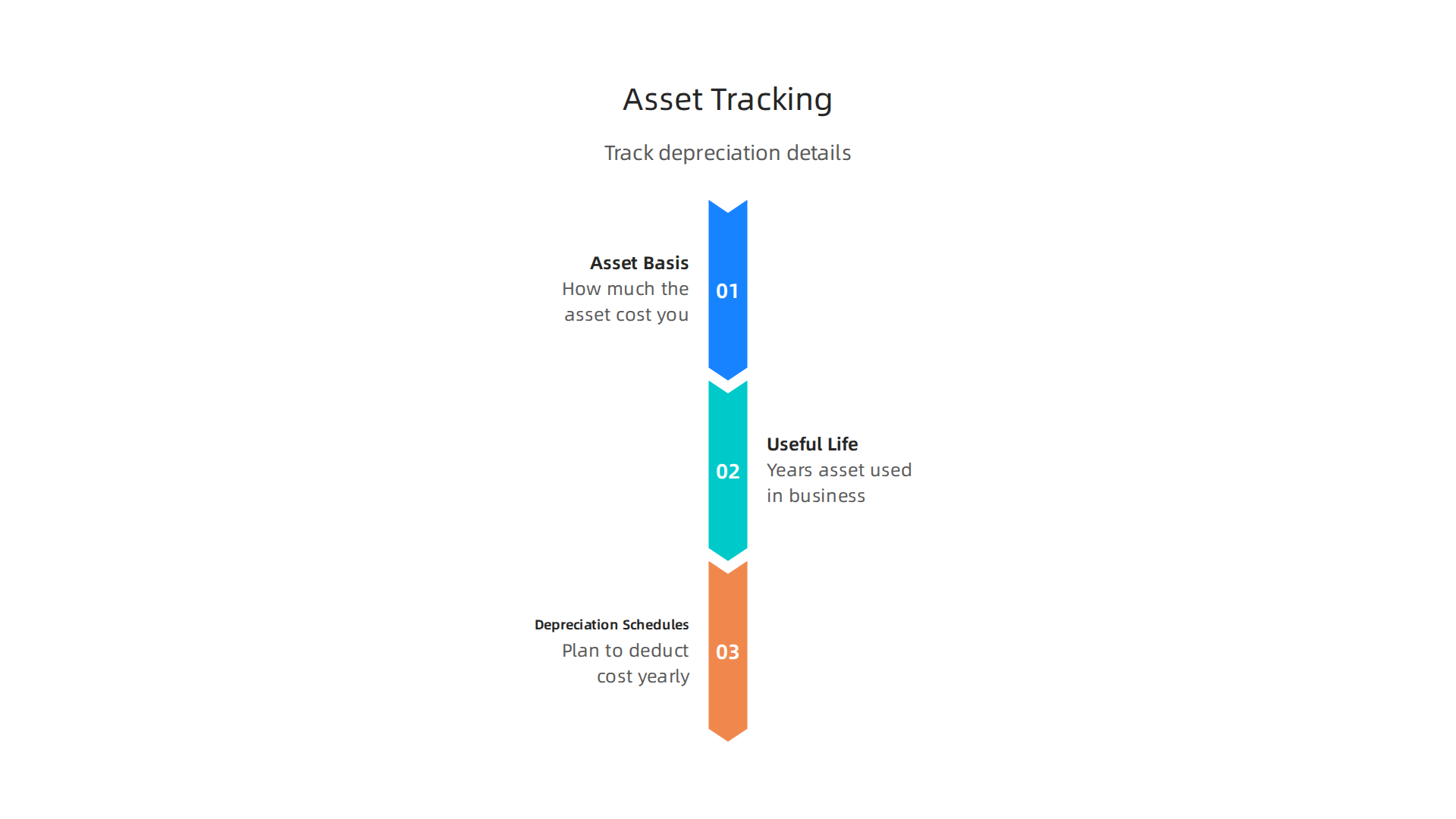
- Asset Basis: This is how much the asset cost you, including any delivery or setup fees. It’s your starting point.
- Useful Life: This is the number of years the asset is expected to be used in your business. Different items have different useful lives. For example, a computer might have a shorter useful life than a building.
- Depreciation Schedules: You need a plan to show how much of the asset’s cost you will deduct each year. This makes sure you spread out the cost correctly over its useful life.
Keeping these details organized is a critical part of smart business taxes deductions. It helps you show tax authorities exactly how you figured out your deductions.
Understanding these details is part of building a strong financial base for your business, especially if you’re involved in property investments. If you’re buying, selling, renting, or investing in Dubai property and want clear advice on all these matters, we’re here to help.
Connect with Ayaz Salman for a FREE Dubai Real Estate Consultation.
After looking at how to deduct big purchases over time through depreciation, let’s turn our attention to other powerful ways to save money on taxes: tax credits and special breaks for certain industries. These are key parts of smart tax strategies for small businesses.
Tax credits, incentives and industry-specific write-offs (including property-related considerations)
Knowing the difference between a deduction and a credit is super important for saving on your business taxes.
Deductions vs. Credits: What’s the Big Deal?
Think of it this way:
- Tax Deductions lower how much of your income can be taxed. If you have $100,000 in income and a $10,000 deduction, you only pay tax on $90,000. So, a deduction saves you money based on your tax rate.
- Tax Credits are even better. They reduce the actual tax money you owe, dollar for dollar. A $1,000 tax credit means you pay $1,000 less in taxes, no matter your tax rate. This makes credits more valuable than deductions. Many small businesses aim to maximize both deductions and credits to save money, as highlighted in various small business tax planning strategies for 2026.
Special Breaks for Your Business
Governments often want to encourage certain types of business actions. They do this by offering special tax incentives or "write-offs." These might be:
- Going Green: If your business invests in energy-saving equipment or uses renewable energy, you might get special credits.
- Research and Development: Businesses that create new products or improve old ones can sometimes claim credits for their research costs.
- Hiring Help: There might be breaks for hiring people from certain groups, like veterans.
- Industry-Specific: Some industries have unique tax advantages. For example, in the United States, certain small business structures, like an S-corporation, can offer significant tax savings by allowing owners to take part of their income as distributions.
Property-Related Tax Benefits in Dubai
For those running a business or investing in property in Dubai, understanding the local tax rules is a big part of your business tax strategies.
Currently, in Dubai, personal income tax is 0%. This means you don’t pay tax on your salary or personal investment earnings directly from the government. However, businesses do have corporate tax. Since 2023, the standard corporate tax rate in the UAE is 0% on profits up to AED 375,000 (about $102,000 US dollars) and 9% on profits above that amount UAE Taxation in 2026.
A special program called Small Business Relief (SBR) helps businesses with revenues under AED 3 million pay 0% corporate tax on all their taxable income. This is a huge benefit for smaller companies, but it’s important to know that SBR is set to expire for tax periods ending after December 31, 2026. So, planning ahead for this change is a smart move for your future Dubai property tax optimization strategies.
If your business involves property, like renting out apartments or running a real estate agency, these tax rules apply to your profits. Making sure your business setup and how you handle expenses are in line with these rules can significantly affect your overall tax bill. Keeping good records and understanding these special benefits are essential business write offs taxes.
Keeping good records is key for your overall business tax strategies. But even with great records, businesses can face big problems if they don’t handle payroll and sales tax correctly. These are two areas where avoiding costly mistakes is crucial for any small business.
Payroll Tax Responsibilities
If your business has employees, you have important duties when it comes to payroll taxes. These taxes include money taken out of an employee’s paycheck for income tax, Social Security, and Medicare. As the employer, you also pay your share of Social Security and Medicare taxes, and other payroll taxes like unemployment insurance.
It’s your job to:
- Calculate correctly: Figure out the right amount to withhold from each employee’s pay.
- Deposit on time: Send these withheld taxes to the government by their due dates. Missing these dates can lead to big penalties, sometimes 2% to 15% of the unpaid amount, as explained in a 2026 guide on business payroll tax compliance Business Payroll Tax Compliance: 2026 Guide for Owners.
- File reports: Submit forms to tax agencies telling them what you’ve withheld and paid.
- Keep good records: Maintain detailed payroll logs and employee information.
Many common issues in 2026, like classifying workers wrongly or making late deposits, can lead to serious penalties for small businesses Payroll Compliance Issues 2026: Real Penalty Costs. This is why mastering payroll compliance is a vital part of your overall tax strategies for small businesses.
Sales Tax (VAT) Basics
Sales tax, or Value Added Tax (VAT) in many countries like the UAE, is another key area for compliance. This is a tax on goods and services that your business sells. You collect this tax from your customers and then pass it on to the government.
Key things to know:
- Registration triggers: You usually need to register for sales tax or VAT once your business reaches a certain amount of sales in a specific area. This threshold can be different depending on where you operate.
- Collection procedures: You must collect the correct tax amount from your customers on all taxable sales.
- Remittance: Just like with payroll taxes, you need to send the collected sales tax or VAT to the proper tax authority by the deadline.
In Dubai, for example, the standard VAT rate is 5%. If your business sells goods or services, understanding when and how to collect and remit this VAT is crucial to avoid penalties and keep your business tax strategies sound. For property-related businesses, knowing how VAT applies to sales, rentals, or services is especially important.
Practical Steps to Avoid Mistakes
To prevent costly errors with payroll and sales tax, consider these practical controls:
- Regular Review: Set a schedule to check your payroll calculations and deposits often. Make sure employee classifications are correct and that you’re withholding the right amounts How to Keep Payroll Compliant in 2026.
- Clear Procedures: Have a clear plan for how you collect sales tax or VAT. Train your staff so everyone knows what to do.
- Automate When Possible: Using accounting or payroll software can help automate calculations and deadlines, reducing the chance of human error.

Many tools can help, including the best small business tax software for Dubai.
- Consult a Specialist: If you’re unsure about payroll rules or VAT, it’s always best to talk to a payroll specialist or a tax accountant. They can help you set up correct processes and stay compliant. This is especially true when figuring out how to file business taxes for your Dubai property company properly in 2026.
By staying on top of these responsibilities, you can protect your business from penalties and make sure your overall financial health remains strong.
The good news is that keeping those strong records doesn’t just help with payroll and sales tax. It also builds a "defensible tax position" for your whole business. This means you have clear proof for every claim you make on your tax forms. It’s super important for your overall tax strategies for small businesses.
Recordkeeping, Audits, and Building a Defensible Tax Position
A defensible tax position simply means you can show an auditor exactly why you reported your income and expenses the way you did. Imagine a tax official asks about a certain business write off. If you have all the papers to back it up, you’re in a good spot. If you don’t, you might face penalties, which can be as much as £100 just for being one day late, and more if it’s much later, according to new rules from 2026 New HMRC penalty rules 2025/26: How to avoid fines for ….
Why "Contemporaneous Documentation" Matters
"Contemporaneous documentation" is a fancy way of saying you keep records as things happen, not later on. For example, if you pay for a business lunch, you should note who was there and why it was for business right away. This makes your records much stronger if you ever face an audit. It clearly shows that these are real business taxes deductions and not made up later.
Preparing for an Audit: Your Checklist
Even if you have solid business tax strategies, an audit can feel scary. But with good records, you’ll be ready. Here’s a simple checklist to keep your business prepared in 2026:
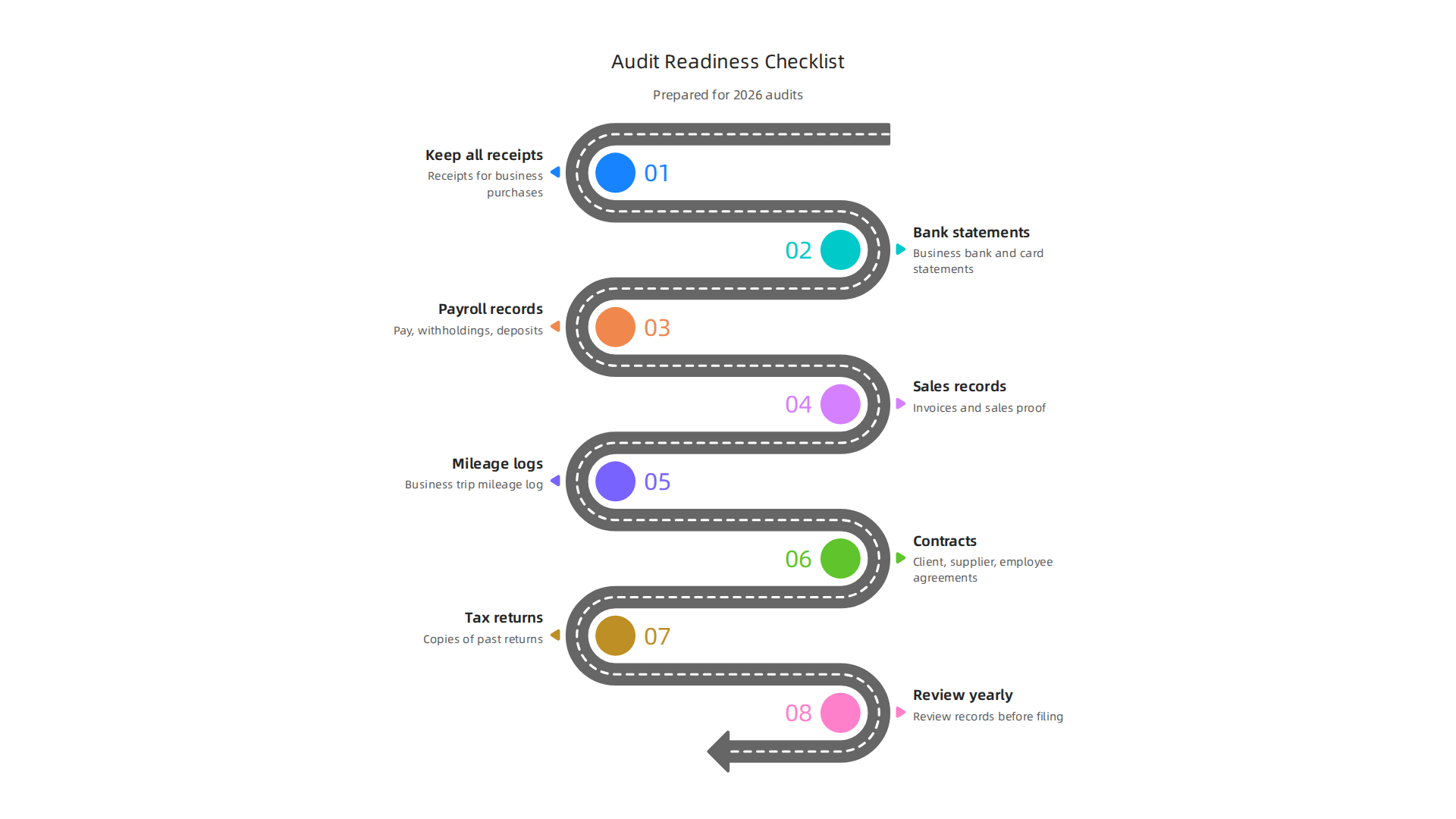
- Keep all receipts: For everything you buy for your business, no matter how small.
- Bank statements: Always have your business bank and credit card statements handy.
- Payroll records: Keep detailed records of employee pay, taxes withheld, and deposits made.
- Sales records: All invoices, sales reports, and proof of sales tax collection.
- Mileage logs: If you use your car for business, keep a log of your trips.
- Contracts: Any agreements with clients, suppliers, or employees.
- Tax returns: Keep copies of all past tax returns.
- Review yearly: Before filing your taxes, go through all your records. A thorough check can prevent issues later, as advised in a 2026 guide on small business tax compliance The Complete Guide to Small Business Tax Compliance.
If you are looking for help making sure your records are audit-ready, especially for property in Dubai, a specialist can offer tailored guidance. For a more detailed guide on selecting the right experts, check out how to choose your audit firm in UAE.
How Long Should You Keep Records?
Tax agencies often expect you to keep records for a certain number of years. In most cases, it’s a good idea to keep most business records for at least three to seven years after you file the tax return they relate to. This includes things like:
- Income and expense records
- Payroll records
- Bank statements
- Receipts
Some records, like property purchase documents or business formation papers, should be kept forever. If you are unsure, it’s always best to keep documents longer or ask a tax expert.
Building a strong, defensible tax position might seem like a lot of work. But it gives you peace of mind and saves you from big headaches and money worries down the road. If you’re buying, selling, renting, or investing in Dubai, connect with Ayaz Salman for Free Consultation. Get started today with your FREE Dubai Real Estate Consultation.
Summary
This article explains how small business owners in Dubai can find, document and claim legitimate business tax deductions while staying compliant with UAE rules. It covers core topics such as UAE corporate tax thresholds (0% on the first AED 375,000 and 9% above that), the Small Business Relief timeline, and why your business structure, taxable income and accounting method matter. You will learn which everyday costs typically qualify as deductions, rules for home office, vehicle, travel and meal write‑offs, and the difference between repairs and capital improvements with depreciation. The guide also warns about common pitfalls—mixing personal and business funds, poor records, payroll and VAT mistakes—and gives practical recordkeeping and audit‑preparation steps. Finally, it outlines how to use tax credits and incentives, and recommends using software or specialists to automate compliance and protect your defensible tax position.