
Optimize Business Expenses on Taxes to Boost Your Dubai Refund
· 23 min read

Why optimizing business expenses matters for Dubai tax refunds (and what this guide will deliver)
Running a business in Dubai in 2026 brings exciting chances, but also new rules to follow. One big topic on many business owners’ minds is corporate tax. When it comes to your money, understanding how to manage your business expenses on taxes can make a real difference. It can help you pay less tax and even get a bigger tax refund in Dubai if you are due one.
Many business owners feel unsure about this. You might be wondering:
- Which costs can I truly claim?
- Are the tax rules clear about what I can deduct?
- What papers do I need to keep to show my business expenses for taxes?
- How can I avoid making common mistakes that cost me money?
It’s easy to get lost in the details. But don’t worry, you’re not alone. Our goal with this guide is to make sense of "taxes and business expenses" for you.
This guide will walk you through everything you need to know to optimize your business expenses on taxes. You will learn about:
- The main types of business costs you can deduct.
- The best ways to keep your records clear and simple.
- Common mistakes to watch out for so you don’t lose out.
- Clear steps to take to make sure your business saves money legally.
By the end, you’ll feel much more confident about handling your company’s finances and making smart choices that lead to better outcomes.
Are you looking to buy, sell, rent, or invest in Dubai real estate? Get expert guidance for your property needs.
FREE Dubai Real Estate Consultation
When you run a business in Dubai in 2026, knowing which costs you can take off your tax bill is super important. These are called tax-deductible business expenses, and they help lower the amount of profit your business pays tax on. The main rule for any expense to be tax-deductible is that it must be spent "wholly and exclusively" for your business. Also, it cannot be a "capital" expense.
What does "wholly and exclusively" mean? It means the expense is only for your business, not for your personal life. What does "not capital in nature" mean? It means the expense is for things you use up quickly in your daily business, like electricity or salaries, not for big purchases that last a long time, like buying a new building or expensive machinery. Those long-lasting purchases are treated differently for tax purposes. This key idea is explained clearly in the official Corporate Tax Guide on the Determination of Taxable Income.
Which Business Expenses Are Typically Tax-Deductible for Dubai-Based Activities
Let’s look at the types of everyday costs that are usually counted as business expenses for taxes:
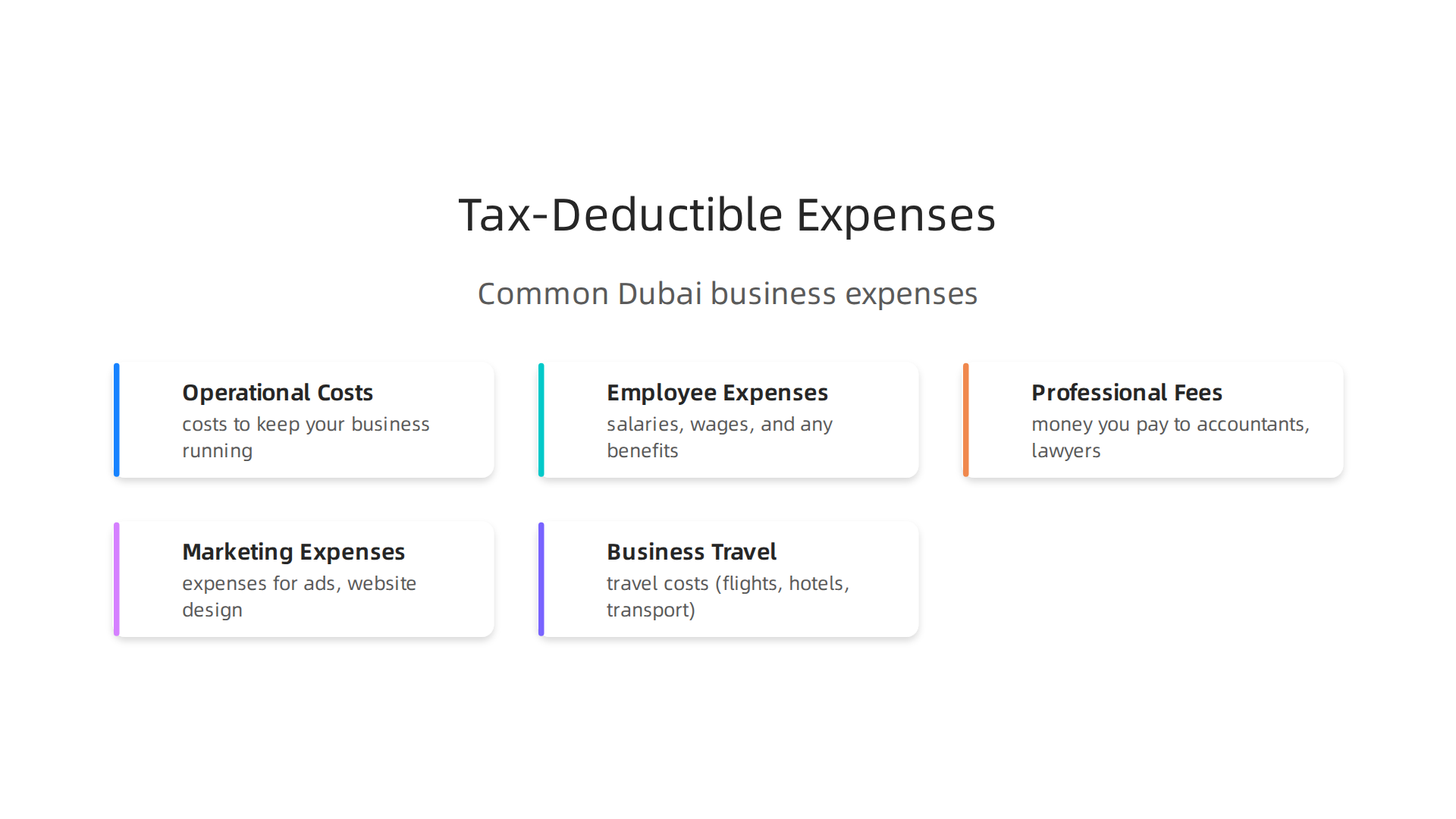
- Operational Costs: These are the costs to keep your business running day-to-day. Think about paying rent for your office or shop, utility bills like electricity and water, and internet services. Also, common office supplies like pens, paper, and printing costs fall into this group.
- Employee-Related Expenses: If you have staff, their salaries, wages, and any benefits you offer them are usually deductible. This includes things like health insurance for your team.
- Professional Fees: Sometimes, your business needs help from experts. The money you pay to accountants for managing your books, to lawyers for legal advice, or to consultants for business strategies can be deducted. This helps you keep your business legally sound and growing.
- Marketing and Advertising: Getting the word out about your business costs money. Expenses for ads, website design, social media campaigns, or even printing flyers are typically deductible.
- Business Travel: If you or your employees need to travel for business reasons, like meeting clients or attending industry events, those travel costs (flights, hotels, transport) can also be part of your business expenses for taxes.
These are just some common examples. The important thing is that each of these costs must directly help your business make money or operate. For more details on what counts as a business write-off, you can check out this guide on How to Claim Business Write-Offs for Taxes on Dubai Property.
Borderline Expenses That Can Cause Confusion
Not all expenses are as straightforward. Some items often lead to questions:
- Mixed Personal and Business Use: What if you use your personal car for business sometimes? Or your home internet? In these cases, you can only deduct the part of the expense that is truly for your business. You need to be able to show how you figured out this business part.
- Entertainment Expenses: Taking clients out for a meal or hosting a business event might seem like a clear business cost. However, the rules for these can be tricky. In Dubai, only 50% of entertainment expenses can usually be deducted, as noted in the UAE Corporate Tax Guide 2026 by Muhammad Akram CMA, ACCA. This means you cannot deduct the full amount.
- Owner Withdrawals and Personal Expenses: If you take money out of your business for your personal use, this is called an owner withdrawal. This is not a business expense and cannot be deducted. Similarly, any personal purchases you make with company money are not tax-deductible business expenses on taxes.
- Fines and Penalties: Any fines or penalties your business has to pay (like for late payments or breaking rules) cannot be deducted from your taxable income.
Understanding these details helps your business stay compliant and make sure you get the biggest tax refund in Dubai you are due. To make sure you’re properly handling all your filings, a comprehensive guide like Mastering Dubai Real Estate Business Taxes can be very helpful.
To make sure your business gets all the tax deductions it deserves and even secures a proper tax refund in Dubai, keeping excellent records is super important. It’s not enough to just know what counts as business expenses on taxes. You also need to prove these expenses with the right paperwork. This helps you show the tax authorities that your claims are true and correct.
What Documents Do You Need to Keep?
For every business cost, you’ll need clear records. Think of these as your evidence. Here are the main types of documents you should always have:
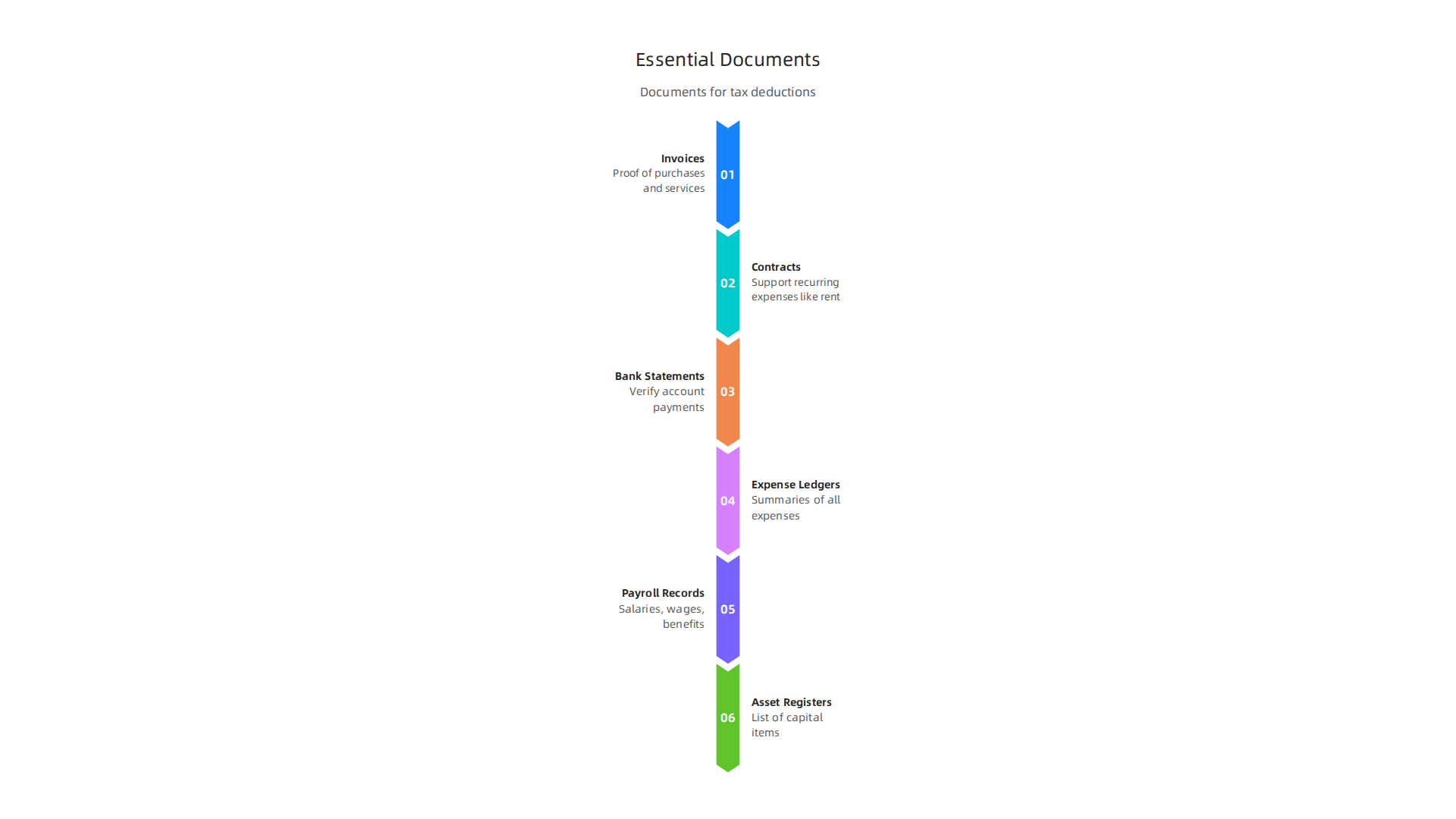
- Invoices and Receipts: These are perhaps the most vital. For every purchase or service you pay for, you need an invoice or receipt that clearly shows what was bought, the amount, the date, and who it was from. This proves your actual business expenses for taxes.
- Contracts: If you have agreements with suppliers, customers, or employees, keep copies of these contracts. They back up the recurring expenses like rent or salaries.
- Bank Statements: Your business bank statements show all the money coming in and going out. They are a great way to verify that expenses were actually paid from your business account.
- Expense Ledgers or Software Records: These are summaries of all your expenses, often kept in accounting software or a simple spreadsheet. They help you track your overall spending.
- Payroll Records: For employee-related costs, you need records of salaries, wages, and any benefits paid.
- Asset Registers: For bigger items like computers or furniture that are capital in nature, you need a list that tracks when you bought them and how much they cost.
Having these documents ready shows you’re serious about your taxes and business expenses and helps avoid any problems during a tax review.
How Long Should You Keep Your Records?
The UAE has clear rules about how long you must keep your business records. Generally, most business records must be kept for a minimum of seven years from the end of the relevant tax period, as highlighted in the UAE Corporate Tax Record-Keeping Requirements: The Complete Guide. However, there are some differences:
- General Records: For most everyday business transactions, a 7-year retention period applies. This includes your invoices, contracts, bank statements, and general financial statements.
- Real Estate Records: If your business deals with real estate, some records might need to be kept for even longer, sometimes up to 15 years, especially if they involve large capital assets or specific real estate transactions. This is important for those mastering Dubai real estate business taxes.
- Electronic Invoicing Data: Records for electronic invoices usually need to be kept for at least 5 years after the relevant tax period. Keeping records for different periods is a key part of staying compliant with UAE Tax Procedures Update 2026.
It’s always best to keep records a little longer than the minimum, just in case there are ongoing audits or questions.
Best Ways to Organize Your Records
Staying organized is key to managing your business expenses on taxes. Here are some smart ways to do it:
- Digital Is Best: In 2026, many businesses keep their records digitally.

You can scan all your paper receipts and invoices and save them on your computer or in cloud storage. The good news is that digital records are fully allowed in the UAE, as long as they are exact copies of the originals, easy to read, and can be given to the tax authority if asked for, as explained in the UAE Tax Record-Keeping 2026: How Long to Keep Records. This also makes them audit-ready.
- Use Accounting Software: Programs designed for small businesses can help you track income and expenses, organize receipts, and prepare financial reports easily. Many even let you snap a picture of a receipt with your phone and store it directly. For options, you can explore the best small business tax software for Dubai 2026.
- Regular Filing: Don’t let receipts pile up. File them away weekly or monthly. Create clear folders, whether physical or digital, for different types of expenses or for each month.
- Back Up Everything: If your records are digital, make sure you back them up regularly. This means saving copies in more than one place, like on an external hard drive and in cloud storage, so you don’t lose anything important.
By following these tips, you can feel confident that your business expenses on taxes are well-documented, making your tax process smoother and helping you secure any eligible tax refund in Dubai.
For specific advice tailored to your real estate investments and business taxes in Dubai, consider a direct consultation. Connect with Ayaz Salman for a FREE Dubai Real Estate Consultation to discuss your investment strategy and tax compliance.
By following these tips, you can feel confident that your business expenses on taxes are well-documented, making your tax process smoother and helping you secure any eligible tax refund in Dubai. Now, let’s look at how the different taxes in the UAE change how your business expenses are treated.
How UAE Corporate Tax and VAT Affect Expense Treatment and Refund Eligibility
In the UAE, businesses need to understand two main types of taxes that affect their spending: Corporate Tax and Value Added Tax (VAT).
While both relate to your business expenses, they work in different ways when it comes to reducing your tax bill or getting money back.
Corporate Tax and Deductible Expenses
For Corporate Tax, the goal is to lower your taxable income. This means you can subtract certain costs from your total earnings before figuring out how much tax you owe. The main rule for any cost to be a business expense on taxes that can be deducted is that it must be "wholly and exclusively" for your business. This means the money was spent only to help your business run or make income, and it should not be for personal use. It also cannot be a "capital expense," which means buying big, long-lasting items like a new building or a big piece of machinery that benefits the business over many years, as explained in the Determination of Taxable Income guide.
Things like salaries, office rent, utility bills, and everyday supplies are usually deductible. These costs directly help your business. On the other hand, personal expenses, fines, or spending that is not directly linked to your business operations cannot be deducted. The UAE Corporate Tax has specific rules for this, making sure that only true business costs are counted to determine your taxable income. You can find more details on these rules in the Corporate Tax Guide on the Determination of Taxable Income. Knowing what counts as a deductible expense is key to managing your taxes and business expenses efficiently.
VAT and Reclaiming Expenses
VAT works differently. When your business buys goods or services, you often pay VAT on those purchases. This is called "input VAT." If your business is registered for VAT and makes taxable supplies, you can usually reclaim this input VAT. This means the government gives that VAT money back to you.
The key here is that the expense must be for your business and part of making goods or services that also have VAT charged on them. For example, if you buy office supplies and pay VAT, and your business then sells products with VAT, you can reclaim the VAT you paid on those supplies. However, not all VAT-paid expenses can be reclaimed. For instance, VAT on certain entertainment expenses might not be fully recoverable.
Understanding the Differences
It’s important to know that an expense might be treated one way for Corporate Tax and another way for VAT:
- Deductible vs. Reclaimable: An expense could lower your taxable income for Corporate Tax (deductible), but the VAT you paid on it might not be reclaimable. Or, the VAT might be reclaimable, but the expense itself might not be fully deductible for Corporate Tax purposes, like certain parts of entertainment expenses, which are only partially deductible. According to tax experts, any expense must be wholly and exclusively for business purposes to be valid for corporate tax calculations, which you can learn more about by watching CHAPTER 17-Allowed/ disallowed and partially allowed expenditures in Corporate Tax.
- Proof is Essential: Just like with Corporate Tax deductions, you need proper records (invoices, receipts) to reclaim VAT. This proves you actually paid the VAT.
- Impact on Profit: Corporate Tax deductions directly reduce your profit before tax is calculated, while VAT reclaim gets back the tax you paid on purchases, affecting your cash flow more directly.
By understanding these differences, you can better manage your business expenses for taxes and maximize your benefits, whether it’s through lower Corporate Tax or a VAT refund. This helps you keep more of your earnings in your pocket.
Common Mistakes That Block Tax Refunds and How to Avoid Them
Even with a good grasp of how Corporate Tax and VAT work for your business expenses on taxes, mistakes can happen. These errors might stop you from getting your expected tax refund in Dubai or even cause bigger problems like an audit. Here are some common slip-ups and how to avoid them.
Frequent Errors That Cause Refund Problems
Many times, VAT refund claims get turned down because of simple errors in paperwork or not following the rules. This is much more common than having a real problem with if the expense should count, according to tax experts in 2026. Here are the main reasons:
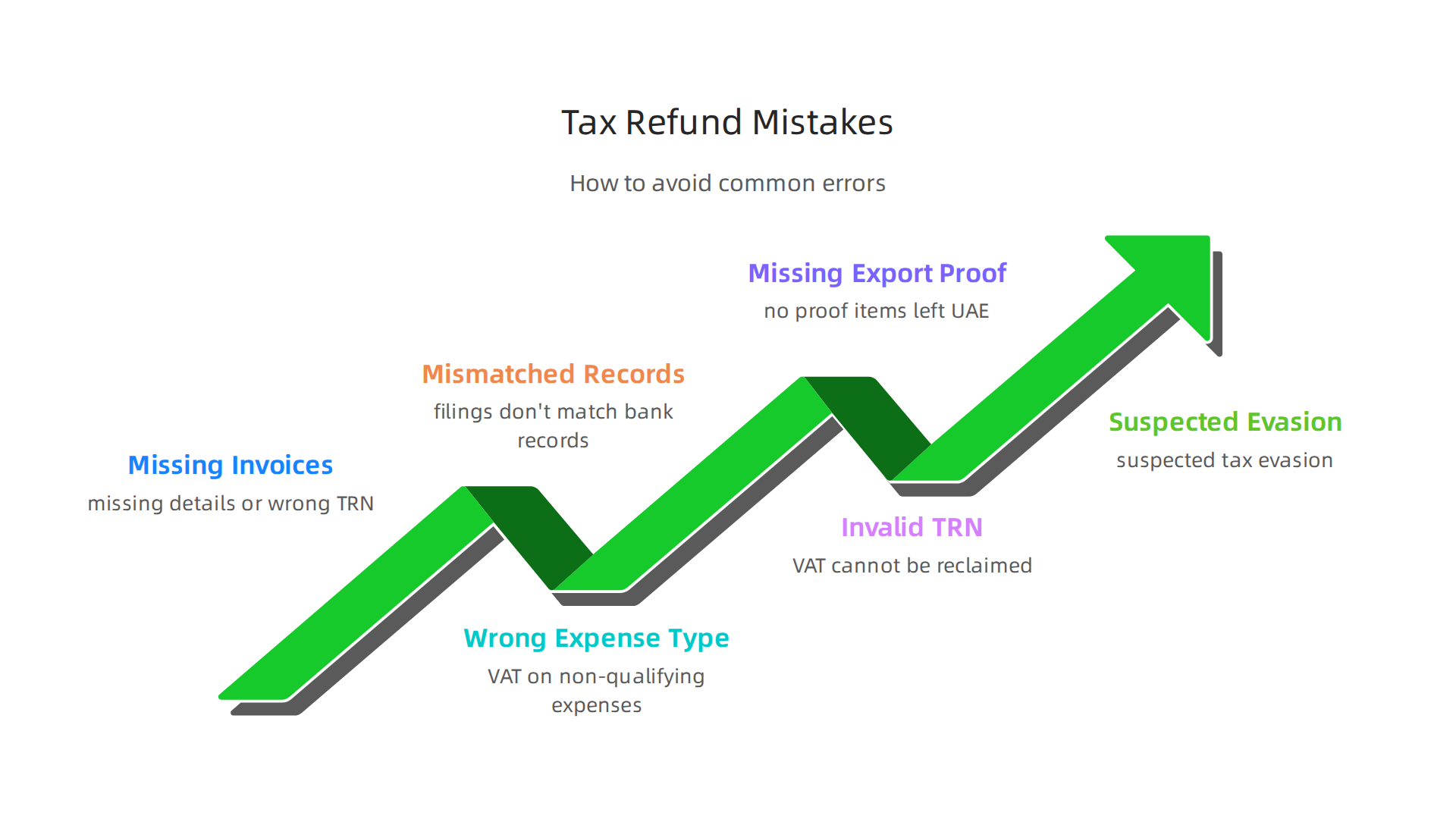
- Bad or Missing Invoices: The Federal Tax Authority (FTA) needs clear and full invoices for every cost you want to reclaim VAT on. If an invoice is missing important details, has the wrong tax registration number (TRN), or doesn’t show the correct tax amount, it might not be accepted. Missing invoices are also a big problem, as they stop the FTA from checking your claims. This is a top reason for rejections, as highlighted in reports on Common Reasons VAT Refund Claims Are Rejected in UAE and Input VAT Checks To Avoid Refund Rejections.
- Wrong Expense Type: You might try to reclaim VAT on expenses that simply don’t qualify. For instance, VAT on some entertainment costs for staff or clients might not be fully recoverable. Including these non-qualifying costs can lead to your whole tax refund in Dubai being reduced or even rejected. This is often called including "non-qualifying expenses" next to ones that should be fine, as noted in a 2026 guide on Why UAE VAT Refund Claims Get Rejected & How to Avoid in 2026.
- Mismatched Records: Your tax filings need to match your actual bank records and other proof. If the amounts you claim for business expenses for taxes don’t line up, the FTA might question your refund.
- Invalid Supplier TRN: Sometimes, a business might get an invoice from a supplier whose TRN is not active or even invalid. VAT from such invoices cannot be reclaimed. Always check that your suppliers have a valid TRN before dealing with them. More details can be found in the guide on How to Claim VAT Refund in UAE: 2026 Deadline Guide.
- Missing Export Proof: If your business sells goods or services that are "zero-rated" for export, you need strong proof that these items actually left the UAE. Without this proof, the VAT reclaim related to these sales might be denied.
Red Flags That Trigger Audits or Refund Denials
The FTA might look closer at your business if certain red flags appear. These can cause delays or even stop your tax refund:
- Suspected Tax Evasion: If the FTA thinks there’s any chance of tax evasion, either by your business or linked to your suppliers, they can decline your refund. This is a serious matter, and the FTA has clarified that potential tax evasion can lead to refund denials or suspensions, as stated by the UAE FTA Clarifies VAT Refund Decline Criteria.
- Outstanding Tax Returns or Lack of Cooperation: If your business has not filed all its required tax returns, or if you don’t work with the FTA during an audit, your refund can be held back. This can also happen if previous audits found big tax issues or if you don’t respond to their questions. The FTA can hold refunds back during an audit, as noted in advice on UAE VAT Refund Delays Due to Audit.
Steps to Prevent These Risks
To make sure your journey with taxes and business expenses is smooth and you get your rightful refunds, take these steps:
- Keep Perfect Records: Always make sure your invoices are complete, correct, and stored safely. They should clearly show the TRNs of both your business and the supplier, the date, description of goods/services, and the tax amount.
- Double-Check Every Claim: Before submitting any refund claim, carefully check each expense. Make sure it qualifies for VAT reclaim and that all supporting documents are in order.
- Regularly Reconcile: Match your VAT claims with your filed VAT returns and bank statements. Any mismatch can cause issues.
- Verify Supplier TRNs: Before making a big purchase, quickly check your supplier’s TRN on the FTA portal to make sure it’s active and valid.
- Seek Expert Help: If tax rules seem too complicated or you’re unsure about certain expenses, it’s smart to talk to a tax consultant. They can help you avoid mistakes and make sure your filings are correct. For important tasks like this, you should always Choose your audit firm in UAE carefully.
Navigating the tax system in Dubai can be tricky, especially when it comes to getting your refunds. If you have questions about your specific business expenses or need help avoiding common tax errors, a specialist can guide you.
Buying, selling, renting, or investing in Dubai? Connect with Ayaz Salman for a FREE Dubai Real Estate Consultation.
Beyond seeking expert help, there are many smart things your business can do to manage its business expenses on taxes and make sure you get your money back. These practical steps focus on how you handle expenses every day, helping you avoid problems and make the most of your tax situation.
Smart Ways to Handle Your Business Expenses
Thinking carefully about when and how you spend money can really help your tax refund in Dubai outcomes.
- Plan When You Spend: Sometimes, it helps to time your bigger business expenses. For example, if you know a large purchase is coming up, completing it within a certain tax period might let you claim the VAT sooner. Always check the rules for deadlines and claiming periods to make the best choice.
- Group and Separate Expenses Wisely: When you have many small items, sometimes it makes sense to group them. Other times, for very specific or high-value items, keeping them separate helps track them better. This is especially true for expenses that might have different VAT rules.
- Use Clear Categories: Every business should have a clear list of expense types. This is called a "chart of accounts." By always putting costs into the right boxes (like "office supplies" or "travel costs"), you keep your records tidy. This makes it much easier to know which business expenses for taxes qualify for a refund. Consistent naming helps a lot, as mentioned in guides on how to keep your accounting records ready for an audit in the UAE.
Set Clear Rules with an Expense Policy
One of the best things a business can do is create a clear "expense policy." This is a set of rules that tells everyone in your company what counts as a business expense and how to handle it.
- What It Should Cover: A good expense policy clearly says which expenses can be claimed and which cannot. It also explains what kind of documents you need, like receipts, and how to submit them. This helps make sure everyone follows the same rules. For example, it should detail what the FTA expects for VAT, like needing the correct Tax Registration Number (TRN) on invoices. Many guides, like this one on Expense Policy Template With Best Practices for 2026, highlight the importance of including UAE-specific VAT rules in your policy.
- Who Approves What: The policy should also say who needs to approve different types of expenses. This usually means a manager checks and approves an expense before it’s paid or refunded. This step adds an extra layer of checking, making sure only proper taxes and business expenses are claimed. This helps avoid mistakes and makes sure your refund claims go through smoothly. Having a detailed expense policy can help your business get ready for audits and prevent issues, as highlighted by resources like Why your business needs a detailed expense policy?.
- Better Refund Outcomes: When everyone follows a clear policy, it reduces errors and makes your tax records much stronger. This means the Federal Tax Authority (FTA) is less likely to question your claims, which helps you get your tax refund in Dubai faster and with fewer issues.
Keeping good records is vital. The UAE tax laws say businesses must keep all corporate tax records for at least 7 years, and VAT records for 5 years. This includes invoices, contracts, and bank statements, which can be stored digitally as long as they are clear and readable, according to the UAE Corporate Tax Record-Keeping Requirements: The Complete Guide.
Even with great internal systems and clear expense policies, there are times when your business needs help from outside experts. Knowing when to ask for help from tax advisors, auditors, or lawyers can save you a lot of trouble and make sure you get the best outcome for your tax refund in Dubai.
Working with advisors, auditors, and authorities: when to escalate and what to ask
Sometimes, your business needs extra support, especially when dealing with complex rules about business expenses on taxes. Here’s when you should think about getting outside help:
- When Rules Are Complex or New: If you’re unsure about new tax laws, like the UAE Corporate Tax rules for 2026, or if your business deals with complex money matters that cross borders, a tax advisor can offer clear advice. They help you understand how to correctly claim all your business expenses for taxes. Learning more about the current rules can be found in a UAE Corporate Tax Guide 2026.
- If You Face an Audit: If the Federal Tax Authority (FTA) decides to check your company’s financial records, an auditor or tax advisor can be a big help. They know exactly what the authorities look for and can guide you through the process, making sure your records are perfectly ready. Having audit-ready bookkeeping is super important here.
- When Legal Questions Come Up: If there are legal problems linked to your taxes, like issues with how your business is set up or disagreements over tax claims, a lawyer specializing in tax law can help protect your company.
- During Big Business Changes: If your business is growing fast, buying another company, or changing its structure, these actions can have big tax effects. Advisors can help you plan these changes to be tax-smart.
Key Questions for Your Advisors
When you decide to hire an expert, it’s important to ask the right questions to ensure they understand your goals and can help you effectively:
- What is your experience with businesses like mine? Ask if they have worked with property investment companies or similar businesses in Dubai, and if they know the specific tax challenges you might face.
- How will you help us get our tax refund in Dubai? Make sure they know your goal is to maximize your tax refund in Dubai and minimize risks.
- What documents do you need from us? Be ready with all your records, policies, and financial statements. The more organized you are, the faster and better they can help.
- How do you charge for your services? Understand their fees clearly upfront so there are no surprises.
Choosing the right expert, whether it’s a tax advisor or an audit firm in UAE, is a smart move for your business. It helps you navigate tricky tax situations, avoid mistakes, and make sure your company stays strong and compliant.
If you are looking for specific guidance on your property investment and how it relates to taxes in Dubai, consider talking to an expert.
FREE Dubai Real Estate Consultation
Summary
This guide explains how optimizing business expenses affects corporate tax and VAT outcomes for Dubai companies in 2026, and shows practical steps to improve refund chances and reduce tax bills. It covers which everyday costs are usually deductible, how to treat borderline items like mixed-use or entertainment expenses, and why the