
How to Start Investing in Real Estate in Dubai Your 2026 Action Plan
· 25 min read

Introduction: Your First Step into Dubai’s Property Market
Dubai’s real estate market is on fire. In 2025 alone, the city recorded over 202,000 residential sales transactions, a number 464% higher than just a few years ago. And rental yields? They are some of the best in the world, with many areas delivering returns between 6% and 8%.
But here is the thing. If you are asking yourself "how do you start investing in real estate" in a place like Dubai, the sheer amount of information can stop you in your tracks. Maybe you have read conflicting advice online. Maybe you are worried about hidden fees or picking the wrong developer. You are not alone. Most first-time investors feel this way. The legal rules, the different costs, and deciding between off-plan and ready property can feel like a lot to handle on your own.
This guide is built to change that. We have put together a clear, expert-backed roadmap for 2026. It covers everything from getting your finances ready to understanding the legal side of things. We will walk you through the different property types, how to pick a great location, and how to do your homework before you buy. For a more detailed look at the exact steps involved, check out our complete guide on how to start real estate investment in Dubai.
We want to make sure you get the right start. If you are ready to move from thinking to doing, talking to someone who knows the market inside and out can be a game changer.

Click here to claim your FREE Dubai Real Estate Consultation with Ayaz Salman. He can help you find the right path for your goals.
1. Evaluate Your Financial Readiness & Budget
Before you look at any property, you need to look at your own money.
If you are wondering how do you start investing in real estate, the short answer is: know what you have and what you can afford. That sounds simple, but many first-time buyers skip this step and get stuck later.
Start by checking your net worth, your liquid cash, and how long you plan to keep the money in the property. Real estate as investment works best when you have a clear timeline. Are you buying for rental income now or for resale in five years? That changes how much risk you can take.
Now, look at the real costs. The price on the listing is not the total. In Dubai, you will pay a DLD transfer fee of 4% of the property price, plus an agent commission of about 2%.
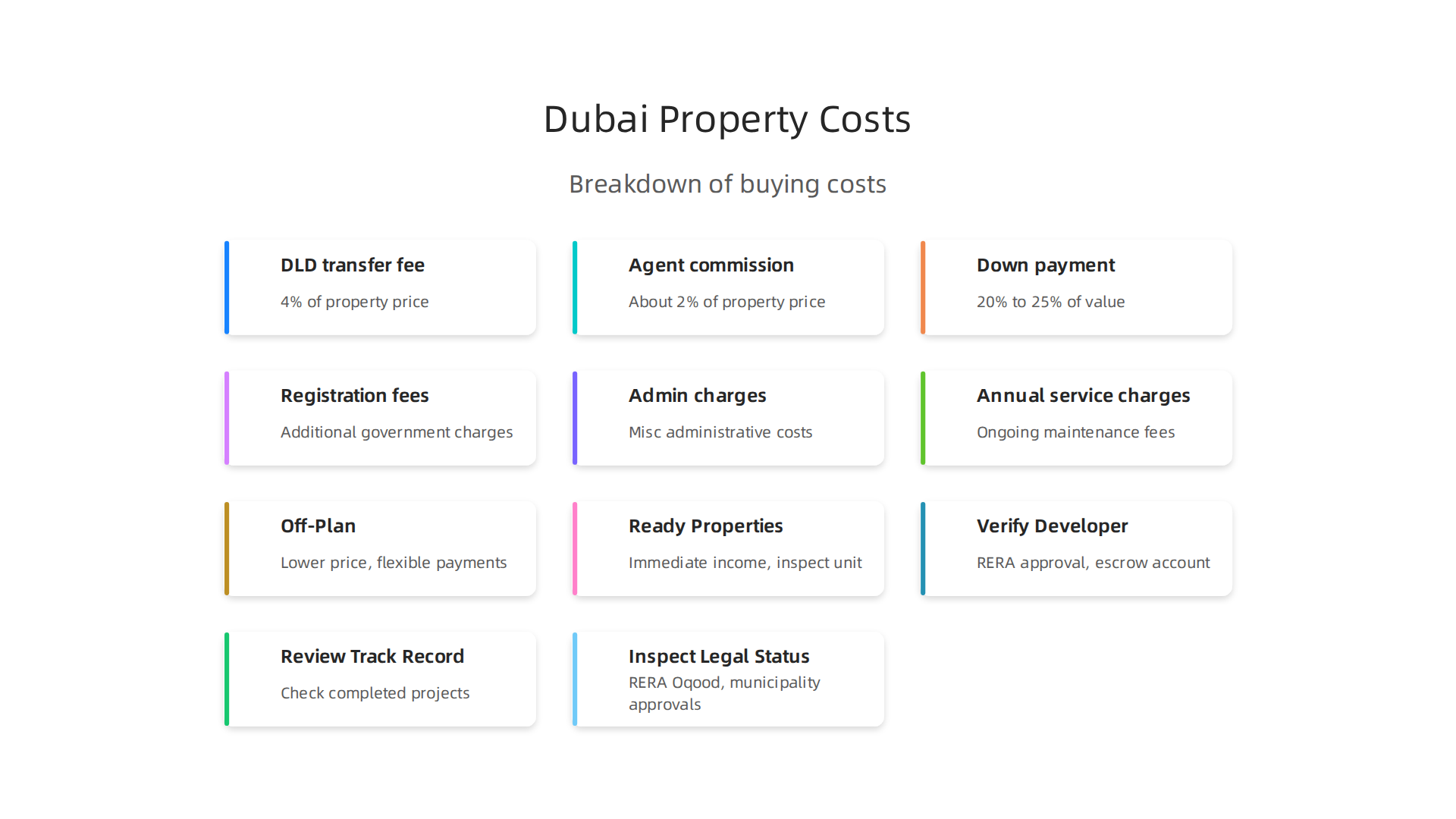
There are also registration fees, admin charges, and annual service charges. The How to Buy Property in Dubai in 2026 guide breaks down each cost so you know what to expect.

For your down payment, most non-residents need to put down 20% to 25% of the property value. Some developers offer payment plans that require less upfront, but typical mortgage lenders stick to that range. To get a clearer picture of your borrowing options, watch this helpful overview on Dubai Property Mortgages 2026.
Once you know your numbers, you can start building a plan that fits your personal situation. A great next step is learning how to build a Dubai real estate investment strategy that works in 2026. And if you want personalized advice on your budget and financing, claim your FREE Dubai Real Estate Consultation with Ayaz Salman today.
2. Understand Dubai’s Legal Framework: DLD, RERA, and Ejari
Once you know your budget, the next piece of the puzzle is the legal side. If you are wondering how do you start investing in real estate without getting lost in red tape, here is the good news: Dubai has a clear, investor-friendly legal system. You just need to know who does what.
The main regulator is the Dubai Land Department (DLD). It handles all property transactions and ownership records.
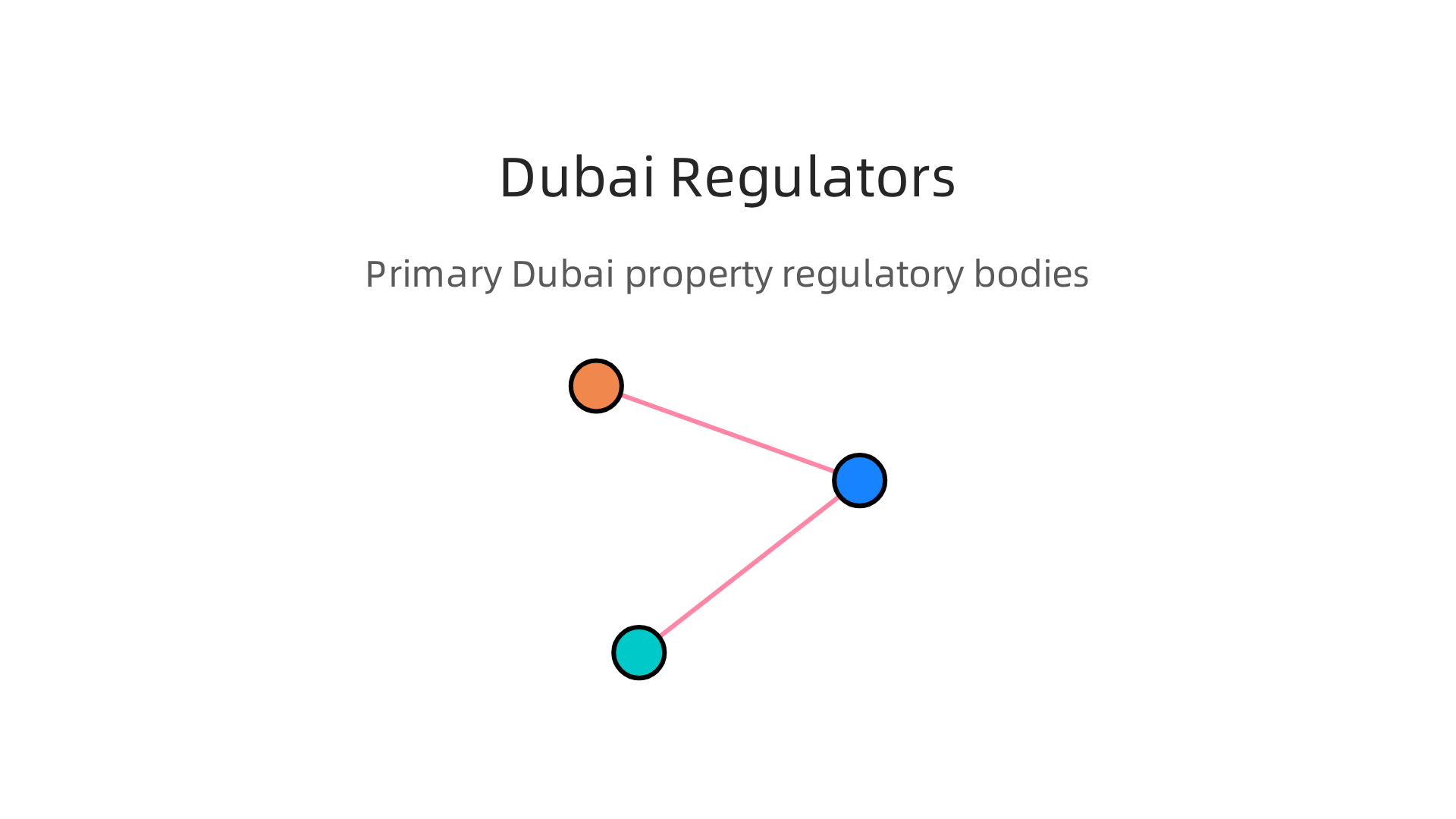
When you buy a property, you pay a transfer fee of 4% of the price to the DLD. This is standard and non-negotiable. The DLD is the big umbrella that makes sure everything runs smoothly and transparently in Dubai’s real estate market.
Under the DLD sits the Real Estate Regulatory Authority (RERA). RERA manages developer registration, off-plan escrow accounts, and the code of conduct for agents and brokers. This is the agency that protects you from bad actors. If you are buying off-plan, you want to make sure your developer is registered with RERA.
Now, if you plan to rent your property, you also need to know about Ejari. This is the system that registers tenancy contracts. Every rental lease in Dubai must be registered through Ejari. It is a non-negotiable legal requirement that formalizes your agreement with your tenant. Without it, you may have trouble enforcing your rights if issues come up.
Understanding these three names is a key part of your tips for real estate investment checklist. They are your safety net.
If all of this sounds complex, that is normal. The rules protect you, but they take time to learn. For personalized guidance on the legal side of your investment, claim your FREE Dubai Real Estate Consultation with Ayaz Salman today.
Key Regulators: DLD and RERA in Detail
If you are wondering how do you start investing in real estate the right way, you need to understand the difference between DLD and RERA. This is a key tip for real estate investment.
The DLD is Dubai’s main property authority. It handles all property registration and issues official title deeds. If a dispute comes up with a tenant or seller, the DLD has a special court called the Rental Dispute Settlement Centre. The overall regulation of the real estate sector falls under the DLD.
RERA works closely under the DLD but focuses on safety measures for investors. Its most important job is monitoring escrow accounts for off-plan projects. When you buy an off-plan property, your money goes into these accounts. RERA tracks them closely to ensure the developer uses the funds to build your unit. RERA also issues developer licenses and approves off-plan projects before they are sold.
Getting personalized advice can save you time and headaches. Claim your FREE Dubai Real Estate Consultation to get clear answers for your specific situation.
The Ejari System and Rental Registration
Now that you understand DLD and RERA, let’s talk about Ejari. If you are asking how do you start investing in real estate and plan to rent out your property, this system is your best friend.
Ejari is Arabic for "my rent." It is an online system from RERA that standardizes all tenancy contracts. Every rental agreement in Dubai must be registered here. This is not optional. It is a legal requirement that turns your simple contract into an official record.
Here is why this matters for you as an investor. When you register a tenancy with Ejari, it links directly to DEWA (your utility provider) and DLD records. This connection makes everything legal and traceable. It also gives you a powerful tool. If a tenant stops paying rent, you need an Ejari-registered contract to file a case at the Rental Dispute Settlement Centre. Without it, you have no legal standing.
This is one of the most practical tips for real estate investment I can give you. Register every tenancy immediately. It protects your income and gives you peace of mind. For a full picture on getting started, read this guide on how to start real estate investment in Dubai.
Every tenancy contract must be registered with RERA through the Ejari system. This is a non-negotiable legal requirement that formalizes the contract and makes it enforceable.
Need help navigating these rules for your specific property? Claim your FREE Dubai Real Estate Consultation and get clear answers today.
3. Choose Between Off-Plan & Ready Property
Now that you know the legal rules for renting out a property, let’s take a step back. Before you can register anything with Ejari, you need to own the right property. And that starts with a big choice.
When you ask how do you start investing in real estate, the answer usually comes down to two paths: off-plan or ready property.
Each one works differently depending on your budget and goals.
Off-Plan Properties
These are units you buy from a developer before construction finishes. The biggest draw is the price. You often pay less per square foot compared to completed units. Developers also offer flexible payment plans. This makes it easier to invest property without needing all the cash upfront Buying Off-Plan vs Ready Properties in Dubai: Pros, Cons & More. The tradeoff is risk. If the project faces delays, your returns get pushed back. You must check the developer’s history before signing anything.
Ready Properties
Ready properties are completed units you can buy and occupy right away. The price per square foot is higher compared to off-plan Buying Ready vs. Off-Plan Properties in Dubai, UAE | Sobha Realty. But the advantage is speed. You can start generating rental income immediately Pros & cons of off-plan vs secondary properties. This makes it a strong real estate as investment strategy for people who want steady cash flow fast.
How to Decide
Your choice depends on your personal situation. If you have a longer timeline and want to save on upfront costs, off-plan fits well.

If you need immediate income and prefer a tangible asset, go with a ready property.
These tips for real estate investment will help you match the property type to your personal goals. For a complete look at building your plan from scratch, read this guide on how to start real estate investment in Dubai.
Still unsure which path matches your budget and timeline? Claim your FREE Dubai Real Estate Consultation and get tailored advice today.
Off-Plan Investment: Benefits and Risks
Off-plan properties can be a smart way to invest property with less cash upfront. But they come with tradeoffs. Let’s break down what you need to know.
The Upside
Buying off-plan usually means a lower deposit. Developers also let you pay in stages as construction moves forward. That makes it easier on your wallet. In a rising market, your property value can jump a lot by the time it’s finished. And developers often throw in extras like free DLD registration fees. These perks make off-plan a popular real estate as investment choice for those with patience.
The Downside
The biggest risk is delays. Projects don’t always finish on time. Sometimes developers run into money problems or even go bust. If the market cools while you’re waiting, your unit might not be worth as much by handover. Also, selling an off-plan unit before completion can be tough. You need to do your homework on the developer’s track record. For a full guide on checking developers, read our due diligence guide to choosing a real estate investment company in Dubai. And for a quick ROI comparison, check this overview of ready vs off-plan properties in Dubai.
Weighing It All
These tips for real estate investment remind you to match risk with your timeline. If you want immediate income, off-plan may not be the best fit. But if you can wait and want lower entry costs, it could work.
Still not sure how do you start investing in real estate with off-plan? Claim your FREE Dubai Real Estate Consultation to talk through your options with an expert.
Ready Property: Immediate Returns vs. Premium Pricing
So you have seen the upside of waiting for an off-plan build. But what if you want income now? That is where ready properties shine. A completed unit lets you start earning rent the day you take ownership. That immediate cash flow is a big reason many see real estate as investment with faster payback.
The Upside of Ready
With a ready property, you skip the waiting game. You can inspect the actual unit, the building quality, and the neighborhood. There is no guesswork about what you will get. This lowers the risk of project failure or delays. Plus, you can move in or find a tenant right away, which helps when you invest property for consistent returns. According to Bayut, ready properties give you a clear view of your investment from day one.
The Premium Price Tradeoff
Here is the catch. Ready properties usually cost more than off-plan ones. Developers price in the convenience of immediate possession. In prime areas, that premium can eat into your ROI. The Sobha Realty blog notes that ready properties come at a higher price due to their completed status. So your yield might be lower than if you bought off-plan in a growth area. It is one of the key tips for real estate investment: balance upfront cost against income speed.
Which One Fits You?
If you want passive income without construction risk, ready is the smart move. But if you chase capital appreciation and can wait, off-plan might win. For a deeper look at building a plan that matches your goals, check out our guide on how to start real estate investment in Dubai step by step. And remember, you can also explore options like REITs if direct ownership feels too heavy.
Still unsure what path matches your situation? Claim your FREE Dubai Real Estate Consultation to get personalized advice on buying ready or off-plan.
4. Research Dubai’s Top Neighborhoods for ROI
So you decided whether to go ready or off-plan. Now comes the fun part. Choosing where to put your money. This step is critical to how do you start investing in real estate the right way. Different areas give different returns. You need to match a neighborhood to your goal.
Some investors want high rental income. Others want the property to grow in value over time. Both are smart. But you need to pick a spot that fits your plan.
High Rental Yield Areas
If you want monthly cash flow, look at places like Dubai South, JVC, and DAMAC Hills 2. These areas offer strong rental returns. For example, apartments across Dubai averaged a gross rental yield of 7.0% in 2025, according to Cavendish Maxwell’s market report. That is solid. JVC and Dubai South often beat that average.
Capital Appreciation Zones
If you prefer value growth, focus on premium spots. Palm Jumeirah, Dubai Hills, and Business Bay have seen strong price increases. The Residential Market Sales Price Index rose by 12.88% year-on-year as of December 2025, as noted in the Global Property Guide analysis. These areas tend to hold value and climb over time.
Use the Data
Do not guess. Use the RERA rental index to check real yields. Look at DLD transaction data for price trends. Also keep an eye on new infrastructure like Expo City and upcoming metro lines. These projects boost property values. For more on matching areas to your goals, read our guide on how to start real estate investment in Dubai step by step.
Still not sure which neighborhood fits your needs? Claim your FREE Dubai Real Estate Consultation for personalized help.
High Rental Yield Areas
If you want monthly cash flow from your property, you need to focus on the right spots. Some areas in Dubai give much higher rental returns than others. This is the real secret behind how do you start investing in real estate the right way.
Dubai South and JVC lead the pack. These areas consistently offer gross rental yields between 7% and 9%. According to Cavendish Maxwell’s 2025 market report, apartments across Dubai averaged 7.0% last year. But JVC and Dubai South often beat that average. That means more money in your pocket each month.
Academic zones are another smart play. Places like Dubai Silicon Oasis sit near universities and colleges. Students and young professionals always need housing. This creates steady tenant demand that never really slows down. You get fewer empty months and more reliable income.
Before you pick a area, check the real numbers. Use the RERA rental index and DLD transaction data. Do not just trust what an agent tells you. For more detail on matching your goals to the right area, check out our guide on how to start investing in real estate in Dubai step by step.
Still not sure which high yield area fits your plan? Claim your FREE Dubai Real Estate Consultation for personalized advice.
Capital Growth Hotspots
Not every investor wants cash flow today. Some want their property to grow in value over time. If that sounds like you, then capital growth hotspots are where you should focus. This is another key piece of how do you start investing in real estate the smart way.
Prime areas deliver steady appreciation. Neighborhoods like Palm Jumeirah, Emirates Hills, and Al Barari have a strong track record. These places hold value well even when the market shifts. According to REIDIN’s data reported by Global Property Guide, the residential sales price index rose 12.88% year on year as of December 2025. Villas performed even better at 15.16%. That kind of growth makes these areas a solid choice for long term real estate as investment.
Emerging communities offer higher growth potential. Places near Expo City and Dubai Creek Harbour are still being built out. Master-planned developments like these often see the biggest jumps in value as infrastructure finishes and demand rises. In 2025 alone, Dubai recorded 202,349 residential sales transactions according to Engel & Volkers’ 2026 market overview. That is 464% higher than 2021. The momentum in new communities is real.
Here is a quick way to think about it:
- Prime areas (Palm Jumeirah, Emirates Hills, Al Barari): Lower risk, steady growth, proven track record
- Emerging areas (Expo City, Dubai Creek Harbour): Higher potential upside, more price movement, longer timeline
Your choice depends on your goals. Want safety and stability? Go prime. Want to bet on future growth? Go emerging.
For more tips on matching your strategy to the right locations, read our guide on how to build a Dubai real estate investment strategy that works in 2026.
Not sure which growth hotspot fits your timeline? Claim your FREE Dubai Real Estate Consultation to talk through your options with an expert who knows the market.
5. Conduct Due Diligence on Developers & Projects
Picking a great location is only half the battle. If you are buying off-plan from a weak developer, even the best hotspot can turn into a headache. That is why knowing how do you start investing in real estate safely means checking who you are buying from. Here are three tips for real estate investment that protect your money.
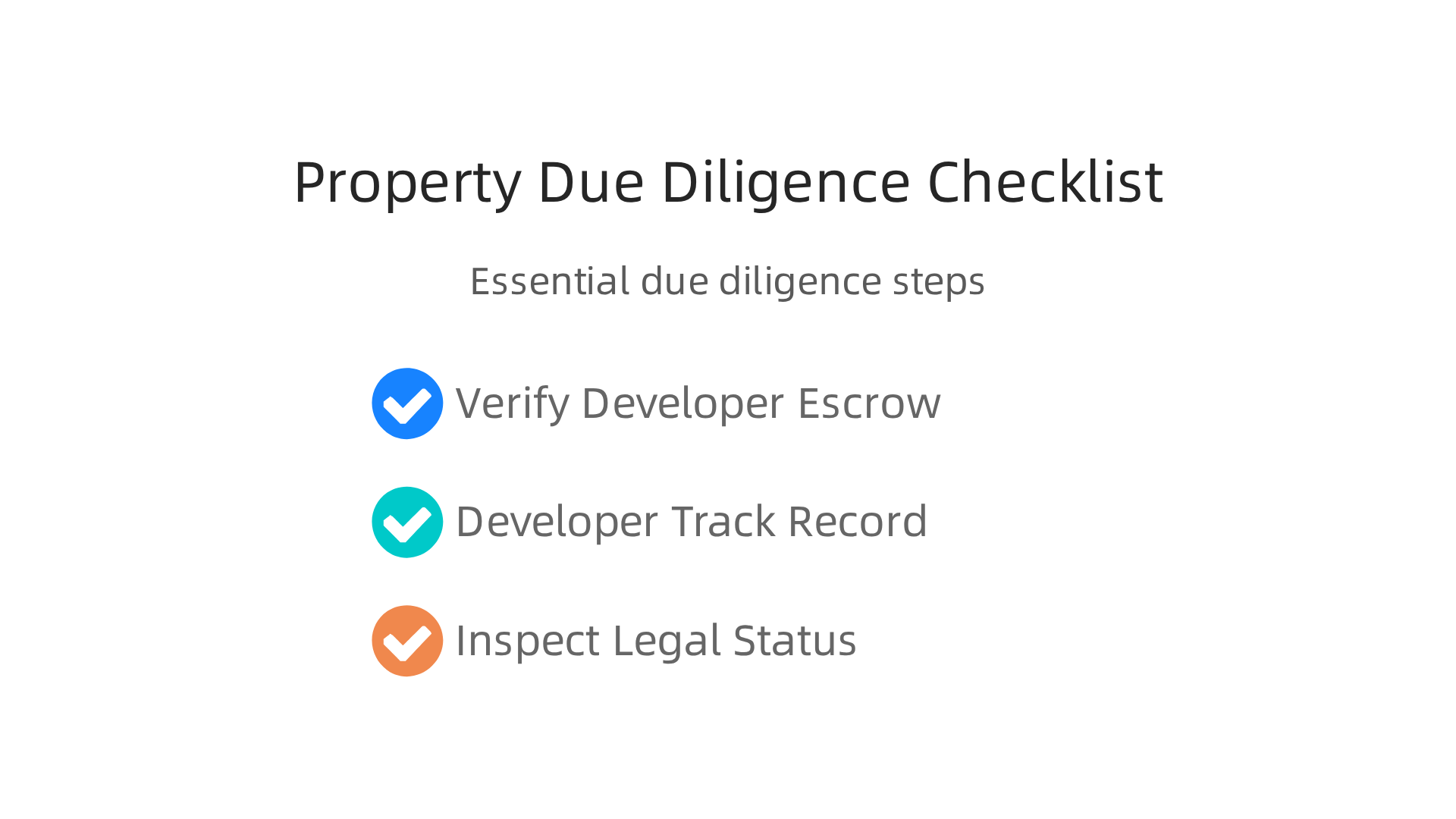
First, verify the developer and the escrow account. Every registered developer in Dubai must have RERA approval before they can sell off-plan. They also need a DLD-approved escrow account. The whole point of an escrow account, as explained by Dubai Land Department, is to regulate construction and protect your payments. You can check if a project has a valid escrow account using the DLD REST app or by asking RERA. This simple step stops you from putting money into an unapproved project.
Second, review the developer’s track record. Look at their completed projects. Did they finish on time? What do past buyers say? A developer with a history of delays or complaints is a red flag. You want someone who has delivered quality, on schedule, and stayed financially stable.
Third, inspect the project’s legal status. Before you invest property into an off-plan unit, make sure the project has RERA Oqood registration and all necessary Dubai Municipality approvals. Check the construction milestones. If approvals are missing, your real estate as investment could get stuck.
Doing this homework might feel like extra work, but it protects your capital. For a deeper walk through this process, read our full due diligence guide for choosing a real estate investment company in Dubai.
Want to run a proper background check on a developer before you commit? Claim your FREE Dubai Real Estate Consultation and get expert help vetting off-plan projects.
6. Check Developer Track Record & RERA Registration
You have found a project in a great location. The price looks right. Now you need to answer one big question: can the developer actually deliver? This is a huge part of how do you start investing in real estate the right way. Skipping this step is how people lose money.
Here is what to check before you invest property in any off-plan deal.
First, make sure the developer is registered with RERA. A developer cannot legally sell off-plan units without RERA approval. They also must have a DLD-approved escrow account for that specific project. As the Dubai Land Department explains, the escrow account protects your payments by releasing funds only as construction progresses. You can verify this using the DLD REST app or by contacting RERA directly, as noted in this guide to escrow account checks. If the developer cannot show you a valid escrow account, walk away.
Second, look at their track record. How many projects have they finished? Did they hand them over on time? Search for legal disputes or complaints from past buyers. A developer with a clean history and several completed projects is a safer bet. This is one of those tips for real estate investment that separates smart buys from risky ones.
Third, check the project’s Oqood registration. Every off-plan sale should be registered with RERA’s Oqood system. This proves the unit is legally yours during construction.
Want a clear path for choosing a trustworthy project? Read our guide on how to build a Dubai real estate investment strategy that works in 2026. It walks you through the full process step by step.
Still unsure about a developer’s reputation? Claim your FREE Dubai Real Estate Consultation and get expert help vetting off-plan projects before you commit your capital.
7. Understanding the Sale Purchase Agreement (SPA)
You have checked the developer and the escrow account. Now look at the Sale Purchase Agreement (SPA). This contract protects your rights when you invest property in Dubai. Reading it carefully is how do you start investing in real estate without surprises.
Focus on these clauses:
- Completion Date & Delay Penalties: Look for the handover date and what happens if the builder is late.
- Payment Schedule: Make sure payments match construction milestones.
- Defect Liability Period: The developer must fix issues for free for one year after handover.
- Service Charges: These ongoing fees affect your real estate as investment profits. Do not ignore them.
Always hire a lawyer to review the SPA before signing. This is one of the smartest tips for real estate investment you can follow.
Need a full checklist? Read our guide on how to start real estate investment in Dubai.
Rules like the escrow laws explained by BetterHomes back up these contracts, but you still need to understand what you are signing.
If a clause feels unclear, get help. Claim your FREE Dubai Real Estate Consultation and we can review your contract together.
6. Secure Financing & Work with the Right Professionals
You have reviewed the Sale Purchase Agreement. Now you need to figure out how to pay for the property. If you are planning to use a loan, here is what you need to know.
Mortgage Options for Non-Residents
Many banks in Dubai offer home loans to foreign investors. The amount you can borrow depends on the property value and your financial profile. According to Property Finder, buyers should expect down payments between 35% and 50%. HSBC UAE lets non-residents borrow up to 60% of the property value.

Dubai Islamic Bank offers up to 80% for some programs.
To qualify, you generally need to earn at least 15,000 AED per month, as Wise explains. Banks will check your income, credit history, and existing debts.
Build Your Team of Experts
You cannot do this alone. Here are the key people you need on your side:
- RERA-Certified Agent: This person helps you find the right property and handles negotiations. Always verify their license on the RERA website.
- Property Lawyer: Your lawyer reviews the SPA and protects your rights. This is one of the best tips for real estate investment you can follow.
- Property Management Firm: If you live outside Dubai, hire a firm to handle tenants, maintenance, and legal rules. This makes your real estate as investment truly hands-off.
Need help building your team? Claim your FREE Dubai Real Estate Consultation and we can connect you with trusted professionals.
When you understand how do you start investing in real estate with the right financing and team, everything becomes smoother. For more details on building your strategy, check out our guide on how to build a Dubai real estate investment strategy.
Mortgage Options for Non-Residents
Now let’s talk about the different loan choices you have. Most banks give you two main options: fixed rate or variable rate mortgages.
A fixed rate mortgage locks in your interest rate for a set period, often 1 to 5 years. This is great if you want predictable monthly payments. As HSBC UAE explains, you can lock in your rate with a fixed interest home loan. A variable rate mortgage changes with the market. Your payments could go up or down over time. Most loans let you repay over up to 25 years, according to ADCB.
Before you start shopping, get pre-approval. This tells you exactly how much a bank is willing to lend you. It also speeds things up when you find the right property. To get pre-approved, you will need to submit:
- Your salary certificate or income proof
- Several months of bank statements
- A copy of your passport
- Proof of existing debts (if any)
- A property valuation report
Banks check your income to make sure you can handle the payments. As Wise notes, you generally need to earn at least 15,000 AED (around 4,000 USD) per month to qualify. Your credit history and existing debts also matter.
The pre-approval process usually takes a few days. Once you have it, you can search for properties with confidence. You will know exactly what you can afford.
Need expert help navigating these choices? Claim your FREE Dubai Real Estate Consultation to get personalized mortgage guidance.
To learn more about building your overall plan, check out our guide on how to build a Dubai real estate investment strategy. That will help you connect your financing with your long term goals.
Choosing a Trustworthy Advisor
Now that you know how to start investing in real estate, the next big step is finding someone you can trust. Dubai has thousands of agents, but not all of them have your best interests in mind. So how do you pick a good one?
First, always work with a RERA-certified agent. RERA is the Real Estate Regulatory Authority in Dubai. Every licensed agent has a card with a unique number. You can check this number on the RERA website to make sure they are legit. This simple step protects you from scams.
Next, do not go with the first agent you meet. Interview at least two or three. Ask them about their recent sales in the area you want. A good agent will share their track record. Also ask about their fee structure. Most agents charge a commission, usually around 2% of the property price. If someone is vague about fees, walk away.
You might also consider hiring a local lawyer for legal due diligence. They can review your sales contract and make sure everything is in order. Lawyer fees in Dubai usually run between 5,000 and 10,000 AED. It seems like an extra cost, but it can save you from expensive mistakes later.
For a deeper look at avoiding costly errors, read our guide on how to file business taxes for your Dubai property company. It covers the legal side of owning property here.
Finally, remember that a good advisor does not just sell you a property. They help you build a smart real estate as investment plan. Take your time, ask questions, and choose someone who earns your trust.
Summary
This guide gives first‑time investors a clear, step‑by‑step roadmap to start investing in Dubai real estate in 2026. It begins with a concise market snapshot and then shows you how to assess your finances, calculate true purchase costs, and choose the right down‑payment and mortgage route. You’ll learn the essential legal framework — DLD, RERA and Ejari — and why those bodies protect buyers and landlords. The article compares off‑plan and ready properties, highlights neighbourhoods for rental yield versus capital growth, and explains how to check developer track records and escrow accounts. Practical tips on reviewing the Sale Purchase Agreement, estimating service charges, and building a trusted team (agent, lawyer, property manager) are included so you can avoid common mistakes. After reading, you’ll know the exact due diligence steps to take and when to get professional advice to turn plans into a safe investment.