
Build a Dubai Real Estate Investment Strategy That Works in 2026
· 18 min read
Why Dubai’s Real Estate Market Demands a Strategic Approach
Dubai’s property market is on fire right now. In the first quarter of 2026, the city recorded an eye-popping Dh176.7 billion in sales from nearly 48,000 transactions, with the off-plan segment leading the charge. That is according to recent market reports. Transaction volumes are climbing, and prices keep rising across townhouses, villas, and apartments. This kind of momentum makes real estate and investment in Dubai incredibly tempting for anyone looking to grow their money.
But here is the thing. That same fast growth brings a lot of complexity. The Dubai real estate market is not a simple buy and hold game. You have to navigate rules from the Dubai Land Department, RERA, and Ejari.
You have to choose between off-plan and ready properties. You have to decide on short-term rentals versus long-term leases. Each option has its own risks and rewards. Jumping in without a clear plan is a fast way to get burned.
This guide is built to change that. We put together a research-backed, step by step framework to help you make smart choices. We cover everything from market research and due diligence to picking the right property type and avoiding common costly mistakes. If you are serious about building wealth through Dubai property, you need more than luck. You need a real strategy.

Want a clear roadmap to get started? Check out this step by step guide on how to start real estate investment in Dubai for a full walkthrough.
And if you prefer to talk to someone directly, you can get a free Dubai real estate consultation with Ayaz Salman. He can answer your specific questions and help you find the right property for your goals.
Understanding Dubai’s Real Estate Market Dynamics in 2026
You might be wondering what is actually driving all this growth in Dubai. It is not just hype. A few major forces are working together to push the market higher.
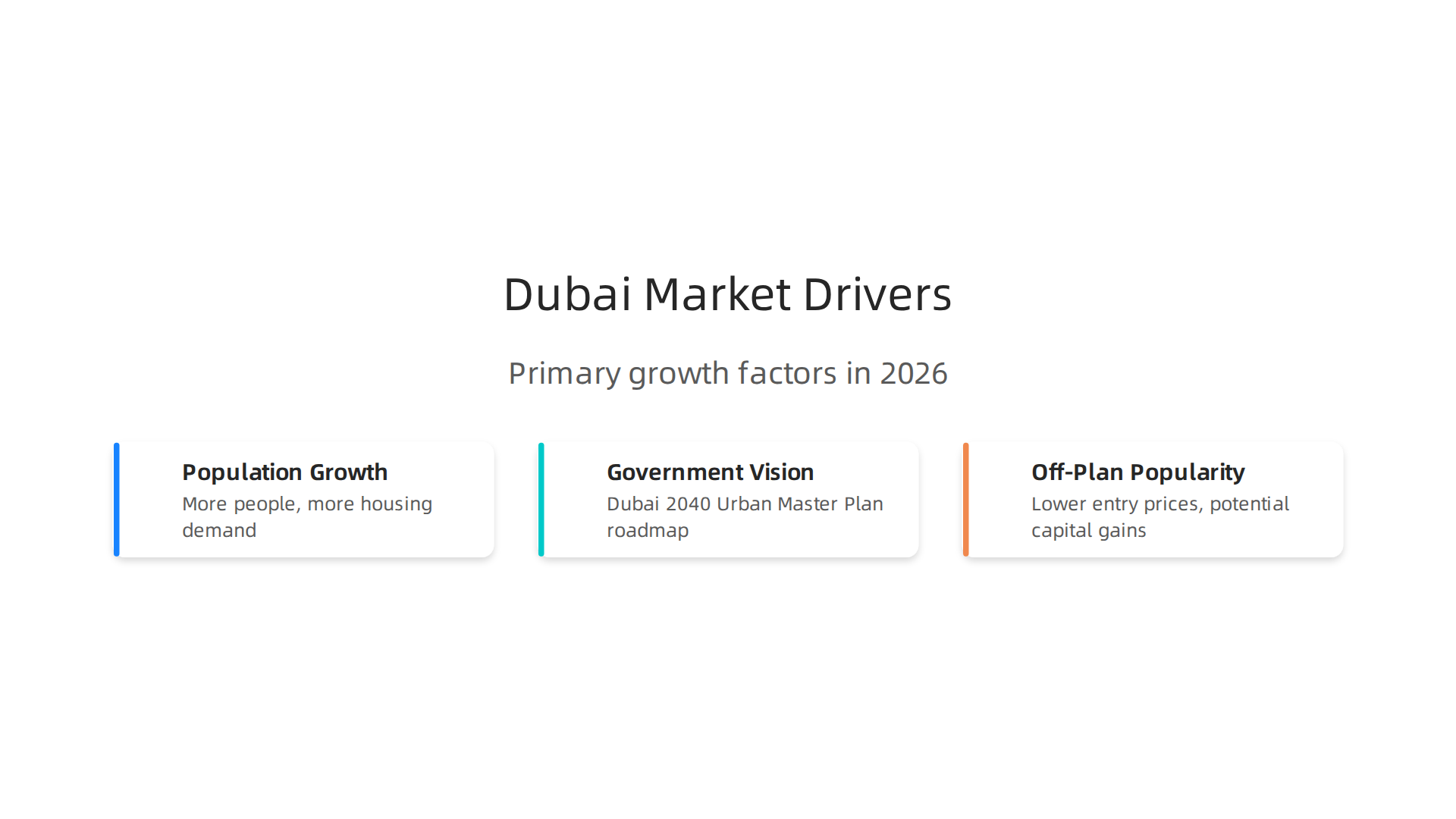
Population keeps growing. More people means more demand for homes. Dubai’s population is rising fast as professionals, families, and entrepreneurs move here for jobs, safety, and a high quality of life. Tourism is also bouncing back stronger than ever. Millions of visitors each year need short-term rentals, hotels, and serviced apartments. This constant flow of people keeps both residential and commercial properties in high demand.
The government has a long term vision. The Dubai 2040 Urban Master Plan is not just a document. It is a real roadmap that shows exactly where the city is heading. It highlights key development areas that are set to see big improvements in infrastructure, green spaces, and transport. Properties in these zones tend to appreciate faster because the city is actively investing in them. If you understand this plan, you can spot neighborhoods that will likely grow in value over the next decade.
Right now, off-plan properties are stealing the show. In the first quarter of 2026, the off-plan segment led the charge with massive sales volumes. Buyers are rushing to secure properties at lower entry prices before construction finishes. But here is the catch. Off-plan comes with waiting time and some risk. Ready properties, on the other hand, let you start earning rental income immediately. The townhouse segment saw a 20% jump in transactions year on year, while villas also posted strong gains. Both paths can work, but you need to match them to your goals.
So what does all this mean for you? It means you have to pay attention to the bigger picture. The market is not random. It follows trends shaped by people, policy, and data. When you understand these dynamics, you can make choices that actually make sense for your money.
Want to explore how to take action based on these trends? Check out this step by step guide on how to start real estate investment in Dubai for a full walkthrough.
And if you want personal help making sense of it all, you can get a free Dubai real estate consultation with Ayaz Salman. He can answer your specific questions and help you find the right property for your goals.
Legal and Regulatory Framework: DLD, RERA, and Ejari Explained
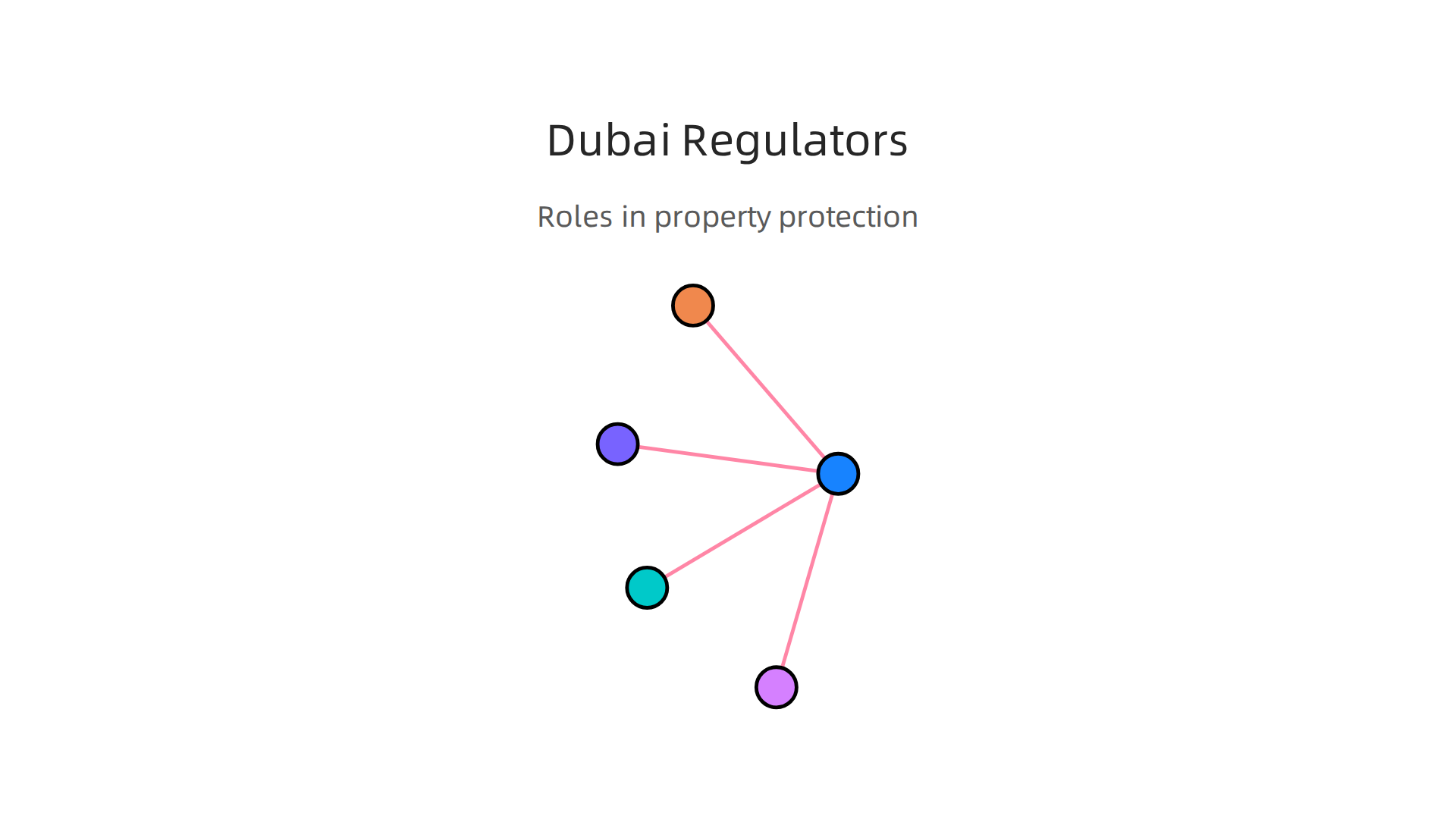
Now that you understand the market dynamics, let’s talk about the rules that keep everything fair. Dubai’s real estate market has a strong legal backbone. Three main players protect your money and your rights.
If you want to succeed in real estate and investment here, you need to know them.
The Dubai Land Department (DLD) is the main authority. Think of it as the government body that oversees all property transactions. Every sale, transfer, and registration goes through them. They make sure everything is legal and recorded properly.
The Real Estate Regulatory Authority (RERA) works under the DLD. RERA sets the rules for developers, brokers, and investors. They enforce standards and protect consumers. One of their biggest jobs is managing escrow accounts for off-plan projects. An escrow account is a special bank account where your money sits safely until the developer finishes construction. RERA makes sure developers can only access that money for building costs, not for other things. Every off-plan project must be registered with DLD and linked to a RERA-approved bank before any sales can happen. This is a major safety net for anyone investing in real estate loans or buying off-plan.
Escrow accounts are mandatory for all off-plan sales. When you pay for a property that is not built yet, your money goes into this protected account. The developer cannot touch it for anything except construction. If the project stops, your money is still there. This rule protects you from bad developers. In fact, DLD has fined developers big amounts for not following escrow rules. Always check that a project has a valid escrow account before you pay anything. You can verify this through the Dubai REST app.
Ejari is the system for rental contracts. If you plan to rent out your property, you must register the tenancy contract with Ejari. This is not optional. It makes the agreement official and protects both landlords and tenants. If you ever have a dispute, an unregistered contract is much harder to enforce. As a real estate tip for investors, always register your rental contracts through Ejari immediately.
Oqood is the registration system for off-plan purchases. When you buy an off-plan property, you get an Oqood certificate. This proves your ownership before the unit is finished. It also protects your rights during construction.
These rules might sound like a lot at first. But here is the truth. They exist to make investing safer. Dubai wants to attract smart money. That means they build systems to protect you.
Need more help understanding how these rules apply to your situation? Read this practical guide on real estate trust investment in Dubai for smarter strategies.
And if you want personal guidance through the legal process, you can get a free Dubai real estate consultation with Ayaz Salman. He knows these systems inside and out.
Off-Plan vs. Ready Properties: Weighing Risks and Rewards
Now you know the rules that protect your money. But the biggest question for real estate and investment in Dubai still remains. Should you buy off-plan or a ready property?
This choice can shape your whole investment journey. Both paths have strong supporters. But the right answer depends on your goals, your timeline, and your comfort with risk.
Let me break it down simply.
What is an off-plan property? You buy a unit before it is built. You pay based on a construction schedule. The developer builds it, and you wait for completion. This is popular because prices are lower at the start. Buyers often get flexible payment plans that make the purchase easier on cash flow. Many off-plan projects also see big price jumps by the time they finish, which means serious capital gains. According to a comparison by Holo, off-plan properties often provide a great entry point into the market with high return potential. But there is a flip side. Delays happen. Market conditions can shift. You cannot inspect a unit that does not exist yet. That is why the escrow rules we covered earlier are so important. Always check the developer’s track record before committing.
What is a ready property? A completed unit you can see, touch, and move into right away. You know exactly what you are getting. The neighborhood is built. The amenities are working. And best of all, you can start earning rental income from day one. This is a huge advantage if cash flow matters to you. Ready properties typically cost more upfront. But they give you immediate returns and less uncertainty. A Betterhomes guide to off-plan versus secondary properties notes that ready homes let you inspect everything before you buy.
So which one makes you richer? That depends on your strategy.
If you have a longer timeline and can handle some uncertainty, off-plan can deliver higher returns. If you want stability and immediate income, a ready property is safer.
A balanced approach often makes sense. Many smart investors build a mix. They buy off-plan for growth potential and ready properties for steady rental income. This spreads the risk.
The table below shows the key differences at a glance.
| Feature | Off-Plan Property | Ready Property |
|---|---|---|
| Entry price | Lower | Higher |
| Payment plan | Staged over construction | Full payment or mortgage |
| Immediate rental income | None until completion | Yes, from day one |
| Physical inspection | Not possible | Possible before buying |
| Main risk | Project delays, market shifts | Higher entry cost |
| Best for | Long-term growth | Steady cash flow |
Your real estate tips for investors should include this one: know your own goals first. Do you want quick cash or long-term gains? Are you patient or do you want results now? Answer these questions honestly.
If you are still unsure about where to start, our step-by-step guide on how to start real estate investment in Dubai in 2026 walks you through the process from scratch.
Getting the right advice can save you from costly mistakes. That is why I recommend this FREE Dubai Real Estate Consultation with Ayaz Salman. He has helped countless investors find the right property for their goals, whether off-plan or ready. There is no pressure, just honest guidance.
Calculating Rental Yields and Capital Appreciation in Dubai
You have decided between off-plan and ready. Now you need to know if the numbers actually work. This is where real estate and investment get exciting.
Two numbers matter most. Rental yield tells you your annual income. Capital appreciation tells you your long-term gain. Together they show your total return.
Let us start with rental yield. It is simple math. Divide your annual rental income by the property price. Multiply by 100. That is your percentage return.
Dubai shines here. The city consistently offers gross rental yields of 5% to 9%. Compare that to London or Hong Kong where yields often sit below 3%. That difference is massive over time. As of 2026, the average gross rental yield in the UAE stands near 5.45%, according to Global Property Guide data.
Some areas perform much better. Mid-market apartments in communities like Dubai Silicon Oasis or Dubai Sports City can push up to 8.5% or even 9%, as noted in a LuxHabitat breakdown of communities with the best rental yields in Dubai.
GuestReady also reports that a studio in Business Bay can give you around 6.68% annually.
Here is a real estate investment tip that many beginners miss. Do not just look at the average. Look at the specific community. A luxury villa in Palm Jumeirah might yield 4%. A mid-range apartment in Jumeirah Village Circle could yield 7%. Same city, very different numbers.
Now let us talk about capital appreciation. This is the increase in property value over time. Dubai has seen strong price growth. In Q1 2026, the market recorded Dh176.7 billion in sales from nearly 48,000 transactions, as reported by Khaleej Times. Engel & Völkers noted that transaction volumes and total sales value rose sharply year on year in their January 2026 market snapshot. Townhouses saw a 20% increase in transaction volume, per the Global Property Guide analysis.
Capital appreciation depends on three things. Location, community quality, and macro-economic trends. A property near a new metro station or in a master-planned community tends to grow faster. Areas with strong demand and limited supply see the biggest jumps.
So how do you estimate these numbers before you buy?
The RERA Rental Index is a great starting point. It shows average rents for different areas. Use it to calculate realistic rental yields. You can also use third-party data from platforms like DXBinteract for daily market trends. For capital appreciation, look at historical price trends in your chosen area. Check how prices moved over the last three to five years.
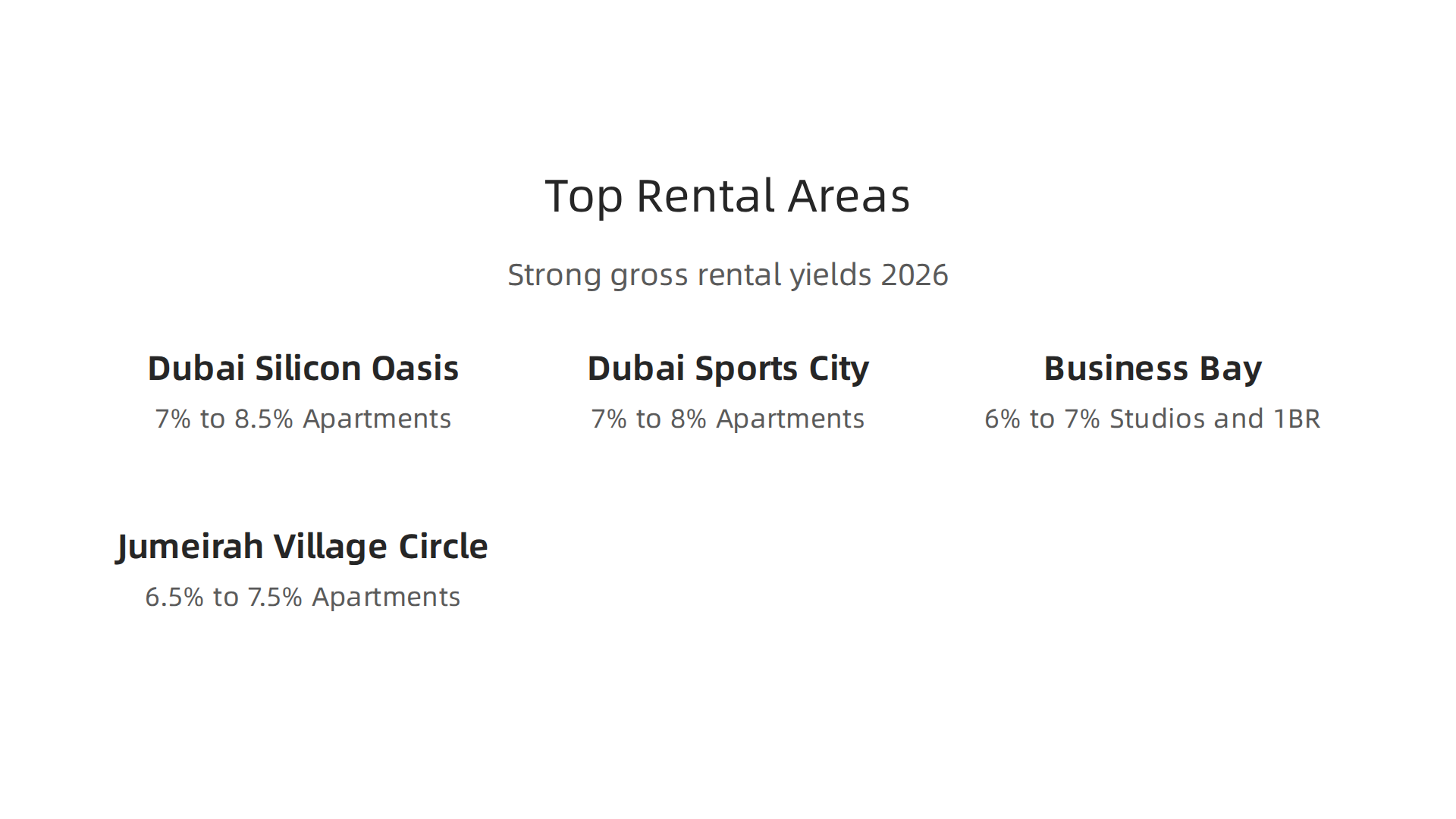
To make it easier, here is a quick look at areas with strong yield potential in 2026.
| Area | Typical Gross Rental Yield | Property Type |
|---|---|---|
| Dubai Silicon Oasis | 7% to 8.5% | Apartments |
| Dubai Sports City | 7% to 8% | Apartments |
| Business Bay | 6% to 7% | Studios and 1BR |
| Jumeirah Village Circle | 6.5% to 7.5% | Apartments |
Remember that real estate tips for investors always include this. Never buy based on yield alone. Check for quality construction, good management, and future development plans.
If you want to explore other ways to invest without buying a whole property, you can learn about Dubai REITs in 2026. They offer a different path to market returns.
Still unsure what numbers to target for your specific budget? That is exactly why you should connect with an expert. Get your FREE Dubai Real Estate Consultation with Ayaz Salman. He can help you calculate realistic yields and find the right property for your goals.
Next, we will walk through how to calculate your actual returns including all costs.
Hidden Costs and Due Diligence: What Every Investor Must Check

So you have calculated your rental yields and love the numbers. The potential returns look solid. But here is something many real estate and investment beginners miss. There are hidden costs beyond the purchase price that can eat into your profits.
Let us break down the most common costs first.
- DLD transfer fee: 4% of the property price. This is paid to the Dubai Land Department when you register the property in your name.
- Agent commission: Usually 2% of the purchase price plus VAT.
- Registration fees: A small fee paid to the Dubai Land Department, typically around AED 4,000 plus VAT.
- Annual service charges: These are ongoing costs for maintaining common areas, security, and facilities in your building or community.
- VAT: 5% on most real estate services including agent commissions and registration fees.
These costs add up fast. A AED 1 million property might need an extra AED 70,000 or more upfront just for fees. Real estate tips for investors always include budgeting for these expenses from day one.
Now let us talk about due diligence. This is where you protect your money from real problems.
First, check the developer track record. You want a developer who has delivered projects on time and without quality issues. Visit previous projects if possible. Talk to existing owners.
Second, and this is critical for off-plan purchases, verify the escrow account. In Dubai, every off-plan project must have a RERA approved escrow account linked to a licensed bank. Your payments must go into this account, not directly to the developer. These funds are protected by UAE law and can only be used for construction costs of that specific project. You can check if a project is registered through the Dubai REST app or the Dubai Land Department website.
Third, always verify the title deed. Make sure the seller or developer actually owns the property and that there are no existing mortgages or disputes. The DLD website has a verification tool for this.
Failure to do proper due diligence can lead to real problems. In 2024, the Dubai Land Department fined three developers AED 1.5 million for not complying with escrow account regulations. That is not something you want to discover after you have paid your money.
For a more complete walkthrough of what to check, you can read this due diligence guide to choosing a real estate investment company in Dubai.
Here is the key real estate investment tip for this section. Always take the time to verify. A small delay in your purchase is better than a major loss later.
Does this all feel like a lot to manage? That is understandable. Real estate and investment decisions require careful planning. You do not have to do it alone. Connect with an expert who knows the rules and can guide you past the pitfalls.
Get your FREE Dubai Real Estate Consultation with Ayaz Salman today and make sure you cover every cost and legal requirement before you sign.
How to Choose the Right Dubai Neighborhood for Your Investment Goals
You have done the math on costs and due diligence. Now comes the fun part. Where should you actually buy? The neighborhood you choose will make or break your real estate and investment returns.

Picking the wrong area is one of the most common real estate investment tips that beginners overlook.
Here is the truth. Dubai is not one market. It is many micro markets. Each neighborhood behaves differently. Some areas give you strong rental income but slow price growth. Others offer big capital gains but lower rent. Your job is to match the area to your personal goals.
High Demand but Lower Growth Areas
Neighborhoods like Dubai Marina and Downtown Dubai have very high rental demand. Tenants love living there. You will rarely have a vacant unit. But the property prices are already high. That means your upside for capital appreciation is smaller. You buy for steady cash flow, not for a huge future jump in value.
According to market data, mid-market apartments in areas like Business Bay can deliver annual yields around 6.68%. Prime luxury areas offer lower rental yields, often in the 4% to 5% range. So if you want monthly income, a proven community like Jumeirah Village Circle (JVC) might be a better fit.
Emerging Areas with Upside Potential
Emerging neighborhoods such as Dubai South, Dubai Creek Harbour, and Meydan City are different stories. These areas are still developing. Prices are lower today. But future infrastructure projects, new metro lines, and master plans can push values higher over time. You take more risk, but the reward can be bigger.
For example, International City has consistently delivered gross rental yields between 8% and 10% according to 2026 data. That is far above the citywide average of around 5.27%. Areas like Dubai Silicon Oasis and Dubai Sports City also offer higher yield percentages than luxury districts.
What Factors Should You Weigh?
Do not pick a neighborhood based on a friend’s recommendation or a single Instagram post. Use a data driven approach. Look at these factors:
- Proximity to metro stations – Properties near transit lines rent faster and hold value better.
- Schools and family amenities – Family oriented communities like Arabian Ranches attract long term tenants.
- Community vibe – Is it quiet or lively? Match it to your target tenant.
- Future development plans – Check if new malls, parks, or business hubs are coming. That can boost appreciation.
- Current supply – Too many new units coming online can push rents down.
You can find transaction histories and rental indices on the Dubai Land Department website or through property portals. Using actual numbers instead of gut feelings reduces emotional bias.
If you want a complete walkthrough of the entire process, this step by step guide to starting your real estate investment in Dubai covers everything from neighborhood analysis to closing the deal.
Still not sure which area fits your goals? You do not need to figure it out alone. An experienced guide can look at your budget, timeline, and risk tolerance to recommend the right neighborhood.
Get your FREE Dubai Real Estate Consultation with Ayaz Salman today and let an expert help you pick the perfect location for your investment.
Summary
Dubai’s property market is booming in 2026, but rapid growth brings complexity that demands a clear strategy rather than guesswork. This article explains the market drivers—population growth, tourism recovery and the Dubai 2040 master plan—and breaks down the legal framework (DLD, RERA, Ejari, Oqood) that protects buyers, especially in off‑plan deals. It compares off‑plan versus ready properties, shows how to calculate rental yields and capital appreciation, and highlights communities with strong returns. The guide also lists hidden costs (DLD fees, agent commissions, service charges, VAT) and gives a practical due‑diligence checklist to avoid costly mistakes. Finally, it helps you match neighborhood choice to your goals and points to alternative vehicles like REITs, so you’ll know how to evaluate opportunities and structure investments with less risk.