
How to Invest in Dubai REITs in 2026 A Guide to Real Estate Investment Trusts
· 21 min read

Introduction
Have you ever wanted to invest in Dubai real estate but felt put off by the high upfront costs, the hassle of property management, or the confusion of navigating a foreign market? You are not alone. Many investors dream of owning a slice of Dubai’s booming property market but get stuck on the practical barriers.
That is where REITs come in.
A Real Estate Investment Trust, or REIT, lets you invest in real estate like a stock. You buy shares in a trust that owns income-producing properties. The trust then pays you a share of the rental income as dividends. It is that simple.
The Dubai Financial Market lists several REITs that give you exposure to commercial, residential, and mixed-use properties across the UAE. According to the Dubai Financial Market, these Sharia-compliant investment vehicles offer a regulated way to invest in real estate without buying a physical property.

Why does this matter right now? The GCC REIT market is worth USD 18.64 billion in 2026 and is growing at a rate of 8.01% each year, according to a Mordor Intelligence report. Dubai is a key part of that growth. Investors are turning to REITs for their liquidity, diversification, and steady dividend income. For example, Dubai Residential REIT recently showed a dividend yield around 6.5%, which is attractive for income-focused investors.
If you are looking for a smarter way to invest in real estate investment trusts (REITs) in Dubai, this guide is for you.

We will cover the top trusts, explain how to get started step by step, and share the key benefits and risks. Think of this as your clear, data-driven map to Dubai REITs in 2026.
If you want more personalized help, connect with Ayaz Salman for a free Dubai real estate consultation. He can walk you through your options based on your unique goals.
First, let us explore why Dubai REITs have become such a powerful tool for investors around the world.
What Are REITs? A Primer on Dubai Real Estate Investment Trusts
So let’s get clear on what a REIT actually is. A Real Estate Investment Trust is a company that owns, operates, or finances income-producing real estate. Think of it like a mutual fund for property. You buy shares, and the trust uses that money to buy buildings like office towers, apartment complexes, or shopping malls. The rental income from those properties flows back to you as dividends.
The Dubai REIT landscape is unique because it is tightly regulated. These trusts trade on the Dubai Financial Market and must follow rules set by the Dubai Financial Services Authority and the Real Estate Regulatory Authority. The Dubai Financial Market explains that all listed REITs are Sharia-compliant, which means they avoid interest-based financing and invest only in permissible assets. This makes them a natural fit for many investors in the region.
How REITs Compare to Direct Property Ownership
Why would you choose a REIT over buying a physical apartment in Dubai Marina? The answer comes down to three big advantages.
| Feature | Direct Property | REIT |
|---|---|---|
| Minimum Investment | AED 500,000-plus | Price of a few shares |
| Liquidity | Months to sell | Trade like a stock |
| Management | You handle tenants, repairs | Professional team does it |
| Diversification | One property | Many properties |
Buying a villa means you need a big chunk of cash, you have to find tenants yourself, and you cannot sell quickly if you need money. A REIT solves all of that. You can start with a very small amount, your money is not locked up, and experts manage the day-to-day operations.
This structure is why many people now choose to invest in real estate investment trusts REITs instead of dealing with the headaches of being a landlord. For a deeper look at how to evaluate these trusts properly, check out our guide on real estate trust investment in Dubai.
The best part? You get exposure to the same growing Dubai market that attracts global investors. The GCC REIT Market was worth USD 18.64 billion in 2026 and is expanding fast. By owning shares in a REIT, you ride that wave without needing a real estate license.
If you are ready to explore your options, connect with Ayaz Salman for a free Dubai real estate consultation. He can help you match a REIT to your goals.
Next let’s look at the specific types of REITs available in Dubai and which ones might fit your strategy.
Why Invest in Dubai REITs in 2026? Key Benefits and Market Trends
So you know what a REIT is and how it stacks up against buying a villa. But why should you consider Dubai REITs specifically in 2026? The short answer is that the numbers look really good right now.
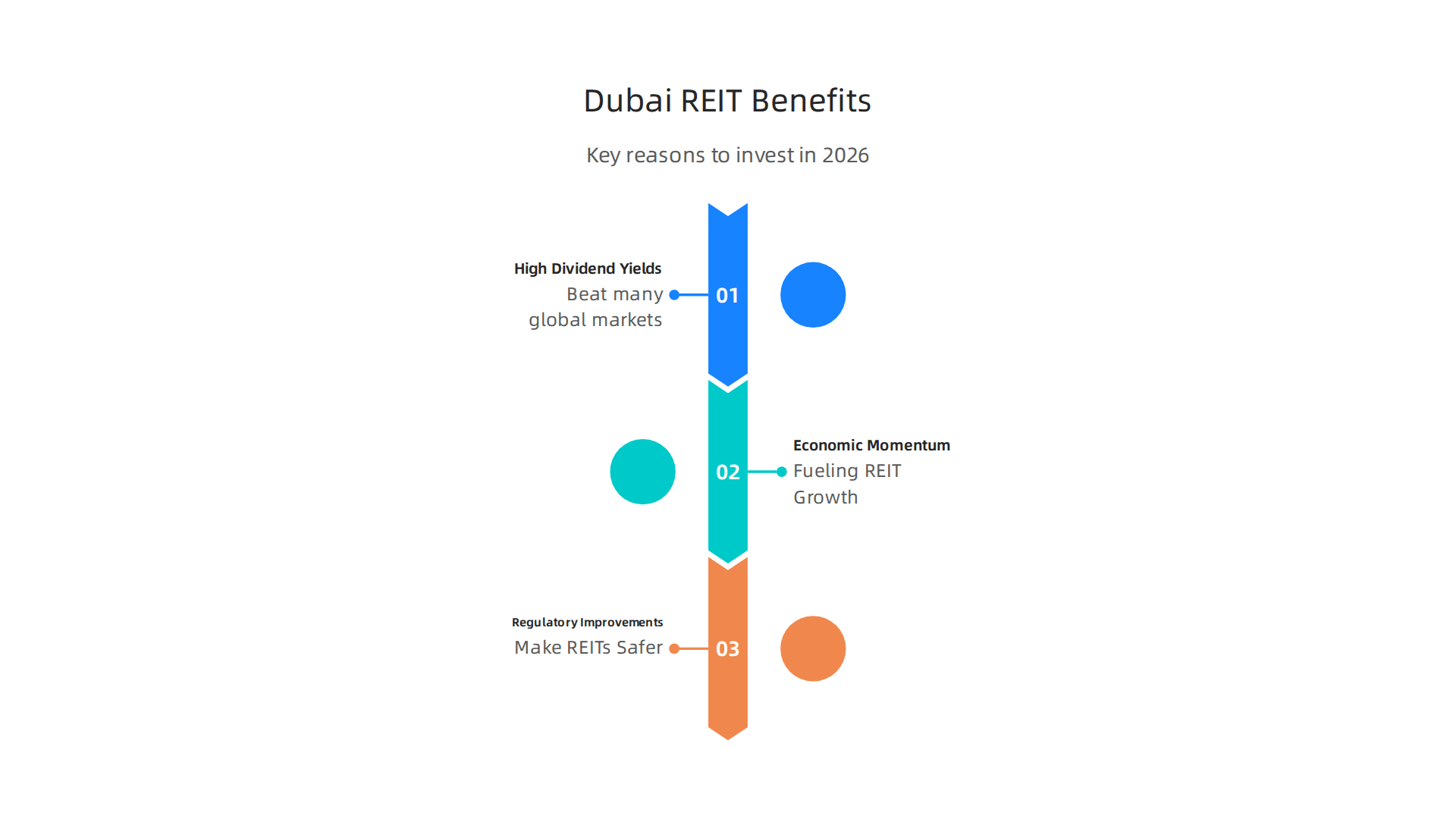
High Dividend Yields That Beat Many Global Markets
One of the biggest draws of Dubai REITs is their dividend yield. The Dubai Residential REIT (DUBAIRESI) currently offers a yield of around 6.5%. Another source shows a trailing twelve-month yield of 6.83%. That means for every 100 AED you invest, you could get roughly 6.5 to 7 AED back each year in dividends.
Compare that to REITs in many mature markets, and Dubai stands out. While global REITs have had a strong year (all equity REITs were up 10.5% year to date as of February 2026, according to Nareit), Dubai’s yields often sit in the 6-8% range. That is a solid return, especially when interest rates are still settling.
Dubai’s Economic Momentum Is Fueling REIT Growth
Here is the thing. The Dubai property market is on fire. In Q1 2026 alone, property deals hit $68.6 billion, and transaction value grew by 31% compared to the previous year. That kind of activity lifts all boats, including REITs.
Why does that matter for you? When property values rise and rental income stays strong, the underlying assets in a REIT gain worth. That means your share price can go up too, giving you both dividend income and capital appreciation.
Tourism is also booming again. More visitors means more demand for hotels, retail spaces, and apartments. REITs that own these properties benefit directly from that foot traffic.
Regulatory Improvements Make REITs Safer
Dubai has been tightening its rules around REITs to protect investors. Every listed REIT on the Dubai Financial Market must follow strict guidelines from the Dubai Financial Services Authority and the Real Estate Regulatory Authority. They also have to be Sharia-compliant, which means no interest-based deals and only permissible assets.
That gives you peace of mind. You are not throwing money at some unregulated vehicle. You are buying into a transparent, regulated trust that has to report its performance regularly.
The government is also pushing green building initiatives and sustainable development. REITs that invest in energy-efficient buildings often qualify for incentives, which can boost their profitability.
The Big Picture for 2026
The entire GCC REIT market was worth USD 18.64 billion in 2026, and it is growing at a compound annual rate of over 8%. Dubai is a big part of that story. When you choose to invest in real estate investment trusts REITs here, you are tapping into a market that has strong fundamentals, clear regulations, and growing demand.
If you are ready to put this knowledge into action, start with a clear plan. Our guide on how to start real estate investment in Dubai walks you through the first steps, whether you choose REITs or direct property.
And if you want personalized advice, reach out to Ayaz Salman for a free Dubai real estate consultation. He can help you pick the right REIT for your goals.
Next, let’s break down the different types of REITs in Dubai and which ones might fit your strategy best.
Top Dubai REITs to Watch in 2026
Now that you know why Dubai REITs are a strong play this year, let’s look at the specific trusts worth your attention. Not all REITs are the same. Some focus on residential apartments, others on office towers or shopping malls. Here are the top options as of 2026.
Dubai Residential REIT (DUBAIRESI)
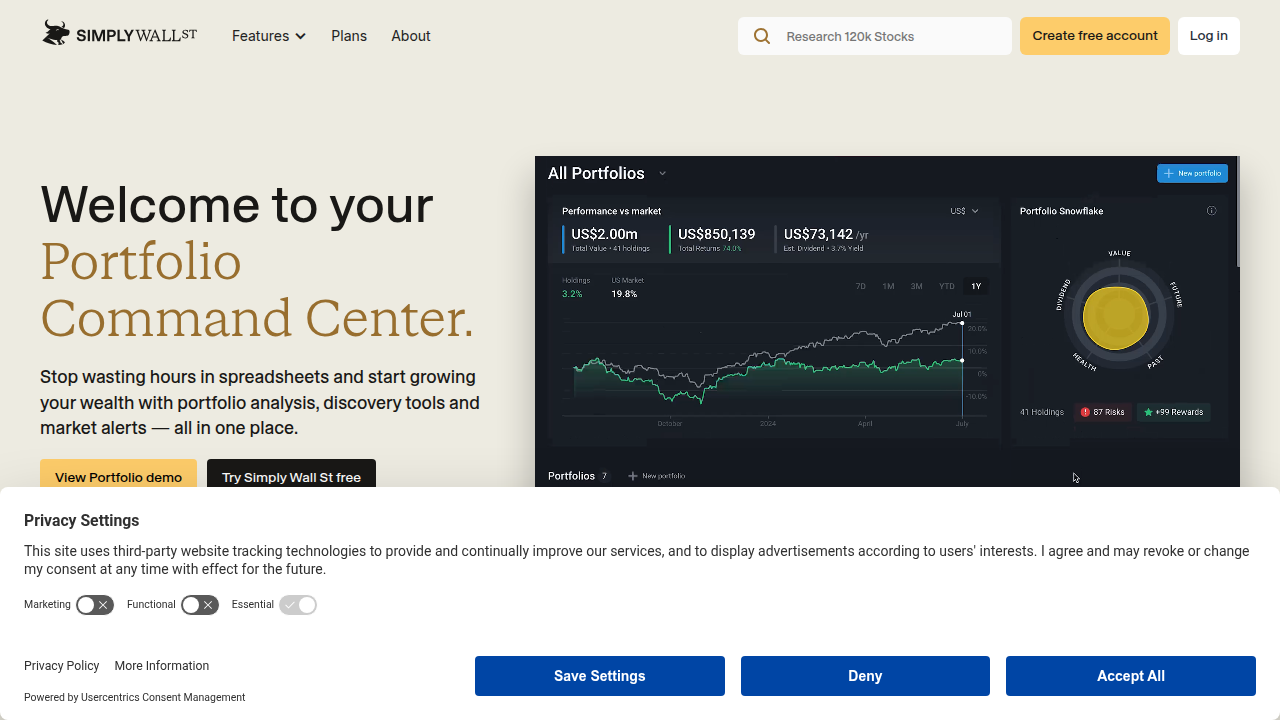
This is one of the most popular REITs on the Dubai Financial Market. As the name suggests, it owns residential properties across Dubai. The current dividend yield sits at about 6.5%, according to Simply Wall St, with a trailing twelve-month yield of 6.83% per TradingView. The payout ratio is around 76%, meaning most of its earnings get passed to you as dividends.
This REIT gives you direct exposure to Dubai’s booming residential rental market. If you are looking to invest in real estate investment trusts REITs that focus on stable rental income, this is a solid pick.
ENBD REIT
Backed by Emirates NBD, one of the UAE’s largest banks, ENBD REIT is a Sharia-compliant trust that invests across multiple sectors:
office, retail, and industrial. It offers more diversification than a pure residential REIT. While it does not publish a fixed dividend yield publicly, historical payouts have been competitive for income-focused investors.
Because it is managed by a major financial institution, you get added oversight and professional management. That matters when you are learning how to invest in real estate investment trust vehicles safely.
Other REITs on the DFM
The Dubai Financial Market lists several other REITs covering different property types. According to Land Sterling’s guide, some focus on commercial offices, while others own retail malls. As the GCC REIT market grows at over 8% annually, more listings are expected in 2026, including potential new funds that may target sectors like healthcare or data centers.
If you plan to invest in real estate investment trusts REITs, always check the property sectors they own. A mix of residential, office, and retail can lower your risk.
Which One Is Right for You?
Your choice depends on your goals. Want steady dividends from homes people actually live in? Go with Dubai Residential REIT.

Prefer a diversified basket managed by a bank? ENBD REIT fits.
Before you buy any REIT, do your homework. Read our full guide on real estate trust investment in Dubai to learn the due diligence steps.
And if you want personalized help picking the right REIT for your portfolio, reach out to Ayaz Salman for a free Dubai real estate consultation. He can match you with the best option for your budget and timeline.
How to Invest in Dubai REITs: A Step-by-Step Guide
You’ve picked a few REITs from our list. Now the big question: how do you actually buy them? The good news is the process is simpler than buying a physical apartment. You don’t need a mortgage, a property agent, or a trip to the Dubai Land Department.
Here are the steps to invest in real estate investment trusts REITs in Dubai.
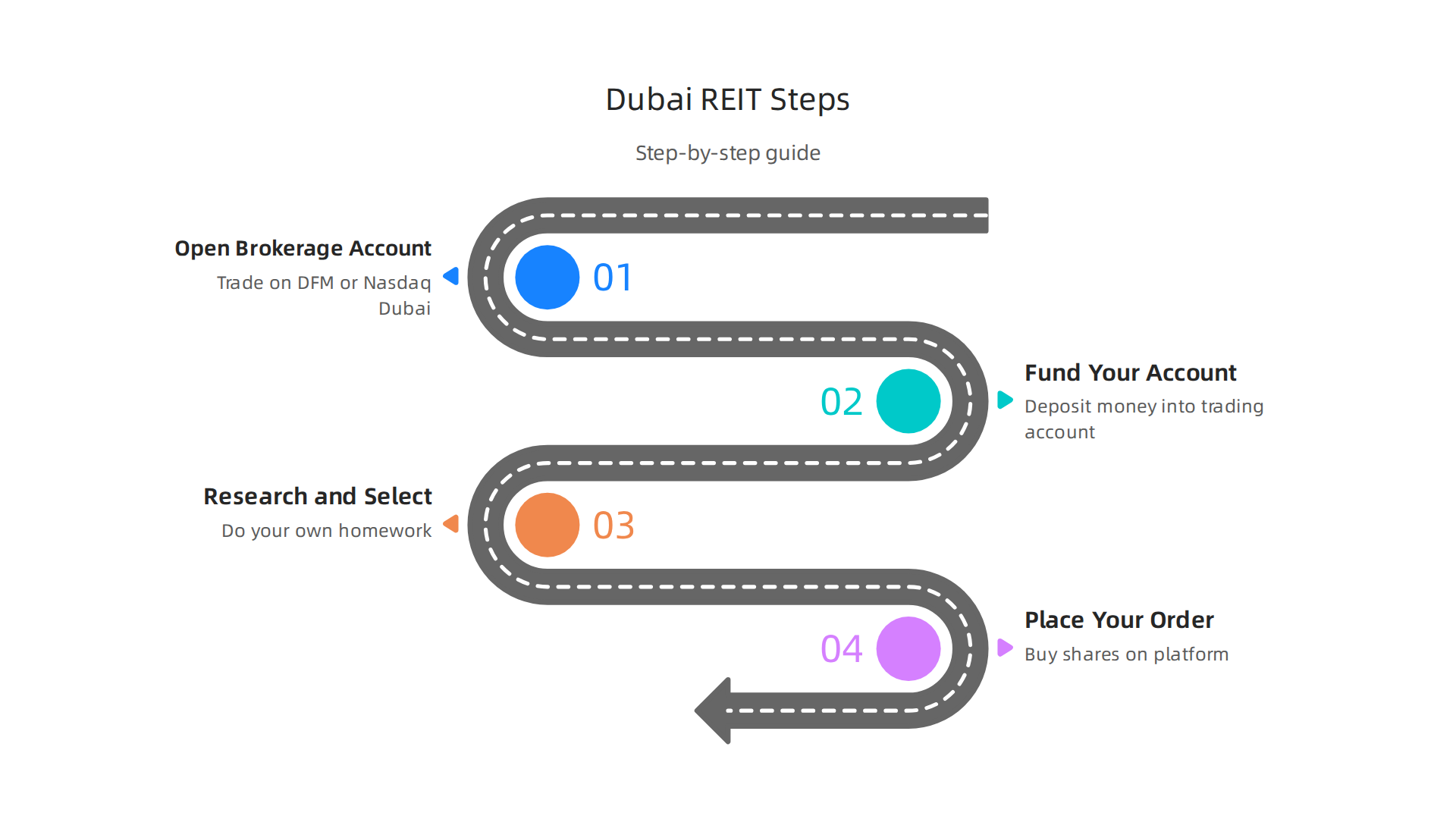
Step 1: Open a Brokerage Account
You need a trading account to buy shares on the Dubai Financial Market or Nasdaq Dubai. You have a few options:
- Local UAE brokers: Firms like Al Dhabi Capital, EFG Hermes, or Emirates NBD Securities let you trade on the DFM directly.
- International brokers: Platforms like Interactive Brokers or Saxo Bank offer access to the DFM. They may charge higher fees but work well if you live outside the UAE.
Opening an account typically takes a few days. You’ll need a passport copy, proof of address, and in some cases a UAE residency visa (though international brokers often waive this).
Step 2: Fund Your Account
Once approved, deposit money into your trading account. Most brokers accept bank transfers. Minimum funding varies. Some UAE brokers ask for a minimum deposit of AED 5,000. Others have no minimum at all.
Check your broker’s fee schedule too. According to the Redubai REIT guide, typical costs include a brokerage commission of 0.1% to 0.5% per trade and a small custody fee for holding shares.
Step 3: Research and Select Your REITs
You’ve already seen our top picks. But do your own homework. Use resources like Propertyfinder’s Dubai REIT guide to understand each trust’s portfolio and dividend history.
Look at things like:
- Property sector (residential, office, retail, or even a data center real estate investment trust if one launches)
- Dividend yield and payout ratio
- Management team and track record
- Total expense ratio (TER)
Step 4: Place Your Order
Log into your broker platform. Search by the REIT’s ticker symbol (for example, DUBAIRESI on the DFM). Choose how many shares you want to buy. REITs trade like regular stocks, so you can buy as few as one share. The minimum investment can be as low as AED 5 to AED 10 per share for some trusts.
Choose a market order (buys at current price) or a limit order (set your price). Confirm the trade.
Alternative Ways to Invest
If managing a brokerage account sounds like work, you have other routes:
- Through a fund: Some mutual funds or ETFs include Dubai REITs. This gives you instant diversification.
- Through a financial advisor: A professional can recommend specific REITs and handle the paperwork. This is especially helpful if you plan to how to invest in real estate investment trust as part of a larger portfolio.
Before you put money in, read our full guide on how to start real estate investment in Dubai for more context on fees and due diligence.
Ready to take the next step?
Not sure which REIT or broker suits you best? Ayaz Salman can walk you through the process.

Get a free Dubai real estate consultation and start earning passive income from Dubai real estate without buying a single brick.
Risks and Challenges of REIT Investing in Dubai
You have the steps down, and you are excited about those dividend payouts. But let’s keep it real. Every investment carries risk. Even a well run data center real estate investment trust can hit a bump. Knowing the downsides before you put money in will save you headaches later. Here are the main risks you should watch out for when you invest in real estate investment trusts REITs in Dubai.
Market Risk: Property Cycles and Sector Concentration
Real estate markets go up and down. Dubai is no different. When property prices fall, REIT share prices can drop too. In 2026, Dubai faces some short term risks. A UBS report noted that Dubai may see higher short term risks due to pricing levels and international buyer exposure. That means REITs tied to hotels or retail spaces could feel the pinch faster than others.
Also, many Dubai REITs focus on one sector. If you buy a hospitality REIT and tourism slows, your dividend could shrink. Diversifying across multiple REITs or using a fund can help, but concentration risk is real. Remember, even a data center real estate investment trust depends on demand for cloud storage and AI. If that demand drops, so does the value.
Currency Risk: The AED Peg and Repatriation Costs
Your dividends will be paid in UAE dirhams (AED). The AED is pegged to the US dollar, so exchange rate swings against your home currency are small. That is a plus. However, moving money out of the UAE costs money. Bank transfer fees, currency conversion charges, and withholding taxes on dividends can eat into your returns. Before you how to invest in real estate investment trust and send funds back home, check what your bank charges.
Regulatory Risk: Rules Can Change
The Dubai Financial Services Authority (DFSA) oversees REITs in the DIFC. In 2026, the DFSA published its business plan focusing on risk based regulation and innovation. They also introduced amendments to legislation in May 2026 that will take effect in 2027. New rules could change how REITs are taxed or how much they must distribute. That would affect your dividend income.
Foreign ownership rules can also shift. While Dubai is investor friendly, no government guarantees its policies forever. Stay updated on regulatory news. A good way to stay informed is to read our guide on real estate trust investment in Dubai and due diligence.
The Bottom Line on Risks
Do not let these risks scare you away. Every asset class has them. The trick is knowing what they are and planning around them. Spread your money across different REITs, keep an eye on regulatory changes, and factor in repatriation costs.
Still unsure how these risks apply to your situation? That is normal. Ayaz Salman can help you look at your portfolio and find the safest path. Get a free Dubai real estate consultation and invest with your eyes wide open.
Dubai REITs vs Direct Property Investment: A Detailed Comparison
You have seen the risks. Now you need to decide which path works best for your goals. Do you buy a physical apartment or villa in Dubai? Or do you invest in real estate investment trusts REITs instead?

Both options have fans. But they work very differently. Let us break down the main differences in liquidity, costs, and returns.
Liquidity: Selling Speed Matters
Here is the biggest difference. With direct property, selling a home can take months. You need to find a buyer, negotiate, sign contracts, and wait for transfer. That process is slow. With a REIT, you sell your shares on the Dubai Financial Market in seconds. Just like selling a stock. That kind of liquidity is a game changer if you need cash fast. Experts point out that liquidity is one of the biggest advantages of REITs. Direct property, on the other hand, locks your money up for much longer.
Costs: Lower Entry, But Less Control
Buying a direct property in Dubai comes with big upfront costs. You pay a down payment, registration fees, agent commissions, and maintenance charges. A REIT lets you start with a few hundred dirhams. That is a much lower bar. Plus, REITs have lower or no costs for buying compared to direct property. You also skip the headache of dealing with tenants, repairs, and property management.
But there is a trade off. When you buy direct property, you can use a mortgage. That gives you leverage. If the property value goes up, your return on cash can be huge. With a REIT, you cannot control leverage. The fund managers decide that. So if you want to borrow to amplify gains, direct property gives you that option.
Returns: Steady Dividends vs Capital Growth
REITs in Dubai have been paying solid dividends. In 2025, the average yield for Dubai REITs was between 6% and 8%. That is higher than many global markets. You get paid regularly, often every quarter. Direct property can also give you rental income, but it might be lower after you subtract costs like service charges and vacancy periods. Plus, direct property can appreciate over time. In the first quarter of 2026, Dubai property deals hit $68.6 billion, showing strong demand. But capital gains are never guaranteed. A REIT’s share price can also go up, but the main draw is the dividend.
A data center real estate investment trust might offer different returns than a retail REIT. So you need to compare within the same sector.
Which One Is Right for You?
Here is a simple way to think about it:
| Factor | REITs | Direct Property |
|---|---|---|
| Liquidity | High (sell anytime) | Low (months to sell) |
| Entry cost | Low (hundreds of dirhams) | High (tens of thousands) |
| Management | No work needed | You handle tenants, repairs |
| Leverage | Cannot control | You can use a mortgage |
| Income | Steady dividends (6-8%) | Rental yield, capital gains |
| Risk | Market volatility | Market, legal, hidden costs |
If you want low effort and fast access to your money, how to invest in real estate investment trust is a good answer. If you want to control a physical asset and use leverage, direct property may fit better.
Not sure yet? Take the next step. Learn the basics of buying property in our guide to how to start real estate investment in Dubai a step by step guide for 2026. Then get personalized advice from someone who knows the market inside out. Get a free Dubai real estate consultation and make your move with confidence.
Tax Implications and Regulatory Framework for REIT Investors in Dubai
You have seen the main differences between REITs and direct property. But here is something many investors miss. The tax rules in Dubai can make a huge difference to your final returns. Let us break down exactly what you need to know about taxes and regulations before you invest in real estate investment trusts REITs in Dubai.
No Corporate Tax on Most REIT Income
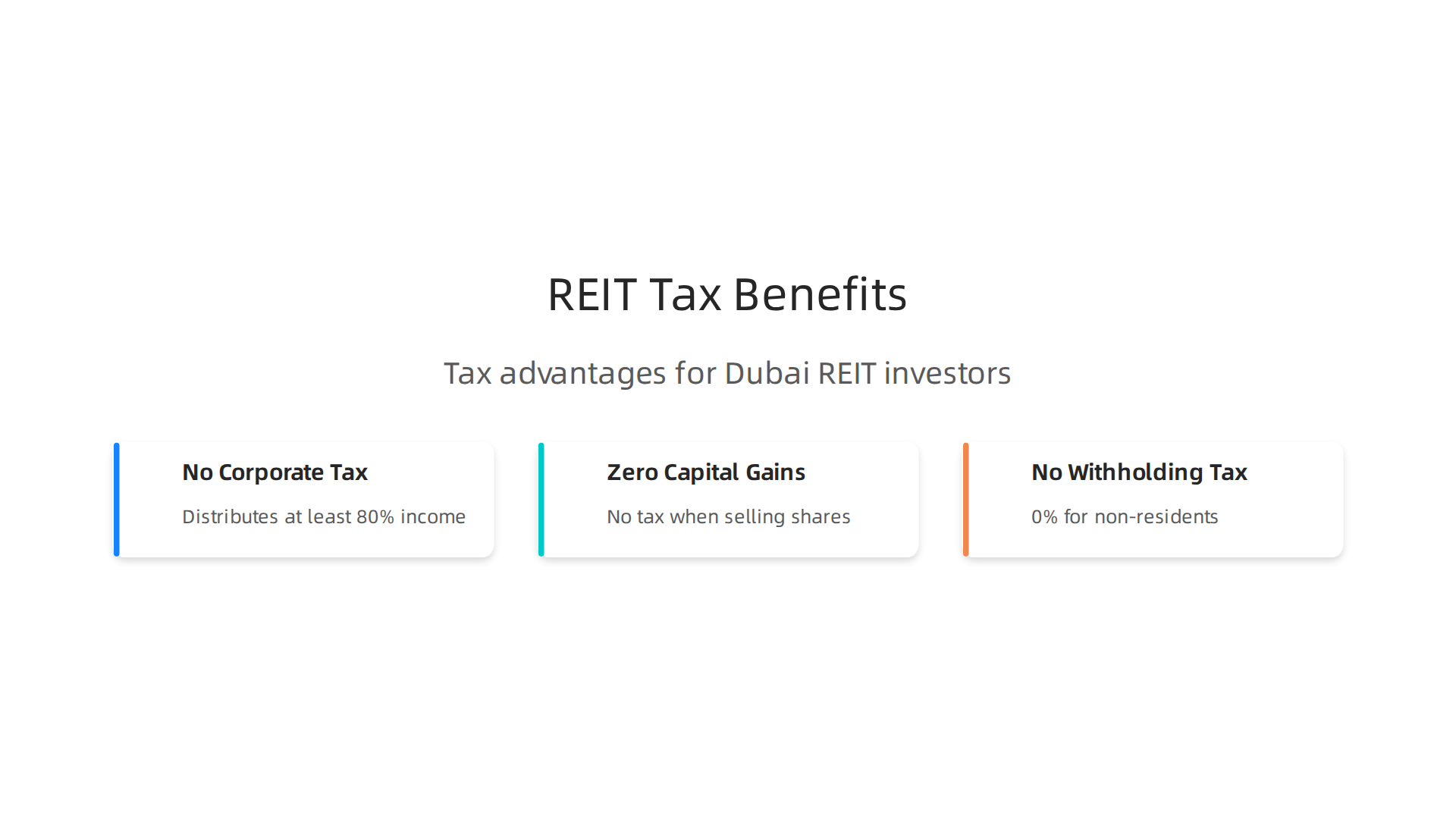
Here is a big money saver. In Dubai, a REIT generally does not pay corporate tax if it distributes at least 80% of its income to investors. That is a rule set by the Dubai Financial Services Authority (DFSA). The DFSA is the regulator that watches over financial services in the Dubai International Financial Centre (DIFC). They have a strong regulatory framework that keeps REITs honest and well managed.
This is very different from owning direct property through a company. If you buy a rental apartment under a corporate structure, you may need to file corporate tax returns. You can learn more about that in our detailed guide on how to file business taxes for your Dubai property company. But with REITs, the tax structure is much cleaner. The fund handles the compliance. You just collect your dividends.
Zero Capital Gains Tax for Foreign Investors
This is one of the best parts. When you sell your REIT shares for a profit, you pay zero capital gains tax in Dubai. Whether you own shares in a data center real estate investment trust or a retail REIT, the rule stays the same. You keep every dirham of profit.
Direct property also has no capital gains tax in Dubai. That is great. But direct property takes months to sell. REITs give you the same tax benefit with much better speed. You can sell your shares in seconds on the Dubai Financial Market.
No Withholding Tax on Dividends
When your REIT pays you dividends, the UAE government does not take a cut. There is a 0% withholding tax on dividends for non residents. That is a big deal. In many other countries, the government takes 15% to 30% of your dividend income before you even see it. In Dubai, you get the full amount.
The DFSA makes sure everything runs smoothly. They are constantly updating the rules to keep the market safe for investors. The Notice of Amendments to Legislation in March 2026 is a good example of how they improve the system over time. This active regulation gives confidence to people who want to learn how to invest in real estate investment trust structures.
One Warning: Check Your Home Country Rules
Even though Dubai does not tax your REIT income, your home country might. For example, if you live in a country with a double tax treaty with the UAE, you may not pay extra tax. But if there is no treaty, you might owe tax to your home government on the dividends or capital gains. Always check with a tax professional who knows your local laws.
Understanding the tax rules is a key part of your due diligence. If you want a complete picture, read our guide on real estate trust investment in Dubai your guide to due diligence and smart returns.
The Bottom Line on Taxes
Dubai offers one of the most tax friendly environments in the world for REIT investors. No corporate tax on most REIT income. Zero capital gains tax for foreigners. And no withholding tax on dividends. These rules make it much easier to grow your wealth.
Still have questions about how taxes apply to your specific situation? That is normal. Every investor is different. The best move is to talk to someone who knows the Dubai market inside and out. Get a free Dubai real estate consultation today. Ayaz can walk you through all the costs, rules, and next steps for your personal investment plan.
Summary
This guide explains how Real Estate Investment Trusts (REITs) let you invest in Dubai property markets without buying physical real estate, offering liquidity, diversification and steady dividends. It defines what REITs are, why Dubai is attractive in 2026—including high dividend yields (typically 6–8%), strong transaction volumes and tighter regulation—and highlights top trusts to watch like Dubai Residential REIT and ENBD REIT. The article gives a clear, step‑by‑step process for opening a brokerage account, funding it, researching tickers and placing orders, plus alternative routes such as funds or advisors. It also covers key risks (market cycles, sector concentration, repatriation costs, regulatory change) and compares REITs with direct property across liquidity, costs, leverage and returns. Finally, it breaks down Dubai’s tax advantages—no withholding or capital gains tax for foreigners and tax‑efficient distribution rules—and directs readers to practical due diligence and consultation options so they can choose and buy REITs with confidence.