
Dubai Real Estate Index Powering Your Investment Strategy
· 26 min read

Why real estate indices matter for Dubai investors
A real estate index is a simple tool, like a scoreboard, that helps you understand how the property market is doing. It tracks property prices over time in certain areas. This helps you see if prices are going up or down. For anyone looking at investment strategies in real estate, knowing these trends is very important. It takes away the guesswork and gives you facts.
In 2026, Dubai continues to be a hot spot for property investment strategies real estate plans. But it also has its own tricky parts. One big challenge is that information about properties can be spread out everywhere. It’s hard to get one clear picture of the whole market. This makes it tough to form a solid real estate investment strategy.
Another challenge for investors is understanding all the local rules and laws. Dubai has its own systems, like the Dubai Land Department (DLD) and RERA, which is the Real Estate Regulatory Agency. You also need to know about Ejari for tenancy contracts. Things like verifying title deeds, checking for any claims on the property, and understanding all the permits are key steps for due diligence.
Then there’s the choice between "off-plan" and "ready" properties. Off-plan means you buy a home before it’s even built. Ready properties are already finished. Buying off-plan needs extra care. You must check the developer’s history and make sure your payments go into a special escrow account. This helps protect your money, as highlighted in the Dubai Real Estate Due Diligence Framework.
Because of these unique challenges, using a real estate index is not just helpful, it’s essential.

It helps you cut through the noise and make clear, smart choices. Learning how to build a winning Dubai real estate investment strategy for 2026 starts with good information.
If you are thinking about buying, selling, or investing in Dubai property and need some guidance, you can connect with Ayaz Salman for Free Consultation.
What is a real estate index? Core types and use cases
A real estate index is like a special report card for the property market. It tracks how home prices and rents change over time in a certain area, like Dubai. This tool helps investors make smart choices by showing clear trends instead of just guesses. Knowing about these indices is a key part of any good real estate investment strategy.
Actually, there are different kinds of real estate index tools, and each one tells you something specific.
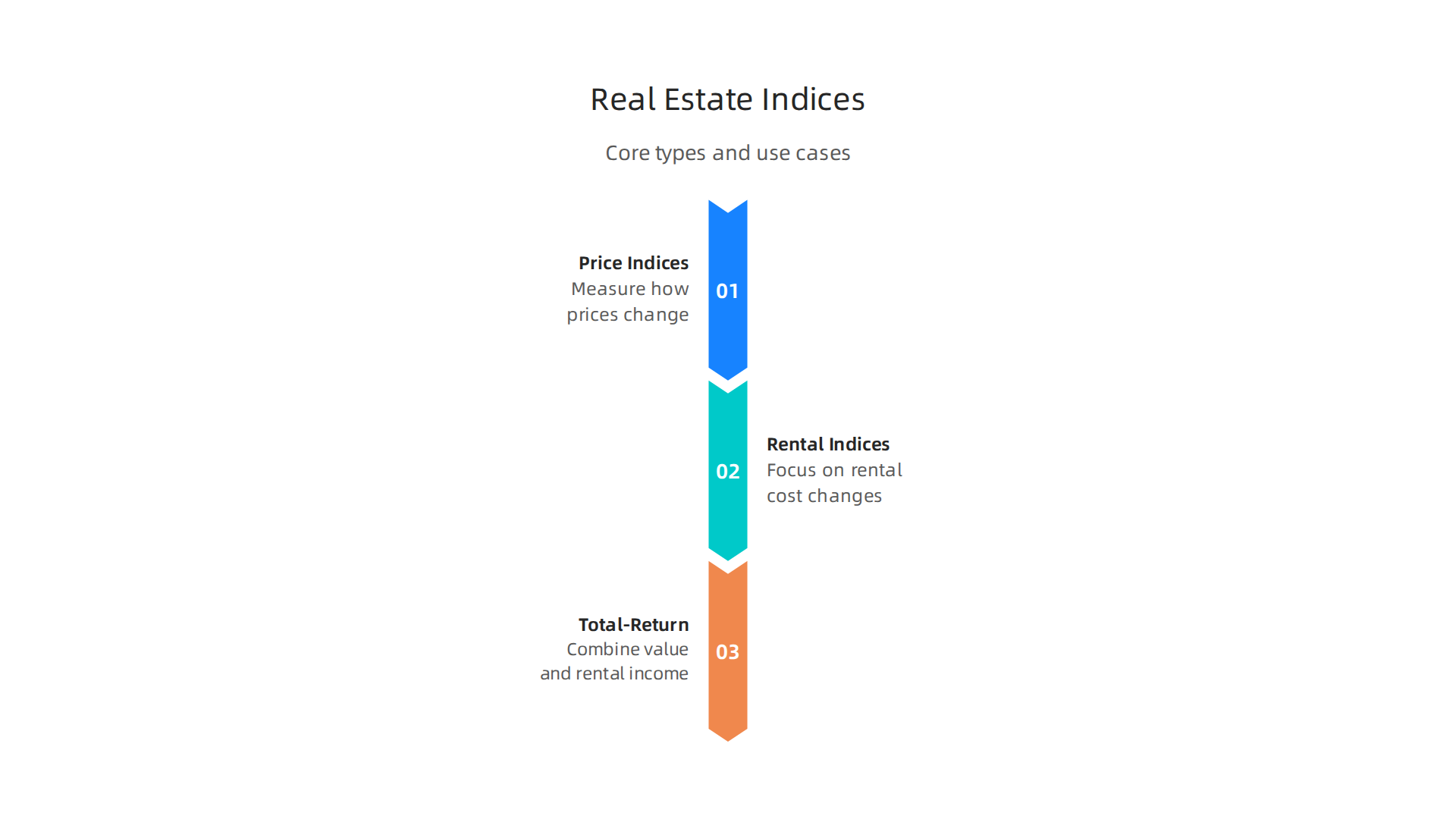
- Price Indices: These are probably the most common. They measure how much property prices are going up or down. For example, the Dubai Land Department (DLD) has its own official Residential Sales Price Index which tracks real sales data.

This helps you understand the average cost of homes.
- Rental Indices: These focus on how rental costs change. They show if rents are getting higher or lower in different parts of Dubai. This is very important for investors who want to earn money from renting out their properties. For example, in 2026, Dubai’s housing market continued to offer attractive rental returns, with apartments averaging 6.9% yield, as noted in a Dubai Housing Market 2026 report.
- Total-Return or Property Performance Indices: These types of indices are a bit more detailed. They look at both how much property values change and how much rental income properties bring in. This gives you a full picture of the overall profit or loss from a real estate
investment strategies real estateplan.
So, how do smart investors use these indices? They use them in several important ways:
- Benchmarking: Investors use indices to see how their own properties are performing compared to the general market. If an index shows that prices in Dubai are up by 10%, and your property only went up by 3%, you might want to look into why.
- Trend Detection: A
real estate indexhelps you spot big changes in the market. Are prices steadily rising, or are they falling? This information is vital for deciding when to buy or sell. Reports like the Dubai Property Price Index help investors understand what these numbers really mean. - Comparing Submarkets and Asset Classes: Dubai is a big place with many different areas and types of homes. Indices can show which neighborhoods or property types (like apartments versus villas) are performing best. This helps investors direct their
investment strategies in real estateto the most promising areas. For those looking to dive deeper into property types and their potential, understanding Dubai real estate assets types risks returns and investment strategies can be very beneficial.
By using these different kinds of indices, investors can make more informed decisions, helping them build a strong real estate investment strategy in Dubai.
How real estate indices are constructed: data sources, weighting, and adjustments
Building a helpful real estate index is like putting together a very large puzzle.

It’s not just about looking at a few home sales. It involves carefully choosing the right information, deciding how important different pieces of data are, and making clever adjustments to ensure the numbers tell the real story of the market. This careful work is key to making strong investment strategies in real estate.
Where the data comes from
To create an accurate real estate index, experts gather information from many places.
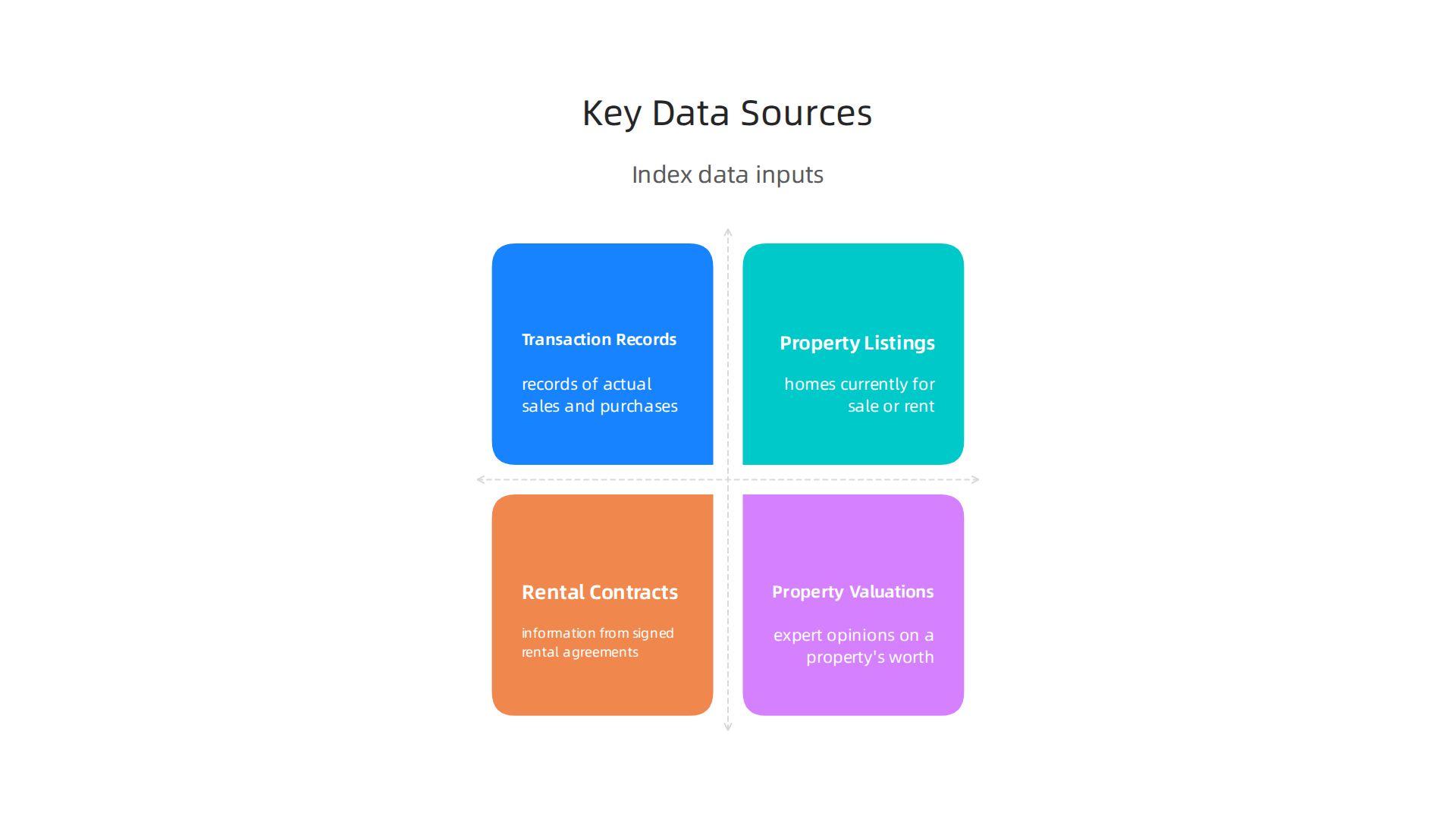
Here are the main kinds of data used:
- Transaction Records: These are records of actual sales and purchases. In Dubai, the Dubai Land Department (DLD) keeps detailed transaction data. Many real estate index tools, like the REMAP Dubai Market Index, use these records to show real market trends.

This is the most reliable kind of data because it shows what people actually paid. You can even watch videos that break down this data to see how the market is doing, such as the Dubai Property Market February vs March 2026 analysis.
- Property Listings: This data comes from homes currently for sale or rent. While helpful for seeing what’s available, listing prices can sometimes be higher than what properties actually sell for.
- Rental Contracts: For rental indices, information from signed rental agreements is crucial. This shows real rental costs over time.
- Property Valuations: Sometimes, official appraisals of properties are used. These are expert opinions on a property’s worth.
The more good quality data an index uses, the better it can show what’s truly happening. Websites like Real Estate Data – Dubai Land Department provide much of this raw information.
Important choices in building an index
Once the data is collected, experts make several important choices to make sure the real estate index is fair and accurate.
- Weighting: Not all properties are the same. A small studio apartment and a large villa have very different values. Weighting means giving more importance to certain types of properties or areas based on their market share or overall value. This helps the index truly reflect the entire market.
- Special ways to measure prices: There are two main ways to measure how prices change over time:
- Repeat-Sales Models: This method looks at properties that have been sold more than once. By comparing the sale price of the same property at different times, it helps remove the problem of different types of homes being sold in different periods. This is a common way to build a real estate price index.
- Hedonic Models: These models use math to break down a property’s price into its different features, like number of bedrooms, location, and size. This helps to adjust for changes in the quality of homes being sold. For example, if more big, new homes are sold in one month, a hedonic model can adjust for that, so it doesn’t look like prices jumped just because fancier homes were on the market. These methods are important for measuring real estate prices.
- Adjustments for fairness:
- Quality Adjustments: This makes sure you’re comparing "like with like" properties. If the average size of homes sold goes up, simply looking at average prices might be misleading. Quality adjustments help fix this problem, as mentioned by the IMF for preventing bias in price series by ensuring that comparisons are on a “like with like” basis.
- Seasonal Adjustments: Real estate markets often have busy and slow times of the year. For example, more homes might sell in the spring. Seasonal adjustments help smooth out these ups and downs so you can see the real trends, not just what usually happens at a certain time of year.
Understanding these details helps you use a real estate index properly and ensures your real estate investment strategy is based on solid data. It also helps you build a winning Dubai real estate investment strategy for 2026.
Are you looking for expert advice on buying, selling, renting, or investing in Dubai property?
Connect with Ayaz Salman for a FREE Dubai Real Estate Consultation.
To make smart decisions about real estate, it’s really helpful to know who offers these important real estate index tools in Dubai and what information they give us. Knowing this helps shape better investment strategies in real estate for 2026.
Who provides Dubai real estate indices and what they cover
In Dubai, several groups and companies create real estate index reports. They help show how property prices and rents are changing. Most of these rely heavily on data from the Dubai Land Department (DLD), which records nearly all property deals.
Here are some main providers and what their indices usually measure:
- Official and Semi-Official Indices: The government of Dubai, through entities like Digital Dubai, provides official real estate price index reports. For example, in 2025, Dubai’s Real Estate Price Index showed good growth. These reports are often broad and cover the whole market or large segments like residential or commercial properties.
- Private Data Providers: Many private companies also put out their own indices. These often offer more specific details.
- Dubai Index offers real-time property price trends based on DLD data. They also provide detailed reports on the market.
- DXB Analytics shares insights on Dubai property prices, including average price per square foot and breakdowns for off-plan versus ready properties. Their blog provides current data for 2026.
- Other reports, like the Dubai Real Estate Market Report — March 2026 and the Dubai Real Estate Market Report — June 2026, give monthly updates on market conditions.

These indices cover many things. Some focus on overall property prices, while others look at rental costs. You can find indices that break down prices by specific communities, property types (like apartments or villas), or even whether the property is new (off-plan) or already built (ready). This helps investors understand the performance of different Dubai real estate assets types risks returns and investment strategies. For example, in July 2026, Dubai’s housing market continued to show good rental returns, with apartments averaging 6.9% yields.
Missing pieces in the real estate index puzzle
Even with all this information, there can be some gaps that make it harder to get a full picture.
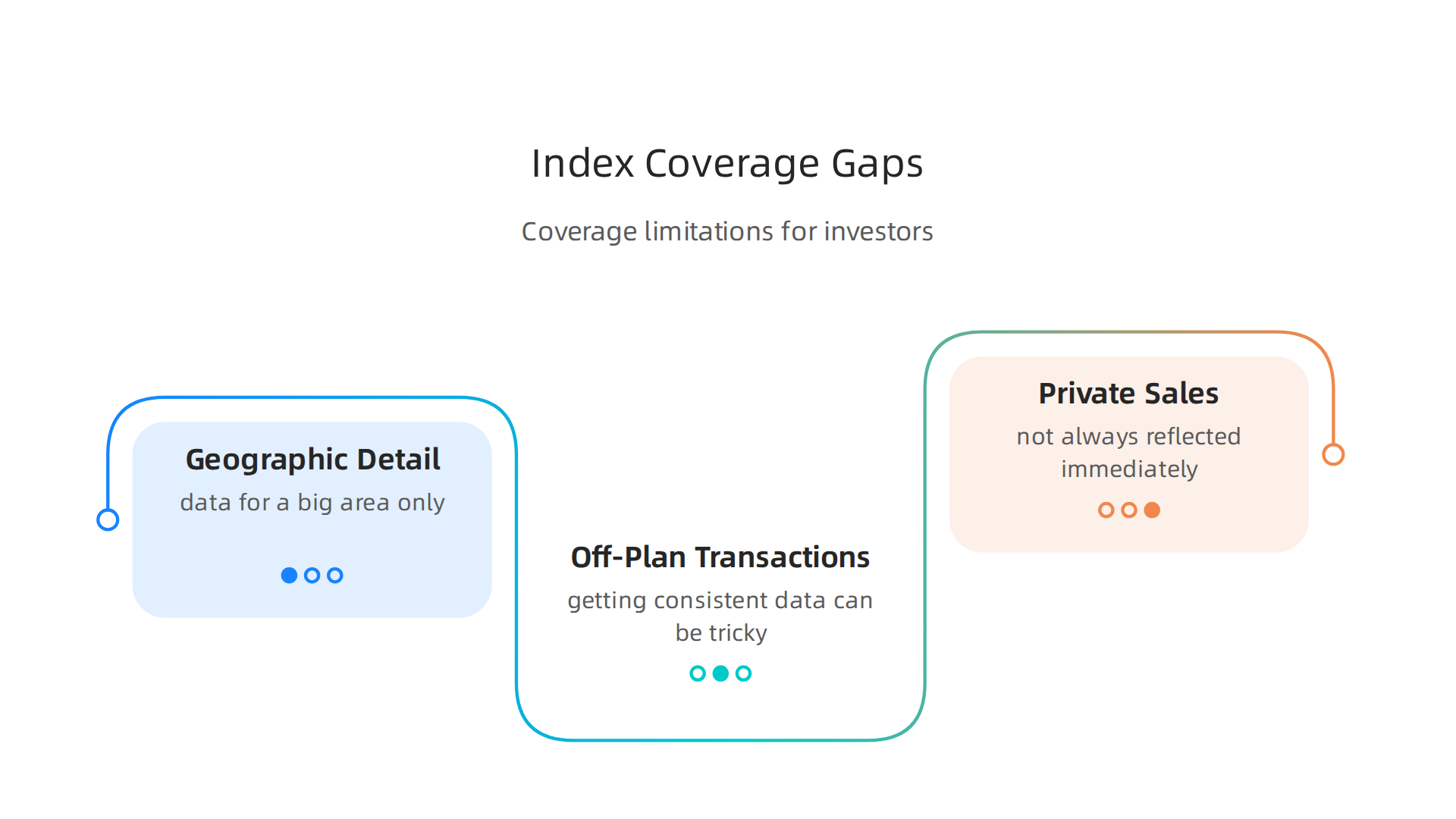
Knowing these gaps is vital for anyone planning real estate investment strategy steps.
- Geographic Detail: Sometimes, an index might show data for a big area but not for smaller, very specific neighborhoods. This means you might know how a large district is doing, but not a single street or community within it. This lack of "geographic granularity" can hide important local trends.
- Off-Plan Transactions: These are sales for properties that are still being built. While some indices try to include them, getting full, consistent data on off-plan sales can be tricky. This is because these sales might not always be recorded the same way as ready property sales until later stages. A report from Meridion Bridge in 2026 points to corrections in high-activity districts for off-plan properties.
- Private Sales Reliability: Most indices rely on DLD transaction data, which is very accurate for formal sales. However, some private deals or quick sales might not always be reflected immediately or in the same way, potentially affecting the complete view of the market. There’s even a Dubai Mispricing Index that tries to identify properties sold significantly below median prices in their buildings, suggesting some deals might fall outside the typical market expectations.
Understanding these details helps you use a real estate index more smartly for your investment strategies real estate in Dubai. If you’re looking for help with taxes related to your property investments, it’s good to know how UAE corporate tax affects your Dubai property investment structure.
Even with a few missing pieces in the data, real estate indices are very strong tools for making smart choices. The trick is knowing how to read them right. It’s not just about looking at a number, but understanding what that number truly means for your investment strategies real estate in Dubai.
How investors should read and use indices: signals, lags, and caveats
When you look at a real estate index, think of it like reading a weather report. You need to look at more than just today’s temperature. You want to see the trends, what’s coming, and what might be tricky. Here are some simple rules to help you get the most out of these reports.
Practical rules for understanding index movements
- Look for patterns, not just single numbers: A single month’s jump or dip might just be noise. What you want to see are trends over many months. Is the index going up slowly, quickly, or staying flat? This shows the market’s momentum.
- Understand different types of changes:
- Momentum: If prices are rising steadily, that’s positive momentum. It means more people are buying, and the market is active.
- Cyclical shifts: Real estate markets often go through cycles. There are times of growth, times of slow down, and sometimes dips. An index can show if Dubai is in a growth phase or nearing a different part of its cycle.
- Consider various indices for a full picture: Don’t just rely on one type of
real estate index. Some look at sale prices, others at rental prices, and some focus on specific areas or property types. For example, the Dubai Land Department’s main residential index uses careful methods to track actual sales, which is helpful to see real market changes How to Use the Dubai Property Index. By comparing a few, you can build a clearer view for yourreal estate investment strategy.
Common pitfalls to watch out for
Even with the best indices, there are things that can trip you up if you are not careful:

- Data lags: Most
real estate indexreports use data that is a little old. It takes time for property sales to be recorded and then for the numbers to be put together into an index. So, an index published in July 2026 might show how the market was doing in May or June. This delay, called a "data lag," means you’re often looking at a snapshot from the recent past, not the exact present moment. - Sample bias: Some indices might not include all types of properties. If an index mostly tracks luxury villas, it might not tell you much about how affordable apartments are doing. Always check what types of properties and areas an index covers to make sure it matches your
investment strategies in real estate. Many key Dubai property price indices track recorded sales transactions over specific periods, helping investors understand different market segments Dubai Property Price Index: What It Tracks and How to …. - Nominal vs. real changes: This is a bit like saying your salary went up by 10%, but everything you buy also went up by 10%. Your money buys the same amount.
- Nominal changes are just the price changes you see.
- Real changes adjust for things like inflation (when the cost of living goes up). If property prices go up by 5% but inflation is 3%, the "real" gain is only 2%.
- The Dubai Financial Market (DFM) Real Estate Index is different: This is an important one. There is a DFM Real Estate Index, but it does not show what real property prices are doing. Instead, it tracks the stock prices of real estate companies listed on the Dubai stock market, like developers. This can be confusing. It tells you about investor feelings towards these companies, but not directly about the value of physical homes or offices Dubai Real Estate Index: What You Need To Know. Don’t mix this up with an index that shows actual property values.
By keeping these points in mind, you can use a real estate index as a powerful guide for your journey to how to start investing in real estate in Dubai your 2026 action plan and achieve greater success.
Understanding these details is a crucial part of building a successful real estate investment strategy. For a broader look at how to approach the market, you might want to learn more about build a winning Dubai real estate investment strategy for 2026.
Making informed decisions in the Dubai real estate market can be complex. If you need personalized guidance on your property investment journey, consider talking to an expert.
FREE Dubai Real Estate Consultation
Understanding what a real estate index tells you is useful. But things get a little different when you look at properties that are still being built (off-plan) compared to homes that are ready to move into (ready properties). These two types of investments have their own unique sides, and an index can show different things for each.
How indices reflect or fail to reflect off-plan vs. ready properties
Most real estate index reports usually track properties that are already built and have been sold or rented out. This is called the "secondary market." When you see a general price index for Dubai, it’s often talking about these ready homes. Methods to create these indices often look at properties sold more than once or try to compare similar homes to track how prices change over time Real Estate Price Measurement Since the Global Financial ….
Off-plan properties are a bit trickier for a standard real estate index. Why? Because they’re not finished yet. You’re buying a promise, not a completed building. This means:
- Different Transaction Types: Off-plan sales often happen directly from a developer, with payment plans spread out over years. Ready properties involve immediate transfer and full payment. This makes it hard for a single index to perfectly capture both.
- Future Value: The price of an off-plan property today reflects its expected value upon completion, plus a discount for buying early and taking some risk. An index, however, usually reports on prices for things that exist now.
- Hidden Deals: Sometimes, developers offer special discounts or payment plans for off-plan units that aren’t fully captured in general price data.
So, while a general real estate index can show the overall health of the market, it might not directly tell you the best timing or specific value of an off-plan deal. You need to dig a little deeper for your investment strategies real estate.
Metrics for off-plan vs. ready properties
When you’re comparing off-plan and ready properties for your real estate investment strategy, you should look at specific numbers beyond just the main index:
-
For Off-Plan Properties:
- Developer Reputation: How well known is the developer? Do they finish projects on time?
- Payment Plan: How easy is the payment schedule? A good payment plan can lower your upfront costs.
- Expected Completion Date: When is the property supposed to be ready? Delays can affect your plans.
- Comparison to Ready Properties: Look at the prices of ready properties in the same area. Is the off-plan price truly a good deal compared to what’s already built?
- Anticipated Rental Yields: For off-plan, you’re hoping for future rental income. Look at current rental yields for similar ready properties nearby. Dubai’s Smart Rental Index, for example, can help you understand expected rental income for different types of homes Dubai Smart Rental Index 2026 & 6.68% Yields. This helps you calculate potential returns.
-
For Ready Properties:
- Current Rental Yields: This is the income you get from rent compared to the property’s price. You can find average rental yields for areas in Dubai, with apartments often showing higher yields than villas in 2026 Dubai Rental Yield Index by Area (2026).
- Historical Appreciation: How much has the property’s value grown in the past?
- Maintenance Costs: What are the service charges and other ongoing costs?
- Immediate Income: Ready properties can start generating rental income right away.
To make smart investment strategies in real estate, always consider these factors. Different types of properties have different risk levels and potential rewards. Choosing the right one depends on your own goals and how much risk you’re comfortable with. For more help with understanding your options, you might want to learn about the various Dubai real estate assets types, risks, returns, and investment strategies.
When you are looking at different properties, a general real estate index can give you a quick idea of the market. But sometimes, what the index shows, or does not show, should make you look much closer. These are called "index-based risk checks." It is like a warning light that tells you to do more detailed homework, also known as due diligence. This is very important for any good real estate investment strategy.
What index movements tell you to check deeper
If the real estate index for an area suddenly drops, it might mean more than just lower prices. It could point to problems like too many homes for sale (oversupply) or a slow economy. If prices for ready properties are falling but off-plan prices seem very stable, it might be a sign that off-plan developers are keeping prices high artificially. This needs a deeper look into the developer and the sales contract. Also, watch for areas where the index shows little to no growth, especially if nearby areas are booming. This could mean hidden problems with that specific location or the types of properties there.
Developer and contractual due diligence
When the index raises a flag, your next steps involve checking the people building and selling the property. For off-plan homes, it is very important to check the developer’s background. Have they finished projects on time before? Was the quality good? You can look up reviews and past project delivery dates as part of your Dubai Property Due Diligence Checklist: 15 Things Every Buyer ….

Also, make sure the project has an escrow account where your payments are safely held until the building is ready. This is a must, especially for off-plan property purchases.
Your contract also needs a careful look. It should be clear about payment plans, completion dates, and what happens if there are delays. This kind of deep dive helps you build a winning Dubai real estate investment strategy for 2026.
Legal checks: RERA, DLD registration, and Ejari
Beyond the developer, you must check the legal side of things. In Dubai, this means looking at official records.
- RERA Registration: Make sure both the developer and the project are registered with the Real Estate Regulatory Agency (RERA). This protects buyers. You can verify this in official registers What is due diligence real estate in Dubai?.
- DLD Registration: The property’s title deed needs to be checked with the Dubai Land Department (DLD). This confirms who truly owns the land and if there are any claims against it. This is a basic step in property due diligence.
- Ejari Implications: For ready properties, if you plan to rent it out, ensure that any existing tenancy contracts are registered on the Ejari portal. An unregistered lease might not be legally binding in Dubai courts UAE Real Estate Due Diligence: What Buyers Check in 2026. These legal checks are crucial to protect your investment strategies in real estate.
If you want to understand all the important steps for checking a property, a Real Estate Trust Investment in Dubai: Your Guide to Due Diligence and Smart Returns guide can be very helpful.
Hidden costs and fee signals
Lastly, always look beyond the purchase price for any hidden costs that could impact your returns. These include:
- Service Charges: These are yearly fees for maintaining the building and common areas. They can vary a lot and significantly affect your rental yield.
- Dubai Transfer Fees: There are costs when you buy the property, like transfer fees, that you need to know about upfront to avoid surprises Dubai real estate due diligence checklist: secure your investment.
- Other Taxes and Levies: Even in a low-tax place like Dubai, it is smart to know about all possible taxes and charges.
A careful investor combines real estate index insights with thorough due diligence. If you are looking to secure your property purchase or refine your overall approach, getting expert advice can make a big difference. Connect with Ayaz Salman for a FREE Dubai Real Estate Consultation.
Now, let’s take all that deep checking and turn it into a smart plan.

You can use real estate index data to build a strong investment strategies in real estate that helps you decide when to buy, sell, or hold property in Dubai. Think of it as a step-by-step guide to making smarter moves.
Step 1: Pick the Right Real Estate Indices
First, you need to choose which real estate index or indices you will watch. Not all indices are the same. For example, some show how real estate companies are doing in the stock market, like the DFM Real Estate Index, but this does not tell you about actual property prices. Instead, you want indices that track actual property sales prices and rental yields. The Dubai Land Department (DLD) offers official transaction-based indices. These indices are very important because they use real sales data, not just asking prices How to Use the Dubai Property Index. Other trusted sources also use DLD transaction records to create their own property price and rental yield indices for Dubai Dubai Market Index — Free DLD-Based Property Data | REMAP.
Step 2: Understand How the Data Works
Once you pick your indices, learn how they are made. This helps you trust the numbers. Many Dubai property price indices, including the official DLD Residential Sales Price Index, use a method called "hedonic regression." This is a fancy way of saying they adjust for differences in properties, so you are comparing apples to apples, not apples to oranges Dubai House Price Index Methodology 2020. Other indices might use median prices. Knowing the method ensures you understand what the index truly reflects, whether it is changes in property value or just changes in the types of properties being sold. The DLD Open Data portal is a main source for much of this information Real Estate Data Analytics & AI Forecasting Methodology.
Step 3: Set Your Investment Rules (Guardrails)
Now, it is time to set up your own rules based on what the real estate index tells you. These rules act like guardrails, keeping your real estate investment strategy on track.
- Entry Points: You might decide to only buy when a certain area’s property price index has dropped by 5% or more, showing it might be undervalued.
- Exit Points: You could plan to sell if an index shows property prices have gone up by 20% in two years, reaching your profit goal.
- Pause New Purchases: If a real estate index shows a market cooling down, you might decide to hold off on new buys for a few months.
- Reweighting Regions: If one area’s rental yield index is constantly higher than another, you might shift your focus to properties in the higher-performing area. For example, in 2026, apartments often show higher rental yields than villas across Dubai Complete Area Yield Table.
These rules help you make choices without being swayed by sudden emotions.
Step 4: Add Your Own Property Models
An index is a general guide. To make smart choices for your specific properties, you also need to use your own math. This means creating simple models for property valuation and checking cash flow.
- Valuation Model: Use the index trend to help you estimate what your property might be worth in the future. But also consider things unique to your property, like its size, condition, and location within a community.
- Cash Flow Model: If you plan to rent out your property, look at current rental indices and your expected costs (like service charges and taxes) to figure out your likely rental income and profit. The Dubai Smart Rental Index uses real-time rental data to grade buildings and helps set rents Dubai Smart Rental Index 2026 & 6.68% Yields.
Combining big picture index data with your own detailed numbers gives you the clearest view.
Sample Portfolio Rules and Monitoring
Here is what an indices-driven investment strategies real estate might look like in action for your Dubai portfolio:
- Monthly Check: Look at the Dubai overall property price index and rental yield index every month.
- Quarterly Deep Dive: Every three months, check specific community indices. If an index for your chosen area drops by 3% in one quarter, you might "pause new purchases" in that area.
- Annual Review: Once a year, review how your properties are doing compared to the indices. If a property is consistently underperforming the average rental yield for its type and area, you might consider selling it.
- Market Shifts: If the overall real estate index shows a major upward trend for several months, you might "reweight regions" by looking for new properties in areas that are just starting to see growth.
By following these steps, you build a strong, data-backed approach to investing in Dubai real estate.
Summary
This article explains why real estate indices are essential for investors in Dubai and how to use them to make smarter buy, sell and hold decisions. It describes the main index types—price, rental and total‑return—then explains how indices are constructed from transaction records, listings, rental contracts and valuation data using methods like repeat‑sales and hedonic models. The piece reviews who produces Dubai indices, what they cover, and important gaps such as limited geographic granularity and inconsistent off‑plan data. Practical advice shows how to read index trends (watch momentum, cyclical shifts and lags), avoid common pitfalls, and translate index signals into clear investment guardrails, monitoring routines and property‑level cash‑flow models. Finally, it ties index signals to the due diligence you should run—developer checks, RERA/DLD/Ejari verification and hidden cost checks—so you can build a data‑backed Dubai property strategy with lower risk.