Transform Your Property Business with a CRM Platform
· 25 min read

Why a CRM platform is now essential for property businesses and investors
Running a property business or managing many investments can get tricky fast. As your business grows, keeping track of every client, tenant, investor, and property detail becomes a huge task. You might find yourself juggling many spreadsheets, sticky notes, and emails just to keep up.

This scattered approach often leads to missed opportunities, slow responses to important people, and difficulty seeing how your business is truly doing. It’s a common problem for property firms and investor teams trying to grow.
This is where a good crm platform comes in. A CRM, or Customer Relationship Management, platform is a smart tool designed to put all your important information in one central place. Imagine having all your leads, every message with tenants and investors, and all your property details neatly organized and easy to find. This means less wasted time looking for information and fewer chances for important details to get lost. By centralizing everything, a crm platform helps reduce problems and stop you from losing out on money because of messy data.
In 2026, the real estate CRM market is growing fast. Experts say this market, which was worth $3.8 billion in 2025, is expected to reach $9.6 billion by 2034, showing how important these tools are becoming for property businesses Real Estate CRM Software and Management Market – Dataintelo.
The bigger global CRM market is also seeing huge growth, expected to hit $126.17 billion in 2026 CRM Statistics 2026: 80+ Facts and Data | Wave Connect.
The practical promise of using a crm platform is simple: it helps you turn more leads into deals, makes it easier to see how well your business is doing, and gives a much better experience to your tenants and investors. Choosing the right best crm software for a small business can change how you work, making everything smoother. If you’re looking to find a system that fits your needs, exploring your options is a great next step, especially if you want to find the best crm for small real estate business with free and paid solutions.
Whether you are buying, selling, renting, or investing in Dubai, connecting with an expert can provide valuable insights. To learn more or discuss your specific needs, consider a FREE Dubai Real Estate Consultation.
Understanding the CRM Use Cases That Matter for Dubai Property Teams
Now that we know how a crm platform can organize your property business, let’s look at how these smart tools really help teams in places like Dubai. The property market here moves fast, and specific tools are needed for different parts of the business. A good crm platform can manage many important tasks, making sure nothing gets missed.
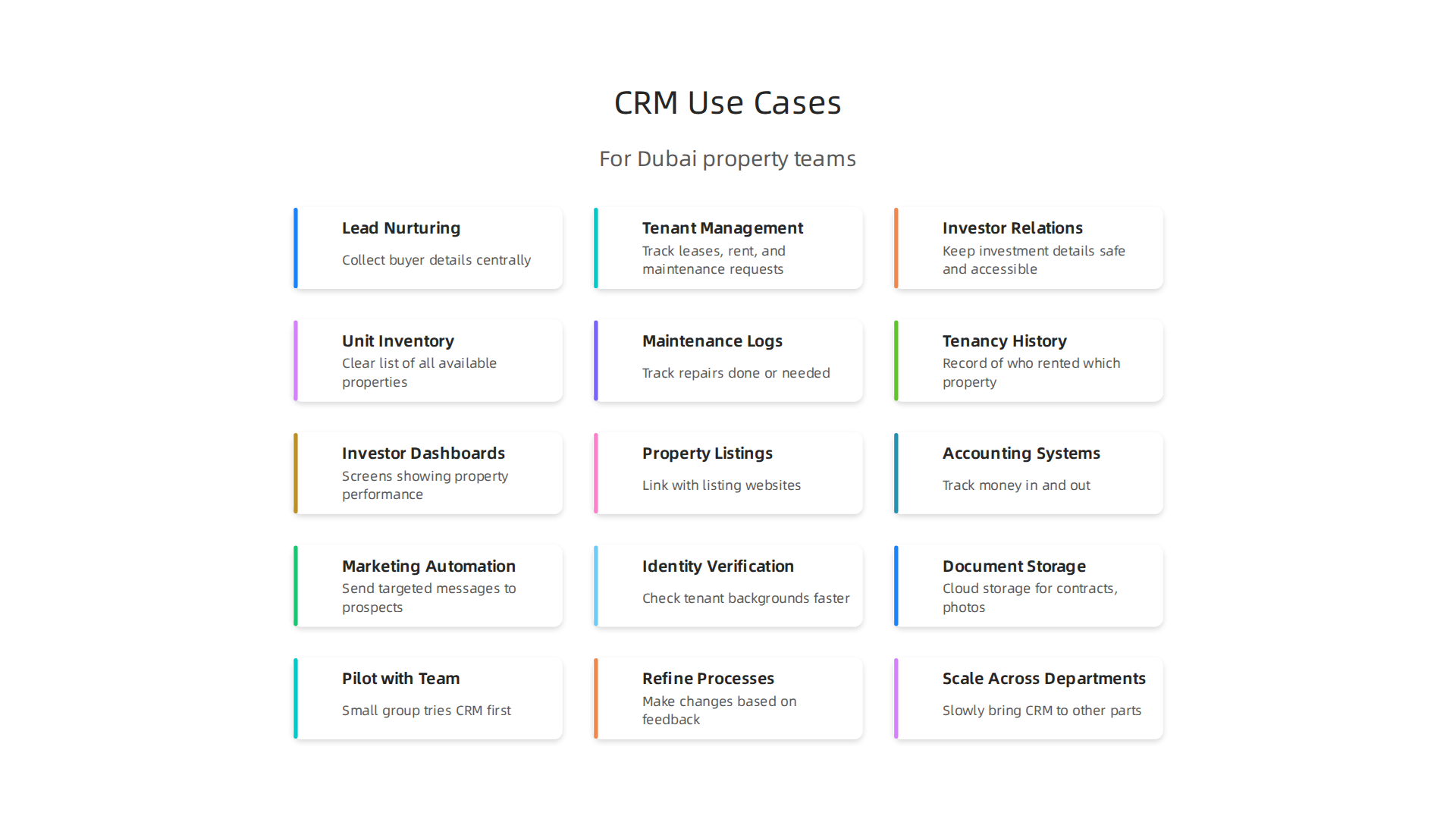
First, think about getting new customers. In Dubai, this means capturing leads from different places like online listings, open houses, or brand-new off-plan projects. A specialized crm platform helps you gather all these potential buyer details in one spot. It then guides you to follow up with them at the right time. This lead nurturing workflow is super important for turning someone just looking into a happy client. In 2026, the best real estate CRM software includes smart features for agents and teams, helping them manage new contacts effectively The Best Real Estate CRM Software In 2026.
Next up is managing existing tenants and properties. If you’re a landlord or property manager, a crm platform can keep track of everything about your tenants. This includes when their lease agreements started and end, when rent is due, and all their maintenance requests. When a tenant needs a repair, the system can help you log it, assign it to a team member, and follow up until it’s fixed. It also reminds you when leases are coming to an end, so you can plan for renewals easily. This keeps tenants happy and your properties well-maintained, all within one system.
Then, there’s the important job of handling relationships with investors. Dubai attracts many High Net Worth Individuals (HNWIs) and large companies that invest a lot of money. A crm platform can help you keep all their investment details safe and easy to access. You can track their different properties, how much they’ve invested, and what returns they’re getting. Plus, it makes creating regular reports simple, showing investors how well their money is doing. This helps you build trust and keep investors informed. For those looking to make smart choices, a strong crm platform can play a big part in creating a successful investment plan. You can also explore how to build a winning dubai real estate investment strategy for 2026 to maximize your returns.
These examples show that a crm platform isn’t just about storing names. It’s a key tool that handles the day-to-day tasks for property teams in Dubai, from finding new leads to keeping tenants and investors happy. Choosing the best crm solution for small business or larger operations means picking a tool that can do all these jobs well.
When you’re ready to pick a crm platform for your property business, it’s key to look at the main things it can do. It’s not enough for a crm platform to just look good. It needs to have strong features that truly help your team every day. In 2026, the top crm platform options offer specific tools that make a real difference.
One of the most important features is how well it handles your contacts and relationships. A good crm platform lets you keep all your client details organized. You can split them into groups, like buyers, tenants, or investors, using tags. This helps you send the right message to the right people. You can also see where each person is in their journey with you. For example, are they just looking, ready to buy, or an existing tenant? Experts say that smart features like these are very important for real estate CRM systems in 2026 Real Estate CRM Features 2026: What Matters Most?.
Another must-have is pipeline and deal tracking. This feature helps you see every step of a property deal, from when you first talk to someone until the deal is closed.

Whether it’s selling a property, renting one out, or managing a new development, the crm platform lets you set up clear steps. You can follow each deal through its unique flow, making sure nothing falls through the cracks. This helps teams stay on track and close deals faster. If you’re looking for the best crm software for a small business, this feature is a game-changer. You might also want to learn more about how to find the best CRM for small real estate business with free and paid solutions.
Lastly, look for good reporting, dashboards, and automated alerts. A strong crm platform should show you simple reports about how your business is doing. You can see things like how quickly you rent out properties (time-to-let), how many people become customers (conversion rate), or how much money your properties are making (portfolio yield). These clear pictures help you understand what’s working and what’s not. Plus, automated alerts can remind you of important tasks or when a deal needs your attention, making sure you never miss a beat. For any property team, choosing the best crm solution for small business or large operations with these reporting features can greatly improve how you work.
Buying, selling, renting, or investing in Dubai? Connect with Ayaz Salman for a FREE Dubai Real Estate Consultation.
After checking for important reports, the next big thing to look for in a crm platform is how well it can be changed to fit your specific business. Some property businesses might be fine with a standard crm platform that works "right out of the box." This is often a good choice if you’re a small business or just starting.
But for others, especially those with many different kinds of properties or unique ways of doing business, a more flexible crm platform is key. The top crm platform options in 2026 let you create special sections just for your properties, units, and contracts. This is called "custom object modeling" and it means the software can truly match how you work. For example, you can set up fields to track specific details for each apartment, land plot, or commercial space you manage. This kind of flexibility is super important for scaling your business, as explained in the Top 5 Real Estate CRM Features to Scale Your Business in 2026 article.
Look for a crm platform with property-specific modules.
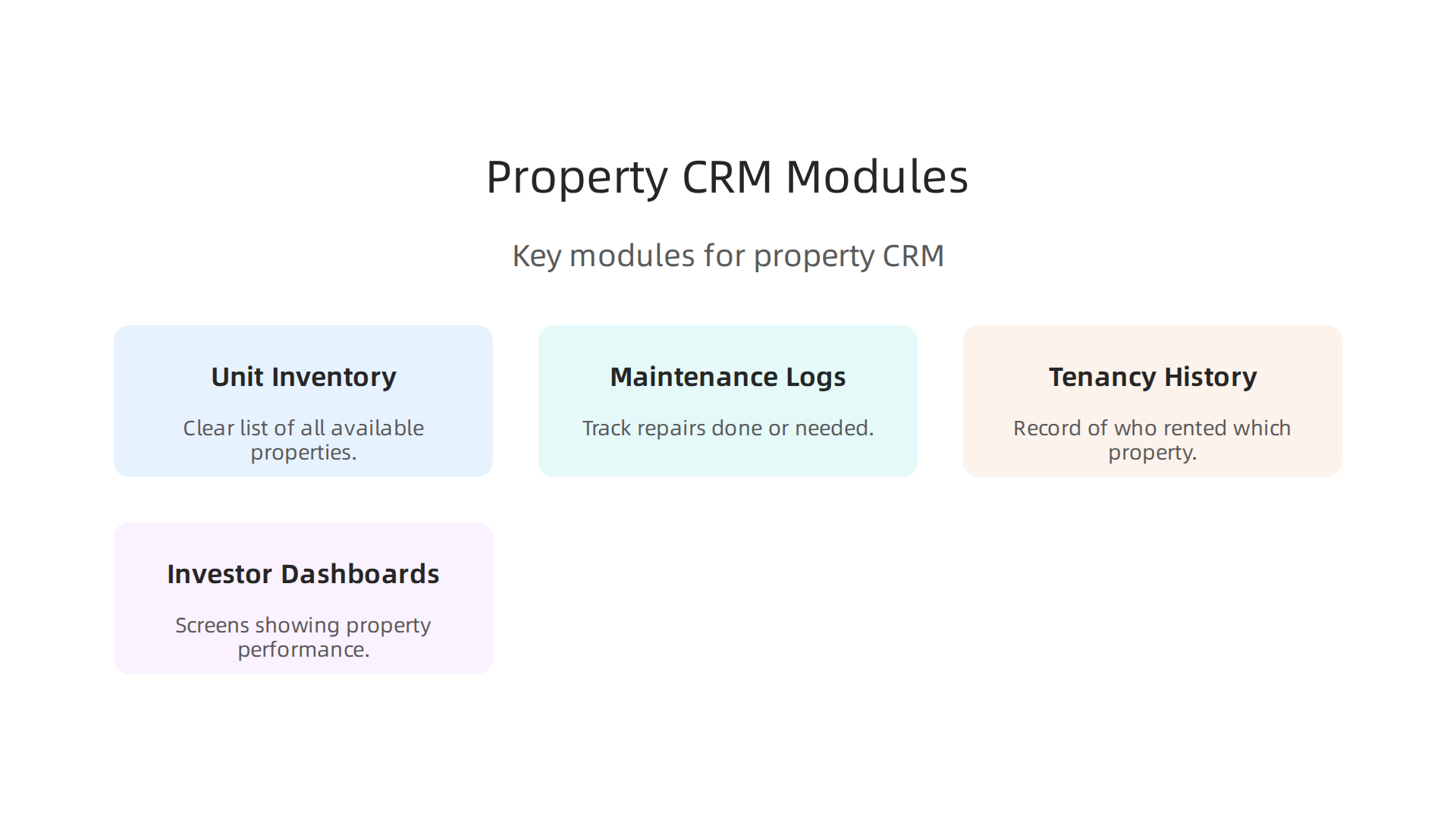
These are like mini-tools built right into your main system. They can include things like:
- Unit Inventory: A clear list of all your available properties or units.
- Maintenance Logs: Keeping track of when repairs were done or are needed for each property.
- Tenancy History: A record of who rented which property and when.
- Investor Dashboards: Special screens where investors can see how their properties are performing.
Having these kinds of custom tools helps make sure your crm platform is the best crm solution for small business or large enterprises. It helps you manage all parts of your property investments more easily. Thinking about how these features support your goals can help you Build a Winning Dubai Real Estate Investment Strategy for 2026.
A great crm platform not only lets you customize it to your needs, but it also talks well with your other important tools. Think of your crm platform as the central hub where all your property business information lives. To make it a true "single source of truth," it needs to connect smoothly with other systems you use every day.
Key Integrations for Your Property Business
For real estate, the top crm platform options in 2026 connect with many tools.
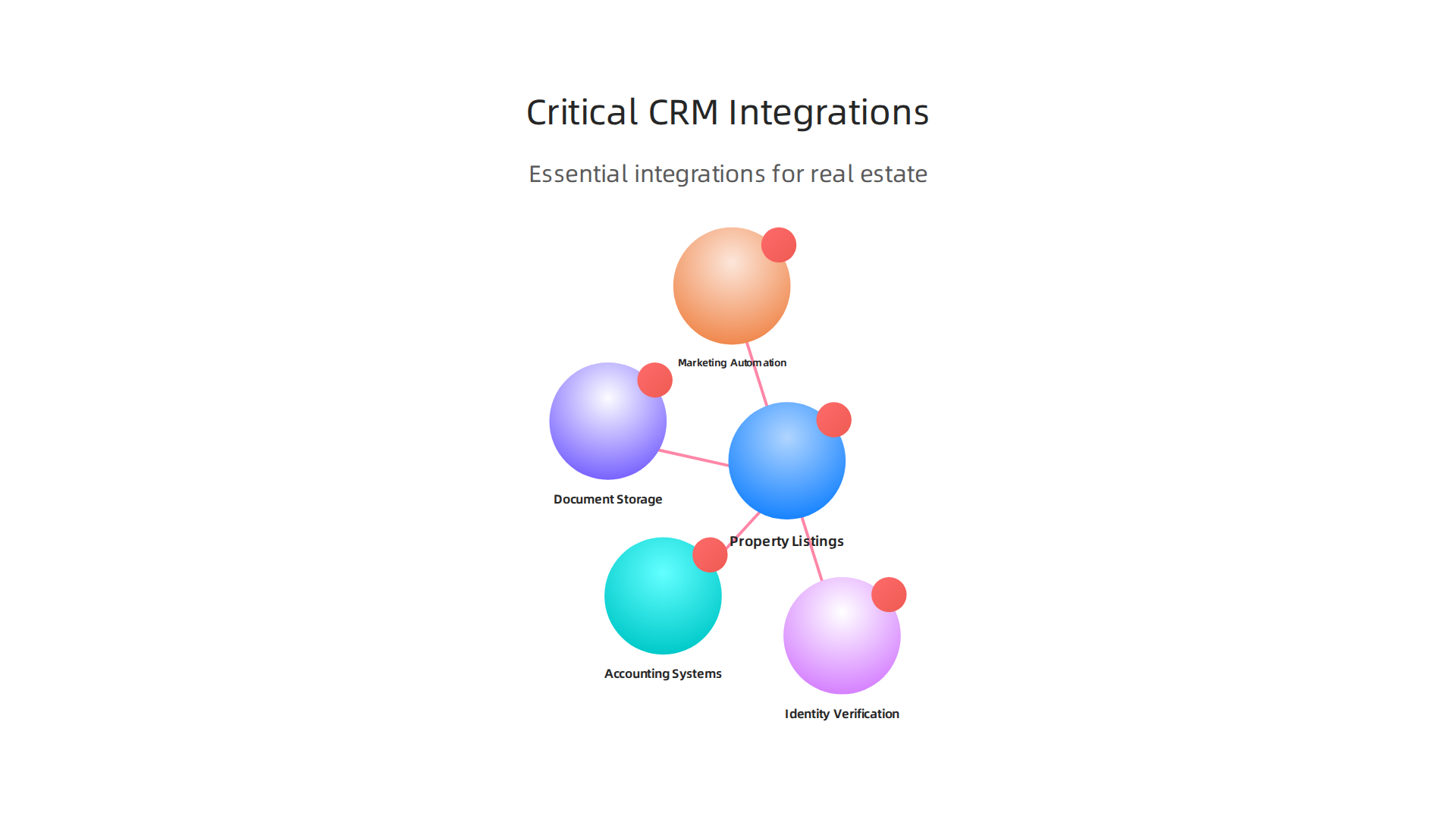
These connections help automate tasks and keep all your data in one spot. Here are some key integrations:
- Property Listings Portals: Your CRM should link up with websites where you list properties. This way, new listings can go out easily, and inquiries come straight back into your system.
- Accounting Systems: Connecting with tools like QuickBooks helps you track money coming in and going out, tying it directly to your properties and clients.
- Marketing Automation: When your CRM talks to your email marketing or social media tools, you can send targeted messages to potential buyers or tenants based on their interests.
- Identity and Tenant Verification: For rentals, it’s very helpful if your
crm platformcan connect with services that check tenant backgrounds. This makes the process faster and safer. - Document Storage: Linking to cloud storage like Google Drive or Dropbox means all your contracts, photos, and legal papers are easy to find and share, right from your CRM.
According to experts, smart automation and deep website integration are among the most important features for real estate CRMs in 2026 to help you close deals faster and stay organized, as discussed in the Real Estate CRM Features 2026: What Matters Most? guide.
Data Hygiene and Smooth Migration
Just having a lot of data isn’t enough; it needs to be clean and correct. This is called "data hygiene." Good data hygiene means:
- Deduplication: Removing duplicate contact information so you don’t have the same client listed multiple times.
- Canonical Contact Records: Making sure each client has one main record that holds all their up-to-date information.
When you switch to a new crm platform, moving your old data safely is a big deal. You don’t want to lose important client details or past transactions. A good migration plan makes sure all your historical property and contract data moves over correctly, without losing leads or causing problems. Many countries, including the UAE, have strict data protection laws that require businesses to handle personal information carefully, as detailed in Data Privacy Laws in the UAE [2026]: Everything You Need to Know. This makes clean data and careful migration even more important.
When looking for the best crm solution for small business or a larger company, always ask about their data migration support. A smart checklist for moving your data can include:
- Backing up everything: Save copies of all your current data before you start moving it.
- Cleaning old data: Get rid of old, bad, or duplicate information before moving it to the new system.
- Testing: Try moving a small amount of data first to make sure it works perfectly.
- Training your team: Make sure everyone knows how to use the new system once the data is in.
Finding the right crm platform can seem like a lot of work, but getting these details right helps you manage your properties and clients much better. If you’re looking to choose the best software, you might find more help on how to find the best CRM for small real estate business with free and paid solutions.
Buying, selling, renting, or investing in Dubai? Connect with Ayaz Salman for FREE Dubai Real Estate Consultation.
Finding the right crm platform means not just looking at features, but also understanding what it will cost and how it can help your business grow. This involves looking at how companies price their software, the full cost over time, and how much value you can get back from using it.
Different Ways a CRM Platform is Priced
CRM companies use different ways to charge for their services. Knowing these helps you pick the best crm solution for small business or a larger company.
- Per-User Pricing: This is very common. You pay a set amount for each person on your team who uses the
crm platformevery month or year. This model is great for smaller real estate teams or those just starting out because you only pay for what you use. - Per-Module Pricing: Some CRMs let you pick and choose the features you need. For example, you might pay extra for marketing tools or advanced reporting. This can be good if you only need certain parts of the CRM.
- Usage-Based Pricing: This means you pay based on how much you use the system. This could be for things like the number of emails you send, the data you store, or how many clients you track. While less common for the core CRM, it might apply to certain add-ons.
- Enterprise Licensing: For very big companies with many users and complex needs, a special deal or "enterprise license" might be set up. This usually means a custom price based on all their specific requirements.
Understanding the Total Cost of Ownership (TCO)
When you pick a crm platform, the price you see for the subscription is just one part of the story. You also need to think about the "Total Cost of Ownership," or TCO. This is the real, full cost of having and using the system over time. According to a guide on NetSuite Total Cost of Ownership: A 2026 Guide for CFOs, understanding TCO is key for making smart budget choices.
Here’s what goes into TCO:
- Initial Costs:
- Setup and Installation: Getting the
crm platformready to use. - Customization: Making the CRM fit your exact business needs, like adding special fields for property types.
- Data Migration: Moving all your old client and property information into the new system.
- Training: Teaching your team how to use the new CRM effectively.
- Setup and Installation: Getting the
- Recurring Costs:
- Subscription Fees: The regular monthly or yearly payment for the software itself.
- Maintenance and Support: Paying for help if something goes wrong or for updates to the software.
- Upgrades: Sometimes new features cost extra, or you might want to upgrade to a higher plan.
Estimating these costs helps you budget correctly and avoid surprises.
Getting Value Back: Return on Investment (ROI)
Choosing a top crm platform isn’t just an expense; it’s an investment. The "Return on Investment," or ROI, tells you how much money or value you get back for what you spend. A good CRM should save you money or help you make more money.

Here’s how a CRM can bring a good ROI for your property business:
- Time Savings: Automating tasks like sending emails or tracking leads frees up your team to focus on clients, not paperwork.
- Better Client Conversion: With all client info in one place, you can follow up faster and offer more personalized service, turning more leads into buyers or renters.
- Improved Client Retention: A
crm platformhelps you stay in touch with past clients, leading to repeat business and referrals. - Reduced Risks: Keeping accurate records and following up properly can lower the chance of mistakes or legal problems.
Thinking about TCO and ROI helps you make a smart choice for your business’s future. Investing in Dubai real estate? Understanding how to build a smart strategy can help maximize your profits, and you can learn more about how to Build a Winning Dubai Real Estate Investment Strategy for 2026.
Choosing the right CRM platform is a big step. The next important part is putting it into action and helping everyone on your team use it well. This is called implementation and change management. Without a good plan, even the best CRM software for a small business or large firm might not work as expected.
A Step-by-Step Way to Roll Out Your CRM
When you bring in a new CRM platform, don’t just flip a switch and expect everyone to use it perfectly.
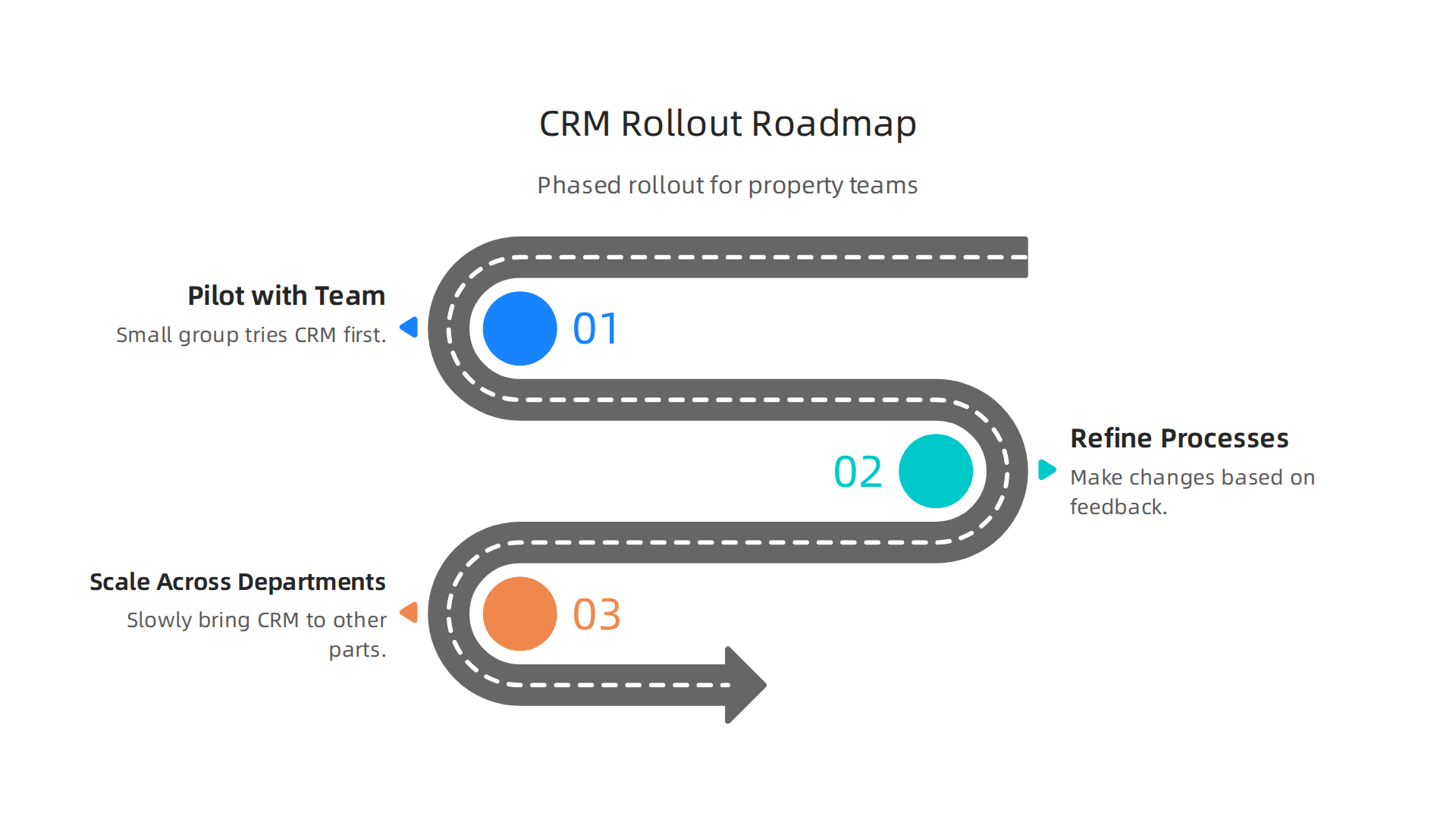
A step-by-step plan helps a lot. This is often called a phased rollout. Experts suggest having a clear roadmap to prevent problems when putting a CRM in place, according to a 2026 guide on preventing CRM implementation failure.
Here’s how you can do it:
- Pilot with a Small Team: Pick a small group, maybe one sales team or a few property managers, to try out the new CRM first. This lets you see what works and what doesn’t in a safe space.
- Refine Your Processes: Based on the pilot team’s feedback, make changes to how you use the CRM. Fix any issues and make sure the steps are clear and easy to follow. This is crucial for making the CRM truly helpful.
- Scale Across Departments: Once the pilot is smooth, slowly bring the CRM to other parts of your business. This might include your sales team, property management group, and even those who deal with investor relations. Each group has different needs, so be ready to adjust.
Getting Everyone on Board: Training and Rules
Even the most advanced CRM platforms won’t help if people don’t use them. This is where "change management" comes in. It’s about helping your team get used to the new system and making sure they use it correctly. For successful CRM adoption, a good change management plan is vital, as noted in The Change Management Playbook for Successful CRM Adoption.
Think about these things:
- Training: Give your team good training. Show them exactly how the CRM will make their jobs easier.

Make sure they know how to add new client details, track properties, and find the information they need. Maybe even offer ongoing support sessions.
- Clear Rules (Governance): Set up clear rules for how everyone should use the CRM. This means deciding what information goes where, how often to update records, and who is responsible for what. These rules help keep your CRM data clean and useful.
- User Adoption Tactics: Find ways to encourage your team to use the CRM. This could be by showing them how it saves them time, celebrating successes, or having leaders show how much they value using the system. Making it easy and rewarding to use will boost adoption.
How to Know if Your CRM is Working
After putting in all that effort, you’ll want to know if your new CRM platform is truly helping. You can measure success in a few ways:
- User Activity: Check how often people log in and use the CRM. Are they adding new information? Are they updating client records? High activity usually means good adoption.
- Data Quality Checks: Look at the information in your CRM. Is it complete and accurate? Good data quality means your team is using the system correctly and consistently.
- Business Goal Alignment: See if the CRM is helping you reach your business goals. Are your sales going up? Are client relationships getting stronger? Is your team saving time? These are the real signs of a top crm platform making a difference.
A successful implementation means your CRM becomes a true asset, not just another piece of software. If you’re looking for insights into finding the best crm solution for small business needs, it’s worth exploring all your options. You can discover more about how to find the best CRM for small real estate business with free and paid solutions.
Buying, selling, renting, or investing in Dubai? Connect with Ayaz Salman for a FREE Dubai Real Estate Consultation.
After you know your current CRM platform is working well or if you need a new one, the next step is to choose the best fit. This means having a clear way to compare different options. A good plan for picking a new CRM platform is important. The global CRM market is expected to grow from $126.17 billion in 2026 to $320.99 billion by 2034, showing just how important these systems are for businesses today, according to a market report on Customer Relationship Management Market Report [2034].
Vendor Selection Framework: Compare Platforms Using a Repeatable Rubric
When looking for a new CRM, especially a top crm platform for a small business or a larger real estate firm, don’t just pick the first one you see. Use a scorecard or a set of questions to compare them fairly. This is called a repeatable rubric.
Here are the main things your rubric should look at:
- Features that Fit Your Needs: Does the CRM have tools specifically for real estate, like tracking property listings, managing client details for buying and selling, and handling leases? A good real estate CRM in 2026 needs smart automation, AI, and tools for mobile use, as explained in a guide on Real Estate CRM Features 2026: What Matters Most?. Think about what your team truly needs to do their jobs easily.
- Easy to Connect with Other Tools: Can the new CRM platform easily talk to your existing tools? This might include your email system, accounting software, or property management portals. Good integration makes your work smoother.
- Support and Help: What kind of help does the company offer? Do they have good customer service? Will they help you learn the system and fix problems? This is very important for long-term success.
- Security and Rules: Is your client data safe with them? Does the CRM follow important rules for keeping information private? This is a must for any business.
- Total Cost of Ownership (TCO): This is more than just the price tag. It includes all costs over time: the monthly fees, setup costs, training, and any extra tools you might need. Understanding this helps you budget correctly, as detailed in a guide about CRM Implementation Cost: A Clear Guide to Budgeting, TCO, and ….
Trying Out CRM Platforms and Scoring Them
Once you have a few good CRM platforms in mind, try them out.
- Run Trials: Ask for a demo or a free trial. Use a small team to test the system with real, but safe, company information.
- Use Scoring Templates: Create a simple spreadsheet. For each CRM, give scores (like 1 to 5 stars) for each point in your rubric. This makes it easy to compare apples to apples.
- Realistic Data: Try to use your own data, like a few old client records or property listings, during the trial. This helps you see how the best crm solution for small business really handles your day-to-day work.
What to Ask For When You’re Ready to Buy
When you pick a CRM and start talking about buying it, remember you can ask for certain things.
- Service Level Agreements (SLAs): These are promises about how well the CRM will work and how fast they will fix problems. Make sure they are clear.
- Data Export Rights: Can you easily get your data out of the CRM if you ever decide to switch to a different one? This protects your business.
- Customization and Upgrade Terms: How easy is it to change the CRM to fit your needs? What happens when they update the software? Will your special changes still work?
Thinking about these points helps you choose a CRM platform that truly helps your business grow. For broader advice on building your business foundation, you might also be interested in a guide on How to Start Real Estate Investment in Dubai.
When choosing a crm platform, especially for businesses in Dubai or the wider UAE, you must think about local laws for keeping client data safe. The UAE has clear rules to protect personal information, making it very important for any business using a crm solution for small business to understand these.
Keeping Client Data Safe in Dubai/UAE
The main law in the UAE for data protection is called the Personal Data Protection Law (PDPL). This law helps keep people’s private information safe. If your business handles personal data of people in the UAE, you must follow this law, no matter where your business is located, as explained in a guide on Data Privacy Laws in the UAE [2026]: Everything You Need to Know. This means any crm platform you use must meet these tough standards.
Here are some important things to consider:
- Residency and Consent: When you collect personal information from tenants or investors, you need to be very clear about why you need it and get their permission. The PDPL gives people rights over their data, including knowing what you do with it and allowing you to use it, according to the Guide to the UAE’s Personal Data Protection Law – Cookie Script. You must make sure your crm platform helps you get and keep records of this consent.
- Data Location: Sometimes, there are rules about where data can be stored. While the PDPL allows data to be sent outside the UAE if certain safety conditions are met, it is always best to understand where your crm platform stores its information.
- Identity Checks and Payments: If your business integrates identity verification or payment systems with your crm platform, these systems also need to follow the PDPL. This is very important for real estate firms that handle sensitive financial and personal details. The goal is to make sure all parts of your business keep client data secure. You can learn more about these requirements in the UAE Data Protection Law: Complete Guide to PDPL (2026).
Smart Ways to Manage Your CRM Data
To make sure your crm platforms are compliant and secure, here are some practical steps:
- Access Roles: Not everyone needs to see all client data. Your crm platform should let you set up different levels of access. This means only the right people can view or change sensitive information.
- Audit Logs: A good crm platform will keep a record of who accessed data and when. This is like a security camera for your data, helping you track any unusual activity.
- Encryption: Make sure your client’s data is scrambled (encrypted) both when it’s stored and when it’s being sent over the internet. This helps protect it from hackers.
- Data Retention Policies: You should only keep data for as long as you need it. Set clear rules for how long you will store different types of data, and make sure your crm platform can help you follow these rules by deleting old data safely.
By paying close attention to these security and legal aspects, you can choose a top crm platform that not only helps your business grow but also keeps your client’s information safe and respects their privacy rights. For more help finding the right tools, explore options to Find the Best CRM for Small Real Estate Business with Free and Paid Solutions.
Buying, selling, renting, or investing in Dubai? Connect with Ayaz Salman for FREE Dubai Real Estate Consultation.
Summary
This article explains why a CRM platform has become essential for property businesses and investors, especially in fast-moving markets like Dubai. It outlines concrete use cases—lead capture, tenant and maintenance management, and investor reporting—and shows how a CRM centralises information to reduce errors and speed up deals. The guide walks through the core features to prioritise (contact management, pipelines, reporting), the integrations you’ll need (listings portals, accounting, identity checks), and the importance of clean data and careful migration. It also covers pricing models, how to calculate total cost of ownership and ROI, and a repeatable vendor-selection framework. Finally, the article offers a step-by-step approach for implementation, user adoption tactics, and legal considerations under the UAE’s PDPL so you can choose and deploy a CRM that protects data and scales your property business.