
Dubai Real Estate Funds The Smarter Path to Property Investment
· 19 min read

Dubai’s property market is known for its luxury towers and high returns. But for many, the idea of buying a villa or apartment feels overwhelming. You have to research areas, manage tenants, handle paperwork, and tie up a large amount of cash. That is where investing in real estate funds changes the game.
Instead of buying a single property, you can pool your money with other investors through a fund. These funds are managed by professionals who pick and manage the properties for you. This approach gives you access to the Dubai market without the headaches of direct ownership. A comprehensive guide to Dubai real estate funds explains that these vehicles offer diversification, professional management, and lower entry barriers compared to buying a property outright.
Still, many investors struggle to decide between direct property and fund-based options.

Each path has its own rules, risks, and rewards. You need clear guidance to make the right choice.
This article gives you an unbiased, expert-backed overview of real estate investment classes available in Dubai. We will cover the main fund types, the regulations that protect your money, and practical tips for picking a fund that fits your goals. If you are ready to take the next step, get a FREE Dubai Real Estate Consultation with Ayaz Salman to learn how investing in real estate properties through funds can work for you.
And if you are brand new to the market, our step-by-step action plan for Dubai property investment will help you get started the right way.
What Are Real Estate Investment Funds?
So what exactly is a real estate investment fund? Think of it as a big basket. Instead of buying one property by yourself, you pool your money with other investors. A professional fund manager uses that pool to buy a mix of properties, including apartments, offices, retail spaces, and even land. You own a share of that basket, not a single building.
This makes investing in real estate funds much simpler than direct ownership. You skip the headaches of finding tenants, fixing leaks, or dealing with paperwork. The fund handles all operations. And because the money is spread across many properties, your risk is lower than betting everything on one villa.
Dubai offers several real estate investment classes under the fund umbrella. The most popular are Real Estate Investment Trusts (REITs). These trade on the Dubai Financial Market like stocks. They are designed to deliver steady dividends and long term growth. According to the official REIT page, REITs provide liquidity so you can buy or sell easily. They also offer high dividend yields from rental income.
Another type is private equity real estate funds. These are usually closed ended, meaning your money stays in for a fixed period, often five to seven years. They focus on bigger projects like developing new towers or renovating existing buildings. They can offer higher returns but come with less liquidity. The UAE also has property funds, which are similar but may invest more broadly. According to a market guide on the types of investment funds in the UAE, the country offers REITs, private equity funds, and more under a regulated framework.
Each of these real estate in investment options has its own risk and reward. REITs are great for income and flexibility. Private equity funds suit investors who can wait for larger gains.
The main advantages of funds are clear. You get professional management from experts. You diversify across multiple properties. And investing in real estate properties through a fund means you do not need millions of dirhams to start. Some funds accept investments as low as a few thousand dirhams.
If you want to learn more about the different asset types and how they compare, read our detailed breakdown of Dubai real estate asset types.
Why Invest in Dubai Real Estate Funds?
Now that you understand what real estate investment funds are, let’s look at why they make sense for your portfolio. The biggest reason is instant diversification. When you invest in a single property, all your eggs are in one basket. If that neighborhood drops in value, you take the full hit. But when you put money into a fund, your investment spreads across different property types, locations, and lease tenures. This mix softens the blow if one area underperforms. According to a guide on the benefits of real estate funds in Dubai, this kind of asset distribution cuts your overall risk without cutting your return potential.
Another major advantage is professional management. Fund managers do all the heavy lifting. They research markets, pick the best properties, handle tenants, and decide when to sell. You never have to argue with a tenant about rent or fix a broken AC at 2 a.m. Your time stays free while experts grow your money.

This is especially valuable for busy professionals or expats who cannot manage property from overseas.
Perhaps the most exciting reason is access to institutional-grade assets. Think about the biggest developments in Dubai: luxury towers on Palm Jumeirah, sprawling retail complexes in Dubai South, or grade-A offices in DIFC. Buying a share of those directly would cost millions. But through a fund, you can own a slice with a much smaller investment. You get exposure to prime real estate that was once reserved only for wealthy institutions.
If you want to see exactly how to get started with these vehicles, read our practical guide on how to invest in Dubai REITs.
At the end of the day, investing in real estate funds gives you a smarter path to the Dubai market. You get diversification, expert handling, and access to top-tier properties without the usual headaches.
For personalized help, claim your FREE Dubai Real Estate Consultation today.
Regulatory Landscape for Real Estate Funds in Dubai
Before you put your money into any fund, you need to know who watches over these investments. Dubai takes real estate regulations seriously. For onshore real estate funds, the Dubai Land Department (DLD) and the Real Estate Regulatory Agency (RERA) set the rules. Funds based in the Dubai International Financial Centre (DIFC) fall under the Dubai Financial Services Authority (DFSA). Each authority makes sure funds follow strict licensing, disclosure, and investor protection rules.

One of the most important safeguards is the escrow account system. For any off-plan project, developers must place buyer funds in a regulated escrow account supervised by DLD. Money is released only as construction reaches verified milestones. This rule protects your capital and reduces the risk of stalled projects. According to the 2026 Dubai buyer’s guide, every off-plan project must operate through a regulated escrow account supervised by Dubai Land Department. Buyer funds are protected and released to developers in accordance with construction progress.
The same level of oversight applies to real estate funds. Fund managers must register with the proper authority, show proof of financial stability, and disclose full details about the properties they invest in. They also have to follow advertising guidelines and resolve disputes fairly. This framework gives you confidence when investing in real estate funds, because you know a regulator is watching.
For investors new to the market, the multiple layers of regulation can feel confusing. That is why doing your homework matters so much. You need to check that any fund you consider is licensed and compliant. A good way to start is to read a due diligence guide for choosing a real estate investment company before you commit your money. This will help you spot unregulated schemes and focus on legitimate opportunities.
Dubai’s regulatory system makes it one of the safest places for real estate in investment. Whether you are looking at different real estate investment classes or comparing funds to direct property, understanding who regulates each option helps you sleep better at night. Always verify the license and check for escrow accounts before you invest a single dirham.
Top Real Estate Fund Vehicles in Dubai (2026)
Now that you know the rules, let’s talk about the main types of funds you can invest in. Dubai offers several real estate fund vehicles, each with different features. The three most common are listed REITs, private placement funds, and real estate mutual funds.
Real Estate Investment Trusts (REITs) are the most popular choice for everyday investors. A REIT is a company that owns and operates income-producing properties. It trades on the stock market just like a regular stock. This gives you strong liquidity, meaning you can buy or sell units quickly. REITs must pay out most of their profit as dividends. According to the DFSA rules, a REIT must distribute 80% of its audited annual net income to unitholders. This makes REITs a great option if you want steady income without managing properties yourself. You can learn more about how these work in our guide on how to invest in Dubai REITs.
Property funds are a different kind of vehicle. These are closed-ended funds that invest mainly in real estate or real estate-related assets. Unlike REITs, they are not always traded on a public exchange. Property funds often have higher minimum investments and lock-in periods. But they can target specific strategies like commercial, residential, or hospitality properties. For example, some funds focus on luxury hotels in prime Dubai locations. Others target office buildings in business districts. The fund manager handles all the property selection and management.
Real estate mutual funds are less common but still available. These are open-ended funds that invest in a mix of real estate stocks, REITs, and sometimes direct property. They offer more flexibility but lower returns than direct property funds.
Here is a simple comparison to help you understand your options:
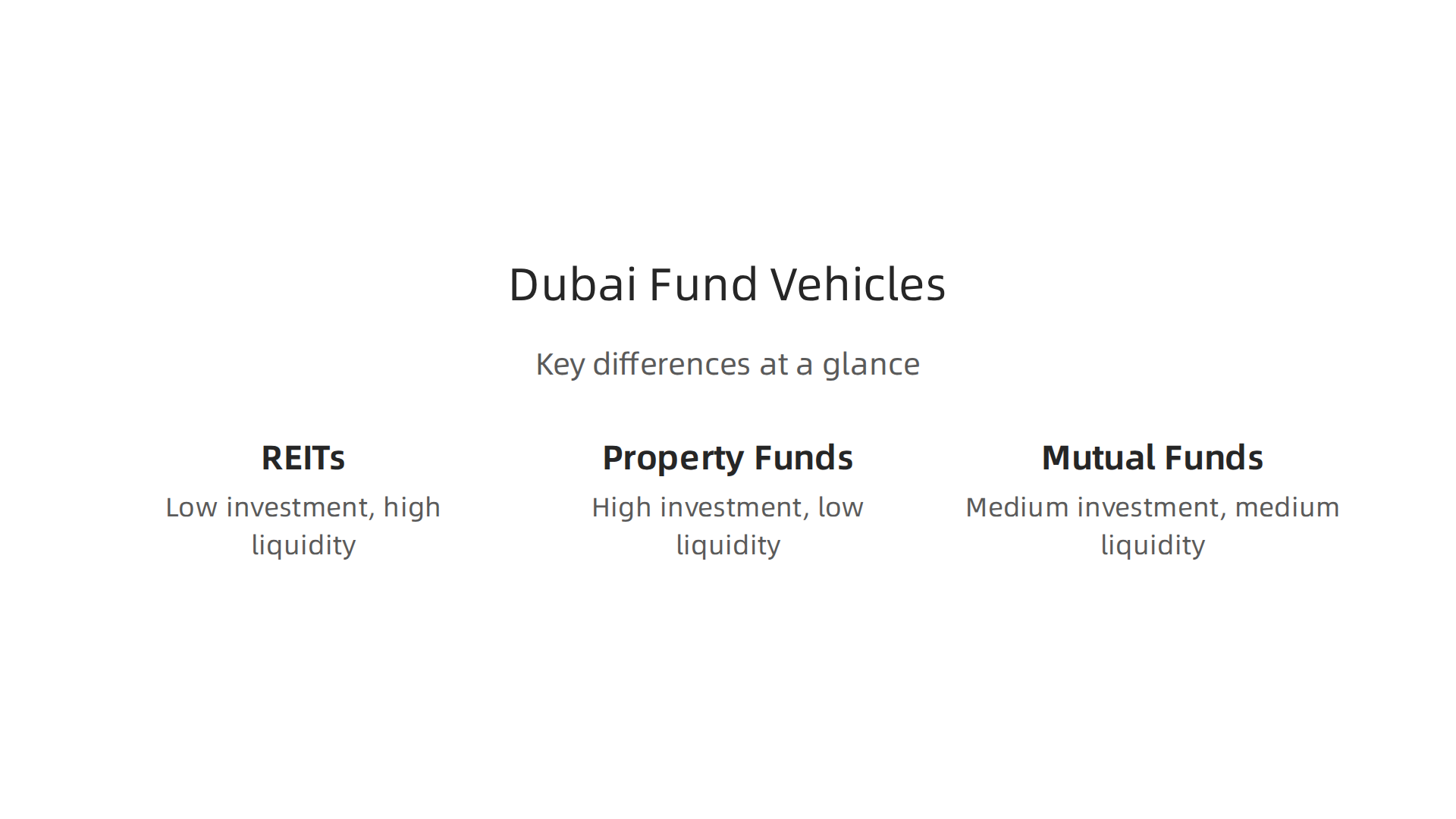
| Fund Type | Minimum Investment | Historical Returns | Liquidity |
|---|---|---|---|
| REITs | Low (buy shares on exchange) | 7% to 12% annually | High (trade like stocks) |
| Property Funds | High (often $50,000+) | 12% to 18% annually | Low (lock-in period) |
| Real Estate Mutual Funds | Medium ($1,000 to $5,000) | 6% to 10% annually | Medium (redeem daily) |
As the Redubai guide explains, these fund vehicles offer diversification, professional management, and easier access to the Dubai market. The right choice depends on your goals, risk level, and investment timeline.
If you are still unsure which vehicle fits your needs, get a FREE Dubai Real Estate Consultation with Ayaz Salman to discuss your options. He can help you match the right fund to your investment plan.
Evaluating and Selecting the Right Fund
So you have picked a fund type. But not all funds are created equal. You need to look under the hood to see if a fund is worth your money. Let us walk through the key numbers and checks that matter most.
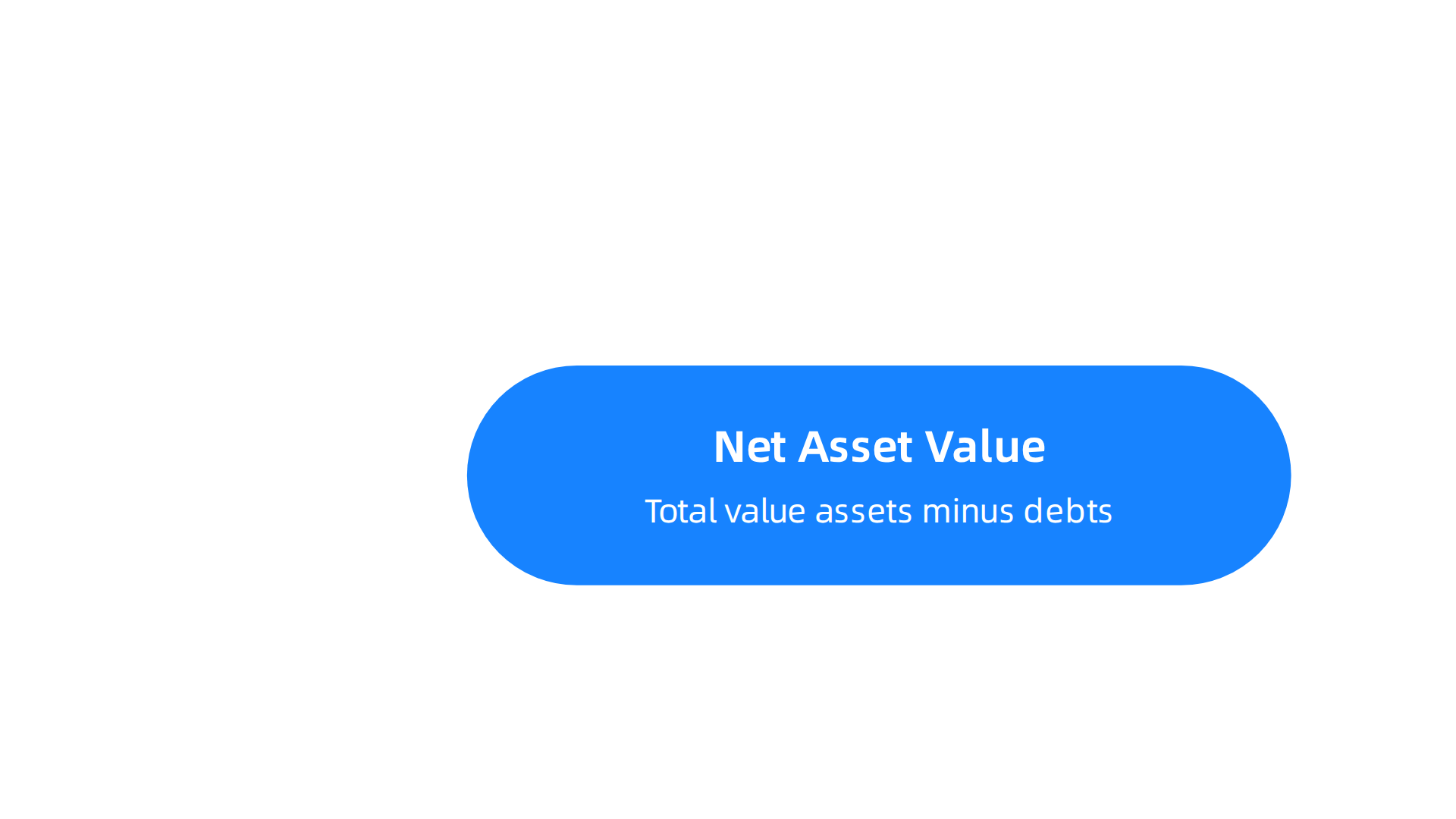
First, look at the Net Asset Value (NAV). NAV is the total value of the fund’s assets minus its debts. It tells you the current price per unit. A stable or growing NAV is a good sign. Another key number is the distribution yield. This is the income you get each year divided by the fund price. Aim for yields that match the market averages. Also check the expense ratio. This is the annual fee the fund charges you. Lower is better because fees eat into your returns. The Real estate fund performance metrics: How to calculate & use guide explains all these numbers in simple terms.
Next, do your due diligence. Always read the fund prospectus. It lists the fund’s strategy, risks, and costs. Look at recent audit reports to confirm numbers are accurate. Check the management team’s track record. How long have they been running real estate funds? What returns have they delivered? Also look at the quality of the properties the fund owns. Are they in good locations? Are they fully leased? A thorough due diligence guide to choosing a real estate investment company can help you vet a fund properly.
Finally, understand the fee structure. Most funds charge two types of fees. A management fee covers day-to-day operations. It is usually a percentage of assets under management. A performance fee is extra money the manager earns only if the fund beats a certain return target. These fees can really cut into your net profit. According to research, some closed-end funds have not delivered good returns after fees. The Academics Question the Value of Private Real Estate Funds article warns investors to pay close attention to fees.
When you compare funds, always calculate what you keep after fees. A fund with a high yield might look great, but high fees can make it a poor deal. Take your time to review each fund’s metrics, do your homework on the manager, and understand every cost. That is how you pick a fund that truly works for you.
Step-by-Step Guide to Investing in Real Estate Funds
So you have done your homework and picked a fund that looks solid. Now comes the actual process. For most people, investing in real estate funds is simpler than buying a physical property, but you still need to follow a clear path. Here is how it works step by step, especially if you are investing from outside the UAE.
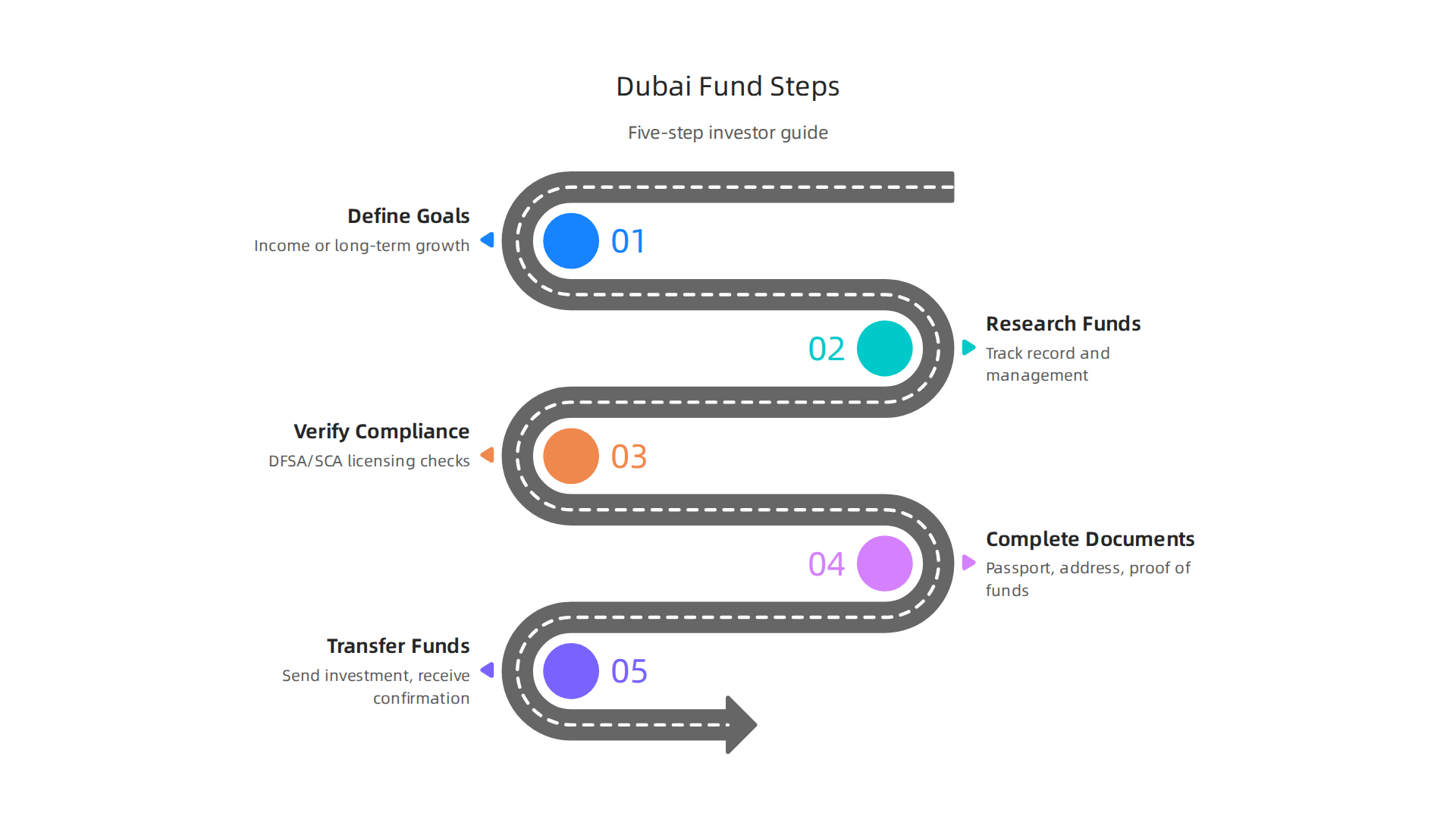
Step 1: Define your investment goals. Ask yourself: Are you looking for steady rental income, long-term growth, or a mix of both? Your answer will guide which type of fund you choose, whether a REIT, a closed-end fund, or a private placement. Having clear goals also helps you decide how much money to put in and for how long. A good resource to start with is the How To Invest In Dubai Real Estate: A Guide To Investors which explains goal setting in detail.
Step 2: Research funds that match your goals. Unlike buying a single property, real estate in investment funds gives you exposure to a portfolio of assets. Look at the fund’s track record, the quality of its properties, and the experience of its management. Also check the minimum investment amount and whether the fund is open to foreign investors. Our real estate trust investment guide walks you through how to evaluate funds properly.
Step 3: Verify regulatory compliance. In Dubai, every fund must operate under the rules of the Dubai Financial Services Authority (DFSA) or the Securities and Commodities Authority (SCA). Ask for the fund’s prospectus and registration documents. You also need to confirm that the fund manager is licensed. This protects your money and ensures the fund follows strict guidelines.
Step 4: Complete the subscription documents. Once you choose a fund, you fill out a subscription agreement. This is where you provide your personal details and declare your investor status. For foreign investors, the typical requirements include a valid passport, proof of your home address, and proof of funds showing where your investment money comes from. You may also need a UAE bank account and, if you are a non-resident, a valid visa or entry permit. Some funds also ask for a bank reference letter.
Step 5: Transfer your funds. After your documents are approved, you send the investment amount to the fund’s designated account. The fund then issues you a confirmation of investment. From there, you become a shareholder or unit holder in the fund.
One smart tip: Engaging a licensed financial advisor or wealth manager can make this whole process smoother. They handle the paperwork, check compliance, and connect you with reputable funds. If you are just starting out with real estate investment classes, having a guide can save you time and prevent costly mistakes.
FREE Dubai Real Estate Consultation — Buying, selling, renting, or investing in Dubai? Connect with Ayaz Salman for Free Consultation.
Risks and Mitigation Strategies for Real Estate Fund Investors
Even the best real estate funds come with risks. Knowing what they are and how to protect yourself is a big part of smart investing. Here are the most common risks you may face when investing in real estate funds in Dubai, along with practical ways to handle each one.
Market downturn risk. Property values can fall during economic slowdowns. This affects the fund’s net asset value and your potential returns. To lower this risk, spread your money across different types of funds. For example, mix REITs with private funds or funds that focus on different property sectors like residential, commercial, and hospitality. This way, a drop in one area won’t wipe out your whole portfolio.
Liquidity constraints. Some funds, especially private ones, do not let you cash out quickly. You may have to wait months or years to get your money back. Always check the fund’s redemption terms before you invest. Look at how often you can request a withdrawal and whether there are penalties. Publicly traded REITs usually offer much better liquidity because you can sell shares on an exchange.
Currency fluctuations. If you are investing from outside the UAE, changes in exchange rates can eat into your returns. The UAE dirham is pegged to the US dollar, so if your home currency weakens against the dollar, your investment value goes down. One way to manage this is to monitor economic indicators and consider hedging strategies. You can also choose funds that hold assets in multiple currencies or invest through a platform that handles currency conversion at favorable rates.
Regulatory changes. Dubai’s real estate rules evolve. In 2026, for example, tighter escrow regulations and stronger oversight by the Dubai Land Department are making the market safer for investors. These changes help protect your money by ensuring funds are only released when construction milestones are met. Staying informed about the latest rules helps you avoid surprises. Check out the details on Dubai real estate regulations in 2026 to understand how they affect fund investments.
Agency risk. This happens when a fund manager’s interests do not line up with yours. The best protection is to choose funds where the managers have their own money invested alongside yours. This co-investment creates strong alignment of interests. Managers who share the risk are more likely to make careful, long-term decisions. Always review the fund’s governance structure and ask how much the manager has personally committed.
For a deeper look at how to evaluate fund managers and their track records, read our due diligence guide to choosing a real estate investment company. It walks you through the questions you need to ask before committing your capital.
Future Outlook for Real Estate Funds in Dubai (2026 and Beyond)
Looking ahead, the Dubai real estate fund landscape is evolving rapidly.

Several exciting trends are shaping what you can expect when investing in real estate funds in 2026 and beyond.
One of the biggest shifts is the rise of green and ESG-focused real estate funds. Investors are increasingly asking where their money is going and whether it supports sustainable development. In response, more funds are targeting eco-friendly buildings, energy-efficient developments, and communities designed with long-term livability in mind. This trend is not just good for the planet. It also makes financial sense. Properties with strong sustainability credentials often hold their value better and attract higher rental demand.
Digitalization is another major force. Fund operations are becoming more transparent and efficient thanks to technology. Investors can now track their holdings, review performance data, and even participate in fund decisions through online platforms. This makes real estate in investment more accessible than ever before.
Foreign investor participation continues to grow. Dubai’s stable tax environment, visa reforms, and world-class infrastructure draw capital from all over the globe. As the market matures, buyers are becoming more selective. They focus on location quality, developer track records, and long-term liveability. This trend benefits well-managed funds that prioritize fundamentals, as highlighted in a recent report on buying, renting or investing? What 2026 looks like for Dubai homes.
Experts predict continued expansion of the REIT market and innovative fund structures like tokenization. Tokenization allows you to own fractions of high-value properties through digital tokens, lowering the entry barrier for everyday investors. This innovation is opening up new real estate investment classes that were once reserved for institutions. For a deeper look at how REITs are reshaping the market, check out our guide on Dubai REITs are a game changer for property investors.
Regulatory developments are also enhancing transparency and investor protection. The Dubai Land Department and other authorities are tightening rules around fund disclosures, escrow accounts, and reporting standards. These changes make it safer for you to put your money to work, knowing that oversight is stronger than ever.
The future for investing in real estate funds in Dubai looks bright. Whether you are a seasoned investor or just starting out, the coming years offer more choice, better technology, and stronger safeguards.
If you would like to explore which fund strategy fits your goals, reach out for a FREE Dubai Real Estate Consultation with Ayaz Salman. It is a simple conversation that could set your investment plan on the right track.
Summary
This article explains how investing in Dubai real estate funds gives investors access to the city’s property market without the hassles of direct ownership. It defines the main fund vehicles—listed REITs, private property funds and mutual funds—then compares their liquidity, returns and typical minimums so you can match a vehicle to your goals. The guide reviews Dubai’s regulatory framework, escrow protections, and the due diligence checks you must perform, including NAV, yield and fees. It also offers a step-by-step investing process, practical tips for overseas investors, common risks (market, liquidity, currency and agency) and ways to mitigate them. Finally, the piece looks ahead at trends like ESG, digital tokenization and increased transparency that will shape funds in 2026 and beyond. After reading, you’ll understand your fund options, how to assess managers and metrics, and the concrete next steps to start investing in Dubai real estate funds.