
Master Small Business Taxes in Dubai Reporting and Compliance
· 26 min read

Why accurate tax reporting matters for small businesses (and what this guide will deliver)
Running a small business in Dubai is exciting, with lots of chances to grow. But it also comes with important duties, like knowing how to report taxes for small business. If you don’t report your taxes correctly, your business could face big problems. This includes paying fines, missing out on money you could have saved, and not following the rules set by the government. Making mistakes with your small business taxes can really hurt your business’s money and reputation.
In 2026, the UAE has a clear tax system. For example, there’s a 5% Value Added Tax (VAT) and a 9% Corporate Tax for profits above AED 375,000, which started in June 2023. Businesses making profits below this amount pay 0% Corporate Tax UAE Corporate Tax & VAT Guide 2026. Knowing these rules is key to your business success.
This guide is here to help you understand how to do small business taxes in Dubai. We will break down everything you need to know, step by step. You will learn about:
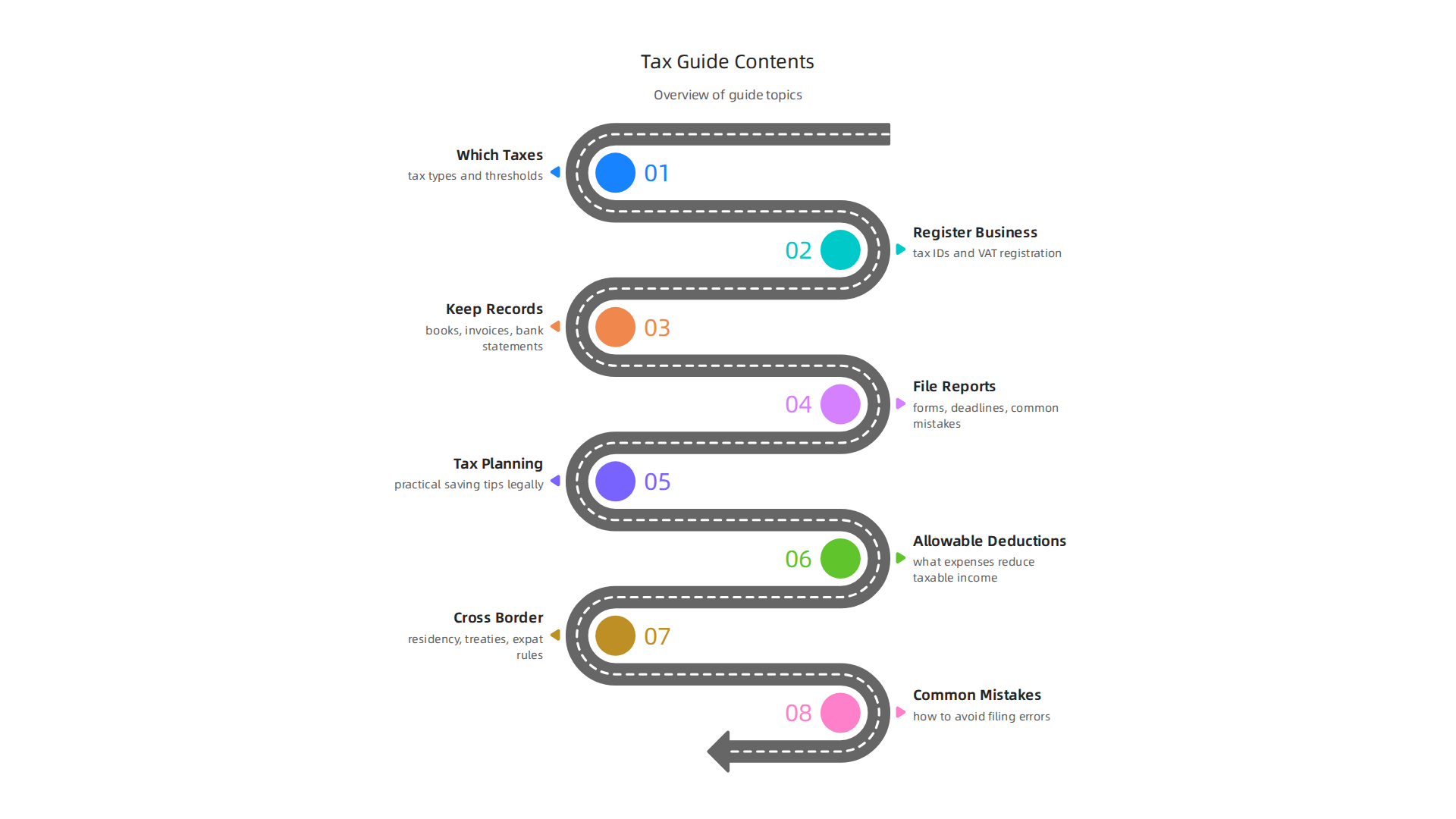
- Which taxes apply to your small business and when you need to pay them.
- How to register your business for taxes.
- The best ways to keep good records of your money.
- How to correctly file your tax reports.
- Tips for planning your taxes for small business so you can save money legally.
This information is for all small business owners and foreign investors who want to be sure their business is following all the tax rules in Dubai. By the end, you will feel much more confident about managing your small business and taxes.
If you’re buying, selling, renting, or investing in Dubai property, it’s wise to get professional advice.
Connect with Ayaz Salman for Free Consultation to discuss your real estate needs.
After learning why it’s so important to report taxes correctly, let’s look at the kinds of taxes your small business might need to handle in Dubai. Knowing these details is a big part of how to report taxes for small business the right way.
Which taxes might your small business need to report?
For small business taxes in Dubai, the main ones you’ll hear about are Corporate Tax and Value Added Tax (VAT). But how these taxes apply can change based on what kind of business you have and where it’s set up.
Corporate Tax: What you need to know
The UAE introduced a federal Corporate Tax in June 2023. This tax is 9% on your business profits. But here’s the good news for many small businesses: if your taxable profit is AED 375,000 or less, you pay 0% Corporate Tax. This is a way to help smaller businesses grow without a heavy tax burden right away. For profits above this amount, the 9% rate applies UAE Taxation in 2026.
This tax applies to most businesses in the UAE, whether they are on the mainland or in one of the many free zones. However, free zones can sometimes have special rules, so it’s always good to check. Understanding these rates is a key part of how to do small business taxes in Dubai. If you want to dive deeper into this, you can check out our UAE corporate tax guide 2026 practical steps for business compliance.
Value Added Tax (VAT): The 5% rule
VAT is a 5% tax added to most goods and services you buy and sell. Not all small businesses need to register for VAT right away. You must register for VAT if your business’s total sales and imports that are subject to tax go over AED 375,000 in a year. This is called the mandatory registration threshold Federal Tax Authority – Registration For VAT.
But what if your sales are lower? You can still choose to register for VAT if your taxable supplies and imports, or your taxable expenses, are more than AED 187,500 per year. This is known as voluntary registration The UAE Tax System in 2026: A Complete Guide. Registering for VAT means you’ll need to collect VAT from your customers and pay it to the government, but you can also claim back VAT you paid on your business expenses. This is an important part of managing small business and taxes.
How your business structure and activities influence taxes
The type of business you run and where it’s located really changes your tax duties.
- Local Trading (Mainland Businesses): If your business operates on the Dubai mainland, you’ll generally follow the standard Corporate Tax and VAT rules discussed above. You’ll need to keep good records of your sales and profits to figure out your tax owed.
- Free Zone Operations: Dubai’s free zones are special areas that offer benefits to businesses, including some tax advantages. While Corporate Tax now applies to most free zone companies, some activities within free zones might still enjoy a 0% Corporate Tax rate if they meet certain conditions, especially for Qualified Free Zone Persons. It’s important to understand your specific free zone’s rules to handle taxes for small business correctly.
- Cross-Border Services: If your business offers services to customers outside the UAE or receives services from outside, the VAT rules can get a bit tricky. Sometimes, VAT might not apply, or the customer might be responsible for paying it in their own country. Knowing these details ensures you properly report taxes for small business activities that cross borders.
Understanding these different tax types and how your business model affects them is the first big step to staying compliant and making smart financial choices.

It helps you prepare for what’s ahead and keeps your small business on solid ground. For a complete guide, check out how to file business taxes for your Dubai property company including corporate tax and VAT.
Now that you know which taxes might apply, let’s talk about how to get your business officially registered. This is a very important step in how to report taxes for small business correctly in Dubai.
Registration: tax IDs, VAT registration, and when to register
To handle small business taxes in Dubai, you’ll need to register with the Federal Tax Authority (FTA). This is where you get your special tax numbers, like a Tax Registration Number (TRN). The good news is that the FTA has an online system called EmaraTax that makes this process easier.
Step-by-step for Corporate Tax registration
Even if your business profits are below the AED 375,000 limit and you pay 0% Corporate Tax, you still need to register for it. This makes sure the government knows about your business and its tax situation.
Here’s a simple checklist to help you register for Corporate Tax:
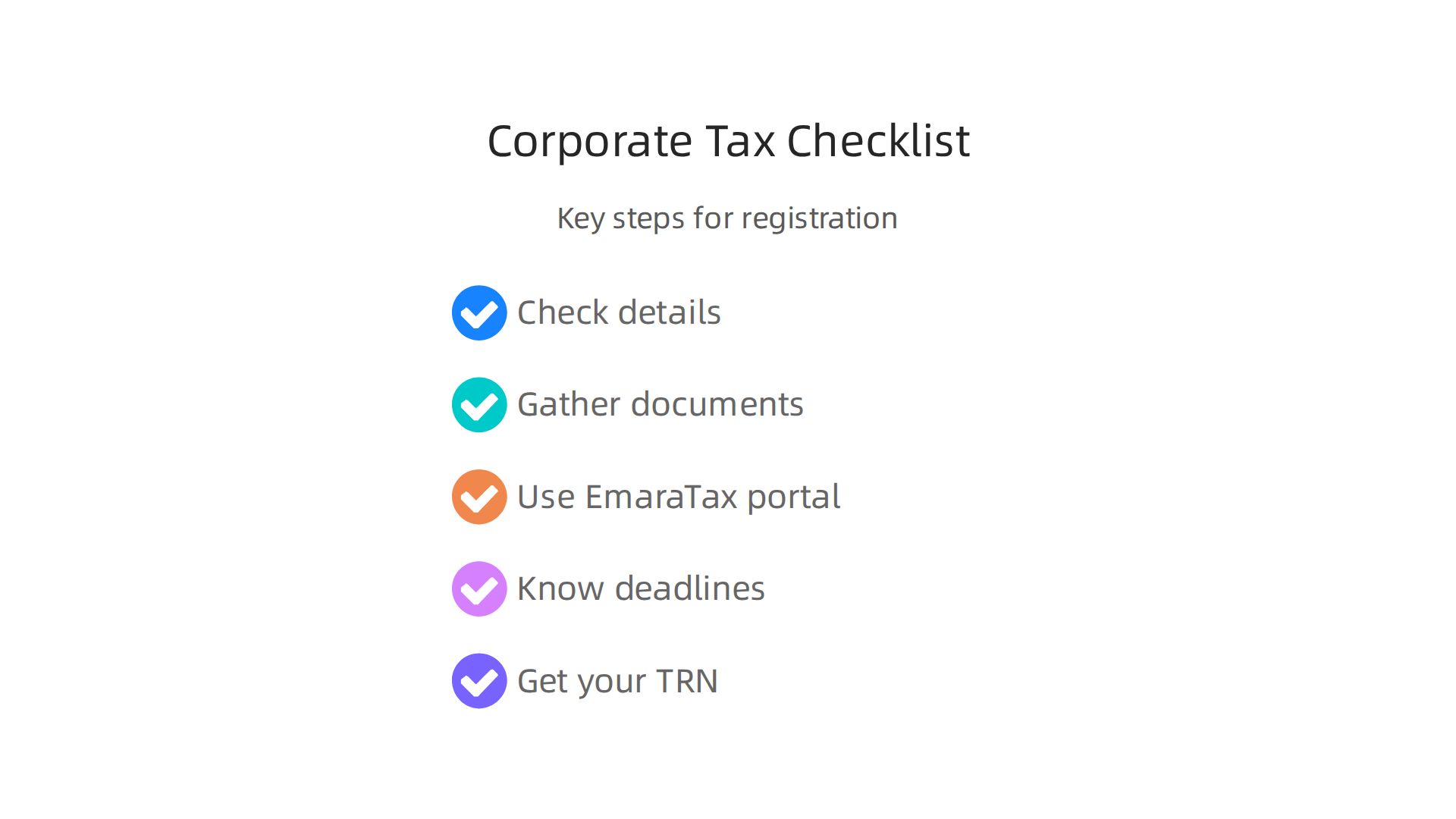
- Check your details: Make sure all your business information, like your trade license and financial year end, is up to date with the right government bodies.
- Gather documents: You will need a few important papers. These usually include your trade license, Emirates ID (for owners/managers), company formation documents, and sometimes your financial statements FAQs on UAE Corporate Tax (2026): Rates, Filing and ….
- Use the EmaraTax portal: Go to the FTA’s online EmaraTax system. This is where you will fill out and submit your registration application. The system will guide you through the steps. If you need help, you can learn more about how to get your UAE Tax Registration Number TRN for property investment.
- Know the deadlines: For businesses that started before March 1, 2024, there are specific deadlines to register for Corporate Tax. These deadlines depend on the month your trade license was first issued, running up to December 31, 2024 UAE Corporate Tax Registration 2026: Deadlines, Penalties …. It’s best to register as soon as possible.
- Get your TRN: Once your application is approved, the FTA will give you a Corporate Tax Registration Number. This number is unique to your business.
How to register for VAT
Registering for VAT is another key part of how to do small business taxes, especially once your sales grow.
Here’s when you need to register for VAT and what to do:
- Mandatory Registration: If your total sales and imports that are subject to VAT go over AED 375,000 in the last 12 months, or if you expect them to go over this amount in the next 30 days, you must register for VAT Tax Compliance in the UAE: The Complete 2026 Guide …. You need to register within 30 days of crossing this threshold VAT Registration UAE: Thresholds, EmaraTax Process 2026.
- Voluntary Registration: You can choose to register for VAT even if your sales are lower, specifically if your taxable supplies and imports, or taxable expenses, are more than AED 187,500 per year. This is a choice, not a must.
The steps for VAT registration are similar to Corporate Tax registration:
- Gather documents: Have your business’s legal documents, trade license, and details of your financial activities ready.
- Use the EmaraTax portal: Just like with Corporate Tax, you will register for VAT through the FTA’s online EmaraTax portal.
- Get your VAT TRN: After your VAT registration is complete, you will receive a separate Tax Registration Number for VAT.
Getting these registrations done sets a strong base for your small business and taxes. It helps you keep track of your tax duties and ensures you are following the rules. Taking care of these early steps helps you master Mastering Dubai Small Business Tax Strategies 2026.
If you find these steps tricky or want to be extra sure you’re doing everything right, getting help from an expert can be a smart move.
Consider professional assistance to guide you through the process effectively: Get Expert Advice on Dubai Property Tax
After you get your business registered and have your Tax Registration Numbers (TRNs), the next big step for how to report taxes for small business is keeping really good records. This is super important. Good record-keeping helps you manage your small business taxes easily, avoid problems, and be ready if the tax people ever have questions.
Record-keeping and bookkeeping best practices for accurate reporting
Keeping track of your business money is not just a good idea; it’s a must-do in Dubai for small business and taxes. This makes sure you report things correctly and follow all the rules.
What records to keep
The Federal Tax Authority (FTA) wants you to keep clear and full records. These are some of the main documents your small business needs to hold onto:
- Books of accounts: These are like your business diary for money. They include a general ledger and all journals that show every money transaction your business makes.
- Financial statements: These are reports that show how your business is doing financially. They include things like a balance sheet, which is a snapshot of your business’s money at a certain time, and an income statement, which shows your profits and losses.
- Sales and purchase records: Keep all your invoices for things you sell and buy. This includes invoices, credit notes, and debit notes.
- Inventory records: If your business sells goods, you need to track what you have in stock.
- Wage registers: These show how much you pay your employees.
- Contracts: Keep copies of all your business contracts.
- Bank statements: Your business bank statements are key to showing all money coming in and going out.
- Customs declarations: If you import or export goods, you’ll need these papers.
The FTA requires businesses to keep these kinds of records to ensure everything is transparent when you report taxes for small business UAE Accounting Requirements for Small Business 2026 – Zola.
How long to retain them
Knowing how long to keep your records is vital for small business taxes. The rules can be a little different based on the type of tax.
- Corporate Tax records: For Corporate Tax, you must keep all your financial records for at least 7 years after the tax period ends UAE Corporate Tax Record-Keeping Requirements.
- VAT records: For VAT, you need to keep related records and invoices for at least 5 years from the end of the tax period UAE SME Bookkeeping: Your 2026 Compliance Guide.
It is always a good idea to keep records longer if you can, just to be safe. You can also watch a helpful video about UAE Record Keeping Rules Explained (VAT + Corporate Tax).
Recommended bookkeeping systems for small businesses
To make record-keeping easier, you should use a good bookkeeping system. These systems help you track all your money coming in and going out. Many small businesses in the UAE use software like QuickBooks, Xero, or Zoho Books. These tools can make keeping your records organized and error-free much simpler

Bookkeeping for UAE SMEs 2026: Rules & Records. They often work online, which means you can check your business’s money from anywhere. For more information on choosing the right tools, check out our guide on how to choose the best software for business taxes in Dubai 2026.
Practical workflow: daily, monthly, and preparing for audits
A clear workflow helps you stay on top of your bookkeeping:
- Daily tasks: Try to record all your sales and expenses every day. This could mean updating your software with new invoices or receipts. Staying on top of this daily prevents a big pile-up later.
- Monthly reconciliations: At the end of each month, compare your business bank statements with your bookkeeping records. This is called bank reconciliation. It helps you find any missing transactions or mistakes and makes sure your records match what the bank says.
- Preparing for filing or audits: When it’s time to file your taxes, all your well-kept records will be ready. If you ever face an audit, having everything organized will make the process much smoother. It will clearly show how to do small business taxes accurately. You might also want to explore how to choose your audit firm in UAE secure compliance and growth.
Keeping great records is truly the backbone of how to report taxes for small business effectively in Dubai. It saves you stress, time, and potential penalties.
Keeping great records is truly the backbone of how to report taxes for small business effectively in Dubai. It saves you stress, time, and potential penalties. Once your records are neat and tidy, the next big step is actually sending in your tax forms. This part of how to do small business taxes has its own rules, forms, and important dates you need to remember.
Filing taxes: forms, deadlines, common mistakes and how to avoid them
Filing your taxes means telling the government about your business’s money and then paying what you owe. For small business and taxes in the UAE, this is mostly done online.
How to file your taxes
The main way to file Corporate Tax returns in the UAE is through the Federal Tax Authority’s (FTA) online system called EmaraTax. It’s a simple online portal. To file your taxes, you generally need to:
- Be registered: Make sure your business is registered for Corporate Tax with the FTA. You should have a Tax Registration Number (TRN).
- Get your documents ready: This means having all your financial statements ready. Sometimes these need to be checked by an auditor, especially for larger businesses. You can find out more about what you need to prepare for filing your UAE Corporate Tax (2026) return.
- Fill out the form: You will input your business’s financial information into the EmaraTax portal. This information comes straight from your good records. The FTA provides a step-by-step guide on how to file your UAE Corporate Tax Return in 2026.
- Pay your taxes: If you owe any tax, you will pay it through the same portal.
Important deadlines to know
Missing a deadline can lead to fines, so it is very important to know when your taxes are due.

- Corporate Tax: You must file your Corporate Tax return and pay any tax due within 9 months after your business’s financial year ends. So, if your financial year ends on December 31, 2026, you would need to file by September 30, 2027. This deadline is the same for both filing and paying Corporate Tax Filing Deadline 2026 UAE.
- VAT: For VAT, most businesses file their returns every three months (quarterly). The deadline for VAT returns is usually the 28th day after the end of the tax period.
Keeping these dates in mind helps your small business taxes stay on track.
Common mistakes and how to avoid them
Even with good intentions, mistakes can happen when reporting taxes for small business. Here are some common ones and how to steer clear of them:
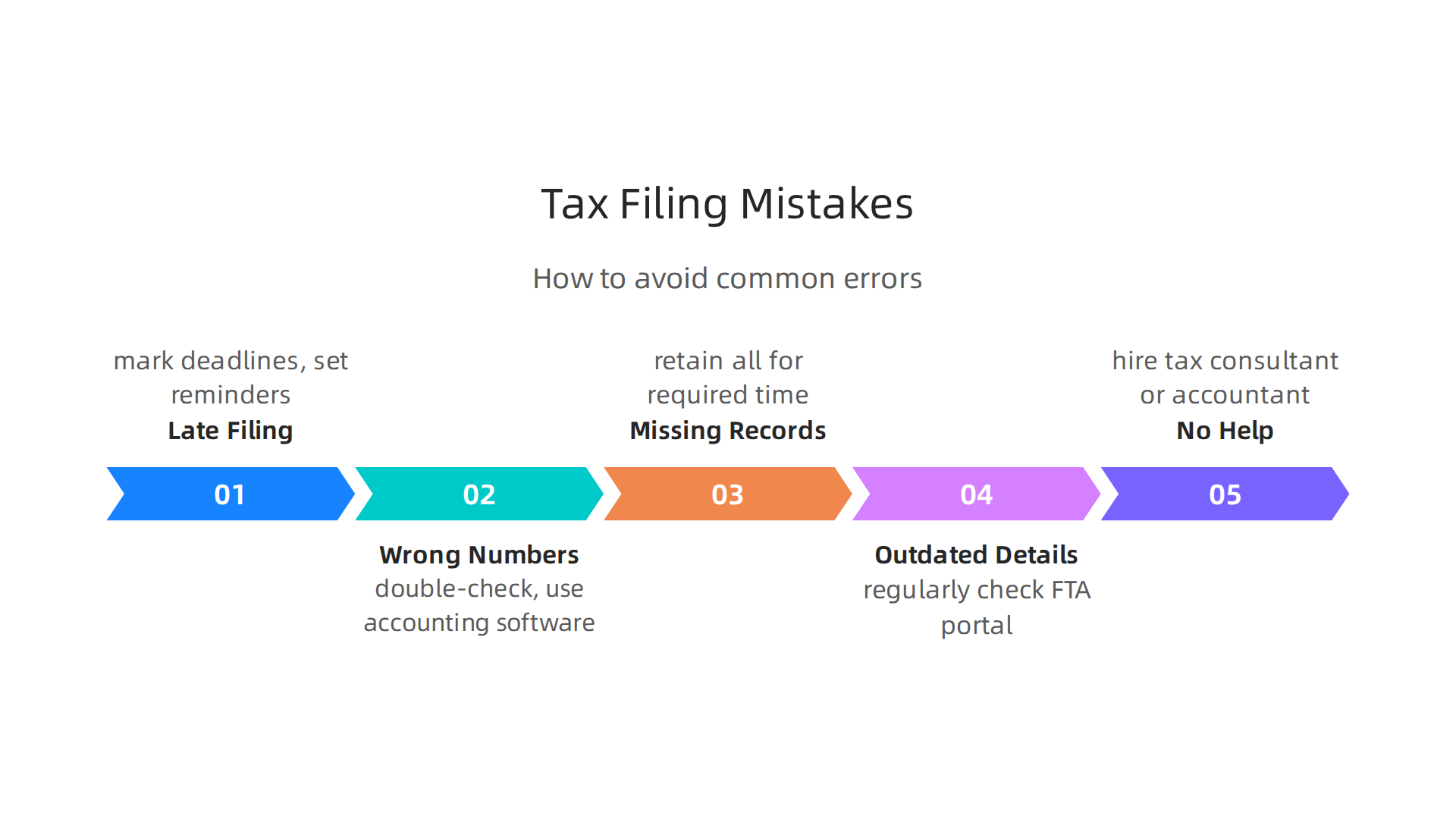
- Not filing on time: The easiest way to get a penalty is to miss a deadline.
- How to avoid: Mark all your tax deadlines on a calendar. Set reminders. Better yet, work with a tax advisor who helps you remember.
- Wrong numbers: Putting in the wrong numbers on your tax forms. This could be a simple math error or using an incorrect amount for income or expenses.
- How to avoid: Double-check all your numbers. Use good accounting software that helps with calculations. Make sure your bank statements match your records every month.
- Not keeping all records: While we talked about this before, not having all the papers to back up your numbers is a big problem if the FTA asks to see them.
- How to avoid: Keep all the records we discussed in the last section for the required time.
- Not updating your business details: If your business name, address, or financial year changes, you need to tell the FTA.
- How to avoid: Regularly check that your details are correct on the FTA portal. If anything changes, update it right away.
- Not asking for help: Tax rules can be tricky. Trying to do it all yourself without understanding can lead to mistakes.
- How to avoid: Consider hiring a tax consultant or an accountant who knows UAE tax laws well. They can guide you through how to report taxes for small business. You can learn more about how to choose the best corporate tax consultant in Dubai for property investment.
Handling amendments, late filings, and communicating with tax authorities
Sometimes, even with the best efforts, you might realize you made a mistake on a past tax return, or you simply could not file on time.
- Late filings: If you file late, you will likely face penalties. The FTA has specific rules for these fines. The same goes for late payments Corporate Tax Return Filing UAE: Deadlines & Penalties. It is important to submit your return as soon as you can, even if it is late, to avoid more penalties.
- Amendments: If you find a mistake on a tax return you already sent in, you might need to amend it. This means sending in a corrected version. The FTA allows you to do this, but there are rules about how and when.
- Talking to the FTA: If you have issues or cannot meet a deadline, it is usually best to communicate with the tax authorities. They might be able to help or guide you on the next steps.
Being careful, staying organized, and knowing your deadlines are your best tools when learning how to do small business taxes in Dubai.
Being careful, staying organized, and knowing your deadlines are your best tools when learning how to do small business taxes in Dubai. But there’s another important part of how to report taxes for small business: smart tax planning. This means finding ways to legally lower the amount of tax your business owes.
Tax planning and allowable deductions for small businesses (practical tips)
Smart tax planning helps your small business save money. It means looking ahead and making good choices about your business spending. The goal is to make sure you only pay the taxes you truly owe, and not a penny more. This involves understanding what expenses you can deduct from your income. When you deduct an expense, it lowers your taxable profit, which means less tax to pay.
Tactical steps for lawful tax planning
When it comes to small business and taxes, here are some practical steps to help you plan your tax strategy:
- Document Everything: Just like we talked about before, keeping excellent records is key. For every expense, you need a receipt, invoice, or other proof. This shows the tax authorities that your expense was real and related to your business. Without proper documents, you cannot claim a deduction.
- Classify Expenses Correctly: All your business costs need to be grouped correctly. An expense is usually "ordinary and necessary" if it’s common and helpful for your type of business. For example, office rent is an ordinary and necessary expense for most businesses. The Federal Tax Authority (FTA) charges Corporate Tax based on your accounting profit, but with some specific rules applied for adjustments.
- Typical Deductible Categories: Most day-to-day costs of running your business can be deducted. This includes things like:
- Salaries paid to employees
- Rent for your office or business space
- Utilities like electricity and water
- Professional fees for services from lawyers or accountants
- Marketing and advertising costs
- Depreciation of assets, which means the value that things like computers or machinery lose over time.
- Certain interest expenses related to loans for your business may also be deductible, including fees for arranging loans or early repayment penalties, as explained in the UAE Corporate Tax Relief for Small Businesses Explained guide.
It’s important to remember that these expenses must be "wholly and exclusively" for your business. For a broader look at what is allowed, review the United Arab Emirates Corporate Deductions information.
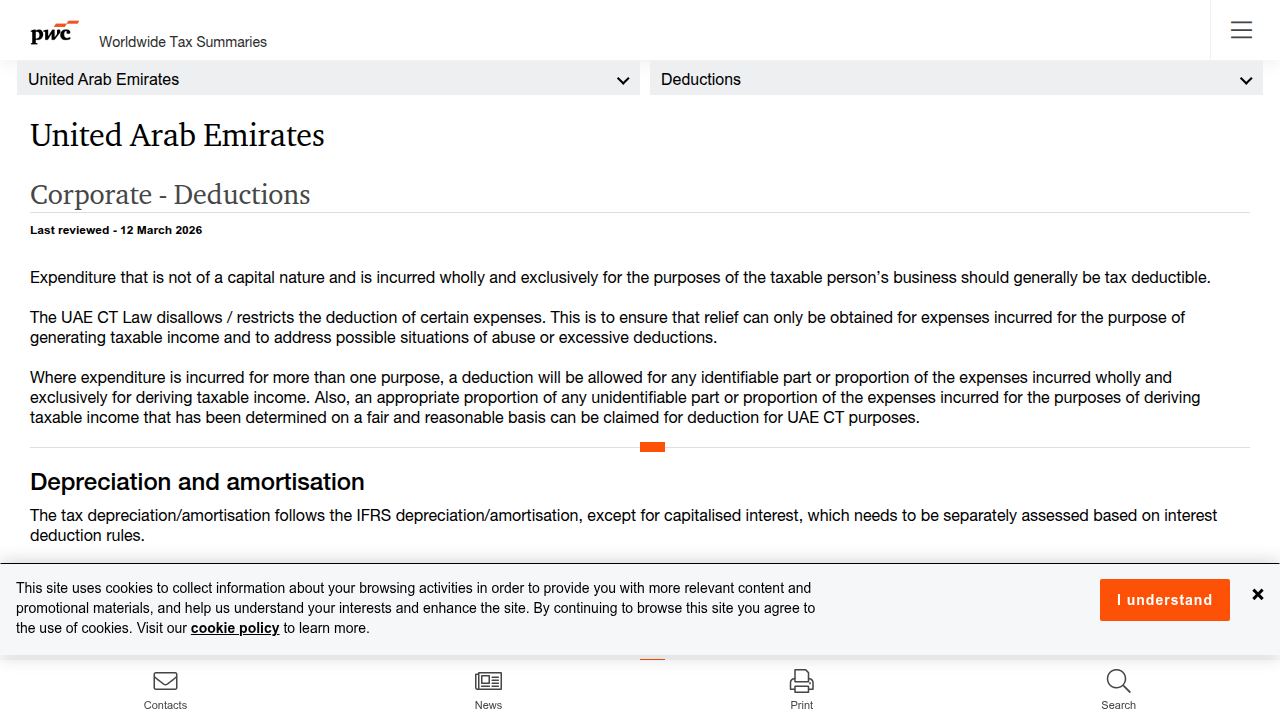
- Non-Deductible Items to Watch Out For: Not everything you spend money on can be deducted. For example, personal expenses (like using your business account to buy groceries for your home) are not allowed. Fines and penalties are also not deductible. Also, for client entertainment, only up to 50% can be deducted in 2026, according to guidance on Dubai Corporate Tax 2026 | Free Zone Compliance Guide.
- Consider Small Business Relief (SBR): For many small businesses in the UAE, there’s a special program called Small Business Relief. If your business qualifies and your revenue is below a certain amount (AED 3 million in 2026), you can choose to be treated as if you have no taxable income, meaning you pay 0% Corporate Tax. If you elect for Small Business Relief, you won’t need to worry about specific deductions because your business won’t have taxable income anyway. To claim this, you need to be registered for Corporate Tax and choose SBR when you file your return through the EmaraTax portal. You can read more about how to Claim 0% Corporate Tax with Small Business Relief UAE 2026.
Understanding these rules helps you manage your small business taxes better. If you want to dive deeper into reducing your tax bill, consider these strategies to optimize business expenses on taxes to boost your Dubai refund.
When to seek professional advice and how to evaluate cost versus benefit for tax advisory services
Even with these tips for how to do small business taxes, tax rules can be complex. Sometimes, doing it yourself might lead to missed savings or accidental mistakes.
- When to Get Help: You should think about hiring a tax consultant or accountant if:
- Your business is growing quickly.
- You have many different types of income or expenses.
- You want to make sure you are following all the latest rules in 2026.
- You simply do not have the time to handle taxes yourself.
- You are unsure about classifying certain expenses or claiming specific deductions.
A professional can guide you through the process, helping you avoid errors and make the most of lawful deductions.
- Evaluating Cost vs. Benefit: Getting professional help costs money, but it can often save you more in the long run.
- Benefits: A good tax advisor can help you find deductions you might miss, ensure you stay compliant, and free up your time to focus on your business. They can help you with comprehensive UAE Corporate Tax Exemptions 2026 knowledge. This can lead to significant tax savings and peace of mind.
- Cost: Get quotes from a few different advisors. Ask what services are included and how they charge (hourly, fixed fee).
Compare the cost of their service to the potential savings you might get and the time you’ll save. If an advisor can save you more money in taxes than they charge in fees, it’s often a smart investment.
For any questions about buying, selling, renting, or investing in Dubai property, a free consultation can offer clarity and guidance.
FREE Dubai Real Estate Consultation
Even with helpful tips for how to do small business taxes and finding smart deductions, the rules can change a bit if you are a foreign owner or an expat running a business in Dubai. You need to think about things like where you are considered a tax resident and if there are special agreements between countries that affect your taxes. These are called double taxation treaties. Understanding these points is key to properly reporting taxes for your small business.
Knowing Your Tax Home: Residency Rules in the UAE
First, you need to know if you are considered a tax resident in the UAE. This is super important because it decides which taxes you need to pay and where. Both people and companies can be tax residents.
- For Individuals (Expats): If you are a person, you are generally seen as a UAE tax resident if you spend 183 days or more in the UAE over 12 months. Sometimes, even if you spend 90 days or more, you might be a resident if you have a home or work here, as outlined in the Tax Procedures Guide on Tax Residency and explained further in the UAE Tax Residency: Understanding the new rules for expats guide.
- For Companies (Foreign Owners): For a company, it is usually a UAE tax resident if it was set up in the UAE. This includes companies in Free Zones. A foreign company can also be seen as a UAE resident for Corporate Tax if its main decisions and management are done in the UAE, according to the United Arab Emirates – Corporate – Corporate residence information. The government’s own Tax Resident and Tax Residency Certificate guide – FTA shares more details.
Understanding your residency status is the first step in figuring out your small business taxes when you have cross-border income.
Double Taxation Treaties: Avoiding Paying Twice
Many countries have special agreements with the UAE called Double Taxation Treaties (DTTs). These treaties are like rulebooks that decide which country gets to tax certain types of income. Their main goal is to stop you or your small business from paying taxes on the same income in two different countries.
For example, if you run a small business in Dubai and also have business activities in another country that has a DTT with the UAE, these treaties can help you pay less tax overall. To use these treaties, you often need a Tax Residency Certificate (TRC) from the UAE. This certificate proves you are a tax resident here. This is an important part of how to report taxes for small business smartly when dealing with international income.
How Cross-Border Income Changes Your Tax Reporting
If you are a foreign owner or an expat, your business might earn money both in the UAE and from other countries. This is called cross-border income.
- UAE-Source Income: If your business is run in the UAE and makes money here, that income is generally subject to UAE Corporate Tax, unless you qualify for Small Business Relief.
- Foreign-Source Income: For residents, worldwide income might be considered. However, DTTs often help decide which country has the right to tax this income.
- Non-Resident Businesses: A business that is not a resident in the UAE but has a "Permanent Establishment" (PE) here will still need to pay Corporate Tax on the income linked to that PE. A PE basically means having a fixed place of business in the UAE, like an office or a factory, through which you do business, as explained in the UAE Doing Business 2024 guide.
Key Compliance Steps for Foreign Investors
For foreign investors and expats, handling taxes for small business in Dubai means taking a few specific steps:
- Determine Your Residency: Clearly figure out your and your company’s tax residency status in the UAE for 2026.
- Check for DTTs: Find out if your home country has a Double Taxation Treaty with the UAE and understand how it affects your specific situation.
- Register for Corporate Tax: If your business meets the conditions, you must register for UAE Corporate Tax. You can learn more about this in our comprehensive UAE Corporate Tax Guide 2026 Practical Steps for Business Compliance.
- Maintain Excellent Records: Keep very clear records for all your business income and expenses, especially those that cross borders. This helps you correctly claim deductions and avoid issues with either country’s tax authorities. This is vital to understanding how to report taxes for small business effectively.
- Seek Professional Help: Tax rules for cross-border business can be tricky. It is often best to talk to a tax advisor who knows about both UAE and international tax laws.

They can help you make sure you are following all the rules and using any DTTs to your advantage. If you are looking into how UAE Corporate Tax affects your property investments, you can read our guide on how UAE Corporate Tax affects your Dubai property investment structure.
Summary
This guide explains why accurate tax reporting matters for small businesses in Dubai and walks you step-by-step through what to do. It covers the main taxes you’ll meet—5% VAT and the UAE Corporate Tax (0% up to AED 375,000, 9% thereafter)—and shows when and how to register using the FTA’s EmaraTax portal. You’ll learn practical record-keeping rules (what to keep and retention periods), the filing process and deadlines, common filing mistakes to avoid, and how to claim legitimate deductions or elect Small Business Relief. The article also explains how business structure, free zone status, and cross-border income affect compliance, and when it makes sense to hire a tax advisor. After reading, you’ll know the concrete steps to register, organise records, file correctly, and plan taxes to protect cash flow and avoid penalties.