
How to Start Real Estate Investment in Dubai: A Step by Step Guide for 2026
· 21 min read

Introduction: Why Dubai and How to Start
You have probably heard the buzz about Dubai’s property market. And for good reason. In the first half of 2025 alone, the total value of residential property sales hit AED 151.8 billion, according to the Q2 2025 Dubai residential real estate market report by Betterhomes. Prices kept climbing too. Data from Dubai Property Prices Trend in 2025 shows a 15.8% annual increase, with prime freehold areas leading the charge. By the end of 2025, the Residential Market Sales Price Index surged 31.59% year on year, and apartment prices rose nearly 35% annually, as reported by Global Property Guide.
Those numbers grab your attention. But here is the problem many newcomers face.
When you try to figure out how to start real estate investment in Dubai, you run into a maze of conflicting advice, complex regulations, and too many options.

Who do you trust? Which area works best? Should you buy off-plan or ready? The confusion can stop you before you even start.
That is where this guide comes in.
We created this resource to give you a clear, step-by-step roadmap for how to start in real estate investment the right way. No fluff. No sales pitches. Just grounded advice based on official data and real market experience. We cover everything from choosing the right neighborhood to understanding legal paperwork and avoiding costly mistakes.
If you want to explore deeper background first, check out our guide on 6 core principles for smart returns in Dubai real estate. It is a great starting point for building your foundation.
So is investment in real estate good right now? The data says yes. But success depends on how you approach it. Let us walk through the process together.
Ready to take the first step? Get your free Dubai real estate consultation with an expert who can answer your specific questions and help you find the right investment opportunities real estate in Dubai has to offer.
Understanding Dubai’s Real Estate Market and Legal Framework
Before you put any money down, you need to understand the market you are entering. Dubai is more than just skyscrapers and luxury malls. Its property market has a unique rhythm shaped by tourism, global events, and smart government planning.
What drives Dubai’s property market?
Several big forces keep this market moving. Tourism brings millions of visitors each year, many of whom decide to buy a second home. The legacy of Expo 2020 still fuels demand for new communities and infrastructure. And Dubai’s push for economic diversification has created jobs in tech, finance, and healthcare, bringing in more residents who need housing.
Here is the thing: Dubai’s property market goes through cycles. It has booms and slowdowns. In 2025, we saw a record-breaking surge. According to the Q2 2025 Dubai residential real estate market report by Betterhomes, total sales value hit AED 151.8 billion in just the first half of the year. The Dubai Property Market Performance 2026 analysis confirms that 2025 set new records in both transactions and values. And experts at Deloitte Middle East predict retail sales will grow 6% between 2025 and 2027, which helps sustain property demand.
The three government bodies you must know
You cannot succeed in Dubai real estate without dealing with three key regulators.
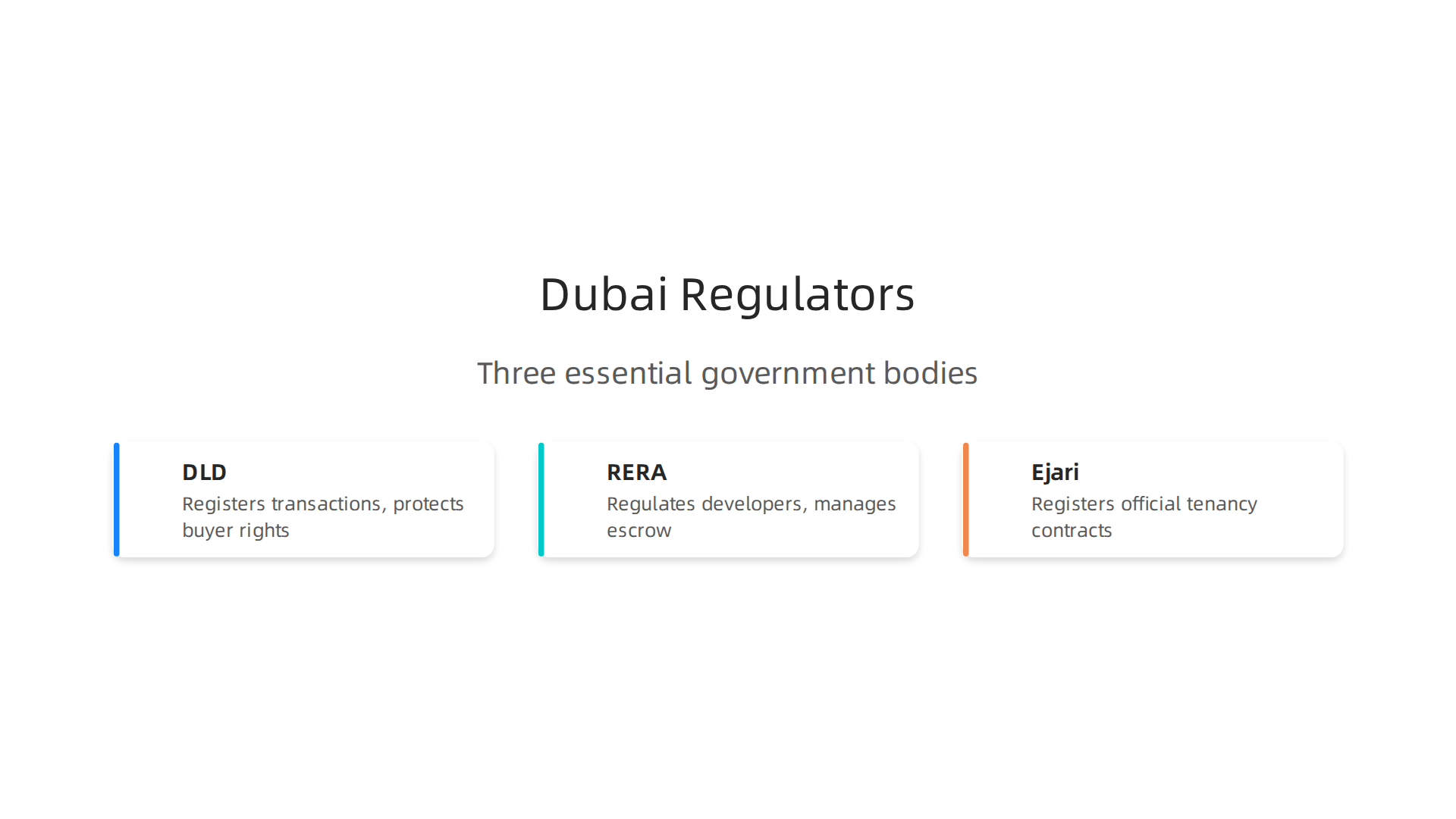
Dubai Land Department (DLD) is the main authority. It registers all property transactions and protects buyer rights. Every sale, transfer, and title deed goes through the DLD.
Real Estate Regulatory Authority (RERA) sits under the DLD. RERA makes sure developers follow the rules. It approves off-plan projects, manages an escrow system for buyer funds, and sets rental increase caps. If a developer is not registered with RERA, walk away.
Ejari is the rental registration system. When you rent out a property, you must register the tenancy contract with Ejari. This makes the agreement official and helps resolve disputes later.
These bodies create a safe environment for investors. But you still need to do your own homework. That is why we recommend you learn how to perform thorough due diligence when choosing an investment company in Dubai.
Freehold vs. leasehold: What is the difference?
This is one of the most important things to understand when figuring out how to start real estate investment in Dubai.
Freehold means you own the property and the land it sits on, forever. Foreigners can buy freehold in designated areas. These include popular spots like Dubai Marina, Downtown Dubai, Palm Jumeirah, and Jumeirah Lakes Towers. Freehold ownership gives you full control. You can live in it, rent it out, or sell it whenever you want.
Leasehold means you own the building but not the land. The land is leased for a certain period, usually 99 years. After that, ownership returns to the landowner. Leasehold is less common but still exists in some older areas.
For most international investors, freehold is the better choice. It offers more freedom and long-term security. As noted by DarGlobal, foreign investors are fueling growth especially in Dubai’s freehold areas.
Visa implications: Property gets you residency
One major perk of buying property in Dubai is the visa benefit. If you buy a property worth AED 750,000 or more, you can get a 2-year renewable residency visa. Buy a property worth AED 2 million or more, and you qualify for a 10-year Golden Visa. This visa lets you live, work, and study in the UAE. You can also sponsor your family.
This is a huge advantage that makes investment opportunities real estate in Dubai even more attractive. You are not just buying a home. You are buying a lifestyle and a base in one of the world’s fastest-growing cities.
Total market size
The numbers are staggering. According to Statista, the UAE real estate market is expected to reach US$697.94 billion by 2026. That is a massive pool of investment opportunities real estate buyers like you can tap into.
Now that you understand the market forces and legal framework, the next step is choosing the right area to buy. And that is what we will cover next.
Ready to put this knowledge into action? Get your free Dubai real estate consultation with an expert who can help you navigate the legal side and find the best real estate investment opportunity for your goals.
Off-Plan vs. Ready Properties: Risks and Benefits
Now that you understand the market and legal setup, it is time to face one of the biggest choices you will make when learning how to start real estate investment in Dubai. Do you buy an off-plan property or a ready one?
Both paths can work. But they come with very different trade-offs. Let us break them down.
What is off-plan exactly?
Off-plan means you buy a property before it is built. You are buying based on brochures, showrooms, and a developer’s promise. It is a bet on the future.
The benefits of going off-plan
Lower entry price is the biggest draw. Developers want early buyers, so they offer prices below market value. According to the Q2 2025 market analysis from Boville, off-plan apartments averaged AED 2,023 per square foot, while ready properties averaged AED 1,600 per square foot. Wait, that means off-plan was actually higher per square foot in Q2 2025? Actually, that data point is more about price per sqft comparison — in some segments off-plan can be priced at a premium due to demand, but generally off-plan offers better payment plans.
Payment plans are another huge advantage. You usually pay in installments during construction. You might put down 10% now and the rest over 3-4 years. This makes how to start in real estate investment much easier if you do not have all the cash today.
Potential for high capital growth is real. If the area develops well, your property could be worth much more by completion. In 2025, off-plan sales continued to outpace ready property transactions, showing strong buyer confidence in future projects.
The risks of off-plan projects
Project delays happen. Construction can take longer than promised. Some developers have missed deadlines by months or even years.
Developer insolvency is the scariest risk. If the developer goes bankrupt mid-project, your money could be stuck. This is why you must only buy from RERA-registered developers and use the escrow system that protects buyer payments.
Market values can also change before completion. A booming market in 2026 might cool down by 2028 when your property is ready. You could end up owing more than the property is worth.
Why ready properties appeal to many investors
Immediate rental income is the top reason. You can buy a ready apartment today and have a tenant paying rent next month. You do not wait years for returns.
You can physically inspect the property. No guessing about finishes, views, or noise levels. You walk through the unit and see exactly what you get.
Established communities offer peace of mind. You know the neighborhood, the amenities, and the tenant demand before you buy. An analysis from Dubai Property Prices Last 10 Years shows ready property sales reached their highest level since 2008 in recent years, proving strong demand for move-in-ready homes.
Which one fits your style?
Ask yourself: Do I want potential growth with some risk? Or do I want stable income starting now?
If you are patient and comfortable with uncertainty, off-plan can deliver serious gains. If you want cash flow and certainty, ready property is your friend.
For a deeper look at the specific price trends and growth areas, the Off-Plan vs Ready Property in Dubai 2026 guide offers a helpful side-by-side comparison.
You can also review our due diligence guide for choosing an investment company to make sure you pick the right partner for either path.
Still unsure which route suits your goals? Get your free Dubai real estate consultation to talk through your budget, timeline, and risk comfort with an expert who knows how to match you with the right real estate investment opportunity.
Due Diligence for Off Plan Projects
So you have decided to go off plan. Smart choice for the right investor. But here is the hard truth: not all off plan projects are created equal. Some deliver amazing returns. Others turn into nightmares.
The difference comes down to one thing: how well you check the developer before you sign. Let me walk you through the exact steps you need as part of learning how to start real estate investment the right way.
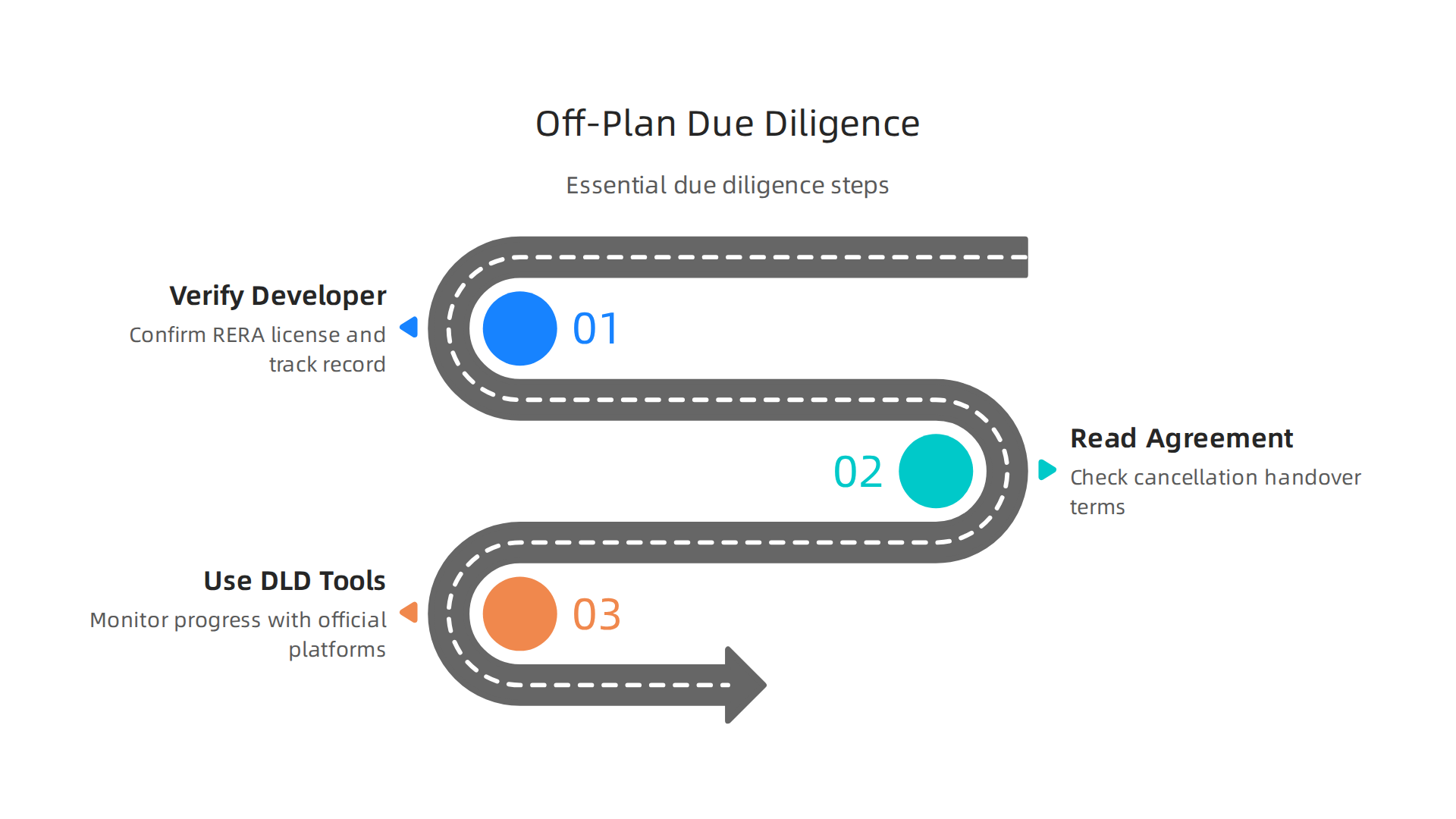
Step 1: Verify the developer’s credibility
You would not lend money to a stranger without checking their background. Same logic applies here. The Dubai Real Estate Regulatory Authority (RERA) makes this easy. Every developer must be registered with RERA. You can search the official RERA website to confirm their license is active and valid.
Next, look at their track record. Have they completed past projects on time? Do other investors speak well of them? A developer with five delivered communities is safer than one with only one project in history. You can also check the escrow account. By law, your off plan payments must go into a RERA monitored escrow account. This protects your money if the developer faces financial trouble. Always ask for the escrow account number and confirm it with the Dubai Land Department.
If you want a deeper framework for checking any investment partner, read our due diligence guide for choosing an investment company. The same principles apply to developers.
Step 2: Read the Sale Purchase Agreement carefully
This document is your legal protection. But many investors skip the fine print. Do not be one of them.
Look specifically at the cancellation policies. What happens if the developer delays? What happens if you need to exit early? Some contracts have harsh penalties. Others are more flexible. Also check the handover date and what happens if it slips. The market data from Global Property Guide shows off plan sales still outpace ready properties in 2026, which means demand is high. But that also means developers may rush projects. You want clear terms on delays and compensation.
Step 3: Use DLD and RERA tools to track progress
You do not need to blindly trust the developer. The Dubai Land Department offers two powerful tools.
First, Makani. This is a smart mapping system that shows every property in Dubai, including off plan projects. You can see the exact location, plot size, and nearby amenities. It helps you confirm the project actually exists and is where the brochure says it is.
Second, Trakheesi by RERA. This platform lets you monitor the construction progress of your off plan property in real time. You can see percentage completion, milestone updates, and even engineering reports. It puts transparency in your hands.
Using these tools removes guesswork and gives you peace of mind.
Still feel unsure about which developer to trust or what to check in the contract?
Get your free Dubai real estate consultation and talk through your due diligence checklist with an expert who can guide you through the paperwork and the tools. That way, your investment opportunities in real estate come with confidence, not worry.
Financing Your Dubai Property Investment
You have checked the developer. You have reviewed the contract. Now comes the real question: how do you pay for it? Many people wonder if investment in real estate is good when they do not have all cash upfront. The good news is that Dubai offers strong financing options for both residents and non-residents. Let me walk you through what you need to know in 2026.
Mortgage Options for Residents and Non-Residents
If you live in the UAE, you are in a strong position. Residents can get a home loan for up to 80% of the property value with lenders like Emirates NBD. That means you only need a 20% down payment. Interest rates for residents typically fall between 3% and 4% in 2026, depending on your salary and credit profile.
For non-residents, the rules are different but still workable. As a foreign buyer, you can expect a loan-to-value (LTV) ratio of 50% to 65%. That means you need a down payment of 35% to 50%. The exact number depends on your financial strength and the bank you choose. Major banks like HSBC UAE and FAB offer non-resident mortgages with rates starting around 4% to 5%. The Property Finder guide for 2026 gives a full breakdown of what documents you will need, including proof of income, bank statements, and a passport copy.
One important thing: processing fees vary. Most banks charge between 1% and 2% of the loan amount. Always ask for a full fee breakdown before you sign.
Islamic Finance vs. Conventional Mortgages
You have two main paths. Conventional mortgages work like standard loans. You borrow money and pay interest. Islamic finance, on the other hand, uses a different structure. The bank buys the property and sells it to you at a markup. You pay in installments with no interest.
Both are common in Dubai. Islamic finance is a good choice if you want to follow Sharia law or simply prefer a more transparent cost structure. The total cost often ends up similar to conventional loans. Your choice depends on personal preference and what each bank offers.
Other Costs You Must Budget For
A mortgage is only part of the picture. When you buy a property in Dubai, these extra costs add up fast:
- DLD transfer fee: 4% of the property price. This is the biggest cost.
- Registration fee: Around AED 540 plus 0.25% of the property value for properties over AED 500,000.
- Agent commission: Usually 2% of the purchase price.
- Valuation fee: AED 3,000 to AED 5,000, paid when applying for a mortgage.
- Annual maintenance fees: Vary by building, but budget 10 to 20 AED per square foot per year.
Do not skip these in your budget. Many first time investors forget the transfer fee and end up scrambling for cash.
If you want to see another way to start strong without a full mortgage, check out our guide on co-investment real estate in Dubai. It lets you own premium property with less upfront capital.
Ready to Find the Best Financing for Your Situation?
Every investor’s case is different. The right mortgage depends on your residency status, budget, and goals.

Let an expert help you compare options and crunch the numbers.
Get your free Dubai real estate consultation and find out exactly how much you need and which bank fits your profile. That is the smartest way to turn your real estate investment opportunity into reality.
Maximizing Rental Yield and Capital Appreciation
You have your financing sorted. Now the real question: how do you make your money grow? When you learn how to start real estate investment in Dubai, you focus on two main returns: rental yield (the cash you get each year) and capital appreciation (the rise in property value over time). Getting both right is the secret to a strong real estate investment opportunity.
Top Areas for Rental Yield in 2026
Not all areas give you the same return. Some neighborhoods are famous for high rental yields. Here is what the data says for 2026:
- International City and Discovery Gardens: These areas offer the highest yields, often up to 8% to 9% for smaller units, according to a study by Luxhabitat.
- Jumeirah Village Circle (JVC): Yields here range from 6.78% to 7.87%, as reported by GuestReady. A three-bedroom flat in JVC yields around 7.21%.
- Dubai Marina and JLT: These popular spots give yields between 5% and 7%. They are more expensive to buy, but demand from renters stays strong.
- Business Bay: Yields sit around 6% to 7%, making it a solid choice for investors who want a central location.
- Downtown Dubai: Rental yield here is 5% to 6%, but capital appreciation can reach 8% to 11%, says Homeland.
Remember, a rental yield between 6% and 8% is considered strong in Dubai. Many emerging communities deliver even higher numbers. The Property Finder guide gives a full list of best areas for 2026.
What Drives Capital Appreciation?
Rental yield gives you cash flow today. Capital appreciation builds your long term wealth. Several factors push property values up:
- Infrastructure projects: New metro lines, roads, and airports make areas more desirable. The expansion of Expo City and new bridges in Dubai South are examples.
- Demand and supply: When more people want to live in an area than there are homes, prices rise. Dubai’s population keeps growing, which keeps demand high.
- Community development: Parks, schools, shopping malls, and hospitals raise the value of nearby properties. Always check what is planned for the neighborhood.
Balancing yield and appreciation is key. A lower yield area like Downtown Dubai can still be a fantastic long term play because of its strong appreciation.
Holiday Homes vs. Long-Term Leases
Another big choice is whether to rent your property short term or long term. Short term holiday homes (like Airbnb) can give you higher income per night. But they come with more work: cleaning, guest management, and seasonal ups and downs. Long term leases give you steady monthly income and less hassle.
Which one is better for you? It depends on your time and goals. If you want passive income, long term is easier. If you want to maximize returns and have a management team, short term can be very profitable. Many investors use a mix of both.
For a deeper look at how to run your numbers properly, check out our guide on real estate trust investment in Dubai. It covers how to protect your returns with smart due diligence.
Ready to Find Your Best Investment Area?
Every investor has different goals. The right area and rental strategy depend on your budget, timeline, and how much work you want to do. Let an expert help you match your goals with the best opportunity.
Get your free Dubai real estate consultation and find out exactly which area and strategy will give you the highest returns. That is the smartest way to turn your investment opportunities real estate into real profit.
Navigating Hidden Costs and Finding Trustworthy Advisors
You now know where to invest and how to maximize returns. But here is the part that trips up many beginners learning how to start real estate investment. The hidden costs. If you do not plan for them, they can quietly eat away your profits.
Let’s walk through what to watch out for and who to trust.
The Hidden Costs You Must Plan For
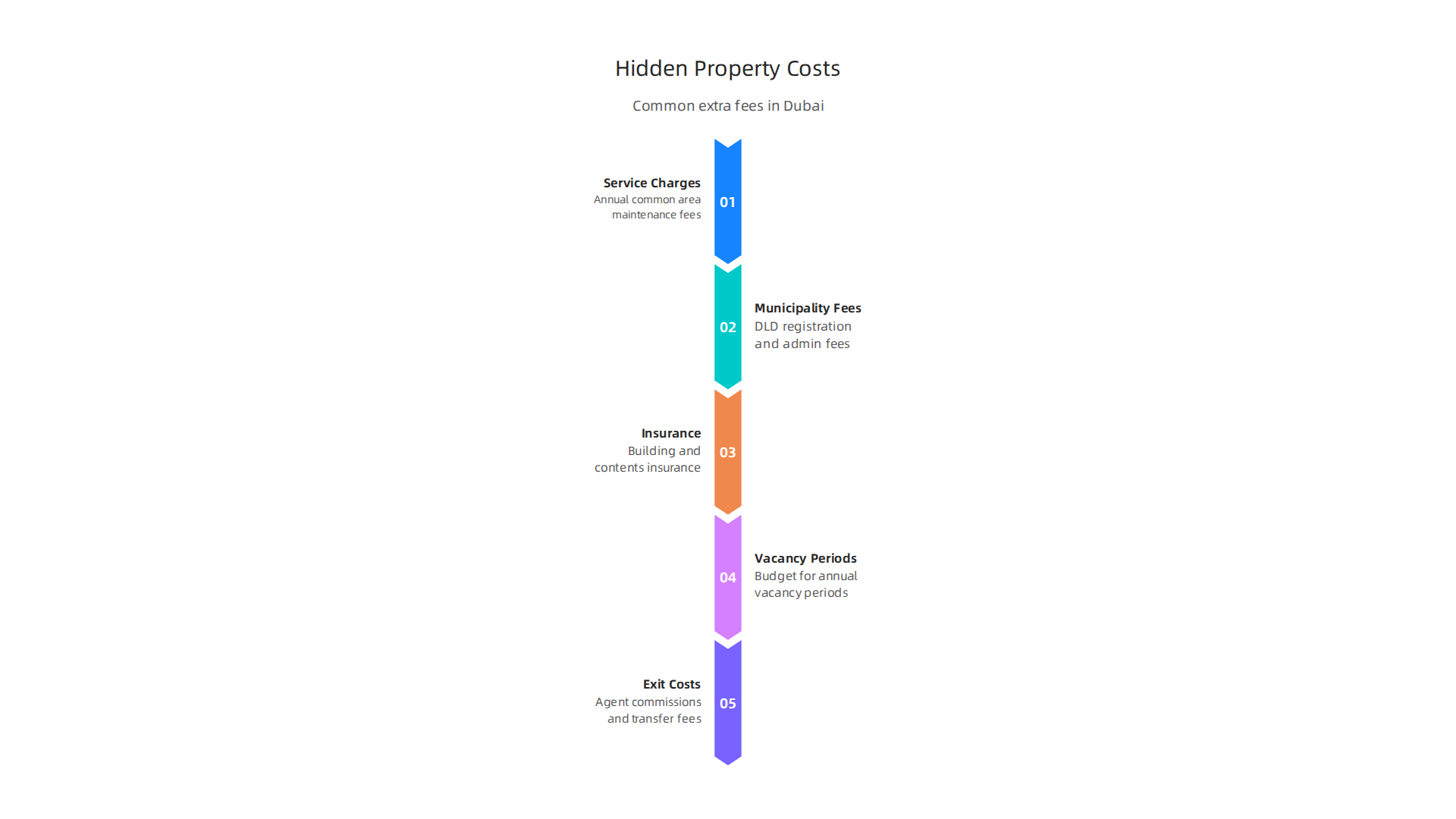
Every property comes with extra fees. Here are the most common ones in Dubai:
-
Service Charges: These are annual fees paid to the building owner association. They cover maintenance of common areas, security, and facilities. Fees vary a lot by community. Always check the service charge before you buy.
-
Municipality Fees: The Dubai Land Department charges a registration fee (usually 4% of the property price) plus an administrative fee. Do not forget these costs when you calculate your total investment.
-
Insurance: Building insurance is often mandatory. Home contents insurance is optional but smart.
-
Vacancy Periods: Even the best properties sit empty for a few weeks between tenants. Budget for at least one month of vacancy per year.
-
Exit Costs: Selling a property comes with agent commissions (around 2%) and transfer fees. Factor these into your long term plan.
The Dubai property market has seen strong growth, with sales values rising in recent periods. But knowing these costs is a core part of understanding how to start in real estate investment the right way.
How to Find a Trustworthy Real Estate Advisor
The wrong agent can cost you a lot of money. The right one is worth their weight in gold.

Here is how to find a great advisor in 2026:
-
Check Their RERA License: Every licensed agent in Dubai has a RERA card. You can verify their license on the official Dubai Land Department website. This is your first and most important step to avoid scams.
-
Read Reviews and Ask for References: Look for agents with a strong track record. Ask them for recent client references. A good agent will happily share them.
-
Look for Specialization: Choose someone who focuses on the area or property type you want. Generalists are less helpful than experts.
-
Never Skip Due Diligence: A trustworthy agent will help you do your homework, not rush you. For a full checklist, read our guide on how to choose a real estate investment company in Dubai.
The Dubai property market is highly regulated. The Betterhomes guide on becoming a certified agent shows how seriously the industry takes licensing.
Why You Need a Lawyer and an Inspector
Before you sign anything, get two things. First, a legal review of the contract. A lawyer will check that the title deed is clean and the terms are fair. Second, an independent property inspection. An inspector will spot issues like plumbing problems or structural damage that could cost you thousands later.
Spending a little upfront on these experts saves you from huge surprises down the road. This is a non-negotiable step in any smart real estate investment opportunity.
Even experienced investors use a team of experts to protect their money. You should too. The best way to avoid hidden costs and bad advisors is to work with someone who knows the market inside and out.
Get your free Dubai real estate consultation and build your team of trusted professionals from day one. That is the smartest way to protect your investment opportunities real estate and your future returns.
Summary
This guide walks new investors through how to start real estate investment in Dubai by combining market data, legal clarity, and practical checklists. It explains what drives Dubai’s recent price gains, the roles of DLD, RERA and Ejari, and the difference between freehold and leasehold ownership. You’ll learn the trade‑offs between off‑plan and ready properties, a step‑by‑step due diligence process for developers, and how to use official tools like Makani and Trakheesi. The article covers mortgage options for residents and non‑residents, Islamic finance alternatives, and all the extra fees you must budget for. It also shows where to find high rental yields, how to balance yield with capital appreciation, and why reliable advisors, lawyers, and inspectors are non‑negotiable. After reading, you’ll be able to choose the right purchase path, check developers properly, set a realistic budget, and take the next step with a consultation if needed.