
Real Estate Investment Trusts Malaysia Compared to Dubai Direct Property in 2026
· 17 min read

Introduction
Have you ever wanted to invest in real estate but felt blocked by the high costs, the hassle of managing tenants, or the fear of putting all your money into one property? You are not alone. Many people dream of owning property, but the barriers can feel too high.

That is where real estate investment trusts malaysia come in. They offer a way to invest in property without buying a single physical building.
A Real Estate Investment Trust, or REIT, is a company that owns and operates income-producing real estate. When you buy shares in a REIT, you are buying a small piece of a large portfolio of properties. This gives you instant diversification and liquidity, meaning you can sell your shares much faster than you could sell a house. It is a smart way to get into group real estate investment and enjoy passive income without the day-to-day work.
Malaysia has one of the most developed REIT markets in Southeast Asia. Malaysian REITs have grown steadily and now offer attractive dividend yields that catch the eye of international investors. The global REIT market is expanding fast too. According to recent data, the REIT market is expected to grow by about USD 397.6 billion between 2026 and 2030, which shows how popular this investment style is becoming.
But here is the thing: you still need to weigh your options carefully. Investing in Malaysian REITs gives you easy access to a growing market, but it also means you miss out on the hands-on control and potential tax advantages of owning property directly in places like Dubai. For example, when you compare real estate investment trusts malaysia with direct Dubai property, you have to think about liquidity, returns, and how complex the rules are. REITs are more liquid and easier to manage, but direct ownership in Dubai can offer higher capital gains and unique benefits.
If you are interested in exploring how REITs work in a different market, you can read our guide on how to invest in Dubai REITs in 2026. It compares the REIT approach with direct property buying in one of the world’s hottest real estate hubs.
In this article, we will break down everything you need to know about real estate investment trusts malaysia: how they work, what returns you can expect, and how they stack up against direct property investment in Dubai. By the end, you will know whether REITs or buying a Dubai apartment fits your goals better.
And if you decide that Dubai property is the right path for you, feel free to reach out for a FREE Dubai Real Estate Consultation with our expert. No pressure, just honest advice.
What Are Real Estate Investment Trusts (REITs) and How Do They Work Globally?
So what exactly is a REIT? Think of it as a basket of properties that anyone can buy shares in. A company raises money from many investors and uses that cash to buy, manage, and sell real estate. In return, investors get a share of the rental income and any profits from property sales. By law, most REITs must pay out at least 90% of their taxable income as dividends each year. That is why they are such a popular choice for passive income.
There are three main types of REITs. Knowing the difference helps you choose the right one for your goals.
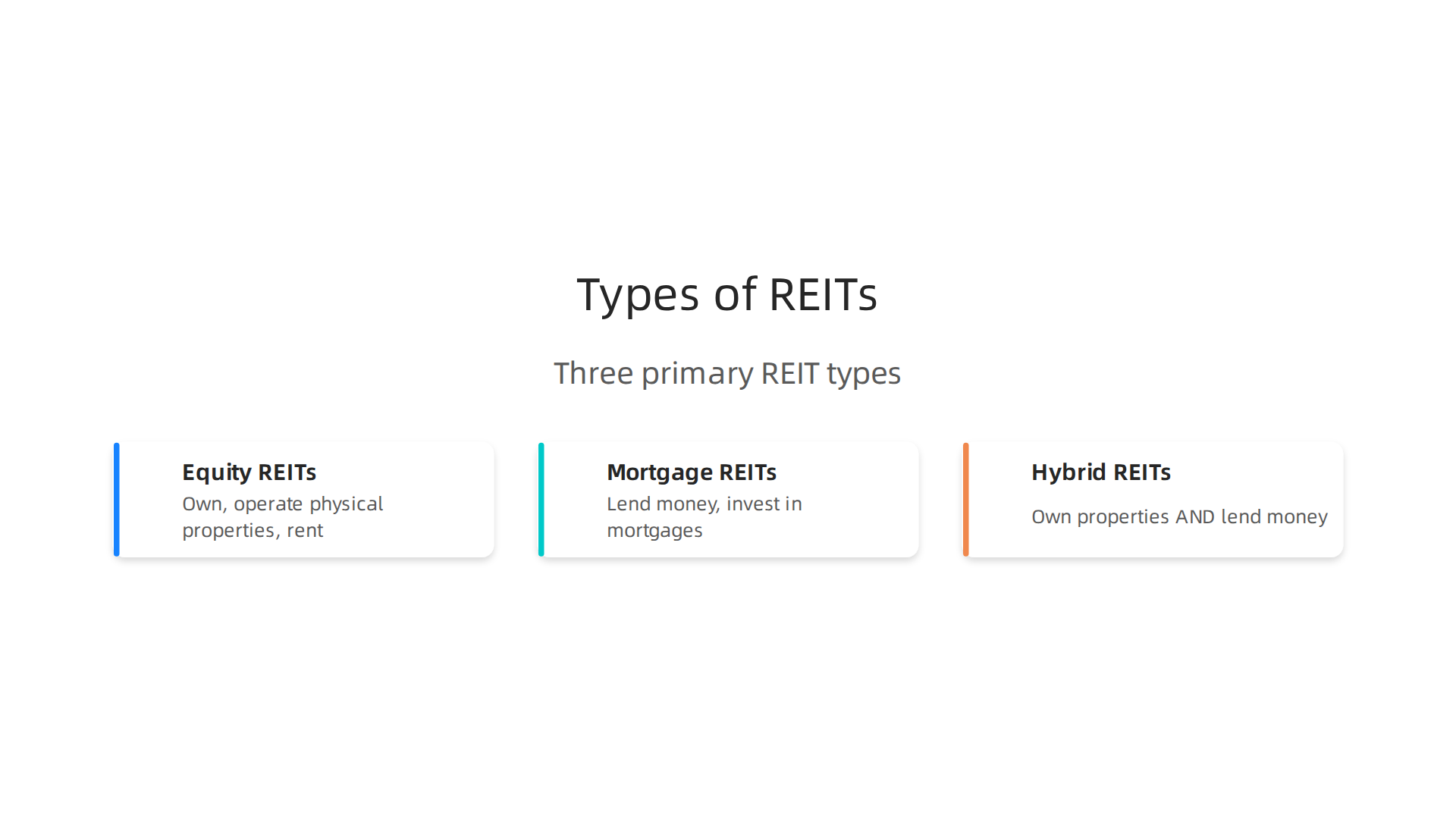
Equity REITs own and operate physical properties like office towers, shopping malls, apartment buildings, and hotels. They make money mostly from rent. These are the most common type and offer steady dividend income with some potential for growth.
Mortgage REITs do not own buildings. Instead, they lend money to property owners or invest in mortgage-backed securities. They earn money from the interest on those loans. These can offer higher yields but come with more risk since they are sensitive to interest rate changes.
Hybrid REITs do a bit of both. They own some properties and also lend money. This mix gives you some balance but can be harder to evaluate.
The global REIT market is massive and growing. According to the Nareit, there were over 1,000 listed REITs worldwide with a combined market cap of about $2.04 trillion as of 2024.

The United States dominates this space, holding the largest REIT market by far. Japan, Australia, the United Kingdom, and Singapore are also major players. Malaysia has carved out its own solid spot in Asia, offering attractive dividend yields that draw international attention.
The REIT market is expected to grow by around USD 397.6 billion between 2026 and 2030, with an annual growth rate of about 3.1%. That steady expansion shows that more investors are turning to REITs for group real estate investment and portfolio diversification.
When you invest in a REIT, you get instant diversification across many properties. You also get liquidity, which means you can sell your shares on a stock exchange in seconds instead of waiting months to sell a physical building. That is a huge advantage if you ever need quick access to your cash.
If you are curious about how the REIT model works in Dubai specifically, check out this Dubai REITs overview to see how it compares with the Malaysian market. Understanding the global picture helps you make smarter choices no matter where you invest.
Malaysian REITs in 2026: Performance, Yields, and Key Sectors
Now let’s talk about real estate investment trusts Malaysia offers. In 2026, Malaysian REITs (often called M-REITs) remain a top choice for anyone looking to earn passive income.

Why? Because they have a strong history of paying steady dividends. For investors focused on cash flow, this is a big deal.
The numbers back this up. In 2026, many top Malaysian REITs offer dividend yields above 5%. According to live data tracking all M-REITs, the average distribution yield across the sector is about 6.26%. Some trusts offer even more. For example, Maybank research picked Pavilion REIT and CLMT as top trusts for 2026, with dividend yields of 5.3% and 7.1%.
What types of properties do these REITs own? The main sectors are retail, industrial, and office. Big names like Sunway REIT and IGB REIT own shopping malls and commercial buildings. But here is what is changing in 2026. Healthcare and data centre REITs are becoming much more important. As Malaysia’s economy grows and demand for digital services rises, these newer sectors offer great potential for both steady income and long-term growth.
How did M-REITs perform in 2026 overall? Very well. The sector is set for robust growth this year, helped by new listings and acquisitions. Analysts at MIDF noted that while the KL REIT Index saw a short dip in March 2026, this pullback actually created a good buying opportunity for long-term investors. The outlook remains highly positive.
Adding Malaysian REITs to your portfolio is fairly easy. You can buy shares through any broker that offers access to Bursa Malaysia. This gives you a simple way to invest in Malaysian property without the hassle of buying a physical building overseas.
Of course, Malaysia is just one market to explore. If you want to compare it with other opportunities, take a look at this helpful guide to investing in Dubai REITs. It breaks down how a different market works and what you can expect.
If you are serious about building a global real estate portfolio, getting expert advice makes a real difference. Whether you are buying, selling, or just exploring your options, you can book a FREE Dubai Real Estate Consultation with Ayaz Salman today to see how Dubai compares with markets like Malaysia.
Malaysian REITs vs. Dubai Direct Property: A Head-to-Head Comparison
So you’ve seen how Malaysian REITs can give you steady passive income. But maybe you are wondering how they compare with buying an actual property in Dubai. Both let you make money from real estate. But they work very differently. Let’s break it down side by side.
The biggest difference is how you get in and out. With real estate investment trusts Malaysia, you can buy shares on Bursa Malaysia just like stocks. You can sell them any trading day for cash in your account. The minimum investment can be as low as a few hundred ringgit. That is daily liquidity and a very low entry barrier.
Direct property in Dubai is the opposite. You need a large upfront capital. A one-bedroom apartment in a decent area might cost AED 800,000 or more. You also have to pay registration fees, agent commissions, and other closing costs. And when you want to sell, it can take weeks or months to find a buyer. You cannot get your money out quickly.
Now let’s talk about income. Dubai’s gross rental yields are known to be high. According to the 2026 Dubai Rental Yield comparison, average yields in Dubai are often 6% to 8% for apartments. That sounds better than the 5% to 7% dividend yields from most M-REITs. But there is a catch. When you own a Dubai property directly, you deal with tenants, maintenance, repairs, and property management. If the apartment sits empty for a month or two, your net income drops. In 2026, vacancy rates in Dubai are expected to rise modestly, with average annual vacancy around 12%. That can eat into your returns.
Malaysian REITs take care of all that for you. Professional managers handle the properties. You just collect your dividends every quarter or half-year. No late-night calls about a broken air conditioner. No worrying about finding new tenants.
Capital appreciation is another factor. Dubai property prices have gone up a lot in recent years. But they are also cyclical. In 2024 and 2025, prices rose 12% to 22% annually. In 2026, price growth is forecast to slow to 5% to 8%. Some analysts even warn of a potential double-digit drop if too much new supply hits the market. REITs are more stable. The M-REIT sector is positioned for robust growth in 2026, supported by new listings and acquisitions. But you invest in REITs mainly for income, not for quick price gains.
So which one is right for you? If you want simplicity, daily liquidity, and hands-off income, Malaysian REITs are a great fit. If you have a larger budget and you are ready to manage a property yourself, Dubai direct ownership can offer higher potential returns. But you also take on more work and more risk.
If you decide Dubai property is worth exploring, you can check out this complete 2026 action plan for Dubai property investment to see exactly how to get started.
Both paths can grow your wealth. The best choice depends on your goals, your time, and how involved you want to be.
Legal and Regulatory Landscape for International Investors
Once you pick your path, you need to understand the rules. The rules are very different for Malaysian REITs and Dubai property. Knowing them helps you avoid surprises and keep more of your returns.
Malaysian real estate investment trusts are watched closely by the Securities Commission. This body makes sure the REIT managers follow strict rules. This gives you strong investor protections. One big rule change happened in 2026. Malaysia changed the tax on REIT dividends. The old 10% rate for foreign investors ended. Now, non-residents pay a 30% rate. You can read more about this in the official 2026 REIT tax guidelines from the Inland Revenue Board.
Dubai’s property laws are also designed to protect buyers. International investors can buy freehold property in designated areas. The Real Estate Regulatory Agency, or RERA, and the Dubai Land Department, or DLD, oversee the market. They require developers to use escrow accounts for off-plan sales. This means your money goes into a protected account until the project is finished. This lowers the risk of losing your money when you are group real estate investment in a new project. But the rules can be complex. It helps to understand how UAE corporate tax affects your property investment before you start.
Whether you choose the structured simplicity of REITs or the hands-on control of a Dubai property, knowing the law keeps you safe. If the legal side of Dubai feels confusing, you do not have to figure it out alone. Get a FREE Dubai Real Estate Consultation to talk through your options with someone who knows the market.
Tax Considerations: REIT Dividends vs. Dubai Rental Income
Now let’s talk about money. Actually, about how much of your money you get to keep after the tax man takes his share. This is where real estate investment trusts malaysia and Dubai property look very different.
For Malaysian REITs, the tax rules changed in 2026. And not in a good way if you are a foreign investor. The old 10% withholding tax rate for non-residents is gone. Starting in 2026, foreign individuals now pay 30% tax on their REIT dividends. This is a big jump. You can read a clear breakdown in this analysis of Malaysia’s REIT tax rule changes from a local finance expert.
Here is how it shakes out. If you live outside Malaysia and invest in real estate investment trusts malaysia, your dividend income gets taxed at source at 30%. That means for every RM100 in dividends the REIT pays, you lose RM30 to tax before the money even reaches you.
Dubai flips this whole picture upside down. The UAE charges zero personal income tax on rental income. Zero on capital gains too. So when you buy a property in Dubai and collect rent each month, every dirham is yours to keep. No withholding. No filing. No surprises.
This tax advantage is one reason why investing in real estate for passive income through Dubai property is so attractive. Your rental yield is your actual return. There is no tax layer eating into your profits.
But here is a twist you need to know about. Malaysia and the UAE have a double taxation agreement. This deal can reduce how much tax you pay on your Malaysian REIT dividends if you are a UAE resident. The treaty might lower that 30% rate. The exact savings depend on your specific situation, so checking with a tax professional is smart.
If you are thinking about group real estate investment, Dubai’s tax-free setup makes teamwork simpler too. No need to figure out how to split tax bills among partners.
The tax gap between these two options is huge. REIT dividends in Malaysia now face a heavy 30% hit. Dubai rental income faces zero. Over five or ten years, that difference adds up to serious money.
For help building a tax smart approach to Dubai property, take a look at these Dubai real estate investment strategies for 2026. Knowing the tax rules before you invest means every dollar you earn goes further.
Portfolio Diversification: Combining Malaysian REITs with Dubai Property
If you have ever put all your money into one type of investment, you know how risky that feels. Markets change. Rules change. Having everything in one basket can hurt your returns when things go wrong.
That is where diversification helps. And combining real estate investment trusts malaysia with direct Dubai property creates a mix that many investors find powerful.

Malaysian REITs are liquid. You can buy and sell them on the stock exchange like shares. This means you can get your money out fast if you need to. Direct Dubai property is the opposite. It takes time to sell a flat or a villa. But while you wait, that property earns you rent every month.
The two markets also move differently. Historically, the correlation between Malaysian REIT returns and Dubai property prices is very low. When one market dips, the other often holds steady or even gains. This kind of low correlation is exactly what you want in a balanced portfolio. A drop in Malaysian REITs does not automatically mean a drop in your Dubai rental income.
So how do you split your money? The right mix depends on three things. First, your risk tolerance. If you want safety and easy access to cash, lean toward REITs. If you can handle slower sales and want higher yields, lean toward Dubai property. Second, your income needs. REITs pay quarterly dividends. Dubai rent comes in monthly. Third, your investment horizon. REITs work for short and medium terms. Dubai property works best over five years or more.
A common starting point for many investors is 60% in Malaysian REITs and 40% in direct Dubai property. Or 50/50 if you want equal exposure. You can adjust as your goals change.
Dubai’s rental yields averaged around 7% for apartments in late 2025, according to a detailed Dubai housing market analysis for 2026. That is strong income to pair with REIT dividends, even after the new 30% tax on those dividends.
If you are thinking about group real estate investment, diversification becomes even more important. A group can split its funds across both REITs and Dubai property to reduce risk for everyone involved.
For a deeper look at how direct property types fit into your overall strategy, check out this guide on Dubai real estate assets types and returns. It helps you match property choices with your portfolio goals.
If you want help building a personalized allocation that blends REITs and Dubai property, you can get a FREE Dubai Real Estate Consultation to talk through your numbers.
Due Diligence: Evaluating REIT Managers and Dubai Developers
So you have a blend of real estate investment trusts Malaysia and Dubai property in mind. Smart move. But the work does not end there. The people who manage your money matter just as much as the numbers.
When you look at real estate investment trusts malaysia, start with three key metrics.
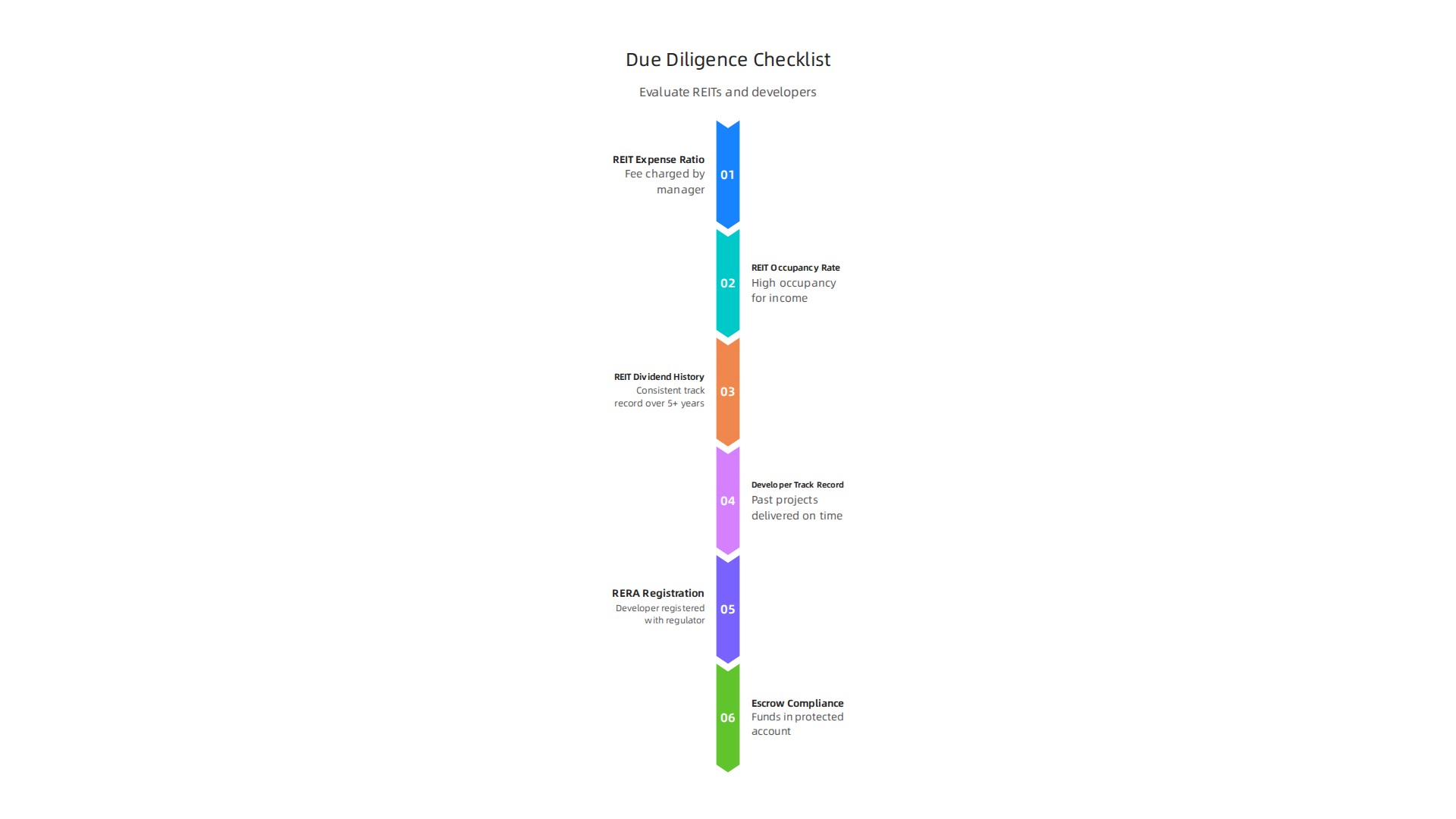
First, the expense ratio. This is the fee the REIT manager charges to run the fund. Lower is better because it leaves more cash for your dividends. Second, check the portfolio occupancy rate. A REIT with 90% or higher occupancy in its buildings is likely keeping tenants happy and income steady. Third, look at the dividend history. A consistent track record of paying dividends over five years or more shows the manager knows how to handle rough markets. These factors are essential whether you are investing alone or as part of a group real estate investment group.
For Dubai off-plan projects, the rules are different. You want to confirm three things before putting any money down. First, the developer’s track record. Have they delivered projects on time before? Second, make sure the developer is registered with RERA, Dubai’s real estate regulator. Third, insist on escrow compliance. Your money should go into a protected account, not directly to the developer. Following these steps helps you avoid costly mistakes and keeps your investing in real estate for passive income on solid ground.
Independent research is your best friend here. Do not rely only on what a salesperson tells you.

Read market reports, talk to multiple advisors, and visit developer sites if you can. The 2026 market has seen a clear shift toward careful due diligence, as highlighted in this analysis of Dubai real estate due diligence trends.
For a step-by-step guide on screening property partners in Dubai, check out this due diligence guide to choosing a real estate investment company. It walks you through the red flags and green lights that matter most.
Summary
This article explains how real estate investment trusts in Malaysia (M-REITs) work, why they remain an attractive passive-income vehicle in 2026, and how they compare with buying direct property in Dubai. It covers REIT types, sector performance and yields in Malaysia, the new 2026 tax change for foreign investors, and the practical pros and cons of liquidity, management burden and capital appreciation. The piece also contrasts gross rental yields and vacancy risks in Dubai with the hands-off nature and dividend focus of REITs, and describes how combining both can improve portfolio diversification. You will learn the key legal and tax differences, the due diligence checks to run on REIT managers and Dubai developers, and simple allocation rules of thumb to build a balanced cross‑border real estate plan.