
What is CRM in Marketing? Core Concepts, Automation, and Data Strategy
· 27 min read

Why CRM matters for modern marketing teams (and for property marketers)
In today’s fast-moving world, connecting with customers is more important than ever. This is especially true for marketing teams. They need smart ways to keep track of everyone they talk to. That’s where Customer Relationship Management, or CRM, comes in. You might ask, "what is CRM in marketing?" Simply put, CRM is a way for companies to manage and understand all their interactions with customers. It uses special tools and plans to help build strong, lasting relationships with people throughout their whole journey with your business.
Think of it this way: CRM systems are like a super helpful brain for your customer information. The CRM full form in marketing is Customer Relationship Management, and it’s all about putting the customer at the center of everything you do. It collects all the details about a customer in one place. This includes their contact info, what they’ve bought, what they’ve looked at online, and any questions they’ve asked. Having all this data in one spot helps marketing teams a lot.

With this clear view of each customer, marketers can do several powerful things:
- Segment customers: This means dividing customers into smaller groups based on what they like or need.
- Personalize messages: You can send special messages that feel just right for each group or even each person. This makes your marketing much more helpful and less like spam.
- Measure success: You can easily see which marketing efforts are working best and where you can improve.
Actually, CRM tools are crucial for managing customer interactions and data through every step of their time with your company, all to build long-term relationships with them, as explained in research from 2023 Volume 1, Issue 6, September 2023.
For people in property marketing, like real estate agents and investors in Dubai, knowing what is marketing CRM and using it wisely is a game changer. The property market can be very busy. You have many potential buyers and sellers to keep track of. A good CRM helps you:
- Keep tabs on every lead, from their first interest to closing a deal.
- Understand what different buyers are looking for in a property.
- Send personalized updates about new listings or special offers.
- Make sure no potential client gets forgotten.
In short, a strong CRM platform helps property businesses turn leads into loyal clients, leading to smarter investments. It helps unify all your data so you can make better decisions. To learn more about how a CRM can transform your property business, check out how CRM marketing for real estate turns leads into loyal clients in Dubai. Also, explore how marketing in CRM unifies Dubai real estate data for smarter investments.
Buying, selling, renting, or investing in Dubai? Connect with Ayaz Salman for a FREE Dubai Real Estate Consultation.
What is CRM in marketing? Core concepts and terminology
To really get what is CRM in marketing, it helps to know some of the special words people use. Think of these as the building blocks for how companies manage their customer relationships. Understanding these basic terms makes it easier to see how a CRM system helps your marketing team.
Let’s look at some key ideas:
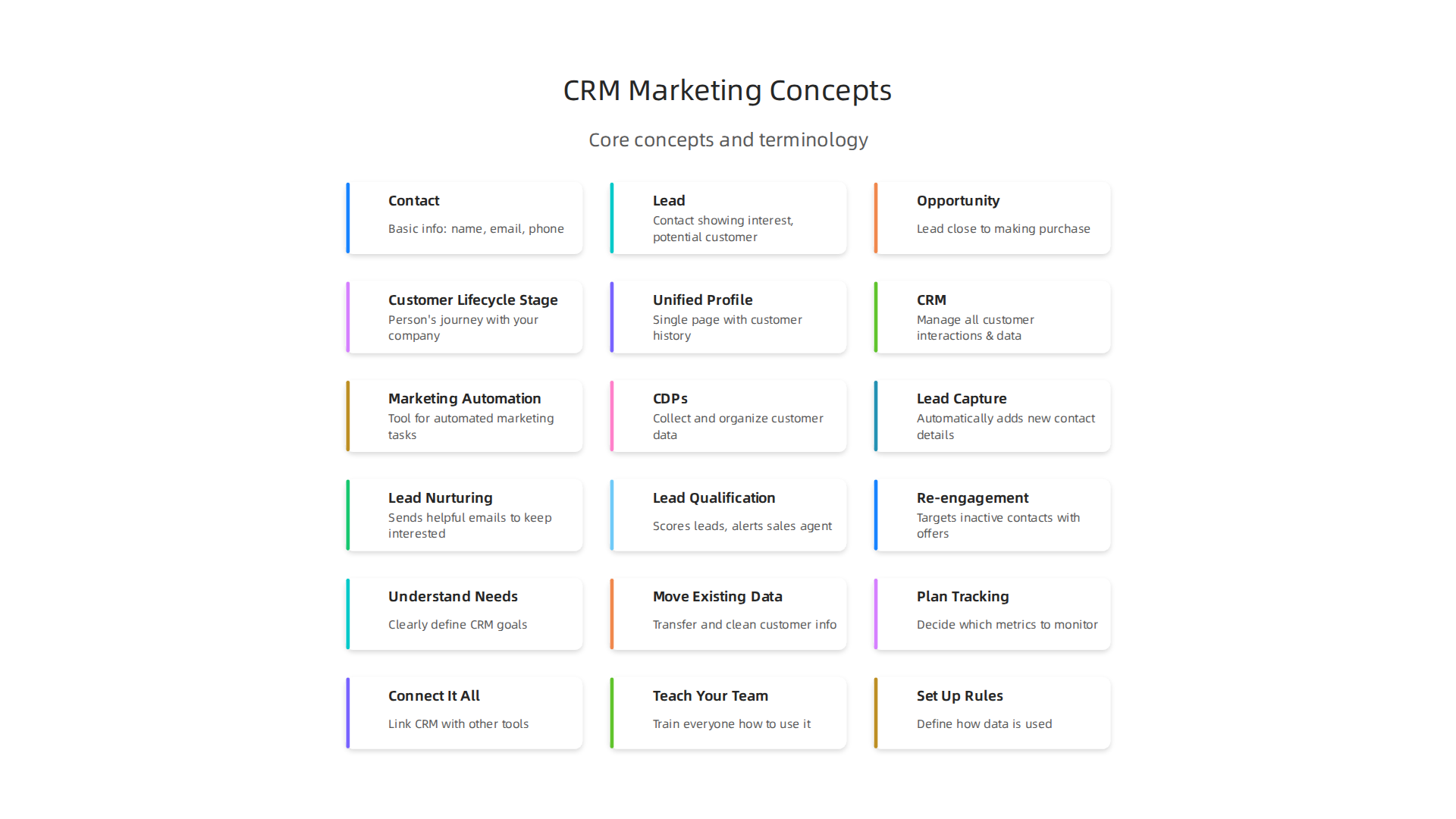
- Contact: This is anyone you have basic information about, like a name, email, or phone number. They might be a past customer, someone who signed up for your newsletter, or even just someone you met at an event.
- Lead: A lead is a contact who has shown some interest in what you offer. Maybe they downloaded a guide, asked a question, or visited your website many times. They’re a potential future customer.
- Opportunity: This is a lead who is very close to making a purchase. It’s a real chance for your sales team to close a deal. For example, a property lead who has toured several homes and is now asking about prices is an opportunity.
- Customer Lifecycle Stage: This describes where a person is on their journey with your company. It goes from being a lead, to a new customer, to a loyal customer, and maybe even someone who shares good things about your business. CRM helps track these steps to give the right support at the right time.
- Unified Customer Profile: Imagine a single page that has everything about one customer. All their interactions, purchases, questions, and preferences. That’s a unified customer profile. It brings all the data together in one easy-to-see spot.
Actually, many experts agree that Customer Relationship Management is a way of handling how companies interact with customers to make more profit and offer more value to customers too The nexus between quality of customer relationship … – PMC.
CRM, Marketing Automation, and CDPs: What’s the Difference?
You might hear other terms like marketing automation or Customer Data Platforms (CDPs). While they work together, they are not quite the same as CRM.
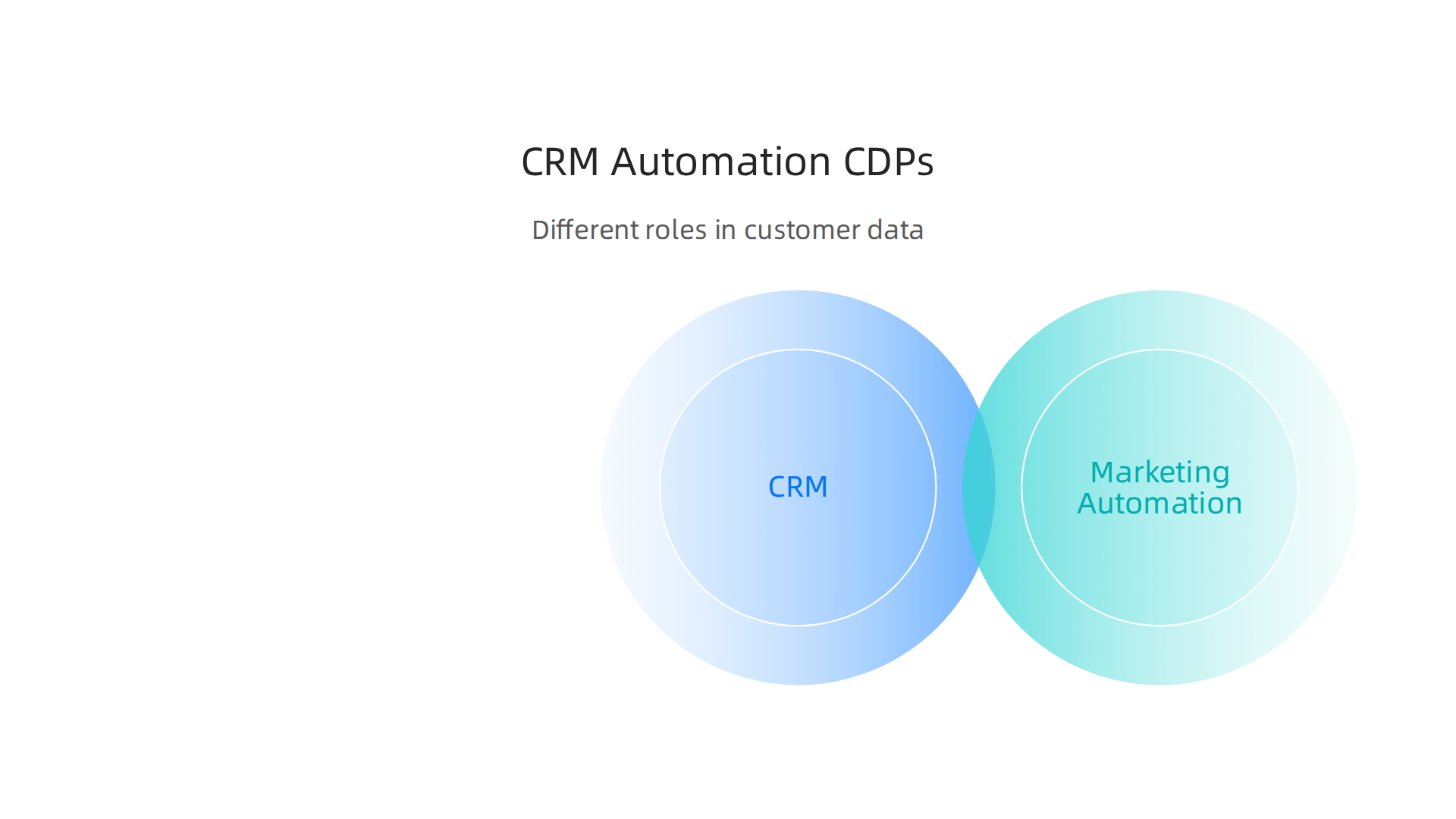
- CRM (Customer Relationship Management): This is the big picture. It’s about managing all your company’s interactions with customers. It helps sales, customer service, and marketing teams work together using a shared view of customer information. It’s a full strategy and a set of tools.
- Marketing Automation: This is a tool that helps marketing teams do tasks automatically. For instance, sending welcome emails, posting on social media, or reminding people about items left in a shopping cart. Marketing automation often uses the customer data stored in a CRM system to send the right messages to the right people.
- CDPs (Customer Data Platforms): A CDP focuses mainly on collecting and organizing all customer data from different places into one clean, complete record. It’s like a super smart database for customer information. CDPs help feed very good, organized data into your CRM and marketing automation tools.
How CRM Systems Work: Strategic Functions
A CRM system isn’t just a place to store names. It has important jobs that help your business grow.
- Data Management: At its heart, CRM is all about managing customer information. This includes everything from contact details to past purchases and conversations. Having good, clean data is super important in 2026. Experts often share advice on how to keep your CRM Data Quality Benchmarks 2026 high.
- Workflows: CRM lets you set up automatic steps for common tasks. For example, when a new lead comes in, the CRM can automatically send a welcome email or tell a sales person to call them. This saves time and makes sure nothing is missed.
- Analytics and Reporting: CRM tools can look at all your customer data and show you what’s working well and what’s not. You can see how many leads turn into customers, which marketing campaigns are best, and where your team needs to improve.
- Cross-Team Alignment: Because everyone uses the same customer information in the CRM, marketing, sales, and customer service teams can work together smoothly. They all know what’s going on with each customer, helping them serve customers better. This makes for a great customer experience from start to finish.
A strong CRM platform can truly change how you do business. If you’re looking to get started or improve your current setup, it can transform your property business with a CRM platform by giving you clear insights and helping you work smarter.
How CRM Centralizes Customer Data and Enables Segmentation
After seeing how a CRM system helps your business grow, let’s dive into how it truly helps: by gathering all customer information in one central place. This single, clear view of each customer is what makes all the difference for marketing what is CRM. It helps your team understand each person better and give them exactly what they need.
Types of Data CRM Systems Store
A good CRM platform brings together many different kinds of customer data. Think of it as putting all the puzzle pieces about a customer into one box. Here are the main types:
- Contact Data: This is the basic stuff, like names, email addresses, phone numbers, and job titles. It’s how you get in touch with people.
- Behavioral Data: This tells you what customers do. It includes their website visits, which pages they looked at, links they clicked, or how long they stayed on your site. This data helps marketers see what a customer is interested in.
- Transactional Data: This records what customers buy. It shows their purchase history, how much they spent, and how often they buy from you. This is super helpful for understanding loyal customers.
- Engagement Data: This tracks how customers interact with your marketing efforts. Did they open your emails? Click on a social media ad? Fill out a survey? This helps you know what messages work best.
Gathering all these details helps companies understand their customers much better, according to insights on CRM Data Operations 2026: Statistics & Insights.
Unified Profiles and Custom Fields for Smart Segmentation
With a CRM system, all this data comes together in what we call a "unified customer profile." Imagine a single page that shows everything about one customer. This complete picture is great, but CRM takes it a step further with "custom fields." These are like extra spaces where you can add special information unique to your business. For example, if you sell homes, you might add fields for "preferred neighborhood" or "number of bedrooms needed."
Having unified profiles and custom fields is important for what is marketing CRM because it makes advanced segmentation possible. Segmentation is simply dividing your big group of customers into smaller, more specific groups. You can group customers by things like:
- Location: Who lives in Dubai?
- Interests: Who is looking for an apartment versus a villa?
- Past Purchases: Who bought a luxury property last year?
- Engagement Level: Who opens every email you send?
This helps your marketing team send the right message to the right group of people.

For example, you wouldn’t send information about luxury villas to someone who is only interested in small apartments. Using your CRM data for smart customer groups can lead to big wins in marketing, as discussed in CRM Data for 2026 Marketing Wins.
When you understand your customers deeply, your marketing messages become more helpful and more likely to get a good response. This is a core part of what is CRM in marketing. To learn more about how this works, check out how marketing in CRM unifies Dubai real estate data for smarter investments.
Keeping Your Customer Segments Accurate
For your customer groups to be truly helpful, the data needs to be clean and up-to-date. This means two main things:
- Data Hygiene: This is about keeping your data tidy. It means getting rid of old, wrong, or duplicate information. If your data is messy, your customer segments won’t be correct, and your marketing messages might go to the wrong people. Good data management in 2026 is crucial to avoid problems like too many duplicate contacts. Experts suggest keeping these duplicate rates very low.
- Data Enrichment: This is when you add more useful information to your existing customer data. For example, you might add public information about a company’s size or industry to a business contact’s profile. This extra information makes your segments even stronger and more detailed. Building good customer groups often means adding different kinds of information, not just one, to create segments that last, according to tips on How To Use Data Enrichment For Segmentation In 2026.
By taking care of your data, your CRM system becomes a powerful tool. It helps you understand your customers, group them smartly, and send them marketing messages that they actually want to see.
Now that you know how a CRM helps you understand and group your customers, let’s look at how it actually uses those groups to make your marketing smarter. This is where CRM-driven marketing workflows and automation come in. Think of a workflow as a set of automatic steps a CRM takes when something happens, like a customer visiting your website. This is a key part of what is CRM in marketing, making your efforts more organized and effective.
Common CRM-Driven Marketing Workflows
Many different marketing actions can be put on autopilot with what is marketing CRM. These automatic steps save time and make sure no potential customer is forgotten. Here are some common examples of how these workflows help businesses, especially in real estate:
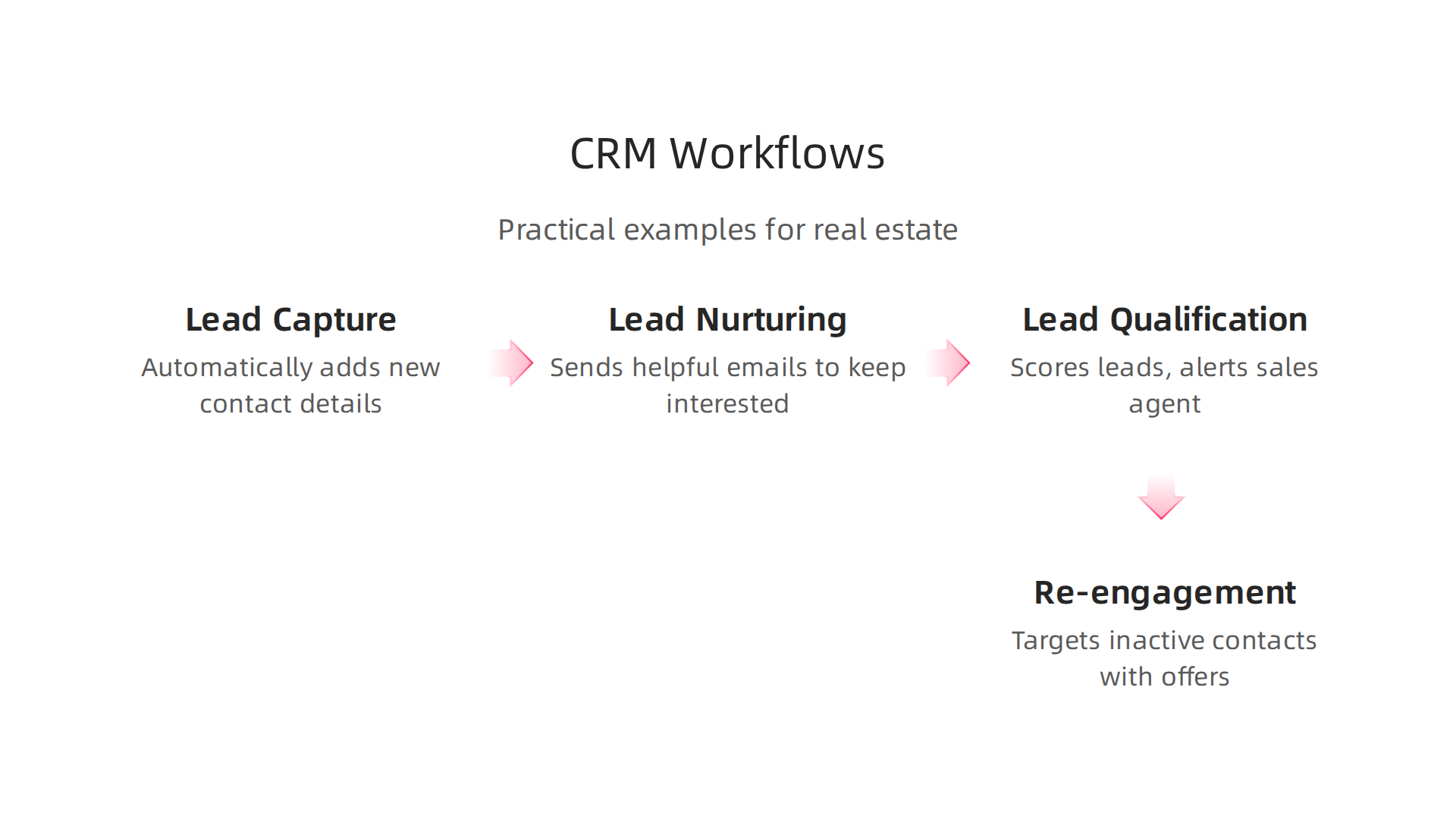
- Lead Capture: When someone fills out a form on your website to download a property guide or simply shows interest, your CRM automatically adds their details. This is the first step in how to implement a lead intake automation. It makes sure new contacts are saved right away.
- Lead Nurturing: Once a lead is captured, the CRM can send a series of helpful emails to teach them more about your properties or services. This is called "nurturing" and keeps them interested without you having to manually send each email. Automated lead nurturing combines CRM and marketing automation for better sales, as explained in studies on automated lead nurturing.
- Lead Qualification and Handoff: As leads interact more (for example, they open many emails, click on links, or visit key property pages), the CRM can "score" them. A higher score means they are more interested and closer to buying. When a lead reaches a certain score, the CRM can automatically alert a sales agent to follow up. This makes sure your sales team talks to the most promising leads first. Many CRM systems feature automated workflows for lead scoring and sales handoff.
- Re-engagement Campaigns: What about customers who haven’t bought in a while or stopped opening your emails? A CRM can spot these inactive contacts and automatically send special offers or helpful content to try and bring them back. This keeps your customer base active.
How CRM Powers Personalized Campaigns
These workflows are powerful because of how CRM uses triggers, scoring, and integrations. A "trigger" is an event, like someone clicking a link or a certain date passing, that starts an action in the CRM. The "scoring" tells you how interested or important a lead is. And "integrations" mean your CRM can work smoothly with other tools you use, like email platforms or social media.
This allows for truly personalized campaigns across different channels. For instance, your CRM can collect data on what specific properties or types of investments customers are looking at, like their browsing history, and then send them personalized emails based on those exact interests. This is one of the best examples of marketing automation with CRM in 2026. By sending relevant information at the right time, you make your marketing much more effective.
Practical Property Marketing Examples
Let’s look at some real-world examples for property marketing in Dubai to better understand marketing what is CRM in action:
- Open House Follow-up: Imagine you host an open house for a new villa. Everyone who signs in gets added to your CRM. The CRM can then automatically send a "thank you" email with a link to the property listing and similar homes. A few days later, it could send another email with financing options or a virtual tour. This quick, helpful follow-up keeps the property fresh in their minds and moves them along their buying journey.
- Buyer Nurturing for Specific Property Types: If a potential buyer visits your website and views only apartments in Downtown Dubai, your CRM can trigger a workflow. This workflow would send them new apartment listings in that area, articles about living in Downtown Dubai, and invitations to apartment viewings. This staged content delivery helps nurture leads based on their specific journey, as highlighted in guides for marketing automation workflows.
By setting up these kinds of workflows, your business can keep potential customers engaged, provide them with exactly what they need, and free up your team to focus on closing deals. Choosing the right CRM is important for this; you can find the best CRM for small real estate business that fits your needs.
If you are thinking about investing in Dubai real estate, understanding how CRM can streamline marketing and customer engagement is a huge advantage.
Are you ready to take the next step in your Dubai real estate journey?
Connect with an expert for personalized advice.
FREE Dubai Real Estate Consultation
Now that you have your CRM doing automatic tasks for you, how do you know if all that effort is actually paying off? This is where measuring success comes in. Understanding what is CRM in marketing means not just setting it up, but also checking its results. You need to look at certain numbers, called metrics, to see how well your CRM is working for your business.

Key Metrics for CRM Success
To really see the value of your CRM, you should track these important numbers:
- Lead-to-Opportunity Rate: This metric tells you how many people who show interest (leads) actually become serious potential buyers (opportunities). If your CRM helps more leads turn into opportunities, it’s doing a good job.
- Time-to-Conversion: How long does it take for a potential customer to go from first showing interest to actually buying something? A good CRM can make this time shorter by keeping customers engaged.
- Customer Acquisition Cost (CAC): This is how much money you spend to get one new customer. By making marketing more efficient, your CRM should help lower this cost over time.
- Customer Lifetime Value (LTV): This measures how much money a customer brings to your business during their entire relationship with you. A great CRM helps you keep customers happy, making them buy more over a longer period, which increases their LTV.
- Data Quality: It is also important to check the quality of the data in your CRM. For example, aiming for a duplicate rate of less than 1-2% for accounts and 2-3% for contacts is a good benchmark in 2026, as per some guides on CRM Data Quality Benchmarks 2026. Good data means your marketing efforts are better targeted.
Businesses can compare their performance to common benchmarks. For example, in 2026, a typical sales funnel might see 50-62% of sales-qualified leads become actual opportunities, with top performers doing even better, as highlighted by CRM performance benchmarks for 2026.
Understanding Attribution in Marketing
Figuring out exactly which marketing effort led to a sale can be tricky. This is called "attribution." Think about it: a customer might see your ad online, then get a few emails from your CRM, visit an open house, and finally call a sales agent. All these steps, or "touchpoints," play a part.
A CRM helps you track these different touchpoints, but it’s hard to say for sure that only one step caused the customer to buy. This is even harder with bigger purchases, like real estate, where people take a long time to decide. The sales cycle for a property can be many months, meaning there are lots of different ways a customer interacts with your business. Even though it’s complex, the CRM gives you a much clearer picture than working without one. It shows how marketing in CRM unifies Dubai real estate data for smarter investments by bringing all those touchpoints together.
How to Improve Your CRM Marketing
You can use a simple way to see if your CRM marketing is getting better. Try making a small change in one of your CRM workflows. For example, maybe you change the words in an automatic email. Then, compare the results of the new email to the old one. This helps you understand what changes make a positive difference.
Here’s how to do it:
- Pick one thing to test: Choose a specific part of your CRM marketing you want to make better. Maybe it’s how fast you follow up with new leads or how you sort your customer groups.
- Make a small change: For example, you could send a new welcome email to half of your new leads and keep the old email for the other half.
- Watch the numbers: Look at the metrics we talked about earlier. Did the new email lead to more people becoming opportunities? Did it shorten the time it takes to make a sale?
- Learn and do it again: If the change worked, keep it! If not, try something else. This way, you keep making your CRM better and better.
By carefully watching these numbers and making small changes, you can clearly see the return on investment (ROI) from your CRM. It helps you understand what is marketing CRM doing for your profits and how it helps grow your business. This careful tracking supports a strong Dubai real estate index powering your investment strategy by making sure your marketing efforts are truly effective.
By carefully watching these numbers and making small changes, you can clearly see the return on investment (ROI) from your CRM. It helps you understand what is marketing CRM doing for your profits and how it helps grow your business. Now that you know how to measure success and improve your efforts, the next important step is choosing and setting up the right CRM for your property business.
Choosing and implementing a CRM for property marketing
Picking the right CRM for your property business can seem like a big job.

But thinking about what you need it to do will make it easier. A good CRM will not only help you manage customer details but also boost your marketing efforts. So, what is CRM in marketing when you are choosing one? It means finding a tool that fits how you work with property clients.
What to look for in a CRM
When you are looking at different CRM systems, keep these important things in mind:
- How flexible is the data model? This means how easily the CRM can hold all the special information important to real estate, like property listings, open house times, and details about different units. You want a CRM that can be changed to fit your unique needs without a lot of trouble.
- Can it connect with other tools? Your CRM should be able to "talk" to other programs you use, such as listing websites, email services, or accounting software. This is called its "integration ecosystem." Connecting everything helps you avoid putting the same information in many places. Experts in 2026 say that you should choose a CRM with good integration options, including reliable connectors for your existing tools, and make sure to understand its cost for integration and support when buying a CRM software.
- What can it automate? A strong CRM for property marketing should be able to do tasks by itself. This might include sending welcome emails to new leads, scheduling follow-ups, or reminding you about client birthdays. Automated workflows can save you a lot of time and make sure no lead is forgotten. This helps improve your marketing efforts, which is a key part of what is marketing CRM. For example, some CRM systems can automatically capture leads from websites and score them based on how interested they are, then tell the right person to follow up.
- How does it protect private information? You will be storing a lot of sensitive client data. So, the CRM needs strong privacy controls to keep that information safe and follow local rules.
How to set up your new CRM
Once you have chosen a CRM, getting it ready to use is the next step. Here is a simple checklist for putting it into action:
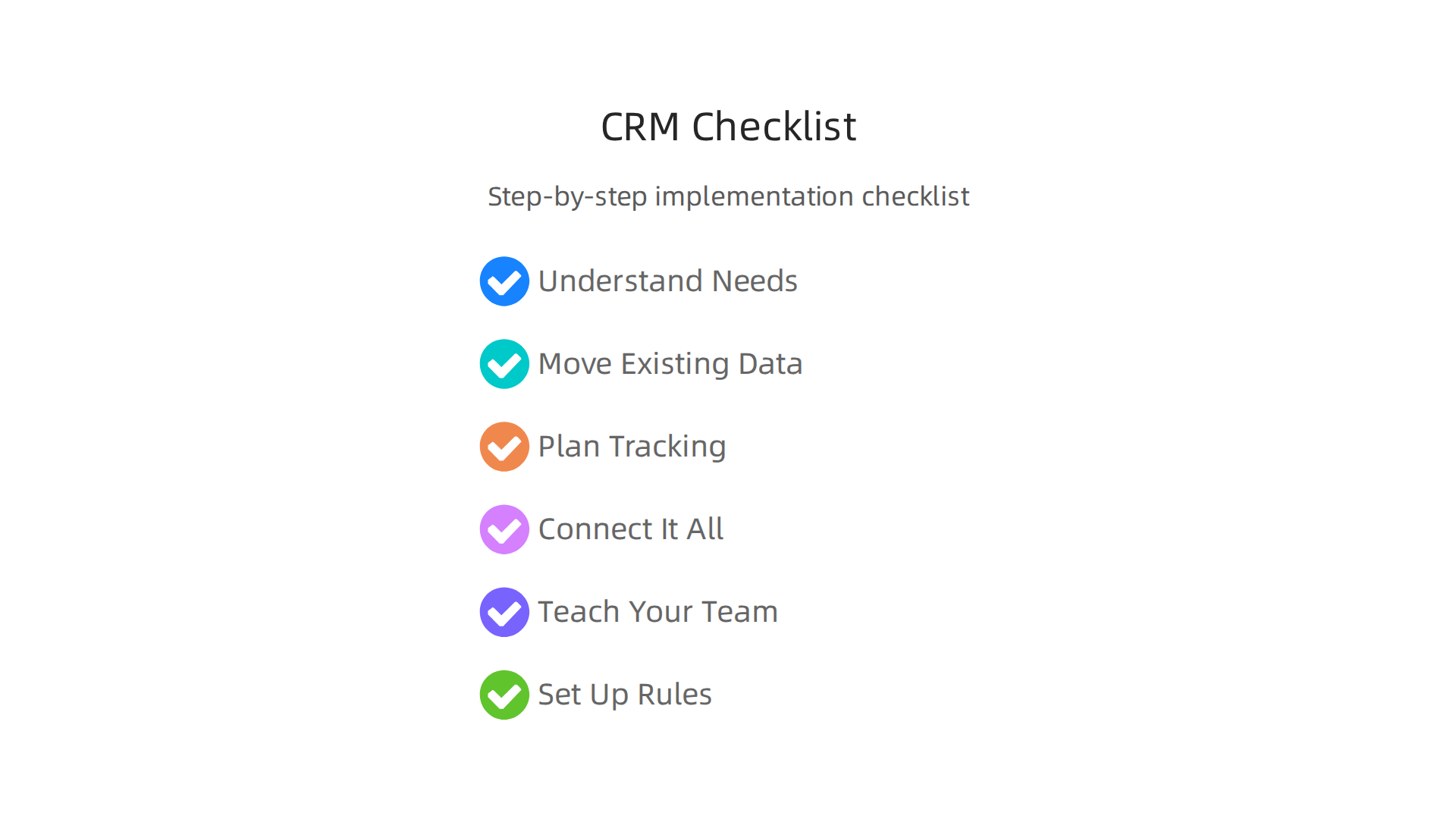
- Understand your needs: Before you even start setting up, clearly write down what you want the CRM to achieve for your business. What problems will it solve? What new things will it help you do? This discovery phase is key to making sure the CRM works for you.
- Move your existing data: This means bringing over all your old customer contact info, property details, and past communications into the new CRM. Make sure to clean up old data so you only move good, useful information.
- Plan your tracking: Decide what numbers you want to watch. How will you track new leads, sales, and customer happiness? Setting this up from the start ensures you can measure your success later.
- Connect it all: Link your CRM with all the other tools you use. This might include your website, social media, and email marketing platform. Seamless integrations are crucial for a smooth workflow.
- Teach your team: Everyone who will use the CRM needs to know how. Good training helps your team use all the features and makes sure they like using the new system. Companies that make CRM software should offer good support for setting it up.
- Set up rules: Have clear rules for how everyone uses and updates the CRM. This is called "governance" and helps keep your data clean and useful over time.
Picking the right CRM for real estate
For real estate, certain features are especially helpful. When you are looking at different vendors, think about these real estate specific things:
- Listings management: Can the CRM easily manage all your property listings? Can it show which ones are available, sold, or rented?
- Open-house workflows: Can it help you plan and manage open houses, like signing people in and sending follow-up emails to visitors?
- Broker portals: If you work with other agents or brokers, can the CRM support a special portal for them to access listings or client information?
- Ease of use for agents: Your agents will be using this every day. Is it easy for them to learn and use? If it is too hard, they might not use it, which means you won’t get the full benefit. It’s smart to focus on how simple a CRM is for daily users.
By carefully evaluating these points, you can choose a CRM that helps your property business grow. You can learn more about finding the ideal CRM for your small real estate business, including free and paid options, to truly transform your property business with a CRM platform.
If you are thinking about buying, selling, renting, or investing in Dubai property, getting expert advice can make a big difference.
FREE Dubai Real Estate Consultation
Even with the best CRM chosen and set up, it is easy to make mistakes if you are not careful. Understanding these common problems and how to avoid them is a big part of knowing what is CRM in marketing and using it well.
Common pitfalls, compliance, and data governance for CRM in marketing
Let’s look at some common issues that can pop up and how to handle the important rules about data and privacy.
Common Mistakes with CRM Marketing
When you use a CRM for marketing, watch out for these traps:
- Data Spread Out Everywhere: Sometimes, businesses have customer information in many different places, not just in their CRM. This is called "fragmented data." It means you cannot get a full picture of your customer, making your marketing efforts less effective. For good CRM marketing for real estate, all your data needs to be in one central spot.
- Not Getting Permission Right: You must ask customers if you can use their personal details, and they need to say yes clearly. This is called "consent management." If you do not handle consent well, you might send emails to people who do not want them, which can cause problems. In 2026, it is super important to have a documented reason for processing every piece of personal data in your CRM, whether it is consent or another legal basis like a contract with the customer CRM and GDPR: A UK Business Compliance Guide for 2026.
- Too Much Automation, Not Enough Checking: CRMs can do many things automatically, which is great for marketing. But sometimes, people set up automatic messages or tasks and then forget to check if they are working well or if the messages still make sense. Always have a human review your automated tasks to make sure they are helpful and accurate.
Legal Rules and Keeping Data Private
Using a CRM means you handle a lot of personal information about people. Because of this, you need to follow strict laws to keep that data safe and private. This is a crucial part of what is marketing CRM today.
In 2026, there are many data privacy laws around the world. For example:
- GDPR (General Data Protection Regulation): This is a European law, but it affects any business that works with people in Europe, no matter where the business is located. GDPR asks businesses to be very careful with personal data, get clear consent, and protect data well Data Privacy Regulations Every Sales Team Must Know in 2026. Key parts of GDPR are consent, transparency, only collecting data you truly need, and not keeping it forever
CRM and GDPR Compliance Guide for 2025.
- CCPA (California Consumer Privacy Act): This law is for people living in California. It gives them rights over their personal information. In 2026, CCPA rules are even stronger, giving consumers the right to ask for all their data or ask for it to be deleted Crm Compliance Best….
These laws mean you need to:
- Get Clear Consent: Make sure customers agree to you collecting and using their data.
- Store Data Safely: Keep all information protected from people who should not see it.
- Be Careful with Cross-Border Data: If you send data across different countries, you need to make sure it is still protected under the right laws. Experts suggest that a smart CRM strategy should include building a privacy framework that works across all your tools Data Privacy in 2026: CRM, AI & Compliance Guide.
Good Habits for Managing Your CRM Data
To keep your CRM running smoothly and safely, you need good "data governance." This means having clear rules and ways of working with your data.
- Who Does What: Make sure everyone knows their job when it comes to data. Who can enter data? Who can change it? Who is in charge of checking its quality?
- Access Controls: Not everyone needs to see all the data. Set up rules so that only the right people can look at or change certain information.
- How Long to Keep Data: You should only keep customer data for as long as you need it. Have a plan for when to get rid of old data. This is called a "retention policy." A checklist for 2026 data protection act requirements suggests having a retention schedule by data type and using automatic deletion where possible Data Protection Act Requirements: A 2026 Checklist.
- Checking What Happened: Keep a record of who accessed or changed data in your CRM. This "audit trail" helps you track everything and makes sure rules are followed.
By paying attention to these common pitfalls, privacy laws, and good data habits, you can make sure your CRM helps your marketing efforts without any big headaches. Knowing the full form of CRM in marketing means not just using it, but using it smartly and safely. You can also explore how marketing in CRM unifies Dubai real estate data for smarter investments.
Summary
This article explains why Customer Relationship Management (CRM) is essential for modern marketing teams and especially for property marketers in fast-moving markets like Dubai. It covers core CRM concepts—contacts, leads, opportunities, lifecycle stages—and shows how a centralized CRM unifies contact, behavioral, transactional and engagement data to enable precise segmentation and personalized campaigns. The guide explains CRM-driven workflows (lead capture, nurturing, scoring, re‑engagement), how to measure success with metrics like lead-to-opportunity rate and CAC, and practical steps for choosing and implementing a real-estate focused CRM. It also highlights common pitfalls, data hygiene, consent and cross-border privacy rules, plus governance practices to keep data accurate and compliant. After reading, you will know how CRM improves marketing efficiency, which features to prioritise for property businesses, and how to start testing and measuring CRM-driven results.