
How CRM Marketing for Real Estate Turns Leads into Loyal Clients in Dubai
· 19 min read

Introduction: Why CRM Marketing Matters for Your Real Estate Portfolio
You walk into a networking event in Dubai and hand out 30 business cards. A week later, you can barely remember who was who. The investor interested in Palm Jumeirah villas blurs together with the one asking about off-plan studios in JVC.
This is the reality of real estate without a system.

Leads slip through gaps. Follow-ups get forgotten. And deals that should have closed quietly fade away.
That is where CRM marketing comes in.
So what is CRM marketing exactly? It is the practice of using customer relationship management software to track, organize, and nurture every person who shows interest in your properties. Instead of juggling sticky notes and scattered spreadsheets, you get one central hub where every conversation, email, and site visit is recorded.
The full form of CRM in marketing is customer relationship management. But it means more than just storage. It means understanding who your leads are, what they want, and when they are ready to buy. A solid CRM for marketing helps you send the right message to the right person at the right moment.
For Dubai property investors, this is a game-changer. The market here moves fast. New off-plan launches hit the market weekly. International buyers fly in and out on short trips. A CRM with marketing capabilities helps you capture that momentum instead of watching it slip away.
Think of it as your memory, your organizer, and your follow-up assistant all in one. When a buyer from London asks about Downtown Dubai apartments during their two-day visit, your CRM makes sure you remember every detail of that conversation.
The purpose of this guide is simple. I will break down exactly what CRM marketing means, how it works for real estate, and how you can use it to turn more leads into loyal clients in 2026.
Dubai’s property market rewards investors who stay organized and respond fast. CRM marketing gives you that edge. And the best part? It is easier to set up than you might think.
FREE Dubai Real Estate Consultation
Whether you are buying your first Dubai property or growing a large portfolio, talking to someone who knows the local market saves time and money. Book a free chat to get clear answers about your next move.
Defining CRM Marketing: Core Concepts and Components
So what does CRM marketing actually look like in practice? Let me break it down.
At its simplest level, what is CRM marketing? It is a strategy that uses customer data to build stronger, longer-lasting relationships. Instead of chasing one-time deals, you focus on nurturing people over months and years.
Think about the full form of CRM in marketing: customer relationship management. But the real meaning goes deeper. A CRM with marketing capabilities helps you collect data from every interaction a lead has with you. Then it uses that data to send them the right information at the right time.
A CRM for marketing typically includes four core building blocks.
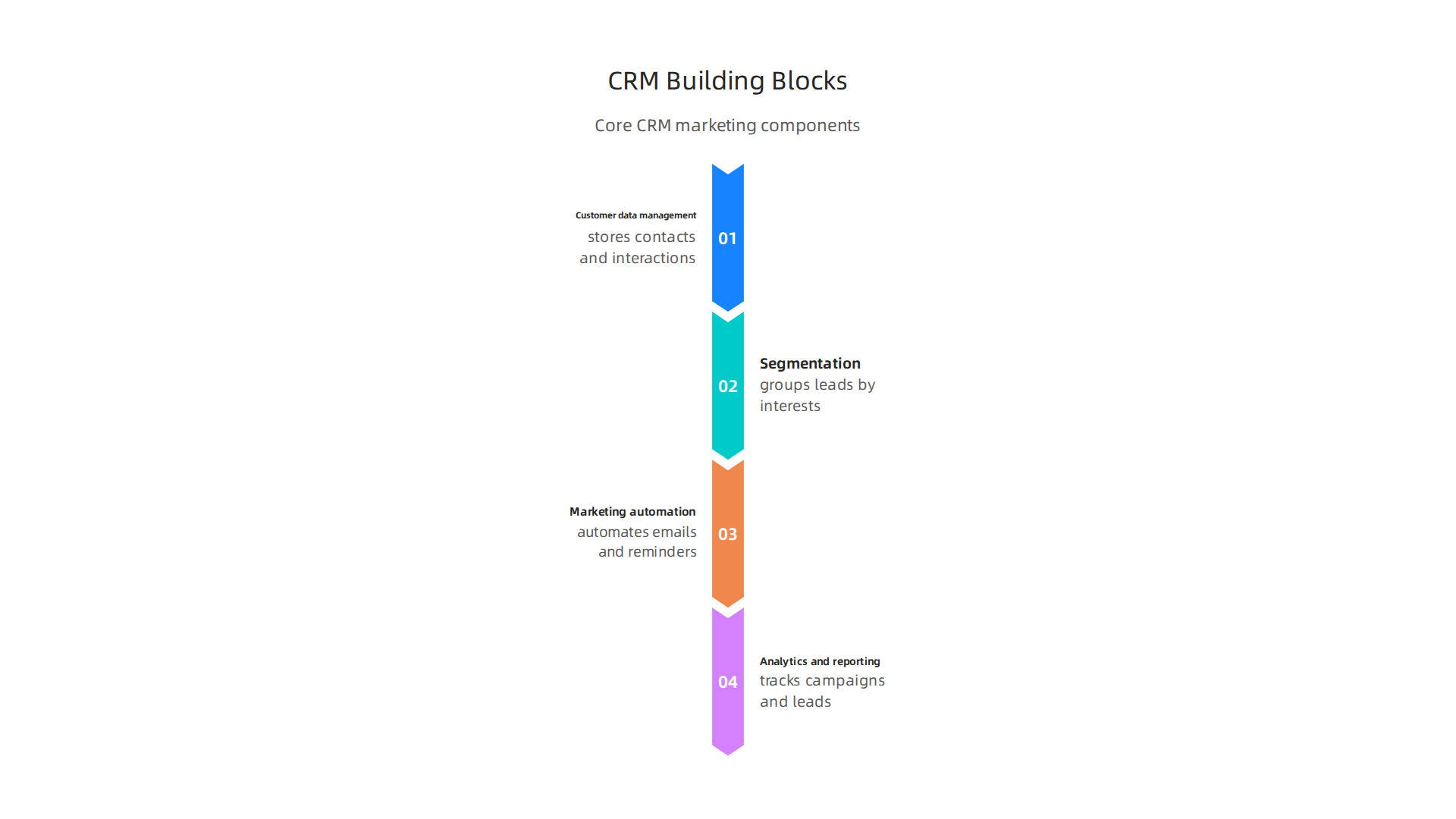
Customer data management comes first. Your system stores contact details, past conversations, property preferences, budget ranges, and every email or call history in one place. No more searching through old messages or sticky notes.
Segmentation is the second block. You group your leads by what they care about. Investors looking for off-plan studios in JVC are different from families wanting ready villas in Arabian Ranches. A good CRM helps you sort these groups so your messages match their needs. As one guide on CRM marketing 101 explains, customer segmentation lets you deliver personalized content to the right audience.
Marketing automation is the third block. Your CRM can send follow-up emails, schedule reminders, and trigger messages based on what a lead does. Someone downloads a brochure about Palm Jumeirah villas? Your system sends a follow-up the next day without you lifting a finger.
Analytics and reporting rounds out the list. Your CRM tracks which campaigns work, which leads are warming up, and where you need to adjust your approach.
This whole approach differs from transactional marketing. Transactional marketing focuses on one quick sale. CRM marketing focuses on lifetime value. You build trust first. The sales come later.
For Dubai property investors, this means turning a single inquiry into a long-term relationship. And your first step is choosing a system that fits how you work. Learn more about how marketing in CRM unifies Dubai real estate data to see how it all comes together.
CRM Marketing vs. Traditional CRM: Key Differences
Now you might be wondering how CRM marketing is different from a regular CRM system. The two are often confused, but they serve different purposes.
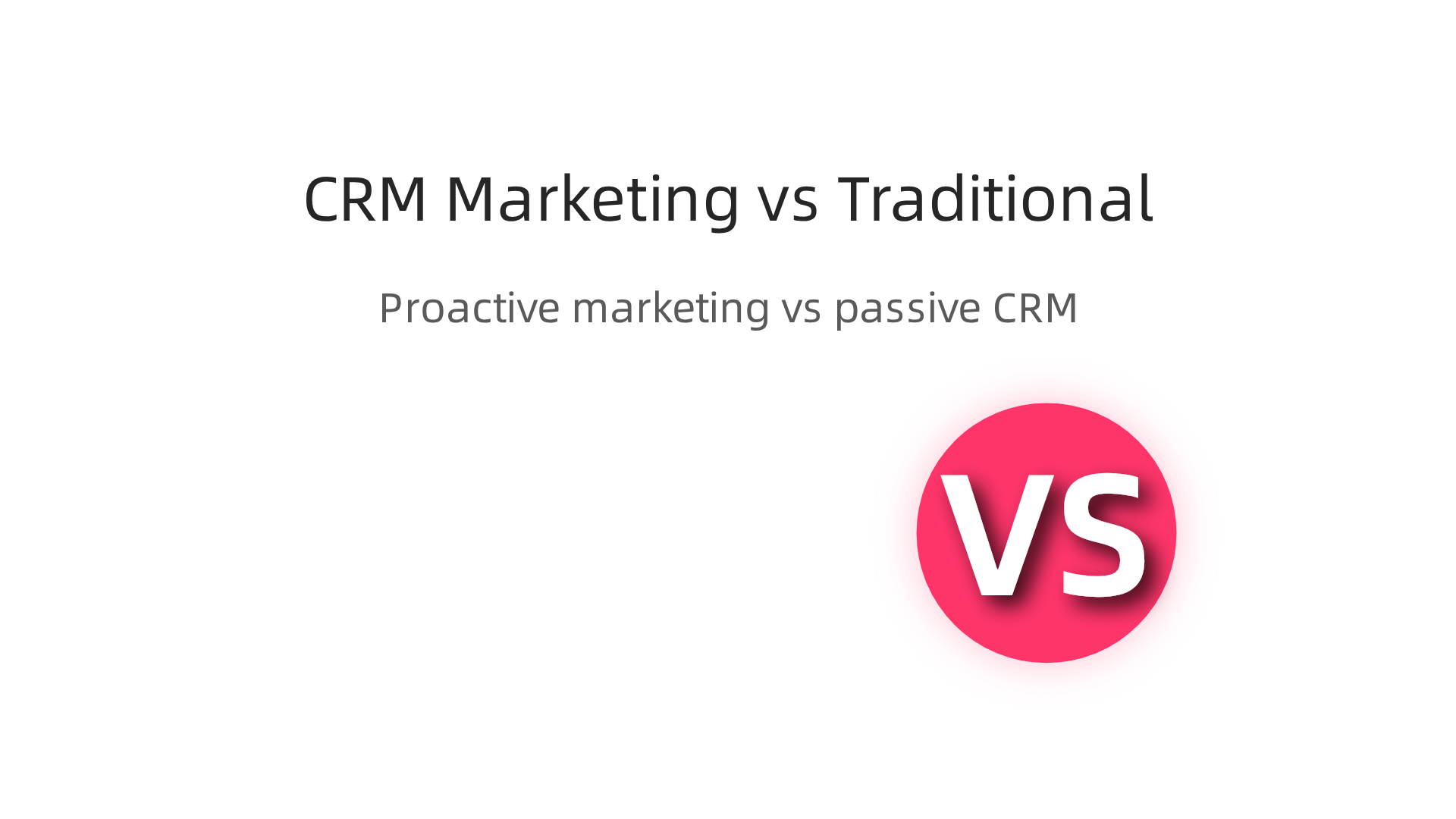
A traditional CRM is mostly passive. It stores customer data, tracks past interactions, and helps your team manage support tickets and sales deals. It focuses on managing existing relationships. Salesforce defines a customer relationship management system as a tool for overseeing a company’s interactions with current and potential customers.
But in practice, many businesses only use it for clients they already have.
CRM marketing flips this approach around. It is proactive. Instead of just storing data, it actively uses that data to find new leads and nurture them. A crm with marketing capabilities automates campaigns, scores leads based on behavior, and personalizes messages at scale. It helps you reach potential buyers before they even contact you.
For property investors, this difference matters a lot. A traditional CRM might log a call from a buyer asking about Jumeirah Village Circle apartments. CRM marketing goes much further. It tracks that the same buyer downloaded a brochure about Dubai Marina studios last week and visited your price calculator page. Then it automatically sends a personalized email about similar listings that match their interest.
This kind of smart lead scoring and follow-up is what sets crm for marketing apart. You stop waiting for leads to come to you. You start guiding them at every step.
To see how this all works in a property context, learn more about how to transform your property business with a CRM platform.
Key CRM Terminology Every Property Investor Should Know
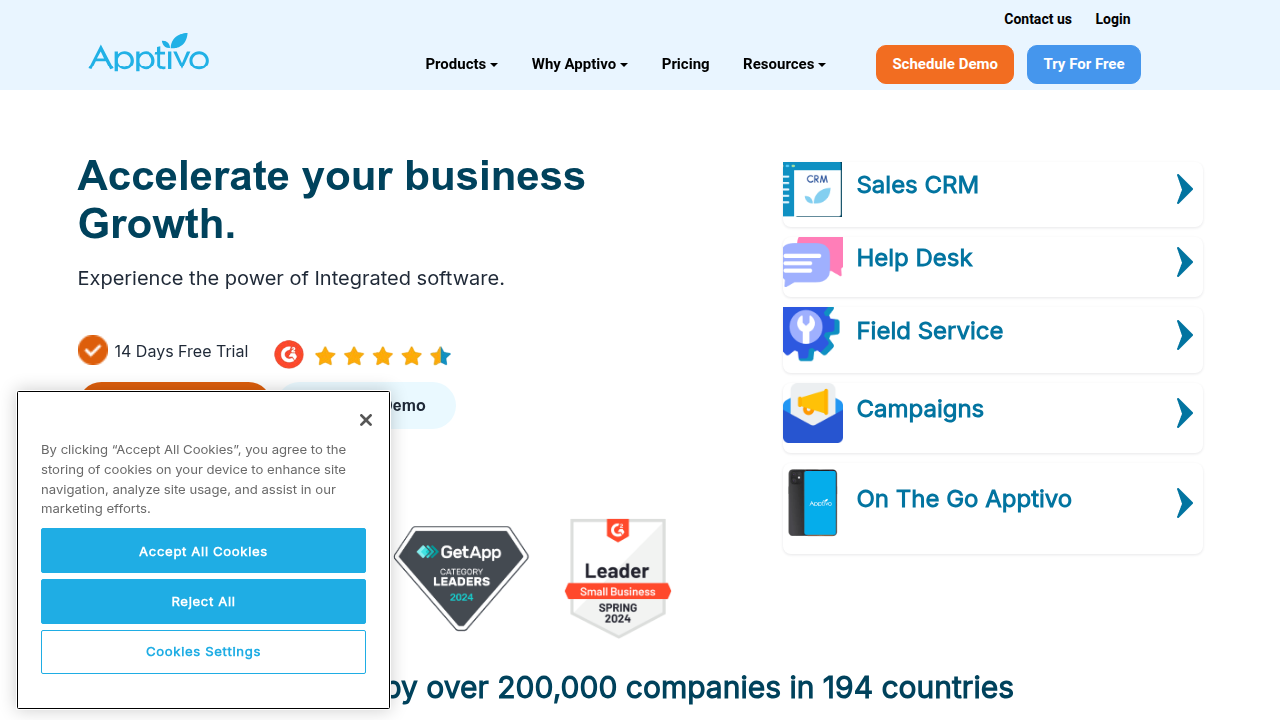
Now that you see how CRM marketing works, let’s cover a few key terms. A lead is someone who shows interest but isn’t ready to buy yet. An opportunity is a qualified lead who is much closer to making a decision. The Apptivo blog explains the difference between lead and opportunity in CRM clearly.
Your pipeline is the visual path leads take from first contact to closing. Segmentation groups leads by behavior, and automation sends the right message at the right time. Knowing these terms helps you pick the right setup. See how they apply in practice with our guide on how marketing in CRM unifies Dubai real estate data.
Lead
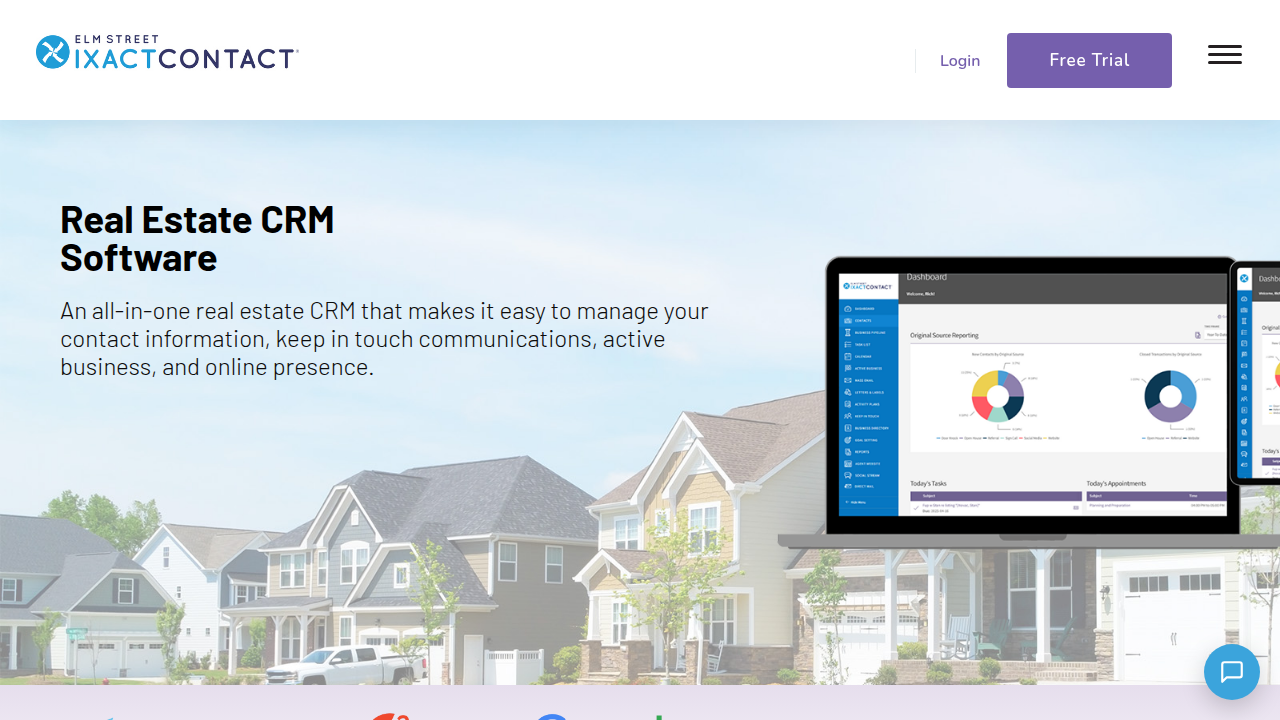
So what is a lead in CRM marketing? A lead is an unqualified contact who has shown interest in a property or service. They are at the top of your sales funnel. In real estate, leads come from website visits, open houses, or referral sources. A good CRM for marketing tracks where each lead comes from and how engaged they are. This helps you score their readiness to buy. The Zendesk blog explains the difference between a lead and a sales opportunity clearly. If you want to organize your leads better, check out how to find the best CRM for small real estate business.
Opportunity
Once a lead passes through your qualification process, they become an opportunity. An opportunity is a qualified lead actively being pursued with a high chance of closing. In real estate, opportunity stages might include "viewing scheduled," "offer made," or "due diligence." Your CRM pipeline tracks these stages and helps you forecast when a deal will close. The Apptivo blog explains the difference between a lead and an opportunity in CRM in more detail. To see how this fits into the bigger picture of what is crm marketing, check out how marketing in CRM unifies data for smarter investments.
Pipeline
A sales pipeline shows you where each opportunity stands at a glance. It is a visual tool that helps teams predict revenue and spot bottlenecks early. In Dubai real estate, a typical pipeline might run from initial inquiry through viewing and offer stages, ending at property handover. For a deeper look at how contacts move through these stages, check out this breakdown of prospect vs lead vs sales opportunity. To see a practical example, explore using a CRM for small real estate business that maps your exact pipeline stages.
Segmentation
Once your pipeline is set up, the next step is organizing your leads. That is where segmentation comes in.
Segmentation divides your contacts into groups based on shared traits like budget, location, or investor type. It is a key part of what is crm marketing because it lets you send targeted messages that get better results.
Property investors can segment by first time buyer, HNWI, or corporate entity. This targeted approach boosts engagement and conversions. Learn how marketing in crm unifies dubai real estate data to make segmentation easier. For more on qualifying these groups, see this breakdown of prospect vs lead vs sales opportunity differences.
Automation
Now let’s talk about the engine that makes CRM run on its own. Marketing automation is a core part of what is crm marketing. It uses set rules to trigger emails, reminders, or tasks automatically. For example, when a new lead comes in, an automated workflow can send a property alert or schedule a follow-up. This saves you hours of manual work and makes sure no lead gets forgotten. To see how this works in real estate, check out this guide on how to transform your property business with a CRM platform. For more on the difference between leads and opportunities in automation, read this CRM leads vs opportunities explanation.
The Role of Data and Analytics in CRM Marketing
Automation keeps your leads warm and your follow-ups on time. But here is the truth. Automation is only as valuable as the data it runs on. This is where the data and analytics side of what is crm marketing comes into play. A CRM system collects details from every email open, website visit, and property inquiry. This data is the fuel for your entire marketing engine.
When you combine crm with marketing analytics, you move from guessing to knowing.

You can see exactly which campaigns bring in the best leads. You can track how much you spend versus how much you earn from each source. Companies today are seeing impressive results. In fact, the latest CRM Statistics 2026: 80+ Facts and Data show that businesses using CRM report a 29% increase in sales revenue.
For Dubai investors, this matters a lot. Analytics can show you which property types get the most attention. Your CRM might reveal that off-plan apartments in Business Bay get twice the clicks as ready villas in Arabian Ranches. With this knowledge, you can adjust your marketing instantly. You can also check how effective your outreach is compared to others. The Real Estate CRM Software Market report for 2026 notes that 78% of real estate firms now use cloud-based CRM for exactly this reason: better data management.
To see how a complete CRM platform brings all your Dubai property data into one place, check out this guide on how marketing in CRM unifies Dubai real estate data for smarter investments.
The best part is that this data feeds back into your automation. When a lead shows high interest by visiting a listing page multiple times, the CRM automatically raises their score. This triggers a personal call or a special email offer. This is the real power of crm for marketing. It creates a loop where data improves actions, and actions create more data.
Understanding the full form of crm in marketing is about more than software. It is about using facts to build better relationships. And in Dubai’s competitive market, the investors who use data well are the ones who win.
CRM Marketing Strategies for Real Estate Investors
Data and analytics give you the facts. But the real question is how you use those facts to build relationships and close deals. This is where practical crm for marketing strategies come to life. Here are three powerful ways Dubai investors can use their CRM to turn leads into loyal clients.
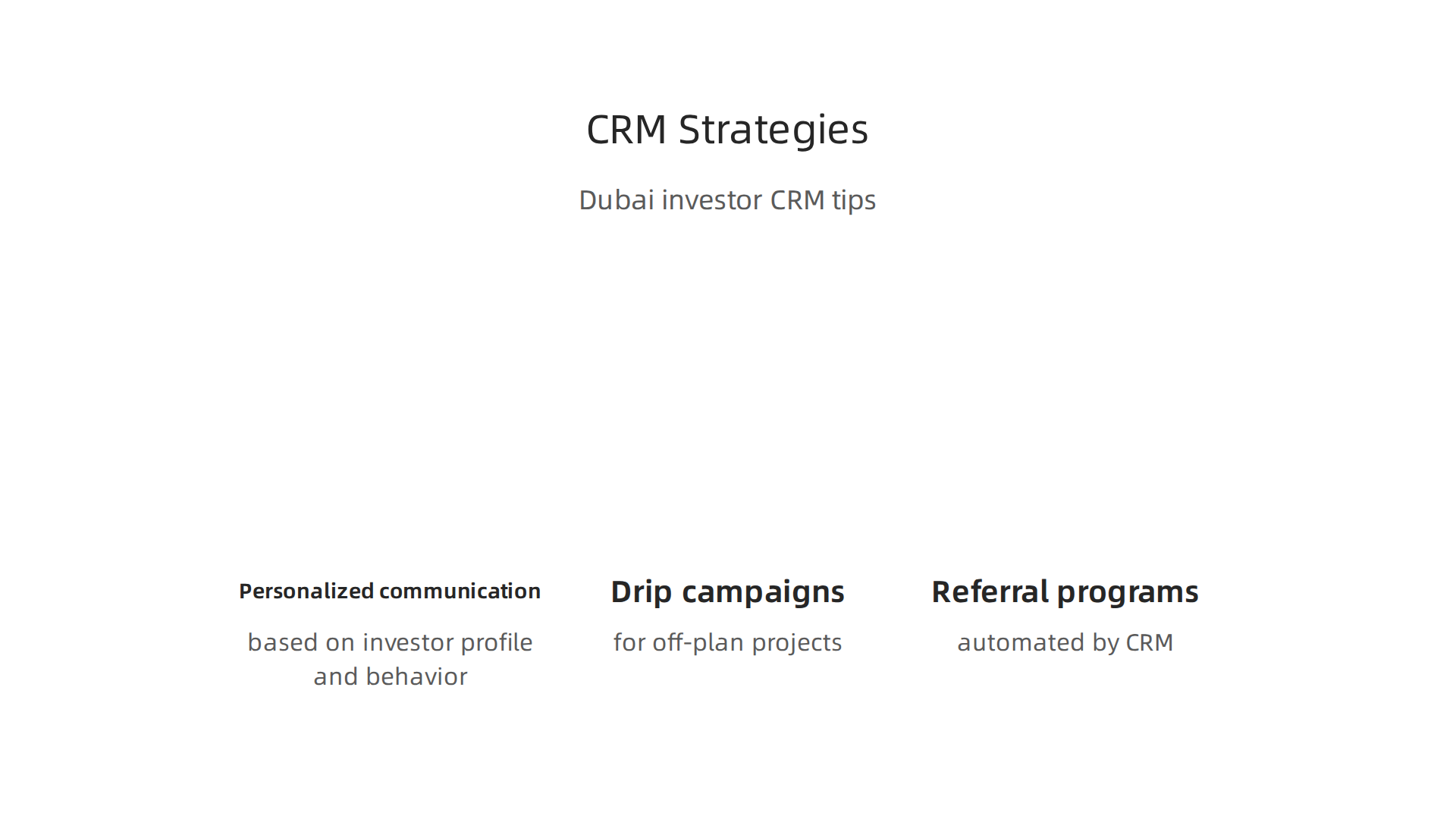
1. Personalized communication based on investor profile and behavior
Sending the same message to everyone is a waste of your data. A good CRM lets you segment your audience based on their preferences, budget, and actions. For example, if a contact keeps viewing off-plan villas in Dubai Hills, send them updates about new launches there. If another person looks at rental yield data for studios, share a report on studio returns. This kind of personalization is a core part of any effective Real Estate CRM Marketing Strategy for 2026.
When you match the message to the person, your open rates and replies go up.
2. Drip campaigns for off-plan projects
Off-plan properties take months or years to complete. Buyers need ongoing education to stay interested. A drip campaign automates this process. Set up a series of emails that share construction updates, floor plan changes, payment plan reminders, and market trends. Each email builds trust over time. Your CRM sends these automatically based on when the lead entered your funnel. This keeps your project top of mind without you having to type a single email every week. It is one of the smartest uses of crm with marketing for long sales cycles.
3. Referral programs automated by CRM
Your happiest past clients are your best marketers. But asking for referrals manually is easy to forget. Use your CRM to trigger a referral request after a successful sale. For instance, two months after closing, the system sends an email asking the client to introduce friends or family who are also looking to invest. You can offer a small reward like a dinner voucher or a property report. Automating this turns happy clients into a steady source of warm leads. To learn more about setting up an automated system for your entire property business, read this guide on how to transform your property business with a CRM platform.
These strategies are not just theory. They work because they respect where each buyer is in their journey. And when you combine them with the data insights from earlier, you create a system that practically runs itself while you focus on the biggest opportunities.
Are you ready to set up a CRM marketing plan for your Dubai property investments? Get a FREE Dubai Real Estate Consultation and let us help you choose the right tools and strategies to grow your portfolio.
Implementing CRM Marketing: Tools and Best Practices
You now know the strategies. But knowing is only half the battle. The real magic happens when you actually set up your tools the right way. So let’s talk about how to implement your crm for marketing system without the headaches.
First, pick the right CRM for your business. Not all CRMs are built the same. A solo agent needs something different than a team managing dozens of off-plan projects. Look for a platform that handles lead management, automation, and integration with your existing tools. You also want something your team will actually use. A clunky system leads to low adoption, which kills your ROI. For a complete walkthrough of how to choose and set up your system, check out this CRM Implementation: Step-by-Step Guide for SMBs [2026]. It covers data migration, team training, and ongoing maintenance, which are critical success factors.
Second, get your data clean before you move it. This is where most people trip up. They import messy spreadsheets full of duplicates and outdated contacts. Then their CRM becomes a junk drawer. Take time to clean your list first. Remove duplicates, fix outdated emails, and standardize your fields. Clean data means your what is crm marketing efforts actually work because your automation sends the right message to the right person.
Third, train your team and keep it simple. You do not need every feature on day one. Start with the basics: contact management, pipeline tracking, and one simple drip campaign. Let your team get comfortable before adding advanced automation. A good rule is to set up no more than three key workflows at the start. Then review results quarterly and add features based on what works. To see how a fully unified CRM can connect your marketing and sales data, read about how how marketing in CRM unifies Dubai real estate data for smarter investments.
Remember, the full form of crm in marketing is customer relationship management. And the best relationship managers start small, get their data right, and build from there. Your CRM is not a one-time setup. It is a living tool that grows with your business. Start simple, iterate often, and watch your conversions climb.
Measuring CRM Marketing Success: KPIs and ROI
So you have your CRM up and running. You are sending the right messages. Your team is using it. Now comes the big question: is it actually working?
The only way to know is to track the numbers that matter. That is where what is crm marketing moves from theory to measurable impact.
**Start with three core KPIs.
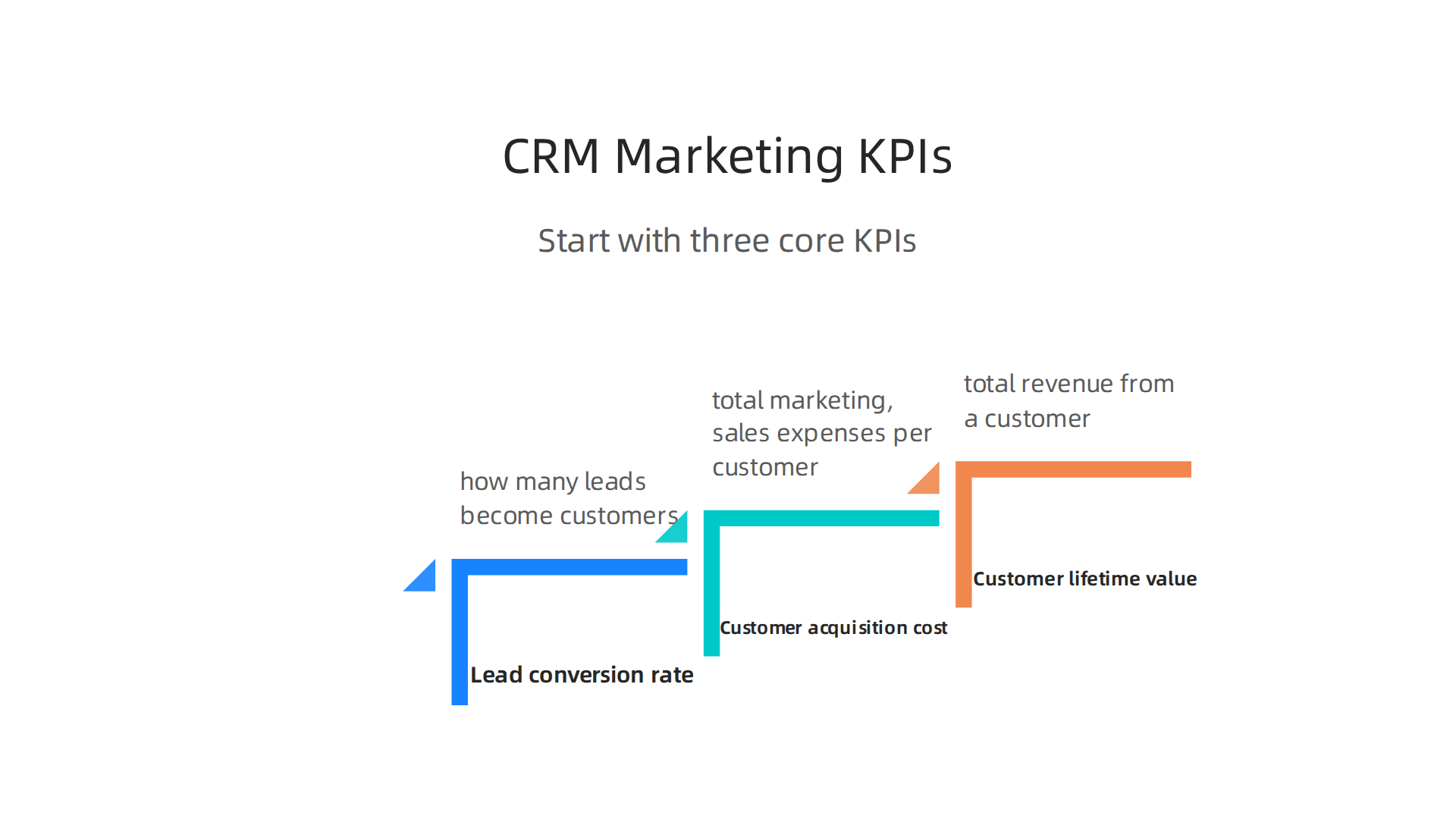
** The first is lead conversion rate. This tells you how many leads become actual customers. If your rate is low, your messaging or follow-up needs work. The second is customer acquisition cost, or CAC. Add up all your marketing and sales expenses for a period. Divide by the number of new customers you got. That is your CAC. The third is customer lifetime value, or CLV. This is the total revenue you expect from a customer over your entire relationship. A healthy rule is that CLV should be at least three times your CAC. According to 2026 CRM statistics, businesses using CRM see an average return of $8.71 per dollar spent, though that number can vary by industry and how well you use the system.
Now calculate your ROI. The formula is simple: take the revenue you can attribute to deals your CRM helped close. Subtract the cost of the CRM software, setup, training, and your time. Divide the result by the cost. If your CRM costs $5,000 a year and it helps you close $40,000 in extra deals, your ROI is 700%. That is a win.
Review your dashboards regularly. A good CRM gives you visual reports on all these metrics. Set a monthly or quarterly habit of checking your numbers. Look for trends. Is your CAC going up? Are certain sources of leads converting better? Use those insights to refine your strategies. For more on how CRM platforms can centralize your data for smarter decisions, check out how to transform your property business with a CRM platform.
Remember, the full form of crm in marketing is customer relationship management. And management means measuring. When you know your numbers, you know where to focus your time and money. That is how you turn your CRM into a profit engine.
Common Pitfalls and How to Avoid Them
Knowing your numbers is half the battle. But even with the best KPIs in place, many businesses trip up on the same mistakes. Let me walk you through the three biggest ones and how to sidestep each.
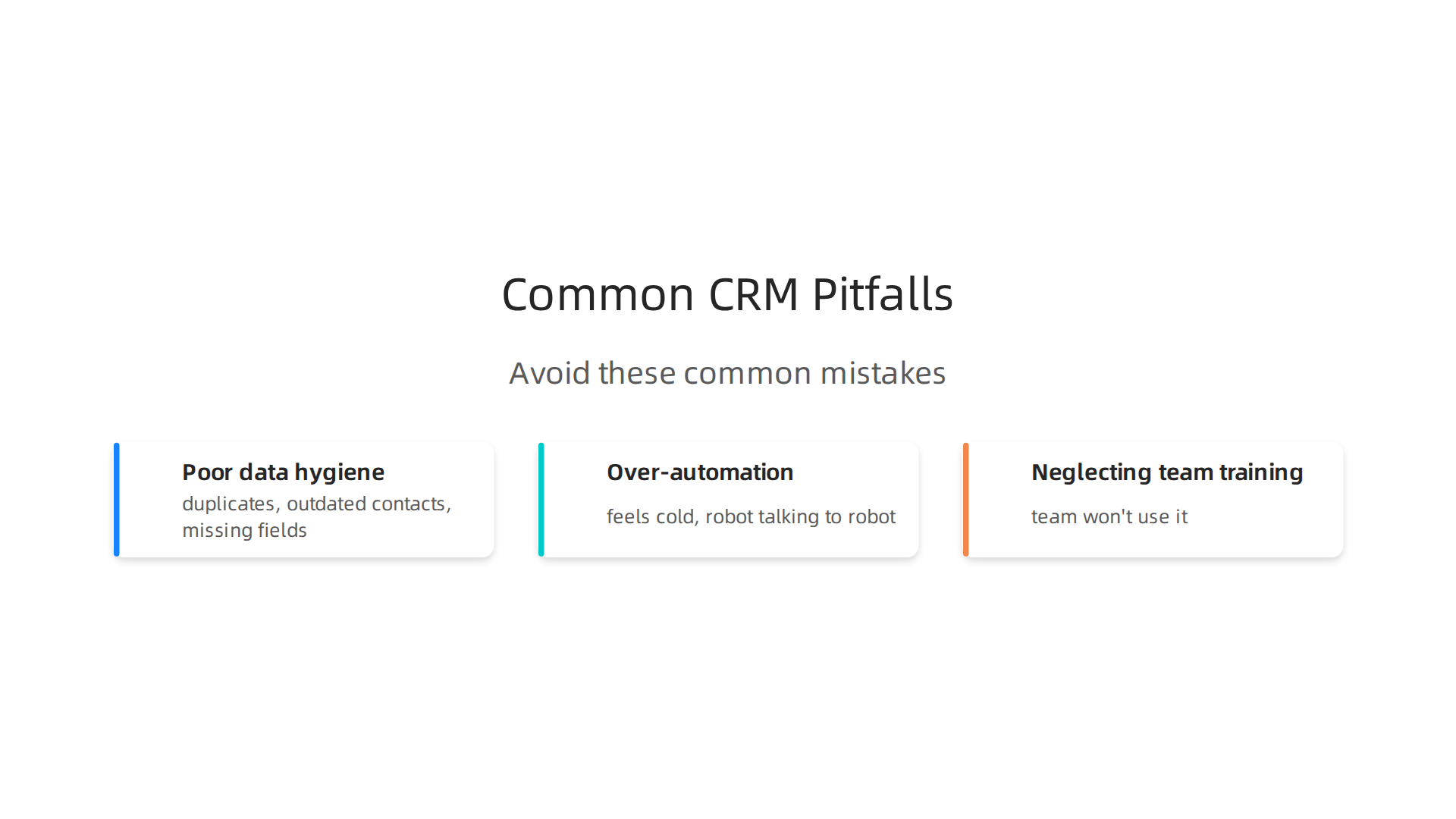
Pitfall one: poor data hygiene. If your CRM is full of duplicates, outdated contacts, or missing fields, your reports will lie to you. You might think a campaign is failing when really you are emailing the wrong people. Bad data leads to bad decisions. The fix is simple. Set up rules for how data gets entered. Run monthly cleanups. According to the latest CRM best practices for 2026, your duplicate rate should stay under 5% and required fields should be at least 95% complete. Schedule a quick audit every month to catch problems early.
Pitfall two: over-automation that feels cold. Automation saves time. But if every message feels like a robot talking to a robot, people stop listening. I have seen businesses automate five follow-ups in a row with zero personal touch. The result? More unsubscribes than sales. Balance is key. Use automation for time-sensitive triggers like welcome emails or appointment reminders. For deeper conversations, pick up the phone or write a short personal note. Your clients can tell the difference.
Pitfall three: neglecting team training. You can buy the most powerful CRM on the market. If your team will not use it, you wasted your money. This is the most common mistake I see. People get busy. They skip logging calls. They ignore the pipeline view. Before you know it, your CRM is just an expensive contact list. The solution is ongoing training. Run short refresher sessions every quarter. Involve your team from day one so they feel ownership. Regular CRM implementation guidance recommends customizing training by role so each person sees how the tool helps them personally.
If you are investing in Dubai property and want to make sure your CRM strategy matches your market goals, get a FREE Dubai Real Estate Consultation with Ayaz Salman. He will help you connect the dots between CRM data and real returns.
Avoid these three traps and your CRM will do what it is supposed to do: help you build real relationships and close more deals.
Summary
This guide explains CRM marketing and why it matters for Dubai property investors, showing how a CRM becomes a central hub for tracking leads, automating follow-ups, and turning enquiries into long-term clients. It defines the core components—data management, segmentation, automation, and analytics—and contrasts proactive CRM marketing with passive, traditional CRMs. The article lays out practical tactics such as personalised messaging, drip campaigns for off‑plan projects, and automated referral programs, plus implementation steps: pick the right platform, clean your data, train your team, and start simple. It also covers which KPIs to track (conversion rate, CAC, CLV), how to calculate ROI, and common pitfalls to avoid like bad data, over-automation, and weak adoption. Readers will learn what to prioritise when choosing a CRM, how to set up effective workflows, and how to measure real results so the system pays for itself.