
Real Estate Investment Property Loan in Dubai Rates Requirements and Strategies for 2026
· 18 min read
Introduction: Navigating Dubai’s Property Financing Landscape
Dubai’s property market is on fire. In January 2026 alone, the city recorded AED 73 billion in total sales value, with strong growth across every segment. The emirate has now surpassed AED 2 trillion in property transactions over the past five years. Those numbers are hard to ignore.
But here’s the thing. While the Dubai real estate market 2026 looks promising, actually getting your hands on the right financing is a different story entirely.
Many global investors come to Dubai excited about the returns only to hit a wall of confusion.

What loan options actually exist for foreign buyers? Which legal requirements do you need to meet? And what about the hidden costs that nobody talks about? Without clear answers, even the best investing in the real estate market opportunity can turn into a costly mistake.
That’s where this guide comes in.
We are here to give you a clear, objective look at the real estate investment property loan landscape in Dubai. No fluff. No sales pitches. Just practical, research-backed information you can actually use.
You will learn how financing works for foreign buyers, what interest rates to expect in 2026, and how to structure your deal for maximum returns. According to the latest Dubai real estate market analysis for 2026, mortgage financing is widely available for foreign buyers in freehold areas, with loan-to-value ratios ranging from 50% to 75% and interest rates around 4% to 6.5% annually. That knowledge alone can save you thousands.
Whether you are exploring investing in real estate passive income for the first time or looking to expand an existing portfolio, this guide breaks down everything from regulatory rules to practical next steps. If you are a real estate investment for beginner just getting started, we have you covered too.
Let us walk through the loan options, the legal side, and the smart strategies that help you keep more of your returns. Ready to get started?
If you want to skip straight to personalized advice, connect with Ayaz Salman for a FREE Dubai Real Estate Consultation no strings attached.
For a broader foundation, check out this practical guide on how to start investing in real estate in Dubai to build your 2026 action plan from the ground up.
What Is a Real Estate Investment Property Loan?
Think of a real estate investment property loan as a specialized mortgage designed for one purpose: helping you buy property to generate income. It works differently than the loan you would get for a home you actually live in.
Banks see investment loans as riskier. So they ask for bigger down payments and charge slightly higher interest rates. For foreign buyers in Dubai, that usually means putting down 25% to 50% of the property price. According to the latest Dubai real estate market analysis for 2026, loan-to-value ratios for investment properties in freehold areas typically sit between 50% and 75%. That means the bank covers the rest.
The repayment structure matters too. Most investment loans in Dubai use an amortization schedule spanning 15 to 25 years. A portion of your monthly payment goes toward the principal, and the rest covers interest. Over time, you build equity while someone else’s rent helps pay down the debt.

So why choose this path over paying cash? Three big reasons.
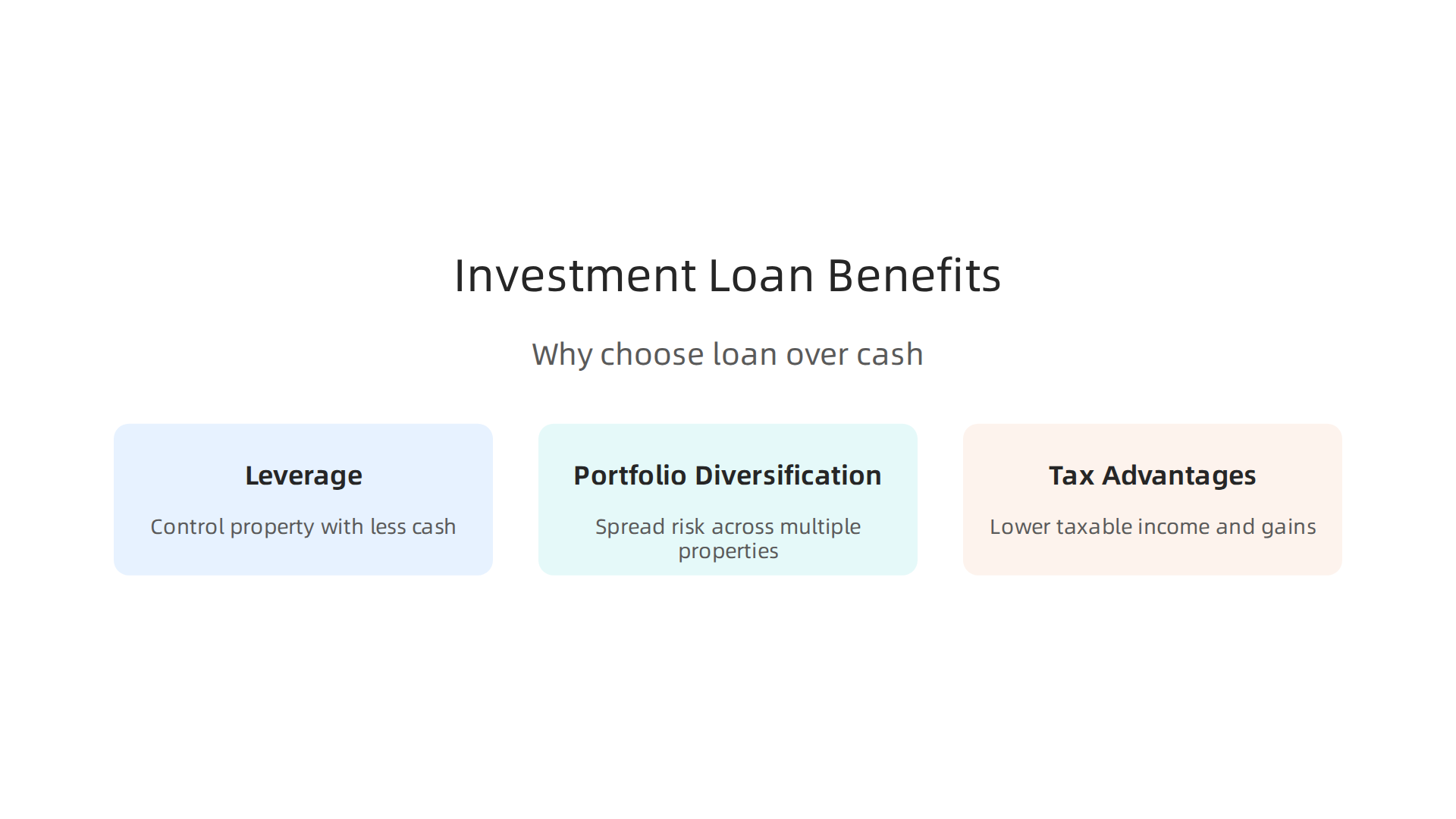
Leverage. You control a full property worth AED 2 million by putting down only AED 500,000. If the property appreciates 10%, your return on cash invested jumps to 40% instead of just 10%. That is the power of leverage.
Portfolio diversification. A real estate investment property loan lets you spread risk across multiple properties instead of pouring everything into one. You can own an apartment in JVC, a villa in Dubai Silicon Oasis, and a commercial unit in Business Bay without needing millions in cash upfront.
Tax advantages. Dubai offers a zero income tax and zero capital gains tax environment. No tax on rental income. No tax when you sell at a profit. That alone makes investing here far more favorable than in most global cities.
If this sounds like the right path for you, start by learning how to get started step by step. Check out this practical guide on how to start real estate investment in Dubai to build your foundation the right way.
Legal and Regulatory Framework for Property Financing in Dubai
Here is the thing about buying property in Dubai. The legal system is there to protect you, but you need to understand how it works first. A few key bodies and laws control everything related to real estate investment property loans in Dubai.
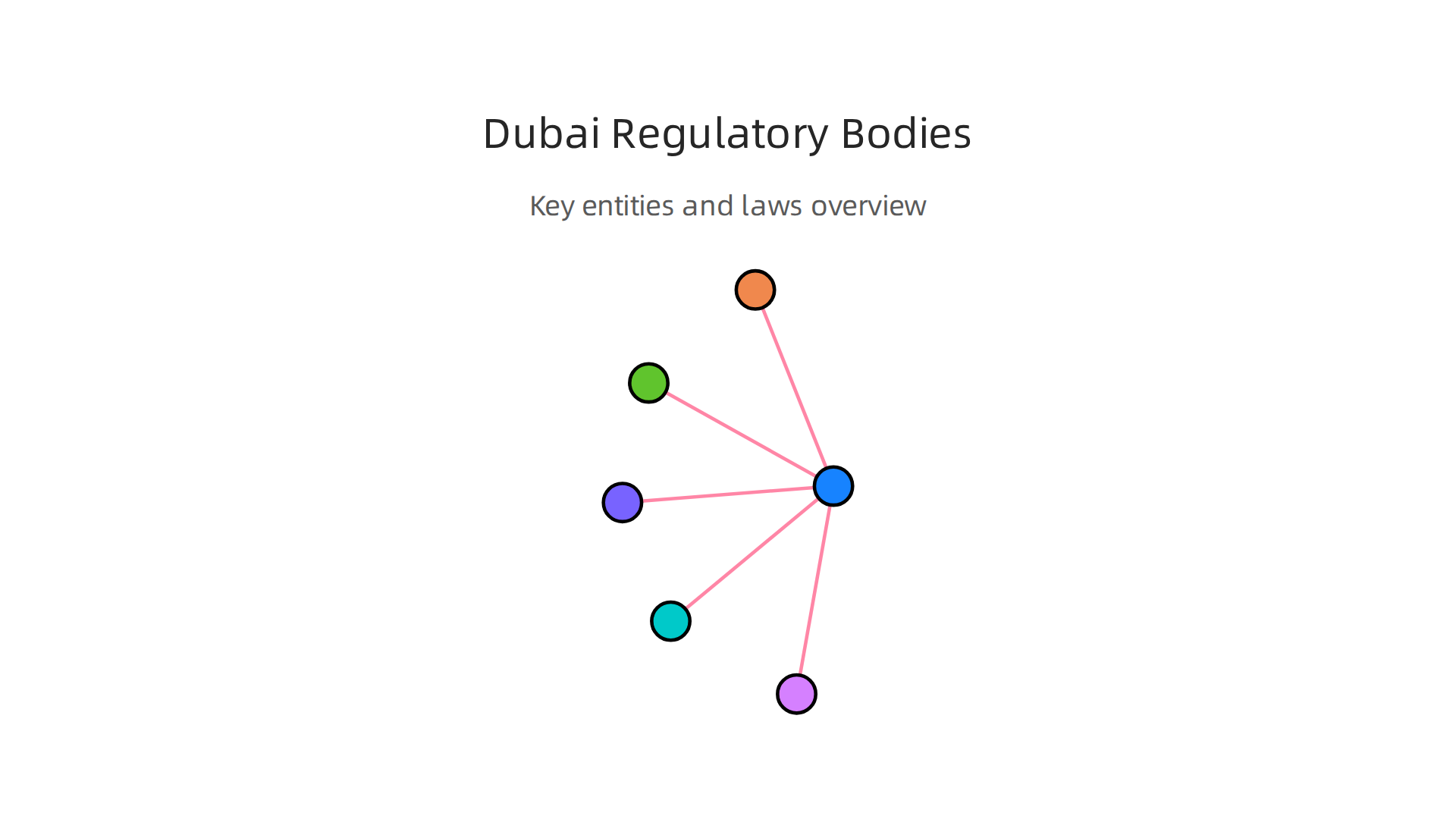
The main players are the Dubai Land Department (DLD) and the Real Estate Regulatory Authority (RERA). The DLD handles property registration and transfer. RERA oversees the market and makes sure developers follow the rules. The Central Bank of the UAE sets the lending limits that directly affect your real estate investment property loan. For example, the Central Bank caps loan-to-value ratios at 75% for non-residents buying a first property under AED 5 million. You can check the full breakdown in this guide about Dubai mortgage rules for non-resident buyers.
When you buy off-plan property, RERA requires every developer to use an escrow account. This means your money goes into a protected account instead of directly to the developer. Funds release only as construction reaches certain stages. This protects you from unfinished projects and builds trust in the market.
Tenancy laws matter too. All rental agreements must register through Ejari. Landlords cannot raise rent by more than 15% at renewal. These rules create a fair environment and predictable rental income for investors.
Foreign ownership rights are clear in Dubai. You can own property outright in designated freehold zones. These areas allow full ownership for non-residents. That means you can buy, sell, lease, or rent your property without any restrictions.
Before you move forward with any real estate investment property loan, make sure you understand the due diligence process. Check out this guide on due diligence for choosing a real estate investment company to know exactly what to look for.
If you want personalized help navigating these rules, connect with Ayaz Salman for a FREE Dubai Real Estate Consultation. He can walk you through the legal steps and match you with the right financing options for your situation.
Types of Financing: Mortgages, Islamic Finance, and Developer Payment Plans
Once you understand the legal rules, it is time to figure out how you will pay for your property. The right real estate investment property loan depends on your budget, your values, and your timeline.
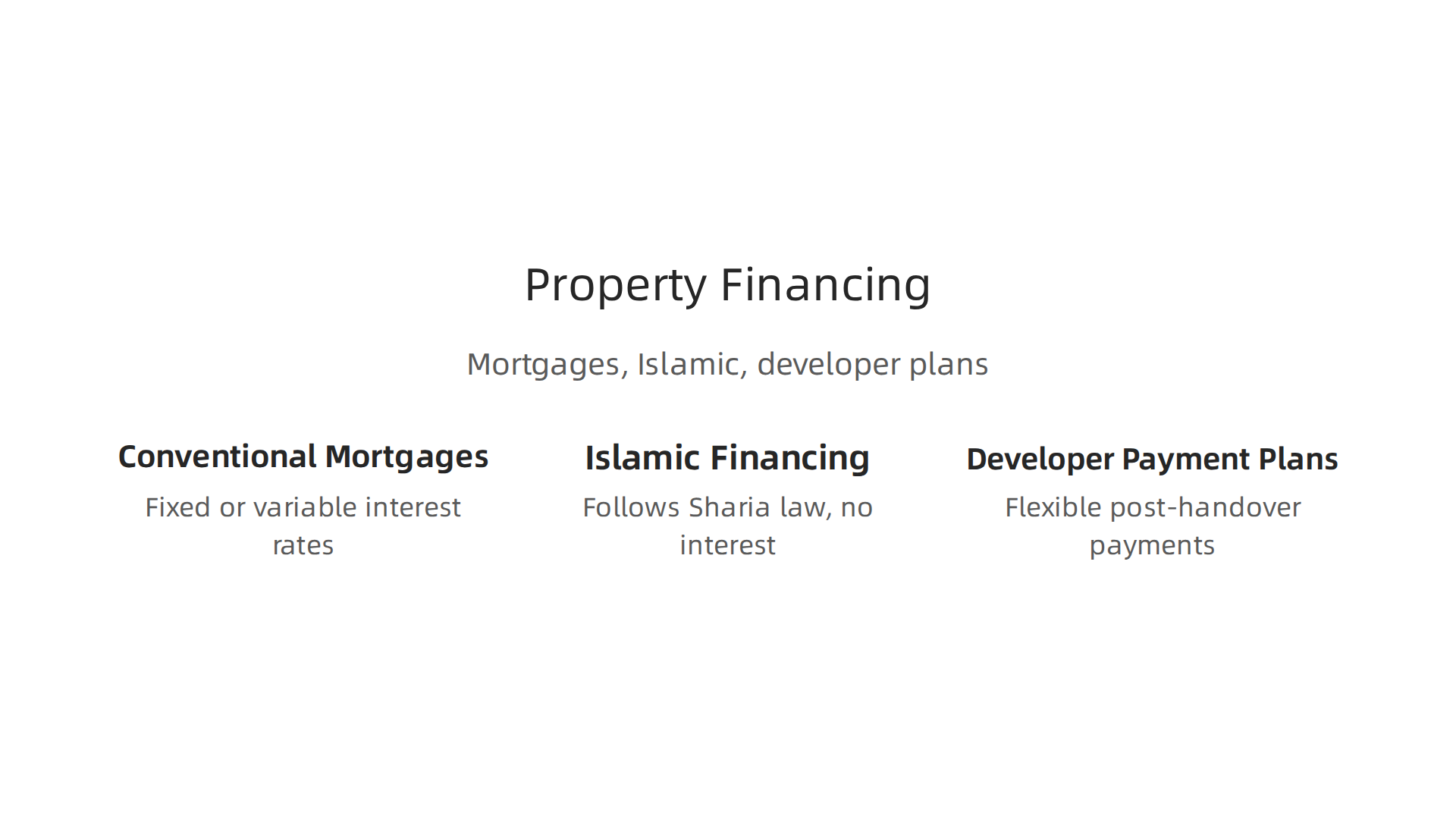
Conventional Bank Mortgages
Most banks in Dubai offer two main types.
Fixed rate mortgages lock your interest rate for 1 to 5 years. In 2026, major UAE lenders are offering attractive fixed rates right now. This is a good choice if you want steady monthly payments and protection from future rate increases.
Variable rate mortgages are tied to the Emirates Interbank Offered Rate, called EIBOR. Your payments change when market rates change. You can check the current EIBOR rates for a clear look at where the market stands today.
Watch out for prepayment penalties. If you pay off a fixed rate loan early, the bank will likely charge a fee. This is usually around 1% of the remaining balance.
Islamic Financing Options
Islamic finance follows Sharia law. It avoids charging interest. Instead, banks use other fair structures.
In Murabaha, the bank buys the property you want. Then it sells it to you at a fixed profit margin. You pay that set price in installments. Your payment never changes.
In Ijara, the bank buys the property and leases it to you. Your monthly payment works like rent. But part of it goes toward owning the home over time.
These options are popular with many investors who want ethical and transparent financing.
Developer Post-Handover Payment Plans
Many Dubai developers now offer flexible plans that go beyond the day you get the keys.
Here is how they usually work. You pay a down payment of around 20%. You pay more during construction. After you move in, you pay the rest over 2 to 4 years.
This is great for investing in real estate passive income. You can rent the property out right away and use that money to cover your remaining payments.
The downside is you are locked into that developer. If property values drop, you still owe the full price.
For real estate investment for beginners, understanding these three paths is the first real step. You can read this guide on how to start investing in real estate in Dubai for the complete roadmap from start to finish.
Eligibility Criteria and Required Documentation
Before the bank approves your real estate investment property loan, they need to check you out. The rules are straightforward, but gathering the right papers is key.
Income and Employment Rules
If you work for someone else, you need a salary certificate and at least 3 to 6 months of bank statements. Most UAE banks in 2026 want a minimum monthly salary of around Dh15,000 for expats. That is one of the key minimum salary thresholds set by banks.
If you are self-employed, bring your trade license and 2 years of audited finances. Banks need to see steady income to feel safe lending to you.
Debt to Income Ratio
The Central Bank of the UAE says your total monthly debt payments cannot go over 50% of your income. That includes your mortgage, car loan, and credit cards. So keep your other debts low before you apply.
Document Checklist
You need these documents ready:
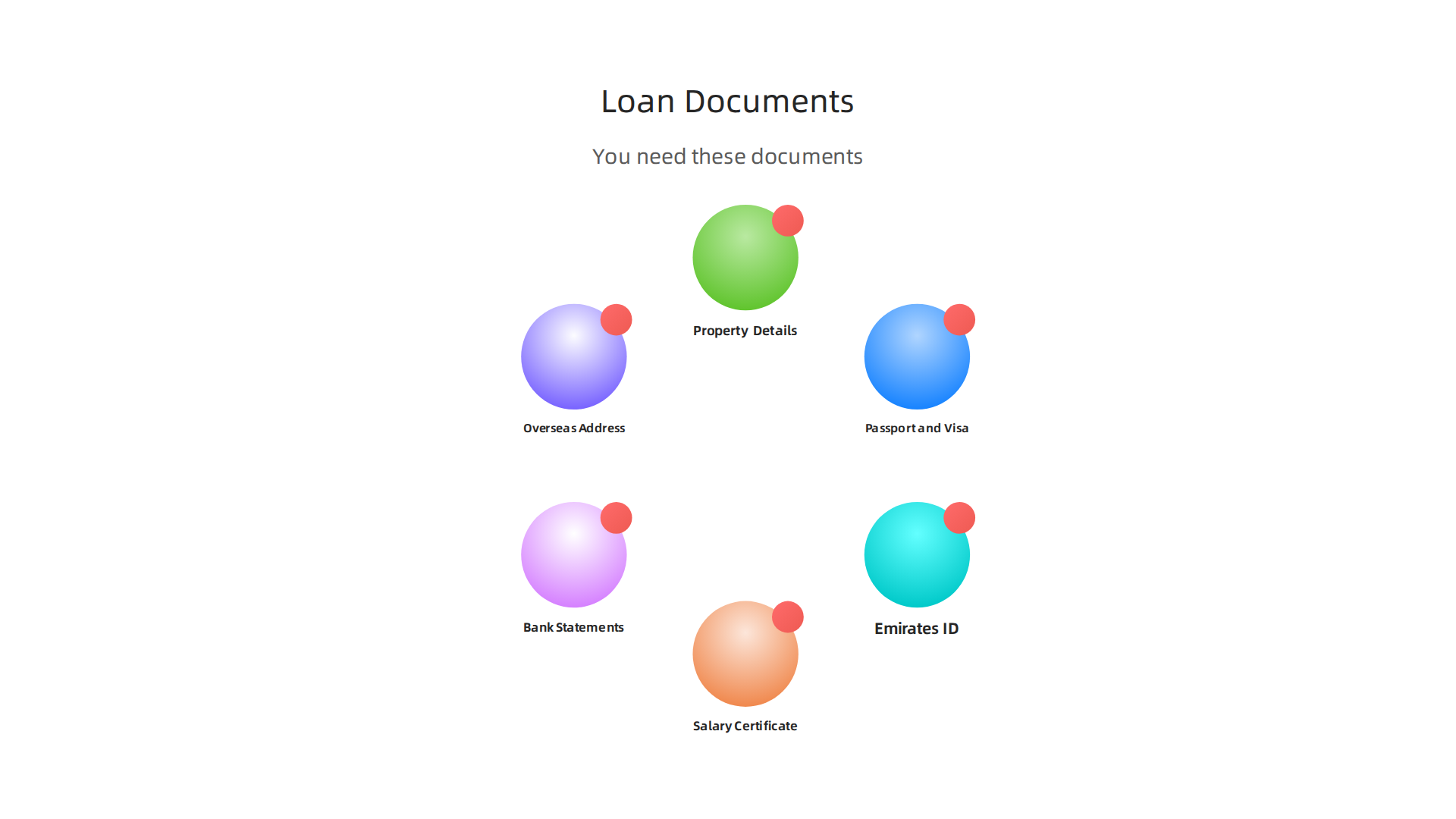
- Valid passport and visa copy
- Emirates ID (if you have one)
- Salary certificate or trade license
- Bank statements for 3 to 6 months
- Proof of overseas address for non-residents
- Property details (title deed or sale agreement)
For a full list, check this guide on buying property in Dubai legal requirements for 2026.
Getting these papers in order early saves you time and stress. If you want help with the whole process, reach out for a FREE Dubai Real Estate Consultation with an expert who knows the system inside out.
Once your documents are ready, you can move forward with confidence. For the complete roadmap from start to finish, read this how to start real estate investment in Dubai step by step guide.
Understanding Interest Rates, Fees, and Hidden Costs
Now that your documents are in order, let’s talk about what this real estate investment property loan will actually cost you. The interest rate you lock in makes a big difference to your monthly payment and total profit.
Fixed vs. Variable Rates
Most UAE banks offer two rate types. A fixed rate keeps your payments the same for 1 to 3 years. Right now in 2026, average fixed rates sit between 3.99% and 4.75%, according to a market update from 4Front Realty. This is a great option if you want to know exactly what you will pay each month.
A variable rate ties your interest to EIBOR, which is the Emirates Interbank Offered Rate. As explained by Investopedia’s breakdown of EIBOR, this is the benchmark rate that UAE banks use when lending to each other. Your mortgage rate becomes EIBOR plus a fixed margin set by the bank. For example, if the 3-month EIBOR is 3.7% and your bank adds a 1.5% margin, your rate would be 5.2%. When EIBOR drops, your payment drops. When it rises, you pay more.
The Central Bank of the UAE sets the base rate, which influences EIBOR. In 2026, rates are around 3.65%, with expectations of slow adjustments ahead. You can check the latest EIBOR rates published by the Central Bank directly.
The Fees That Add Up Fast
Beyond the interest rate, banks charge several fees that can surprise you. Here is what to expect:
- Processing fee: 0.5% to 1% of the loan amount
- Property valuation fee: Dh2,500 to Dh3,500
- Early settlement fee: 1% to 3% if you pay off the loan early
- Life insurance premium: Required by most banks, usually 0.1% to 0.2% of the loan per year
- DLD registration fee: 0.25% of the property value, set by the Dubai Land Department
These fees can easily reach Dh25,000 or more on a standard mortgage. Always ask the bank for a full fee breakdown before you sign anything.

How to Compare Loans Smartly
Do not just look at the interest rate. Ask each lender for the APR, which includes the rate plus all fees rolled together. That gives you the true cost. Also check if the fixed rate period matches your plans. If you plan to sell in 3 years, a 5-year fixed rate might not be worth the premium.
Understanding these costs helps you avoid surprises. For a complete overview of building your investment approach, check out this guide on Dubai real estate investment strategies for 2026 that deliver solid returns.
Step-by-Step Guide to Securing a Loan for Property Investment
Now that you understand the costs and have a strategy in mind, let’s walk through the actual steps to get your real estate investment property loan approved. The process might sound complex at first, but it really breaks down into a few clear stages.
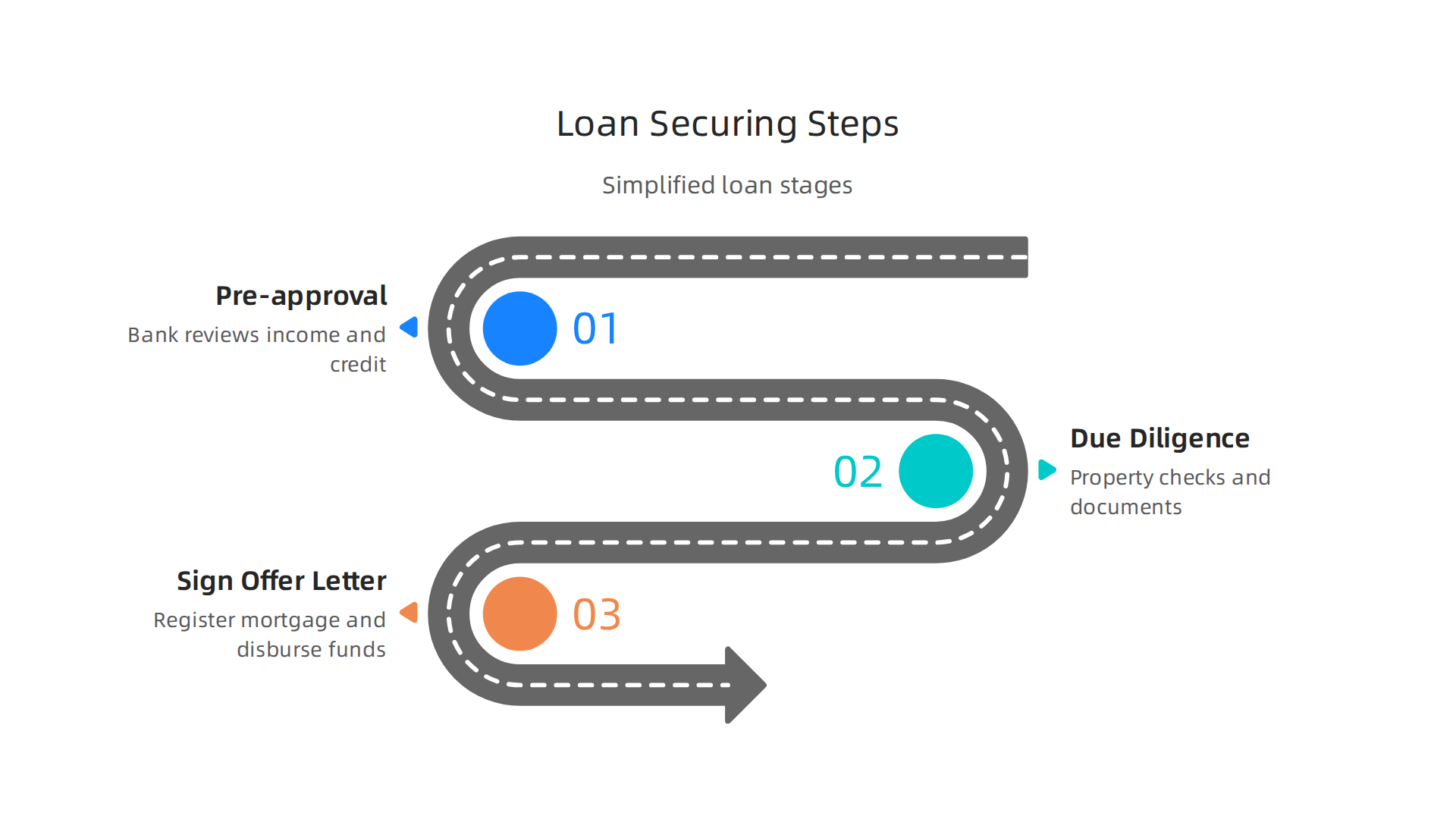
Step 1: Pre-approval vs. Final Approval
First up is pre-approval. Think of this as a financial health check. The bank reviews your income, credit score, and existing debts. This tells you exactly how much you can borrow. It usually takes 1 to 3 days once you submit your documents. Pre-approval is not a final promise, but it gives you a clear budget and makes sellers take you seriously. The Dubai Property Financing Guide 2026 notes that the full journey from pre-approval to getting your funds released typically takes 2 to 4 weeks for ready homes. Final approval happens later, after the bank has done its checks on the property itself.
Step 2: Property Valuation and Legal Due Diligence
Once the seller accepts your offer, the bank sends an independent valuer to confirm the property is worth the price you agreed on. At the same time, your lawyer handles the legal side. This means checking the title deed at the Dubai Land Department (DLD) to make sure the seller truly owns the property. They also get a No Objection Certificate (NOC) from the developer. The NOC is a critical document that says the developer has no problem with the sale. Without this NOC, the transfer cannot move forward at all.
Step 3: Sign the Offer Letter, Register the Mortgage, and Get Funded
After the valuation and legal checks come back clean, the bank sends you the formal offer letter. This document spells out the final interest rate, fees, and repayment terms. Read every line carefully before signing. Once you sign, the bank registers the mortgage with the DLD. This step legally secures the loan against the property. Finally, the bank transfers the loan amount to the seller. This is called disbursement. At this point, the property is officially yours.
The whole process is simple when you understand each phase. For a complete roadmap, read this guide on how to start investing in real estate in Dubai in 2026. And if you are ready to take action right now, get a FREE Dubai Real Estate Consultation with Ayaz Salman. He can answer your specific questions and help you take the next step with confidence.
Tips for Maximizing Returns and Minimizing Risks
Getting your real estate investment property loan approved is just the start. The real work begins with making smart choices that protect your money and grow your wealth.

Here are the key areas to focus on.
Choose Your Area Wisely
Location is everything in Dubai real estate. Different communities offer very different returns. For example, apartments in areas like Dubai Investments Park and Dubai Sports City offer rental yields above 8%. Meanwhile, villa communities like Arabian Ranches average around 3.99%. According to the Average Rental Yields in Dubai 2026 data, studios and one-bedroom flats in high-demand neighborhoods tend to deliver the best returns. If you want steady monthly income, focus on mid-market areas with strong tenant demand. Jumeirah Village Circle and Dubai Silicon Oasis consistently rank as top choices for yield-focused investors.
Lock in Low Rates and Negotiate
Interest rates in Dubai are still competitive. In early 2026, fixed mortgage rates ranged from about 3.9% to 4.75%. Do not accept the first offer the bank gives you. Shop around. Ask multiple lenders for quotes. Even a small rate difference can save you thousands over the loan term. Also check the early settlement fees and processing charges. These hidden costs can eat into your returns if you are not careful.
Plan for Taxes and Exit
Dubai offers strong tax advantages. There is no property tax and no capital gains tax on most residential sales. This means more of your rental income stays in your pocket. But you still need a clear exit strategy. Decide upfront whether you are chasing rental yield or capital appreciation. If you want cash flow, go for JVC or Silicon Oasis. If you want long-term value growth, look at Downtown or Dubai Creek Harbour. For a complete plan, read this guide on Dubai real estate investment strategies for 2026 that deliver high returns.
Finally, always calculate your net yield. Subtract service charges, maintenance, and vacancy periods from your rental income. A property that looks great on paper might not perform well once you factor in all the real costs.
Common Mistakes to Avoid When Taking an Investment Loan
Getting your loan approved feels great. But many investors trip up right after that. Let us look at the most common mistakes so you can avoid them.
Overleveraging: Borrowing Too Much
It is tempting to stretch your budget to buy a bigger property. But here is the risk. If your monthly payments eat up too much of your income, one missed rent cheque or a vacancy period can hurt badly. Banks in Dubai usually require you to put down 20 to 25 percent of the property value. That means you already have some cash at risk. Adding a giant loan on top makes things worse. A better rule is to keep your total debt payments below 40 percent of your monthly income. That way you still have room for service charges, maintenance, and unexpected costs.
Ignoring Prepayment Penalties and Exit Costs
Many borrowers focus only on the monthly rate. They forget to read the fine print about early settlement fees. Some banks charge a penalty if you pay off your loan ahead of schedule. That matters if you plan to sell the property or refinance later. Always ask your lender about these charges upfront. The Dubai Property Financing Guide 2026 explains that you should negotiate fees like processing charges and valuation costs before signing. Every dirham you save here adds to your bottom line.
Not Reading the Fine Print on Variable Rates and Insurance
Most investment loans come with a variable interest rate. That means your payments can change when the UAE central bank adjusts rates. Some banks also require you to buy property insurance through them, which can cost more than shopping around. Do not assume the standard terms are fair. Ask your lender to explain every clause. If something feels unclear, slow down and get help.
Avoiding these mistakes protects your capital and keeps your real estate investment property loan working for you.
If you would like a second opinion on your loan terms or want to explore better financing options, connect with a local expert. Reach out for a FREE Dubai Real Estate Consultation and get personalised advice on your investment plan.
Summary
This guide explains how real estate investment property loans work in Dubai in 2026 and gives actionable steps for foreign and local investors to secure financing wisely. It covers the regulatory framework (DLD, RERA, Central Bank limits), typical loan-to-value ranges (roughly 50–75% for investment properties in freehold areas), current interest-rate expectations, and the main financing routes: conventional mortgages, Islamic structures (Murabaha and Ijara), and developer post-handover plans. You will find a clear checklist of eligibility criteria and documents, a step-by-step walkthrough from pre-approval to disbursement, and a practical breakdown of fees and hidden costs to include in your APR comparison. The guide also offers location and yield guidance, negotiation tips, and the most common mistakes—such as overleveraging and ignoring prepayment penalties—so you can protect returns and plan exits confidently. After reading, you’ll know which loan types suit your goals, how to prepare an application, and how to compare offers to maximise net returns.