How Marketing in CRM Unifies Dubai Real Estate Data for Smarter Investments
· 28 min read

Introduction
Dubai’s real estate market runs on data. Every day, the Dubai Land Department (DLD), RERA, Ejari, and dozens of developer portals generate massive amounts of information about property transactions, prices, rentals, and permits. But here is the problem. That data lives in separate systems that do not talk to each other, leading to real estate data quality failures that frustrate even experienced investors.
This fragmentation creates a real headache. You might know that a certain neighborhood saw 500 deals last month. But without connecting that number to rental trends, off-plan launch dates, or changing regulations, you are working with puzzle pieces that do not fit. The result? Missed opportunities and costly guesswork.
This is exactly where marketing in CRM becomes a game-changer. A well-designed CRM does not just store names and phone numbers. It pulls data from multiple sources into one clean dashboard. Instead of jumping between five different platforms, you get a unified view of the market. You can spot rising demand, track buyer behavior, and time your moves with confidence. To see how this works in practice, check out this guide on how to transform your property business with a CRM platform.
CRM marketing turns scattered information into a clear picture. When you know what is selling, who is buying, and where trends are heading, you can make decisions based on facts, not feelings. The UAE real estate tech market is growing rapidly in 2026, and smart investors are already using marketing and CRM tools to gain an edge. The question is not whether to adopt a CRM. It is how fast you can start using one to drive better results.

If you are ready to take control of your Dubai property journey, connect with an expert who knows the market inside and out. FREE Dubai Real Estate Consultation with Ayaz Salman can help you turn data into dollars.
Why CRM is Essential for Real Estate Marketing in Dubai
In Dubai’s property market, data flows from many directions. Transaction records from the Dubai Land Department, rental contracts through Ejari, off-plan registration data, website inquiries, broker logs, and social media leads all arrive in different formats. Managing them separately is like trying to read a map with pieces missing. You might see sales volume in one window and rental prices in another, but without connecting them you cannot see the full picture.
This is why marketing in CRM matters so much. A good CRM does not just store contacts. It pulls data from disconnected sources into one clean place. So when a potential buyer fills out a form on your website, the CRM instantly matches that person with any previous transaction history, past inquiries, and even public record data about properties they looked at. Suddenly you know not just who they are, but what they want and when they are ready to act.
For real estate professionals, this unified view changes everything. Instead of guessing which neighborhood might heat up next, you can spot real demand patterns. Combine transaction data with rental trends and off-plan launch calendars, and you can see where buyers are moving before the crowd does. That allows you to run targeted email campaigns, send the right listings at the right moment, and predict when a buyer or seller might make a move. According to the Boyot blog on why real estate data is the most valuable asset in 2026, investors who centralize their data gain a clear edge over those who rely on spreadsheets.
The same logic applies to sellers and landlords. By tracking rental demand and price changes inside your CRM, you can advise clients on the best time to list or adjust rent. You stop reacting to the market and start anticipating it.
If you are still using separate tools for leads, transactions, and market data, you are working harder than you need to. A single CRM designed for real estate can save hours every week and boost your deal flow. For a deeper look at how to pick the right system, check out this guide to find the best CRM for small real estate business.
The Data Fragmentation Challenge in Dubai
Here is the real problem hiding behind the opportunity. Dubai’s property ecosystem runs on three separate data worlds. Property portals like Bayut and Property Finder hold listing and inquiry data. Government databases like Dubai Land Department and RERA store transaction records, ownership history, and rental contracts through Ejari. And your own CRM or spreadsheet tracks your leads and deals.
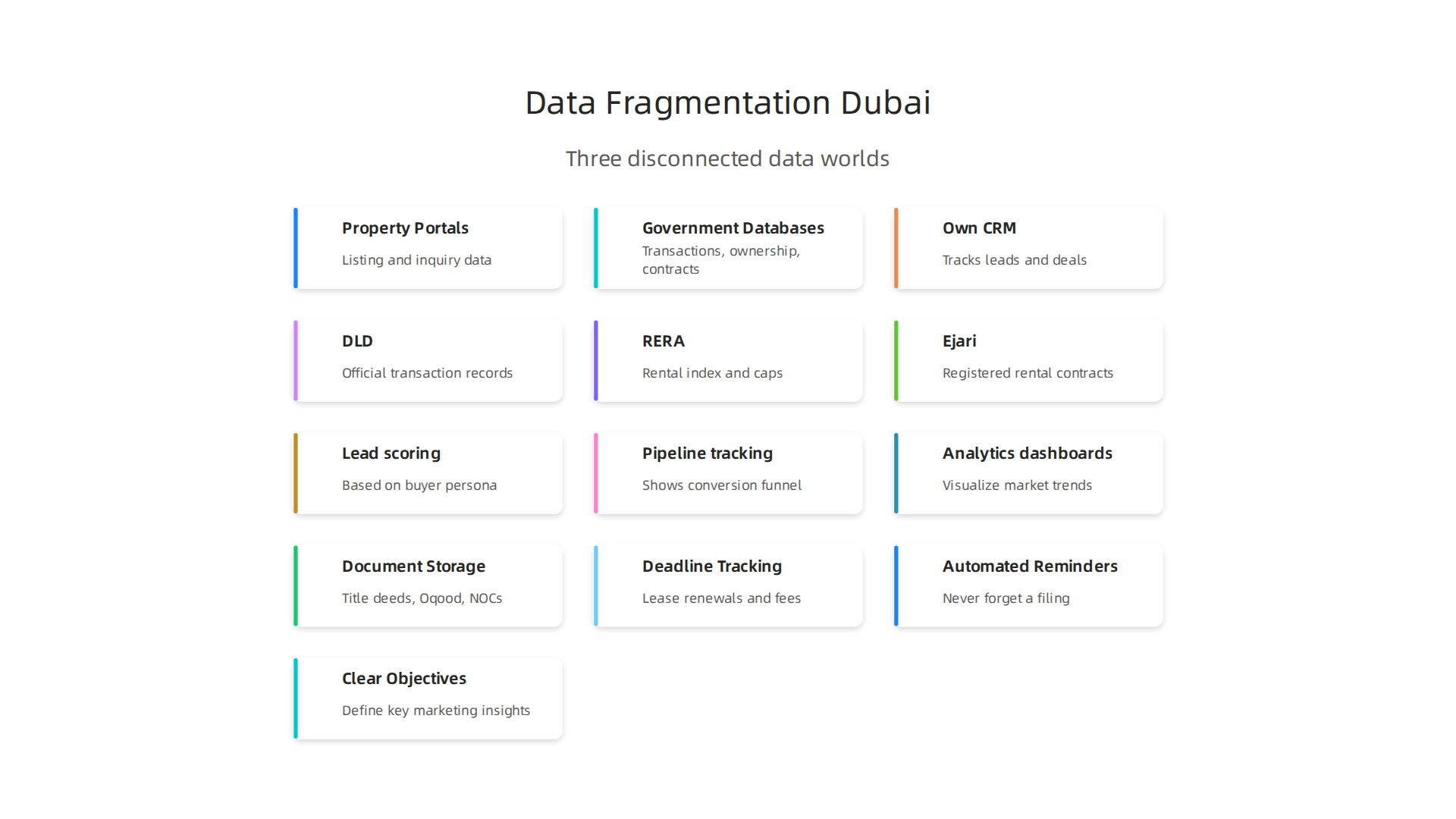
These three worlds rarely talk to each other.
The result is fragmented data. Most investors and agents still rely on manually updated spreadsheets to unify this mess. But spreadsheets get stale fast. A deal that closed yesterday might not show up until next week. Rental trends shift while you are still copying numbers from one column to another. That delay costs you money. The data quality problem is not just annoying. It actively blinds you to emerging trends. According to the guide on real estate data quality and property record fragmentation, most platforms struggle to normalize property records from different sources, which leads to analytics that cannot be trusted.
When you lack a single source of truth, you end up making decisions on outdated or incomplete information. You might chase a neighborhood that already peaked. Or miss a submarket that is about to heat up. The only way out is to break down these silos with a unified system. If you want to see exactly how a CRM platform brings all your data together, check out this guide on how to transform your property business with a CRM platform.
Still struggling to connect your data sources? Buying, selling, renting, or investing in Dubai can be overwhelming without the right insights. Get a free Dubai real estate consultation to learn how to unify your data and spot market trends before your competition does.
How CRM Creates a Single Source of Truth
A real estate CRM software is exactly the tool that breaks down those silos. It pulls in data from every channel your business uses: email conversations, phone call logs, website inquiry forms, and even third-party feeds from property portals like Bayut and Property Finder. This is where effective marketing in crm starts. When all your inbound leads land in one place, you stop jumping between tabs and start working from a single view.

The system also handles cleanup automatically. It spots duplicate client records or property listings and merges them. It normalizes address formats and ownership details so your database stays consistent. Without that step, you end up with the same kind of broken data described in real estate data as the most valuable asset in 2026 — fragmented records that kill your analytics.
Once your data is clean and unified, the real power of crm marketing kicks in. You can run reports that show true market demand, actual pricing trends, and real buyer behavior across your portfolio. No more guesswork based on stale spreadsheets. The connection between marketing and CRM becomes a competitive edge rather than a headache. If you are shopping for the right tool, take a look at this guide on how to find the best CRM for small real estate business to compare options that fit your workflow.
Key CRM Features for Actionable Marketing Insights
Once your CRM holds clean, unified data, the next step is putting that data to work. The best real estate CRM software turns raw information into clear signals that guide your crm marketing decisions. Three features stand out as essential for turning insights into action.
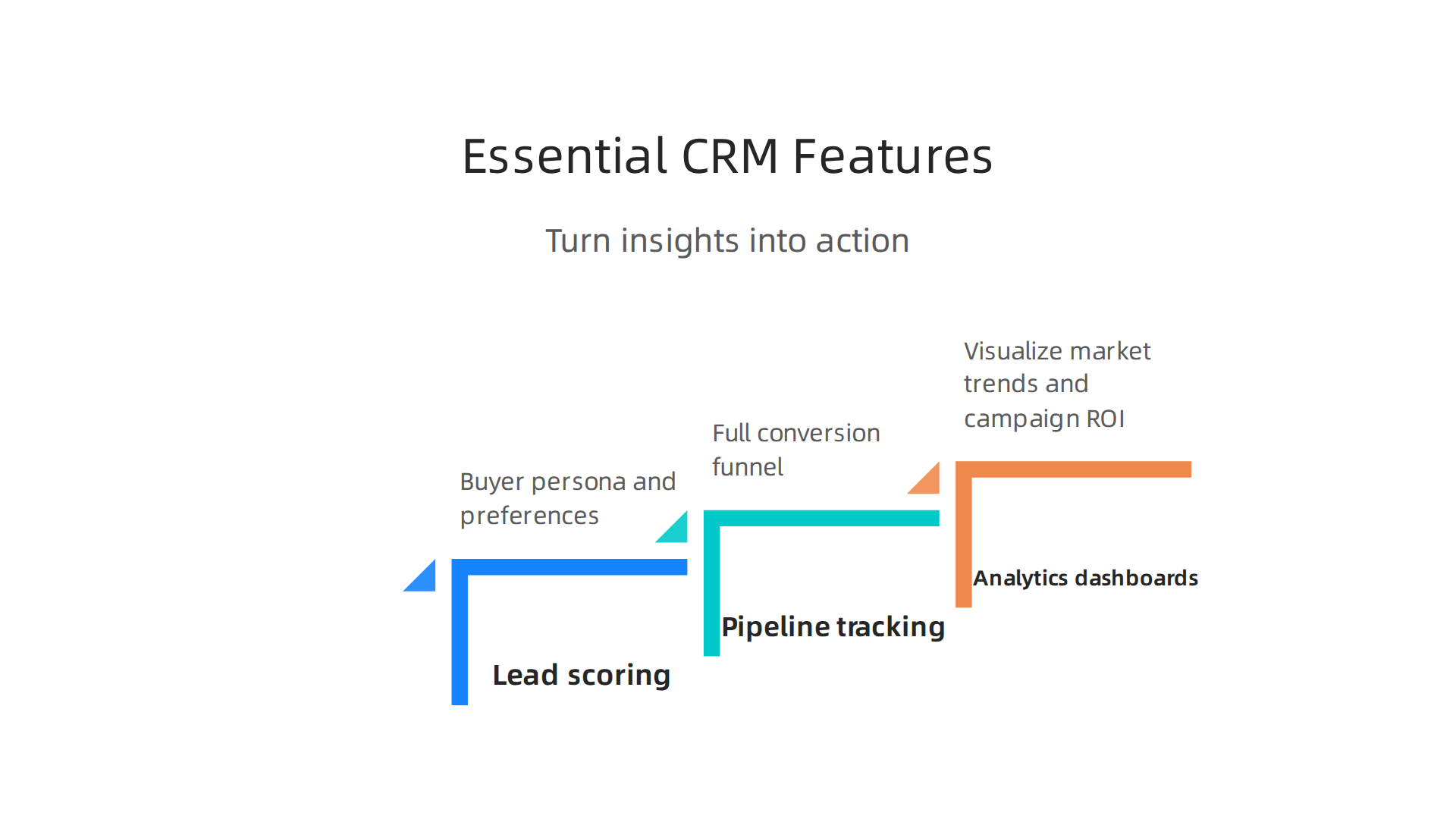
Lead scoring based on buyer persona and property preferences. Not every lead deserves the same attention. A modern CRM automatically scores each contact by how well they match your ideal buyer persona and the types of properties they engage with. Someone who repeatedly views luxury villas in Palm Jumeirah gets a high score. A person who downloaded one guide but never opened another email stays low. This is where marketing and crm truly connect. You send different campaigns to hot leads versus cold ones, and your conversion rates climb. According to the guide on key CRM features for real estate in 2026, lead scoring is one of the top capabilities that help you prioritize the people most likely to buy now.
Pipeline tracking that shows the full conversion funnel. You need to see every stage from inquiry to signed contract. A good pipeline view shows you exactly how many leads are at each step, how long they stay there, and where they drop off. If you notice a bottleneck at the property viewing stage, you can adjust your follow-up process or offer virtual tours. This kind of visibility makes crm en marketing feel less like guesswork and more like a predictable system. The CRM acts as your central control panel for moving deals forward.
Analytics dashboards that visualize market trends and campaign ROI. Instead of digging through spreadsheets, you get real-time charts showing which properties are getting the most interest, how your portfolio is performing, and which marketing channels deliver the best returns. For example, you can see that Instagram ads generate three times more quality leads than email blasts for a specific neighborhood. That insight lets you shift your budget immediately. A CRM with strong reporting turns marketing in crm into a measurable engine. The 2026 roundup of real estate CRMs from HousingWire highlights analytics as a must-have for agents who want to track what works and double down on it.
With these features, you stop reacting and start planning. If you are investing in Dubai’s property market and want to make smarter moves based on real data, you can connect with an expert who knows the local landscape. FREE Dubai Real Estate Consultation A quick chat can help you align your CRM strategy with your investment goals.
Lead Scoring and Segmentation Based on Property Preferences
Not all property views are equal. A person browsing a penthouse for the third time in a week is much more serious than someone who clicked one listing and left. Modern CRM platforms track these behaviors automatically.
Scoring based on engagement signals. Every action a lead takes on your site gets recorded. Property views, saved searches, inquiry depth, and time spent on listings all feed into a lead score. A person who fills out a detailed inquiry form on an off-plan villa scores higher than someone who only opens your welcome email. This scoring system lets you focus your crm marketing energy on the buyers most likely to move forward now.
Segmentation by property type and budget. Once you know who is active, you group them by what they actually want. Segment leads by off-plan, ready property, or commercial interest. Then layer in budget range. The 2026 guide on CRM features for real estate agents explains that advanced filtering helps you send the right message to the right segment at the perfect time.
Automated property alerts. After you segment your leads, your CRM can fire off personalized alerts. A buyer looking at ready properties under AED 2 million gets notified the moment a matching listing appears. This keeps your brand top of mind while helping the buyer act fast. The whole system makes marketing and crm work together to boost conversion rates without you lifting a finger.
For a deeper look at how a CRM platform fits into your daily workflows, read our full guide on how to transform your property business with a CRM platform.
Pipeline Tracking and Transaction History Analysis
Your CRM does more than store names and numbers. It tracks every deal from the first contact right through to closing. You can see exactly where each lead sits in your sales funnel. This visibility helps you find drop-off points quickly. Maybe buyers stop responding after viewing three properties. Maybe they ask for financing details and then go silent. The system shows you these patterns. Modern platforms even give you full transaction and revenue visibility, as explained in this overview of real estate CRM in 2026.
Your CRM also holds years of transaction history. That data lets you study buyer behavior over time. You can see which property types close fastest and what price ranges move the quickest. When you combine this history with marketing in crm data, you learn which campaigns actually bring in buyers who close. Use these insights to decide where to put your time and money. Focus on the properties and segments that deliver the best results. For help picking a system that supports this kind of analysis, check out this guide on how to find the best CRM for small real estate business.
If you are ready to apply these strategies to your own Dubai property portfolio, you can get a free Dubai real estate consultation with Ayaz Salman to discuss your next steps.
Top Data Sources for CRM Integration in Dubai Real Estate
To make the most of your CRM, you need to feed it the right data. Raw contact lists are not enough. When you connect official Dubai data sources to your system, your marketing in crm becomes smarter and more targeted. You can send the right property offers to the right people at exactly the right time.
Here are the three key data sources every Dubai real estate professional should integrate.
DLD (Dubai Land Department)
The Dubai Land Department publishes official transaction records. This includes actual sales prices, property types, and locations. When you pull DLD data into your CRM, you can see which areas are hot and which price ranges move quickly. Use this to adjust your marketing messages. If a neighborhood shows rising sales, send alerts to buyers who saved searches there. Your CRM can tag leads based on verified transaction activity, not just guesses.
RERA (Real Estate Regulatory Authority)
RERA provides the official rental index and yearly rental increase caps. This data helps investors calculate realistic returns. When you connect RERA feeds to your CRM, you can automatically update estimated rental yields for each property. Your crm marketing can then target leads looking for high-yield investments with precise figures. Plus, RERA indices alert you to market shifts so you can adjust your campaigns early.
Ejari Rental Contract Records
Ejari holds all registered rental contracts in Dubai. This data reveals tenant demographics, lease durations, and actual rental income by area. Integrating Ejari with your CRM gives you a granular view of rental demand. For example, you can see which communities attract families versus single professionals. Your CRM can segment leads based on these verified tenant profiles, making your outreach feel personal and informed.
When you link these official sources, your CRM becomes a powerful market intelligence hub. It can automatically score leads based on real transaction data, not just website clicks. Look for a real estate CRM that supports open integrations and behavior-based tracking, as highlighted in this guide on essential real estate CRM features for 2026. The best platforms act as a central hub connecting marketing, sales, and data from external sources.
To start using these data sources effectively, consider how you can transform your property business with a CRM platform that supports these connections. The more accurate data your CRM holds, the better your marketing decisions become.
DLD and RERA Transaction Data Feeds
Getting data from official sources into your CRM sounds complex, but it is one of the smartest moves you can make. Live feeds from the Dubai Land Department let you pull in real-time transaction registrations as they happen. That means your crm marketing always reflects the actual market, not stale listings.
When a property sells in Palm Jumeirah for a certain price per square foot, your CRM can tag every lead who saved a similar unit in that area. You can send them an alert instantly. This level of speed only works when direct data integration is active.
RERA’s rental index and apartment valuation data are just as valuable. Investors want to know if a property is priced fairly. By connecting RERA feeds, your CRM can automatically show fair market values next to asking prices. This builds trust with buyers. They see you are not guessing, you are using verified data.
The technical setup requires some work. You need a CRM that supports API connections to the Dubai Land Department API Gateway. Some platforms, like the RERA-ready CRM from Retyn, already have these integrations built in. Once connected, your system updates automatically.
The payoff is a real competitive advantage. While other agents rely on old reports, you see market shifts the same day they happen. That speed gives you smarter outreach and better closing rates. If you want to find a CRM that supports these live data feeds, start by checking how to find the best CRM for small real estate businesses.
For a deeper look at how to set up these integrations for your own portfolio, reach out for a FREE Dubai Real Estate Consultation with a local expert who knows the market.
Ejari Rental Contract Records and Market Trends
Here is where the real magic of crm marketing comes together. Ejari is Dubai’s official system for recording every rental agreement in the city. Every lease, every renewal, every tenant gets registered. That data is gold for your business.
Ejari records show you actual rental amounts paid, lease durations, and even tenant nationality breakdowns. You are not guessing what a studio in JLT rents for. You have the real number. When you connect this feed to your CRM, you can calculate real-time rental yield per community instantly. No more waiting for quarterly reports.
This kind of data also helps you predict demand shifts. If you see lease durations shortening in one area and tenant nationalities changing in another, you know the market is moving. Your marketing and crm system can flag these trends before your competitors notice them.
Integrating Ejari into your workflow gives investors automated reports on their portfolio performance. They get a clear view of how their properties stack up against the market. That builds long-term trust and repeat business. For a complete walkthrough of how Ejari registration works, check out this detailed Ejari system guide.
If you want to build this kind of automated reporting into your daily operations, the right software makes all the difference. Consider how you can transform your property business with a CRM platform that pulls live Ejari data.
Integrating CRM with Dubai’s Regulatory Frameworks
Dubai’s real estate market runs on strict rules. Laws like Dubai Law No. 7 of 2019 require agents and brokers to keep detailed records of every transaction. They must store documents like title deeds, Oqood certificates, and No Objection Certificates. Doing this by hand is slow and easy to mess up. That is where marketing in crm becomes your safety net.
A good real estate crm software does more than track leads. It stores all your compliance documents in one place.
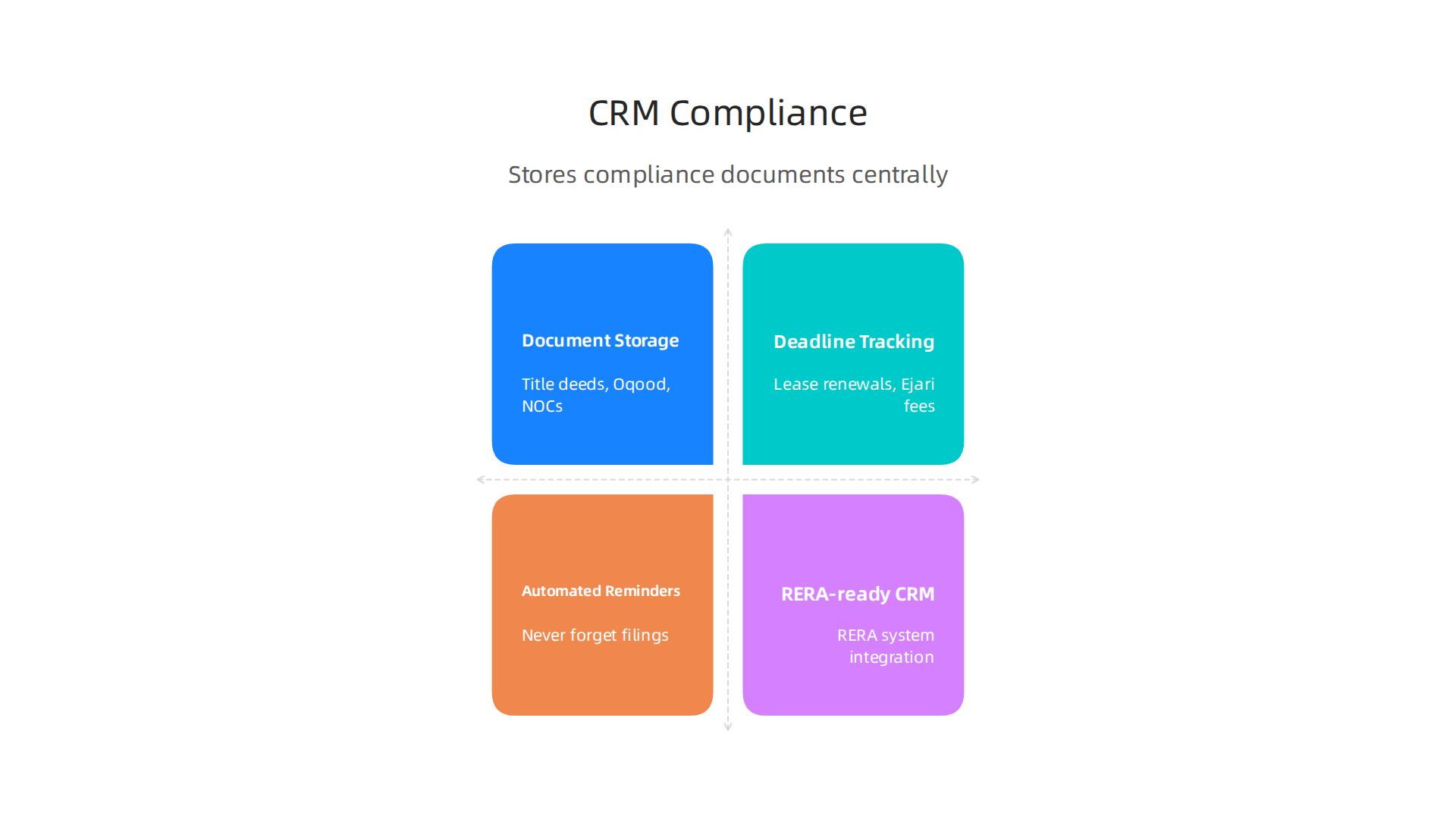
You can upload a title deed once and tag it to the right property and client. When a regulator asks for proof, you find it in seconds. No digging through filing cabinets or old emails.
Your CRM can also track deadlines. Lease renewals, Ejari registration fees, and service charge payments all have hard dates. Miss one, and you face fines or legal trouble. With automated reminders built into your crm marketing system, you never forget a filing. The system alerts you weeks before a deadline. That keeps you compliant without the stress.
The best part? These features are built into tools that already work with Dubai’s regulators. Some platforms offer a RERA-ready CRM for Dubai realtors that integrates with RERA systems for automatic compliance checks. They monitor each stage of a deal from the MOU through the final DLD transfer. That saves hours of manual work.
Marketing and crm together mean you spend less time on paperwork and more time selling. Your system handles the compliance side while you focus on clients.
If you are not sure which CRM fits your business needs, it helps to look at options. You can also find helpful advice in this guide to the best CRM for small real estate businesses. It compares free and paid solutions so you can pick the right one.
Regulations in Dubai change often. One wrong step can cost you. But with the right CRM, you stay ahead. You protect your clients and your reputation at the same time. And if you ever need personalized help navigating the Dubai market, you can always book a FREE Dubai Real Estate Consultation with a local expert who knows the rules inside out.
Ensuring Compliance with Property Laws
Dubai’s property laws require you to check buyer eligibility before any transaction. RERA expects you to verify visa status, confirm off-plan registration rights, and document each step. Your marketing in crm tools can automate this. Store every eligibility check inside a client’s profile so you pull it up in seconds when a regulator asks.
Document management is just as important. You must keep every contract, Oqood certificate, and NOC safe and easy to find. A real estate crm software acts as your central vault. Upload a file once, tag it to the property and the buyer, and it stays there forever. No more digging through email attachments.
Audit trails give you proof of due diligence. Every action you take in your CRM gets logged. When you verify a buyer’s identity, upload a signed MOU, or send a compliance reminder, the system records it. If a dispute comes up, you have clear evidence that you followed the rules. That protects your license and your reputation.
These features turn crm marketing from a simple tool into a legal safety net. You stay on the right side of RERA without extra stress.
For a deeper look at what regulators check, read this overview of RERA compliance requirements from a trusted audit firm. And to keep your tax filings in line, check out the guide on mastering Dubai real estate business taxes.
Automating Due Diligence and Documentation
Checking documents by hand takes time and leaves room for mistakes. A smart real estate crm software can handle this for you. It runs workflows that automatically collect documents like passport copies, proof of funds, and visa details before a deal moves forward. No more chasing clients for missing files.
Due diligence checklists inside your CRM make sure nothing slips through the cracks. For off-plan properties, the system reminds you to verify registration rights, check payment plans, and confirm the developer’s status. Each step gets ticked off before you proceed. This kind of automated follow‑through keeps you compliant and builds trust with buyers.
Automated document generation is another big win. Your CRM can create MOUs and sale agreements in seconds using pre‑approved templates. This cuts down on errors and saves hours of manual typing. The final document is accurate and ready to sign.
As crm marketing becomes more central to Dubai real estate, tools that handle compliance and documents are a must. In fact, CRM software is powering Dubai’s real estate industry by streamlining operations and reducing risk.
To see how all these automation features fit into your business, read our guide on how to transform your property business with a CRM platform. And if you want personalised advice on setting this up for your deals, get a FREE Dubai Real Estate Consultation with Ayaz Salman.
Analyzing Market Trends Using CRM Data
Your real estate crm software holds a goldmine of data that can show you exactly where the market is heading. Every buyer inquiry, property view, and closed deal gets recorded. When you look at these patterns across different Dubai communities, you start seeing clear signals.
For example, you might notice that one area is getting twice as many views as last quarter but prices have not moved yet. That gap often means demand is rising faster than supply. If you act early, you can secure properties before the price jump happens. This kind of insight separates guesswork from smart investing.
Cross-referencing transaction history with rental yields reveals even more. An area with steady sale prices but growing rental income might be undervalued. Smart investors use their CRM to spot these mismatches. They find neighborhoods where the numbers say "buy" even though nobody is talking about them yet.
The real magic comes with predictive analytics. A good CRM can forecast price movements by studying historical data plus current demand. Some platforms already offer predictive analytics for market trends right inside the dashboard. Instead of waiting for next month’s report, you see what is likely to happen weeks ahead.
Putting all this into action means turning your CRM into a research hub. You stop relying on rumors or gut feelings. Every decision gets backed by real numbers from your own system.
Want to learn how to apply these trend insights to your portfolio? Check out these Dubai real estate investment strategies that use CRM data to find top opportunities.
When marketing in crm tools work this well, you spend less time guessing and more time closing deals that actually perform.
Identifying High-Yield Investment Areas
Finding areas with the highest potential returns is where your crm marketing tools really shine. Your system pulls together actual transaction records and verified rental data to calculate yields by community automatically. Instead of hunting for numbers across different websites, you see everything in one place.
Most CRM dashboards offer heat maps and trend lines that highlight neighborhoods where demand is climbing and prices are starting to move. One glance tells you which communities are heating up. The Dubai Real Estate Insights dashboard even shows you how market distribution works across budget, mid-range, and high-end segments. That kind of visual data helps you spot opportunities before the crowd.
You can also compare key metrics like ROI, occupancy rates, and price per square foot across multiple areas side by side. Maybe one neighborhood has steady occupancy but lower sale prices than nearby communities. That gap might mean the area is undervalued. Your CRM turns those comparisons into actionable insights.
If you want to explore how different property types perform in these hot areas, check out this guide on different Dubai real estate asset types and their potential returns. It pairs perfectly with what your CRM shows you.
Ready to put these tools to work on your own portfolio? Get a FREE Dubai Real Estate Consultation to discover which high-yield areas fit your strategy best.
Custom Dashboards for Rental Yield and Capital Growth
Once you spot the winning areas, the real work begins. You need to track how your actual investments stack up. That is where custom CRM dashboards become your best tool.
Picture a dashboard built just for your portfolio. It displays your annual rental income, property appreciation, and total return in simple, color coded widgets. No more juggling multiple spreadsheets to understand your bottom line.
The smartest dashboards also let you compare your performance against the broader market. You can place your property’s growth right next to the Dubai Residential Index. This gives you an honest look at whether you are winning or lagging behind.
Because the data refreshes in real time, you always act on the latest numbers. This is where marketing in CRM tools proves its value by turning raw data into a clear competitive advantage. Using a trusted real estate CRM software ensures you have the right framework in place to make this happen.
Want to build a dashboard that fits your exact needs? Start by learning how to transform your property business with a CRM platform. It gives you a clear roadmap to get started.
Best Practices for Implementing CRM in Your Real Estate Business
Once your custom dashboard is up and running, the next step is making sure your whole team uses the CRM the right way. A great tool is useless if nobody adopts it. Here are the top practices that make marketing in CRM actually work for your real estate business.
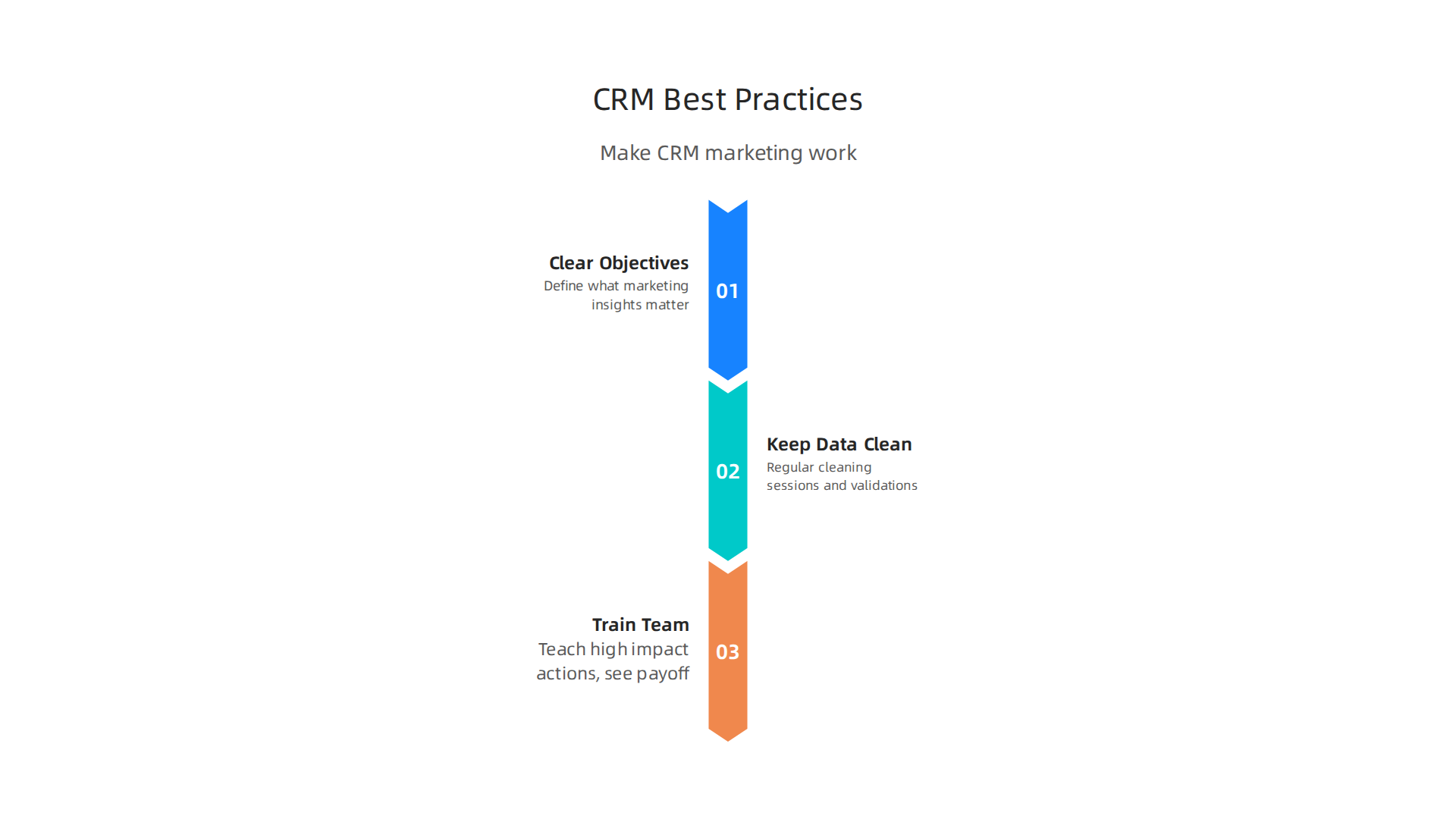
Start with clear objectives. Before you dive into any CRM, you need to define what marketing insights really matter. Are you trying to track which lead sources produce the highest ROI? Do you want to spot seasonal trends in property demand? Write down your top three goals first. This helps you choose the right features and avoid getting lost in endless settings. As highlighted in the best real estate CRMs of 2026, the top platforms offer robust reporting, but only if you know what to look for.
Keep your data clean. Nothing kills crm marketing faster than a database full of duplicates, old contacts, or wrong numbers. Schedule regular cleaning sessions. Remove leads that never responded after six months. Merge duplicates. Validate email addresses and phone numbers. Good data hygiene means your reports are accurate and your automated campaigns reach the right people. It also saves your team from frustration when they search for a client.
Train your team and show immediate value. People resist change when they do not see a payoff. Start with a simple training session that teaches one or two high impact actions. For example, show your agents how to log a call in under ten seconds or how to instantly see a lead’s history. Once they see that marketing and crm saves them time, adoption goes way up. Over time, introduce advanced features like automated follow up sequences or crm en marketing dashboards.
If you run a small agency, reading how to find the best CRM for small real estate business can help you choose a platform that fits your size and budget.
Still unsure how to get started with marketing in crm for your properties? Get expert help tailored to your portfolio. FREE Dubai Real Estate Consultation — Connect with Ayaz Salman and build a CRM strategy that actually drives results.
Choosing the Right CRM for Dubai Investors
Picking a CRM for your Dubai real estate business is different from other markets. You need a tool that connects to local systems like DLD and Ejari. It must also support Arabic and English. Many investors overlook this until they hit a problem.
Start by checking if the CRM links to Dubai Land Department data. This lets you track property records straight from your dashboard. Next, think about scale. Are you a solo investor or do you plan to grow a team? A platform like Follow Up Boss works well for high-volume teams. But a simpler tool may save you money if you work alone. According to a 2026 review of top real estate CRMs, your team size and budget should guide your choice.
Finally, look for analytics that match your investment style. If you focus on off-plan properties, you need a CRM that tracks payment milestones and handover dates. Good reporting helps you improve your marketing in crm efforts. For example, you can see which lead sources bring the most off-plan buyers.
If you are unsure where to start, read how to transform your property business with a CRM platform. It gives you a clear roadmap for Dubai investors.
Need personal guidance? Get a FREE Dubai Real Estate Consultation and talk to Ayaz Salman about your specific needs.
Data Hygiene and Team Training
Even the best CRM software is useless if its data is messy. For your marketing in crm efforts to work, you need clean, accurate records. Strong data hygiene supports your broader marketing and crm strategy.
Run regular audits to remove duplicate contacts and update inactive leads. Standardize how you enter names, phone numbers, and property details so everyone on your team follows the same rules. Automate as much as possible. Many real estate CRM software options let you set up automated data cleansing. You can create rules to merge duplicate leads or flag incomplete entries automatically. This cuts down on human errors and keeps your database reliable.
Your team also needs ongoing training. Hold monthly sessions to walk through new features and review best practices. When everyone knows how to use the tool properly, your crm marketing efforts improve. You spend less time fixing errors and more time closing deals.
If you run a smaller operation, learn how to find the best CRM for small real estate business that fits your budget. Clean data and a trained team turn your CRM into a powerful engine for your Dubai property investments.
Summary
This article explains how marketing in a CRM transforms Dubai real estate by connecting fragmented data from portals, the Dubai Land Department (DLD), RERA and Ejari into one actionable system. It shows how a CRM becomes a single source of truth—cleaning and normalizing records, scoring and segmenting leads, tracking pipelines and visualizing market trends—so agents and investors can make faster, evidence‑based decisions. The guide covers key integrations (DLD/RERA/Ejari), essential features (lead scoring, analytics dashboards, document management), and practical benefits like automated compliance, faster follow‑ups and predictive insights for identifying high‑yield neighbourhoods. It also walks through best practices for selection, implementation and team adoption so you avoid stale spreadsheets and missed opportunities. After reading, you’ll understand which CRM capabilities matter in Dubai, how to feed official data into your system, and the first steps to turn CRM marketing into measurable deal flow and portfolio performance.